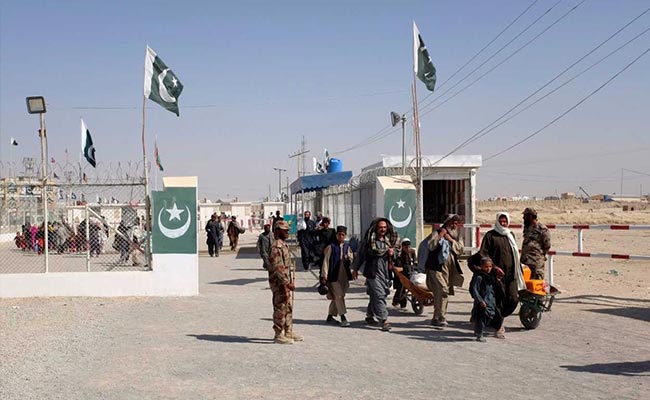
Today marks a critical deadline for undocumented foreign residents in Pakistan. Under the ongoing "Illegal Foreigners' Repatriation Plan" (IFRP), the Ministry of Interior has ordered a nationwide crackdown and immediate arrests of those residing in the country without valid visas, starting tomorrow. While Islamabad defends the move by citing security concerns, severe economic strain, and allegations of cross-border smuggling, this sweeping expulsion stands in sharp contrast to the values of religious solidarity Pakistan has long championed on the global stage.
The Human Cost: A Lifetime in the Shadows
Behind the statistics lies a profound human crisis. Millions of Afghans began fleeing to Pakistan in continuous waves starting in April 1978 following a pro-Soviet coup, and later during the Soviet occupation in 1979.
Consider the case of a 48-year-old man born in Pakistan to Afghan parents who arrived during those early waves. His parents have since died and were buried in Pakistan. For nearly five decades, he has lived in a modest mud house near Islamabad, surviving without electricity or basic municipal facilities. Given that the average life expectancy at birth in Pakistan is roughly 68 years, this man has spent nearly his entire existence in a country he has always called home. Yet under today's strict deadline, he and countless others in similar situations are being categorized as "illegal foreigners" and ordered to leave immediately.
Shifting Stances And National Interests
What makes this repatriation drive notable is how sharply it departs from Pakistan's historical diplomatic posture. For years, Islamabad has been a vocal critic of other nations enforcing strict border controls.
For instance, Pakistan has repeatedly condemned India's actions regarding undocumented Bengali-speaking Muslims, labeling deportation drives as a violation of fundamental rights and an escalation of state-sponsored Islamophobia. Similarly, when European nations attempted to tighten their borders against migrant influxes, organizations like the Organization of Islamic Cooperation (OIC) often supported by Pakistan criticized those policies on humanitarian grounds.
However, today the policy script has changed. When dealing with its own long-standing refugee population, Pakistan has adopted the very arguments it once criticized: national security and economic preservation. The humanitarian principles previously cited in regional diplomacy have been set aside in favor of domestic security priorities.
The Crackdown By The Numbers
The scale of this migration shifts is unprecedented. Since the launch of the repatriation plan in October 2023, the return of Afghan refugees has accelerated dramatically. According to United Nations High Commissioner for Refugees (UNHCR) and International Organization for Migration (IOM) data, approximately 5.4 million (54 lakh) Afghan migrants have returned to Afghanistan from Pakistan and Iran since October 2023.
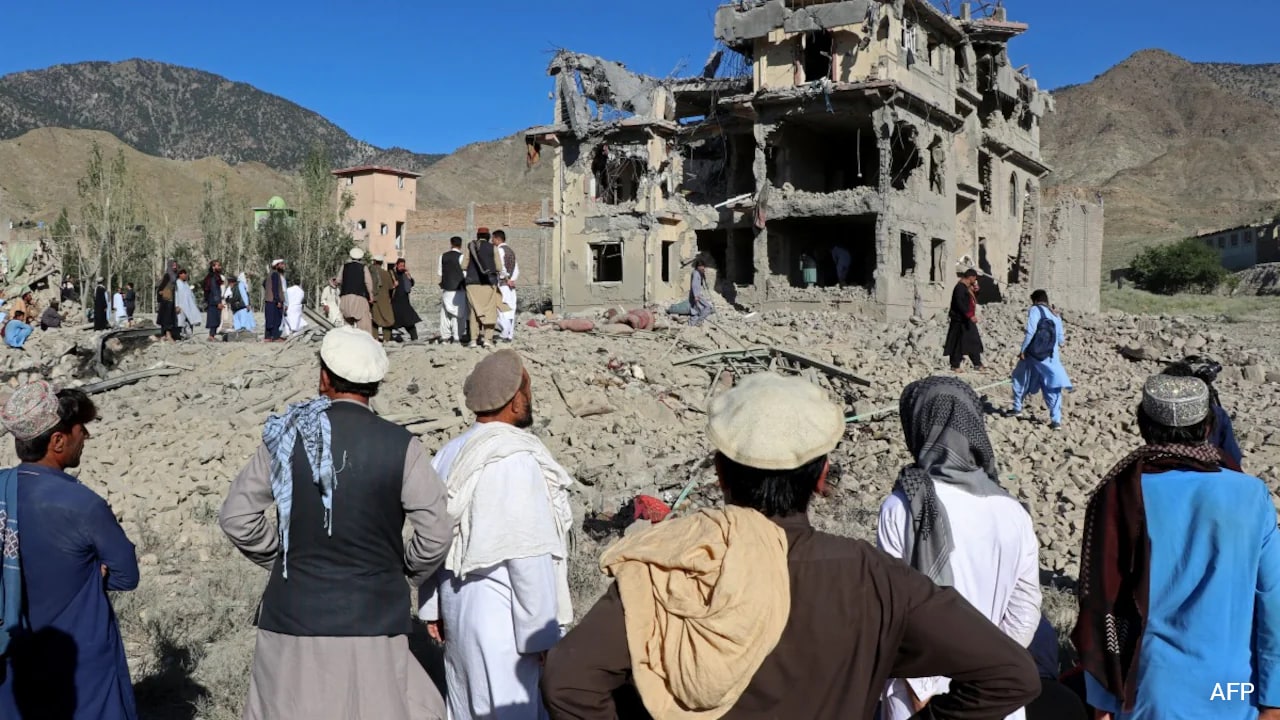
Following a high-level review meeting on June 1, 2026, the Ministry of Interior directed authorities across all provinces as well as Gilgit-Baltistan, Azad Kashmir, and the Islamabad Capital Territory to accelerate the repatriation process. Starting July 11, 2026, local authorities are required to submit daily reports to the Ministry of Interior, detailing the number of citizens without valid visas, the actions taken against them, and their current status.
UNHCR representatives have noted that over 400,000 Afghan migrants returned over a recent four-month period, with roughly 5,000 returning daily. Currently, more than 800,000 Afghan nationals holding Proof of Registration (PoR) cards and 600,000 holding Afghan Citizen Cards (ACC) remain in Pakistan, alongside over 100,000 who arrived after the political changes of 2021. While international agencies have urged the Pakistani government to avoid linking the entire migrant population to security threats, the scheduled crackdown is set to proceed.
A Broader Regional Reality: The Limits Of Unity
Pakistan's domestic policies reflect a broader geopolitical truth: national interests and regional security almost always supersede idealist rhetoric.
This dynamic is similarly visible in other regional crises, such as the situation in Gaza. While many Muslim-majority nations have condemned the humanitarian crisis and provided financial aid, direct military or political intervention has not occurred. For instance, Egypt continues to maintain tight security restrictions on the Rafah border crossing, limiting refugee movement and aid entry due to its own national security concerns.
The regional landscape remains deeply divided by complex alliances and strategic priorities. Sectarian divides and geopolitical rivalries such as those between Shia-majority Iran and Sunni-majority states like Saudi Arabia, Egypt, and the UAE frequently prevent unified action. Furthermore, many regional powers prioritize their military and economic alliances with Western partners, hosting major foreign military bases in countries like Qatar, Bahrain, and Kuwait.
Ultimately, the July 11 crackdown highlights how international diplomacy functions in practice. While global solidarity is a frequent theme in public forums, when a state faces internal security and economic pressures, national interests remain the primary driver of policy.
Track Latest News Live on NDTV.com and get news updates from India and around the world


