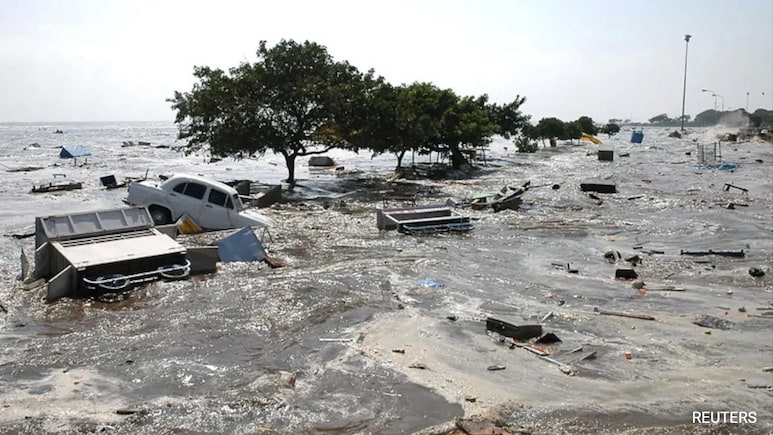
A powerful 7.4-magnitude earthquake shook northern Japan on Monday, prompting the Japan Meteorological Agency (JMA) to issue an urgent tsunami warning for waves as high as three metres (10 feet).
According to the agency, the quake struck at 4:53 PM (0753 GMT) in the Pacific Ocean off the coast of Iwate prefecture in northern Japan. The tremors were intense enough to be felt hundreds of kilometres away from the epicentre.
Roughly 40 minutes after the earthquake, a tsunami wave measuring about 80 centimetres (31 inches) reached the port city of Kuji in Iwate as confirmed by the JMA. Authorities immediately escalated safety alerts due to the risk of further waves.
What Is A Tsunami?
A tsunami is a series of enormous waves climbing up to 30 metres or more, according to the Intergovernmental Oceanographic Commission (IOC) of UNESCO. They are created by disturbances near or below the ocean.
What Can Trigger A Tsunami?
The disturbances which may generate tsunamis include:
Earthquakes
The most common cause is undersea earthquakes. But not every earthquake leads to a tsunami. The quake must be strong. It should usually be above magnitude 6.5, shallow in depth (less than 70 km beneath the surface) and move the seafloor vertically.
Landslides
Both coastal and underwater landslides can trigger tsunamis. When large amounts of rock or soil move suddenly, they displace surrounding water that create strong waves which can travel outward with force.
Volcanic Eruptions
Volcanic activity can also produce tsunamis but this is less frequent. This may happen due to explosive eruptions or when parts of a volcanic structure collapse into the sea and displace massive volumes of water.
How Tsunami Waves Travel
As per IOC, tsunami waves, once formed, radiate outward in all directions from the source of disturbance. If the event occurs near a coastline, waves may reach land within minutes.
In deep ocean waters, these waves are barely noticeable. But as they move into shallow coastal zones, their height increases significantly.
“Coastline topography and ocean floor greatly influence their size, which is why tsunami impact can vary from one beach to another,” IOC mentioned.
Types Of Tsunami
A single underwater disturbance can produce different wave patterns that affect nearby and distant coastlines in varying ways.
For this reason, tsunamis are usually classified by how far they travel from their source. Local tsunamis can reach the shore within minutes while distant ones may take hours but can still remain powerful depending on ocean conditions.
Track Latest News Live on NDTV.com and get news updates from India and around the world


