Ceasefire Announced, But It's Not A Full Stop To War: What Happens Next
The immediate test for this ceasefire is the next 24 hours; if Iran, the US, and Israel can control their trigger fingers, the Islamabad talks (or whenever the first round takes place) will begin on a positive note.
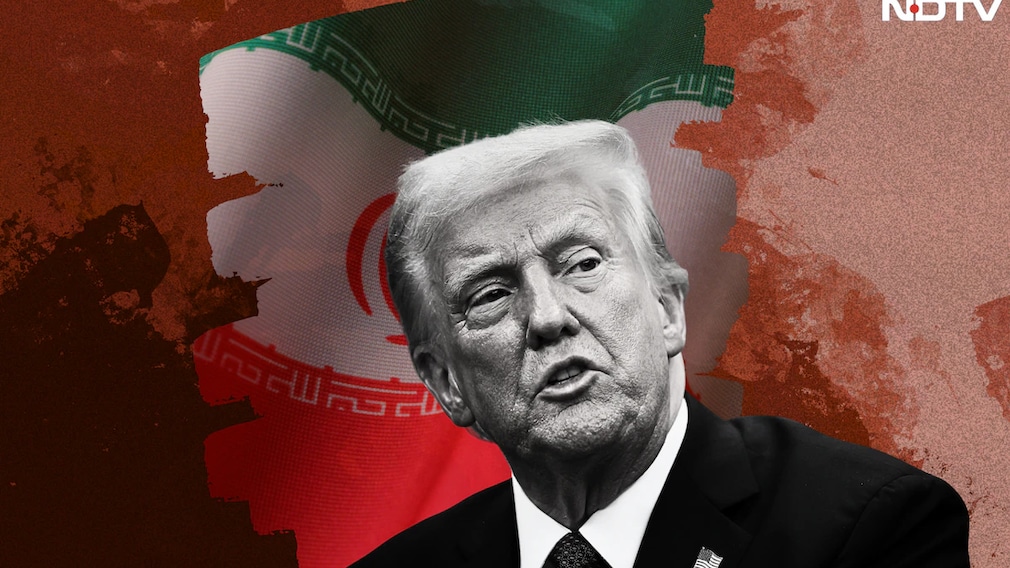
For 40 days and 40 nights the US and Iran waged war - one deadly barrage of missiles and drones followed by another. Over 4,000 people, including children, were killed and billions of dollars of damage done to Gulf oil fields that supply 32 per cent of the world's oil and gas. On the 41st, there was peace, sort of.
The two announced a two-week ceasefire - with 90 minutes on Donald Trump's "a whole civilisation will die tonight" clock - early Wednesday, as part of which Iran agreed to re-open the Strait of Hormuz, potentially restoring global energy supplies.
Israel, the US' strike partner in this war, is included in the agreement. However, while Benjamin Netanyahu indicated he will stand down over Iran, he will continue to target Lebanon.
This is not a full stop to the war; it has been described as a 'cooldown window' to facilitate talks, the first round of which could be in Pakistan, which helped broker this ceasefire, on Friday.
The focus now shifts to scheduled talks in Islamabad.
Fragile truce, talks ahead
Over the past few days the US and Iran have each submitted multi-point peace proposals, and it is likely the talks will centre on reaching a viable middle-ground between the two.
The 15-point American proposal is broadly aligned with earlier deals on Iran's ballistic missile and nuclear programmes, including the dismantling of its Fordow, Isfahan, and Natanz plants.
Iran's 10-point counter included withdrawal of US troops from the region, an international guarantee against future attacks, the lifting of economic sanctions, recognition of its 'authority' over the Hormuz, and, of course, the right to continue a civil-use only nuclear programme.
How Iran Sucker-Punched Trump Into 'Escalation Trap' 'Hellhole'
Any long-term peace in West Asia will certainly revolve around Iran's nuclear and ballistic missile programmes; the US and Israel have publicly committed to dismantling or weakening these, while Iran has repeatedly said it will not compromise sovereignty on energy generation.
Costs mount on all sides
The question now is purely cost vs benefit.
What price will Tehran be willing to pay - i.e., how much of its missile and nuclear programmes will it compromise to satisfy US-Israel demands?
What benefits will the country want in exchange - i.e., lifting of sanctions, returning to the globally accepted SWIFT banking network to facilitate trade payments, security guarantees.
The US faces similar questions.
How long is it prepared to continue the war?
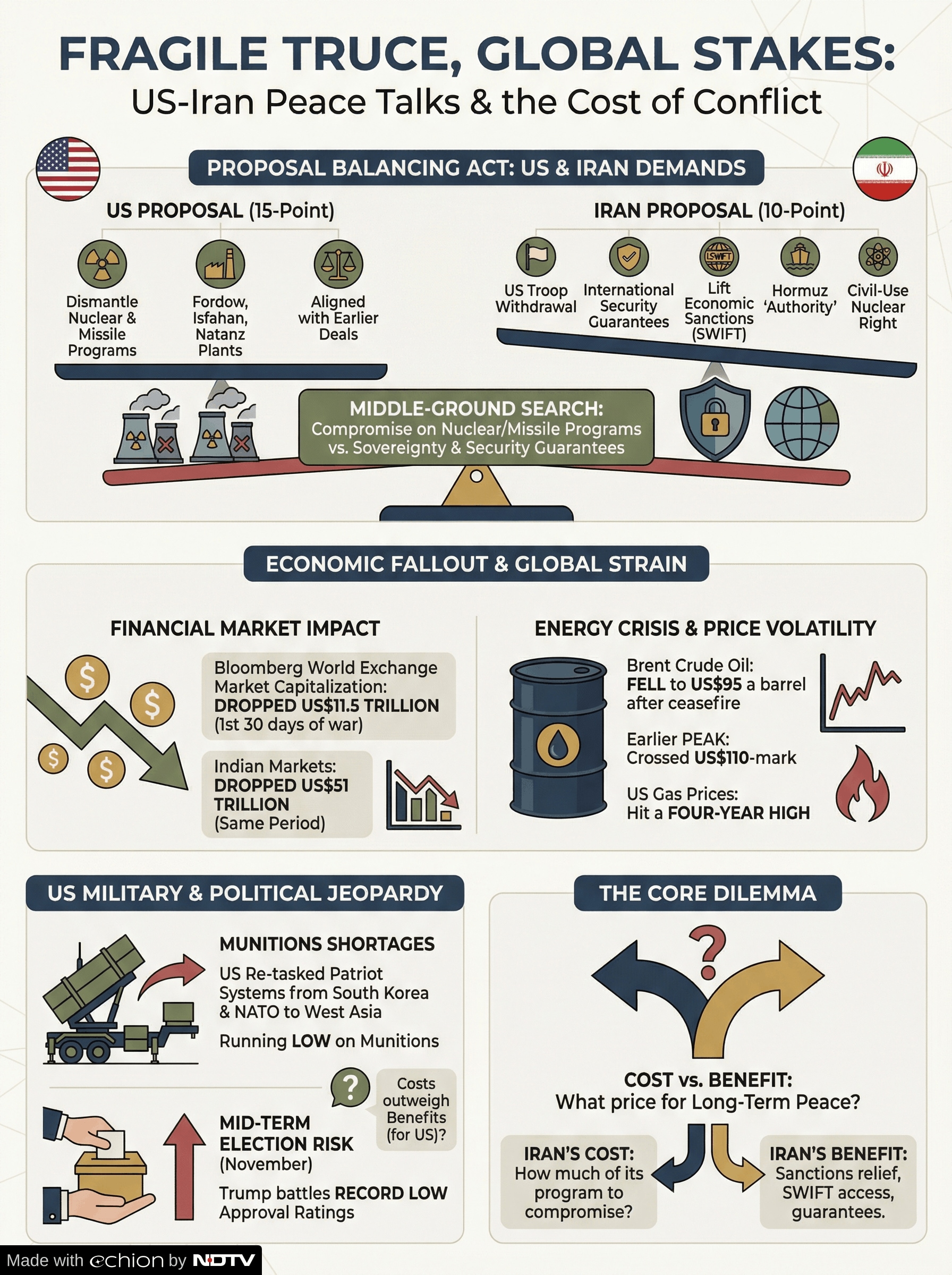
The US is already believed to be running low on munitions, enough that it has re-tasked Patriot air defence systems from allies South Korea and NATO towards the West Asia theatre.
Resumption will also re-ignite a global energy crisis that has impacted fuel prices and manufacturing supply chains, and cause more trauma to stock markets that have lost trillions.
Prices of benchmark Brent crude fell to US$95 a barrel after the ceasefire; it crossed the US$110-mark earlier to send average gas prices in the US to a four-year high.
The Bloomberg World Exchange Market Capitalization index, for example, dropped US$11.5 trillion in the first 30 days of the war. Indian markets dropped US$33.5 billion in the opening week alone.
Renewed fighting will also be political jeopardy for Trump back home as he battles record low approval ratings ahead of the November mid-term election.
For Trump, therefore, there is likely no scenario in which costs outweigh benefits - unless he secures a complete surrender from Iran, which will almost certainly not happen.
And for the world, a return to fighting is to be avoided; global oil prices cannot be allowed to climb any further and continuing supply chain disruptions could wreck economies.
Diplomatic path fraught
A diplomatic (long-term) solution is the only viable answer here.
This will likely include new caps on Iran's nuclear and missile programmes.
At present neither is capped; Trump allowed the 2015 JCPOA - which limited Iran to 3.67 per cent enriched uranium - to expire in October last year, while a United Nations' non-binding call to Iran to not develop nuclear-capable ballistic missiles has been void since October 2023.
In any case, Iran views the latter as a 'non-negotiable' for national security.
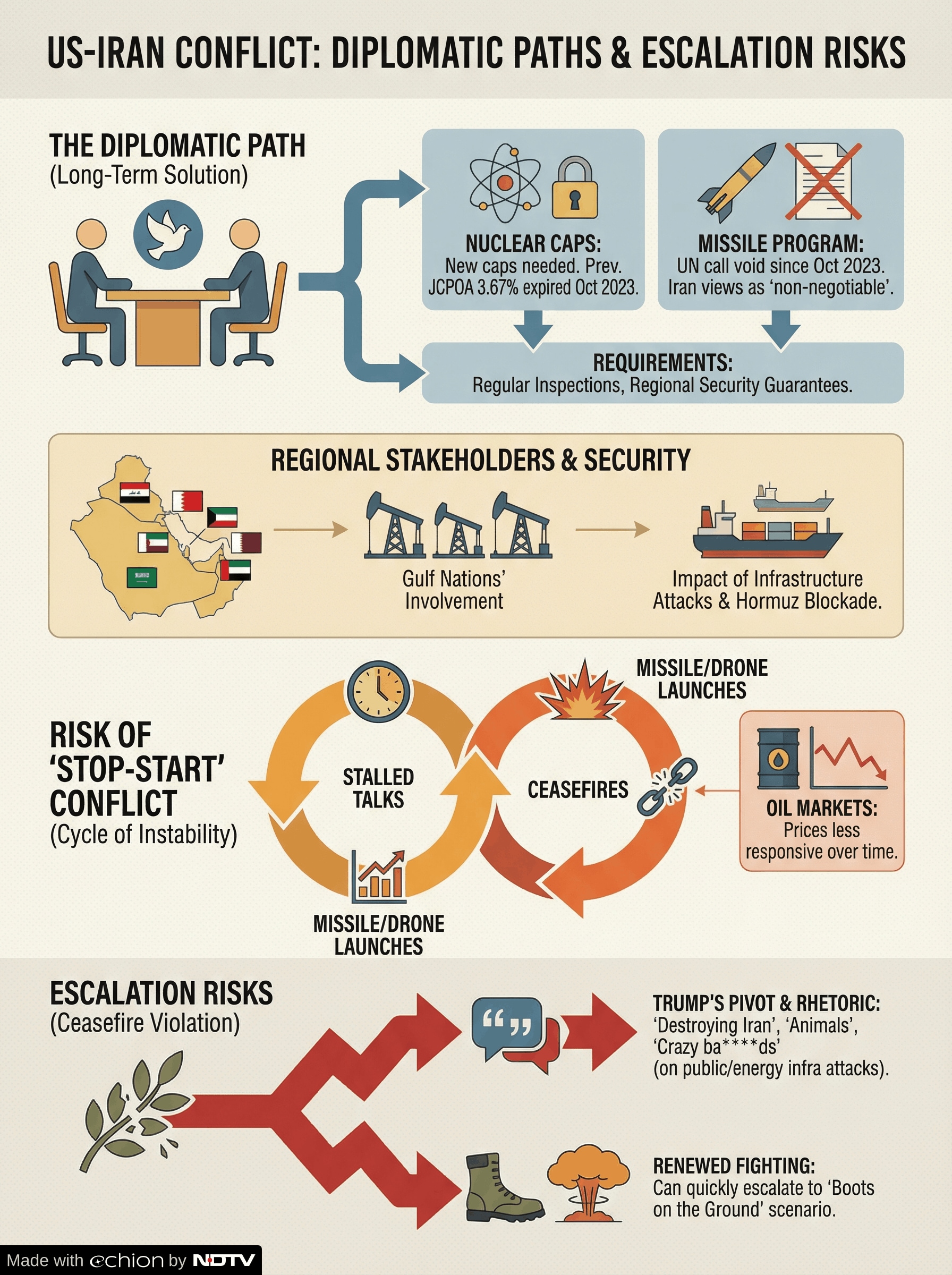
Any end to the war that centres on these points will require Tehran agreeing to regular inspections, something that hasn't been easy to enforce in the past.
Also, any agreement will likely account for security guarantees from other Gulf nations - Iraq, Bahrain, Kuwait, Qatar, the UAE, and Saudi Arabia - who have been dragged into this war.
The three latter will likely be particularly keen observers after Iran attacks on oil and gas infrastructure, and the Hormuz blockade that has crippled regional export architecture.
Risk of stop-start conflict
A spin-off could be a cycle of fighting and ceasefires.
Stalled talks could trigger bouts of missile and drone launches, particularly if Trump gets frustrated over progress closer to the US mid-terms.
This is neither a long-term solution nor a viable short-run answer.
Frequent conflict will maintain tension in oil markets that will reflect in prices that become less and less responsive to ceasefires over time.
Escalation risks persist
In the event of a ceasefire violation - Israel, for example, has already claimed Iran fired missiles at it this morning - Trump will likely pivot sharply to pre-ceasefire rants about destroying Iran.
He has repeatedly said he is willing to step up attacks on public and energy infrastructure, and has waved aside civilian casualties, referring to Iranians as "animals" and "crazy ba****ds".
A ceasefire violation leading to renewed fighting could also quickly escalate to a 'boots on the ground' scenario, something the US seemed to be on the brink of before hostilities ceased.
Iran's Leverage Points
For Iran this a welcome pause, though the administration has insisted otherwise.
Like the US, it too is believed to be running low on munitions.
A ceasefire buys time to repair and re-build damaged infrastructure and re-stock its arsenal, as well as stabilise its economy (assuming sanctions are lifted) now that oil flow is set to resume.
Financial imperatives will likely rule its cost-benefit analysis, with Tehran expected to accept some restrictions on nuclear activity in exchange for financial relief, i.e., sanctions + reparation, though these could be cloaked as 'aided post-war reconstruction' to hide US climbdowns.
$4.5 Billion A Month Jackpot: Why Iran Wants World To Accept Hormuz 'Authority'
Reports, however, indicate a possible splitting of lines within Tehran's power corridors, if hard-liners, including those in the elite Revolutionary Guards Corps, also insist on the full withdrawal of US forces. That will certainly include the re-deployment of US carrier strike groups.
Iran does have one trick up its sleeve the US doesn't - the 'Axis of Resistance'.
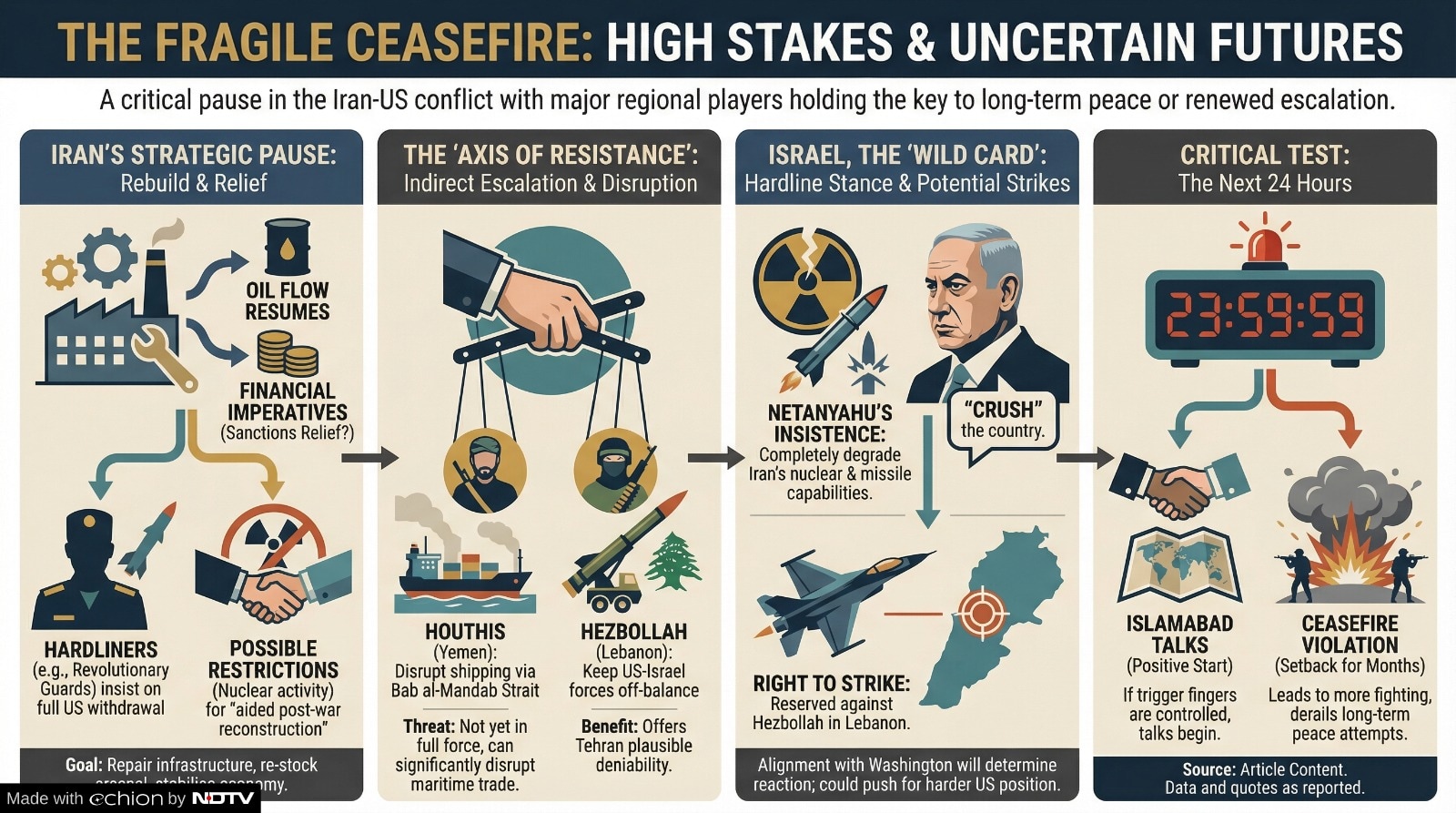
Iran-funded militia in Yemen and Lebanon - i.e., the Houthis and Hezbollah - could escalate fighting to keep US-Israel forces off-balance while offering Tehran some plausible deniability.
'Five Straits' Trap: How Hormuz Blockade Exposes Global Oil's Fatal Flaw
The Houthi threat is particularly noteworthy; they have not entered this war in full force as yet but, if they do, can disrupt shipping through Hormuz's neighbour, the Bab al-Mandab Strait.
Israel, the 'wild card'
Israel is the possible wild card in this deck.
How Tel Aviv reacts to the ceasefire could depend on how aligned it remains with Washington in this war. Israeli officials have already spoken once about Netanyahu's insistence on completely degrading Iran's nuclear and missile capabilities and last week he vowed to "crush" the country.
He has already reserved the right to strike at Lebanon, where the stated target is the Iran-funded Hezbollah group, and could play a key role in pushing the US to a more hardline position in talks.
24-Hour test ahead
The immediate test for this ceasefire is the next 24 hours. If Iran, the US, and Israel can control their trigger fingers, the Islamabad talks (or whenever the first round takes place) will begin on a positive note.
Any ceasefire violation between now and then will not only lead to more fighting but also set back any attempt at long-term peace, potentially for weeks and months.
-
The River Took It All: Aerial Visuals From Nepal Show Scale Of Catastrophe | NDTV Exclusive

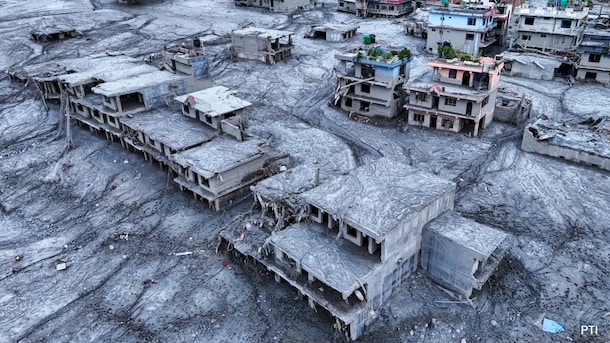
Visuals from a helicopter showed narrow gorges now flattened and widened into valley-like spreads, with rocks, debris, mud, and bodies strewn across them.
-
Before The Nepal Flood, A Glacial Fall: Tracing The Trigger, And A 100-km Killer Surge
A glacier came off a ridge on the Nepal-China border and travelled 100 km down multiple rivers, the longest part of the run being in the Trishuli.
-
Opinion | How A 'Friendship' Pact With Russia Came To India's Rescue 55 Years Ago
With PM Modi set to meet Putin in Kyrgyzstan, a throwback to a historic treaty that helped India fend off Pakistan - and America's 7th Fleet - over 50 years ago.
-
Opinion | The OBC Fault Line That Could Shake Up Uttar Pradesh - And BJP
For years, the BJP was propelled by support from the OBCs. Now, cracks have begun to appear in that base
-
Census Asks 40 Questions. Why Number 10 Is A Battleground | NDTV Explains
The caste question is a fill-in-the-blank for everyone other than SCs and STs. But there's a case for making it a dropdown with set options. Let's decode the history and math behind the politics.
-
Opinion | China To Pak To America, The Growing Dilemmas Of The 'General'
Recent civil military turmoil in the United States, China and Pakistan can be understood through two lenses.
-
Opinion | Why India's Bureaucrats Have Learnt That Doing 'Nothing' Is Safer
India's bureaucracy has perfected a peculiar survival strategy: make a decision, you may be punished; make none, and you are usually safe.