











- Satellite images with Mandarin annotations showed US military buildups before Operation Epic Fury began
- Images captured F-22 fighters at Israel's Ovda Air Base and aircraft at Saudi Arabia’s Prince Sultan Air Base
- MizarVision, a Chinese firm, published detailed geolocated images on social media
In the final week of February, long before the first missiles were launched and before the name Operation Epic Fury entered public discussion, a set of satellite images began circulating quietly online.
The pictures showed aircraft parked on runways, transport planes arriving at desert airfields and carrier decks crowded with fighters somewhere in the Mediterranean. Yet each image carried an unusual level of detail -- not in English, but in Mandarin. Aircraft types were identified. Missile defence systems were labelled. Troop concentrations were marked with precise geolocation.
One set of images showed Lockheed Martin F-22 stealth fighters parked on the ramp at Israel's Ovda Air Base. Another showed the buildup of aircraft and support systems at Saudi Arabia's Prince Sultan Air Base. Others mapped US bases across Qatar, Jordan and Bahrain.
February 24: Satellite imagery shows military aircraft on the tarmac of Prince Sultan Air Force Base.
Photo Credit: February 27: Satellite images capture approximately 11 US Air Force F-22s deployed to Ovda Air Force Base.
The images were shared online by a Chinese artificial intelligence company with fewer than 200 employees.
Within days, the war began.
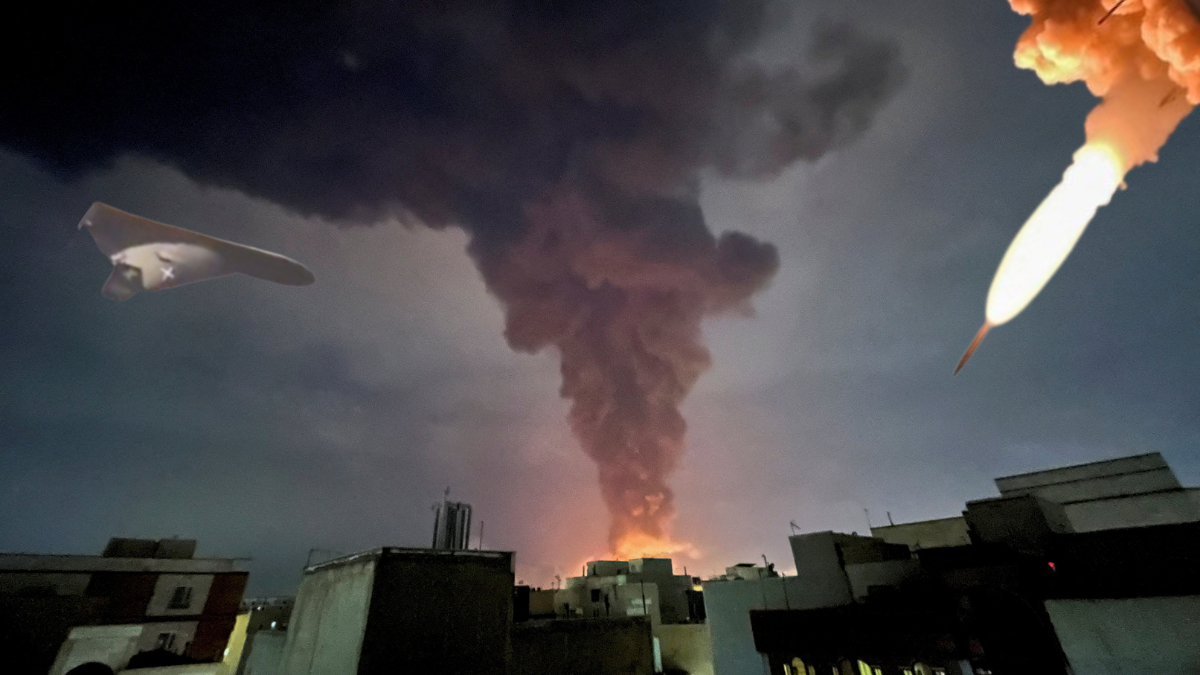
On February 28 the United States and Israel launched Operation Epic Fury, a joint campaign of air strikes targeting Iran. This was followed by retaliatory missile and drone attacks from Tehran.
Amid the conflict, something else was unfolding in parallel. A steady stream of satellite imagery showing American aircraft, missile defence batteries and naval deployments continued to appear online. The source was the same firm, the Shanghai-based geospatial intelligence company MizarVision.
What The Images Show
The first major batch of imagery reportedly appeared on February 20.
MizarVision published a collection of high-resolution satellite photographs showing US aircraft transfers to Ovda Air Base in southern Israel, fighter deployments across the Middle East, including Saudi Arabia and Qatar, naval activity and carrier movements in the Arabian Sea, among other military assets.
Each image was annotated using artificial intelligence tools. Aircraft were labelled by type. Support aircraft were identified. Missile defence systems were highlighted.
By March 1, the dataset had expanded significantly.
February 26: Satellite images shows one KC-135, two C-130s, and approximately seven attack helicopters on the tarmac at Udeid Air Base.
MizarVision released additional imagery covering military bases in Jordan, Kuwait, Bahrain and the United Arab Emirates. The images catalogued aircraft types, air defence configurations and troop concentrations.
The imagery was geolocated and published on social media platforms including X and Chinese networks such as Weibo. Some of the posts were shared by accounts linked to Chinese state media and analysts with ties to the People's Liberation Army (PLA).
Among the assets identified in the images were several high-value US platforms. Satellite imagery showed F-22 stealth fighters parked on the ramp at Israel's Ovda Air Base shortly before the beginning of combat operations.
The images claimed seven F-22 aircraft were parked on the tarmac, while four additional F-22s were spotted on the runway.
Roughly 24 hours later, Operation Epic Fury began.
Other images documented activity at Prince Sultan Air Base in Saudi Arabia, identifying seven Boeing E-3 airborne warning and control system aircraft and two Bombardier E-11 communications aircraft staged there.
Additional satellite images captured al-Udeid Air Base in Qatar, which later became a target of Iranian missile and drone attacks.
The imagery did not stop at airfields.
Tracking Aircraft Carriers From Orbit
Naval movements were also tracked.
MizarVision published satellite images showing the USS Gerald R Ford, the newest aircraft carrier in the US Navy, after it departed Souda Bay naval base in Crete.
The images showed Boeing F/A-18E/F Super Hornet fighters and Northrop Grumman E-2D airborne early warning aircraft on the carrier's flight deck.
Satellite imagery shows the USS Ford aircraft carrier departing Sounda Bay Naval Base.
Satellite imagery also showed the USS Abraham Lincoln, another US carrier operating in the region, appearing to rendezvous with a resupply vessel in the Arabian Sea near Oman.
The company also combined satellite imagery with open-source flight tracking data.
Using aircraft tracking tools, analysts followed a US Navy Boeing P-8A maritime patrol aircraft departing Isa Air Base in Bahrain and flying toward an area in the Arabian Sea where the Lincoln carrier group was believed to be operating.
The Company Behind The Images
Unlike American companies such as Vantor -- formerly Maxar Intelligence -- or Planet Labs, which operate their own satellite constellations, MizarVision functions primarily as an analysis and data-processing firm.
Its role is closer to what analysts describe as an "information aggregator."
The company combines multiple streams of publicly available data like commercial satellite imagery, ADS-B aircraft tracking signals and AIS ship tracking data.
These datasets are processed using artificial intelligence models designed to identify military equipment automatically.
The result is a form of geospatial intelligence product that resembles the work traditionally carried out by national intelligence agencies.
The firm has been labelled "the Bloomberg of intelligence," combining multiple datasets into a single analytical platform.
Where The Satellite Data Comes From
The imagery used by MizarVision appears to come from two possible sources. One option is China's Jilin-1 satellite constellation, operated by Chang Guang Satellite Technology.
The Jilin-1 network includes more than 100 Earth-observation satellites, many capable of sub-metre resolution imagery. At that level of resolution, analysts can identify aircraft on runways and distinguish between different missile defence systems.
The second possible source is commercial Western imagery, which ironically includes companies such as Vantor, Planet Labs, and Airbus Defence & Space that operate global satellite constellations that sell imagery commercially to customers worldwide.
Did Iran Use The Data?
There is no confirmed evidence that Iran used the imagery to guide its attacks.
However, several facilities previously highlighted in MizarVision posts were later targeted during Iranian missile and drone strikes.
Among them was al-Udeid Air Base in Qatar.
Iran also targeted facilities in Jordan, including Muwaffaq Salti Air Base, where a $300 million AN/TPY-2 radar system used by US THAAD missile defence units was destroyed.
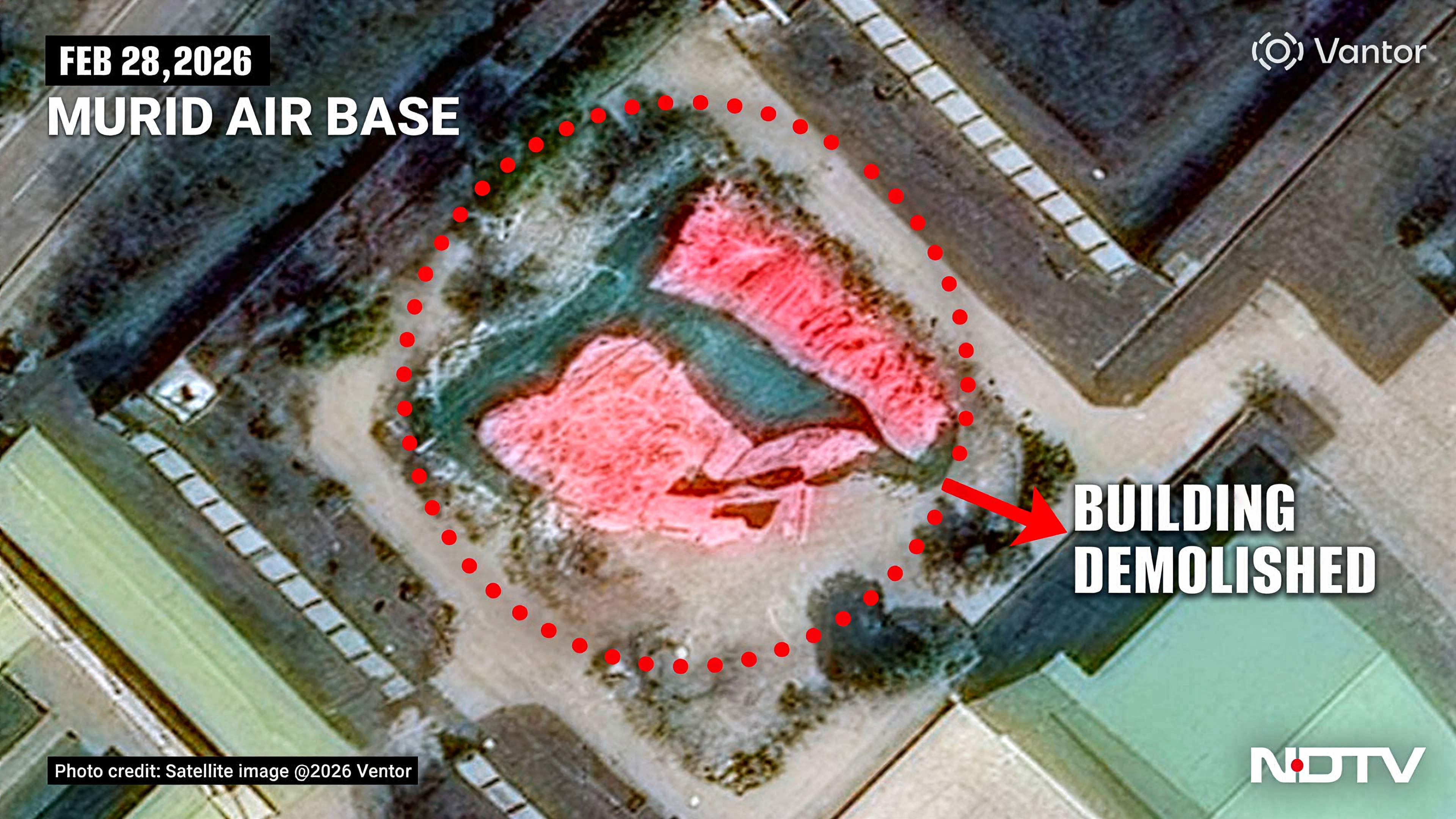
Satellite images capture damage to buildings in Tehran, the Iranian capital, following attacks by the US and Israel.
Satellite images later confirmed the loss of the radar installation. The system had been critical for directing missile defence batteries across the Gulf.
With the radar out of action, interception responsibilities shifted more heavily to Patriot missile batteries, which rely on PAC-3 interceptors already in limited supply.

