



When the United States and Israel launched strikes against Iran a week ago, Donald Trump said the goal was to let the Iranian people rise and reclaim their country. Then it was a way to destroy the "imminent Iranian threat". Then regime change. Then he wanted to personally pick Iran's next leader. By Friday, he was demanding unconditional surrender. His senior officials, meanwhile, offered their own explanations that frequently contradicted his.
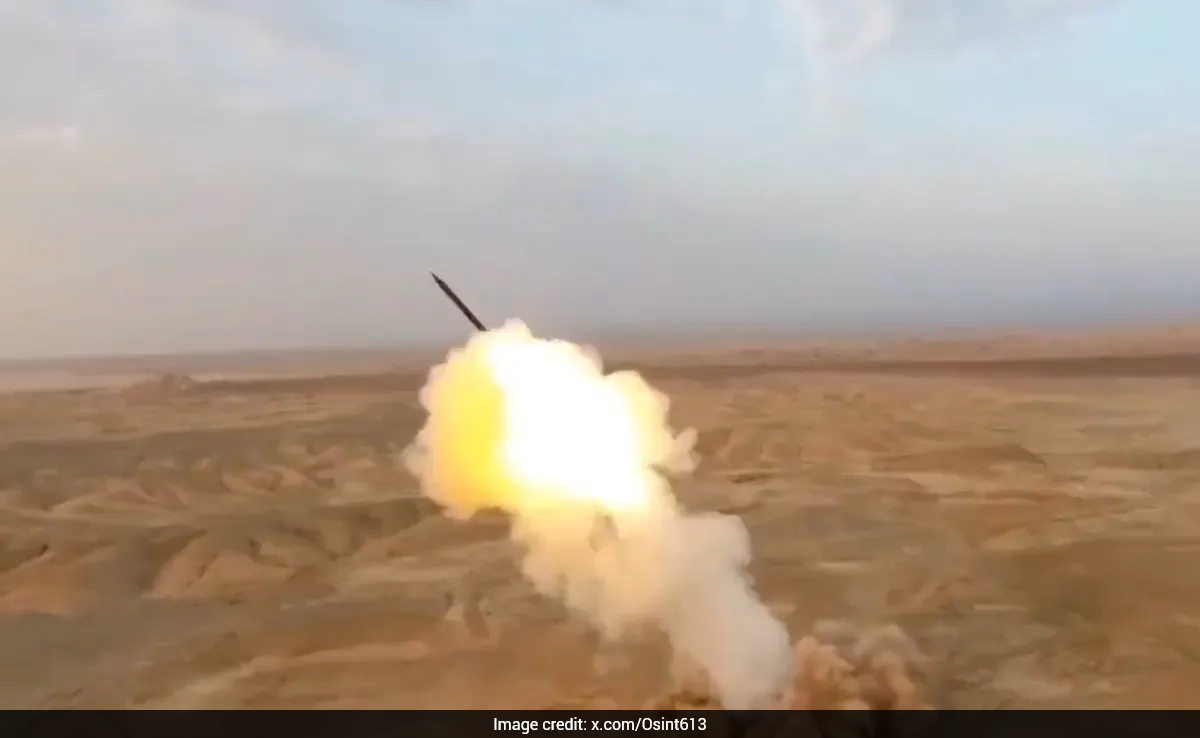
The US-Israel campaign, dubbed Operation Epic Fury by the Pentagon, began with coordinated American and Israeli strikes and the killing of Iran's Supreme Leader Ayatollah Ali Khamenei on the first day. Tehran retaliated with strikes of its own against Israel and Middle East countries hosting US bases.
A week into the war, what Trump actually wants remains, at best, unclear, and his own statements suggest even he may not know.
Day One: A Fight Against Iran's Threat
Trump first announced the campaign on 28 February in an eight-minute video posted on Truth Social. He framed the attack as a response to what he described as decades of Iranian aggression against the United States. He accused Tehran of refusing to abandon its nuclear ambitions while developing missiles capable of threatening American forces and allies.
The United States, he said, would "raze Iran's missile industry to the ground" and "annihilate" the country's navy. He also appealed directly to Iranian citizens. "The hour of your freedom is at hand," Trump said, urging them to "take over your government."
Even before the first day was out, Trump was switching things. Speaking to Axios on 28 February, just hours after the strikes began, the US president said he has multiple options. "I can go long and take over the whole thing, or end it in two or three days and tell the Iranians: 'See you again in a few years if you start rebuilding [your nuclear and missile programs],'" he said.
That same day, the US mission to the United Nations moved to build a legal case, invoking Article 51 of the UN Charter - the self-defence provision. US Ambassador Mike Waltz said Washington had made every effort to resolve matters peacefully, but Iran had refused.
Day Two: Pentagon Undercut The 'Imminent Threat' Claim
Trump administration officials, speaking in closed-door briefings with congressional staff, acknowledged there was no intelligence indicating Iran was planning to strike American forces first. That admission directly contradicted the White House's public justification of an imminent threat.
Day Three: Regime Change Or Not?
On March 2, Defence Secretary Pete Hegseth attempted to present the war as a focused military campaign. "The mission of Operation Epic Fury is laser-focused. Destroy Iranian offensive missiles, destroy Iranian missile production, destroy their navy and other security infrastructure, and they will never have nuclear weapons," he said.
Hegseth also rejected suggestions that Washington was seeking to overthrow Iran's government, saying, "This is not a so-called regime-change war, but the regime sure did change, and the world is better off for it."
"This is not Iraq. This is not endless ... This is the opposite ... This operation has a clear, devastating, decisive mission," he added.
Within hours, Secretary of State Marco Rubio offered another explanation for the war's timing. Rubio said Washington knew Israel was planning a strike and believed Iran would retaliate against American forces.
"We knew that there was going to be an Israeli action. We knew that that would precipitate an attack against American forces, and we knew that if we didn't preemptively go after them before they launched those attacks, we would suffer higher casualties," he said.
"There absolutely was an imminent threat, and the imminent threat was that we knew that if Iran was attacked, and we believed they would be attacked, that they would immediately come after us."
Day Four: Trump Overrules His Own Secretary of State
On 3 March, Trump dismissed Rubio's explanation entirely. The decision, he said, was his alone, driven by Iranian intentions rather than Israeli ones. "Based on the way the negotiation was going, I think they were going to attack first, and I didn't want that to happen," he said while speaking to reporters. Rubio subsequently walked his comments back, saying they had been taken out of context.
Day Five: 'We Have Only Just Begun'
At the second Pentagon briefing on 4 March, Hegseth announced that American and Israeli air power would soon have complete, uncontested control of Iranian skies, says US will be "flying over Iran, flying over their capital... Iranian leaders looking up and seeing only US and Israeli air power every minute of every day until we decide it's over."
"[The Iranian regime] is toast, and they know it, or at least soon enough, they will know it. And we have only just begun to hunt, dismantle, demoralise, destroy and defeat their capabilities just four days in."
Day Six: Trump Wants To Pick Iran's Next Leader
On 5 March, Trump told Axios he expected to be personally involved in selecting Iran's new leader, comparing the situation directly to his involvement in Venezuela. US preisdent said he found the most likely successor, Mojtaba Khamenei, son of the assassinated Supreme Leader, entirely unacceptable.
"They are wasting their time. Khamenei's son is a lightweight. I have to be involved in the appointment, like with Delcy [Delcy Rodriguez, who replaced Maduro] in Venezuela," Trump said. "We want someone who will bring harmony and peace to Iran."
Day Seven: Unconditional Surrender And 'Make Iran Great Again'
On the morning of 6 March, Trump demanded "unconditional surrender" from Iran on Truth Social.
"There will be no deal with Iran except unconditional surrender! After that, and the selection of a great & acceptable leader(s)," Trump wrote. He added that after such a surrender, the United States and its allies would help rebuild the country.
"Iran will have a great future. Make Iran Great Again (MIGA!)"
White House press secretary Karoline Leavitt tried to downplay the statement, saying that nothing had shifted, adding that unconditional surrender simply meant the point at which Trump determines Iran is no longer a threat.
Iran Shows No Sign Of Surrender
Despite Trump's demands, Iran has not indicated any intention of surrendering. Instead, Tehran has expanded the conflict, launching missiles and drones toward countries hosting American bases across the Middle East.
Iranian President Masoud Pezeshkian apologised to neighbouring states for the attacks but insisted Iran would defend itself. "I must apologise on my own behalf and on behalf of Iran to the neighbouring countries that were attacked by Iran... no missiles will be fired unless an attack on Iran originates from those countries," he said.
Apparently commenting on the apology, Trump said, "Iran, which is being beaten to HELL, has apologised and surrendered to its Middle East neighbours, and promised that it will not shoot at them anymore." He declared Iran was no longer "the Bully of the Middle East" but "THE LOSER OF THE MIDDLE EAST."
To recap, here are the explanations that have been offered so far: Iran posed an imminent nuclear threat, Iran would have retaliated against an Israeli strike anyway, the goal was regime change, Iran itself was about to attack first, and now, unconditional surrender.

