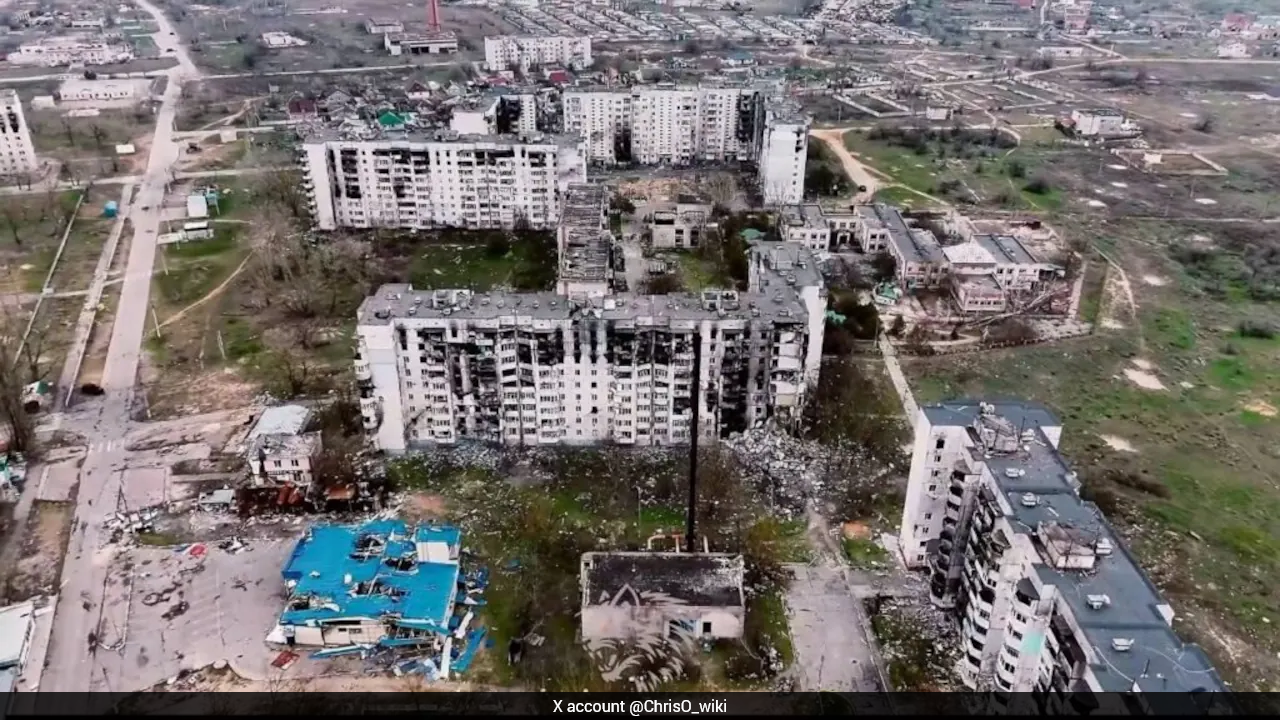
A limited ceasefire has begun in the Russian-occupied Ukrainian city of Oleshky, where residents have been living without electricity, gas and running water for three years and are struggling to find food.
The truce is intended to allow humanitarian supplies into the city and help civilians escape through routes that need to be cleared of land mines. The evacuation is planned for Friday.
The White House said last week that US First Lady Melania Trump had secured the ceasefire. Ukrainian officials and Russia's defence ministry have said the truce is being respected.
Residents have spent months facing hunger and dangerous escape routes. "I don't believe in Russia's humanity," one resident told the BBC.
Cooking Weeds To Survive
In Oleshky, the situation has become so desperate that some residents have resorted to cooking weeds from their gardens to survive. There are no open shops, and getting food and other essentials into the city has become extremely difficult.
Kyiv estimates that up to 6,000 people, including 200 children, remain in Oleshky and nearby areas. Only around 1,700 are believed to still live in the city itself.
Before Russia's full-scale invasion in February 2022, Oleshky had a population of around 24,000. Russian forces seized the city in the early days of the war.
Escaping the city has also become dangerous. Roads out of the city have been mined and are vulnerable to drone attacks, leaving residents with few safe options.
Fears Over Evacuation
The truce is expected to give humanitarian workers an opportunity to bring in supplies and clear mines from roads so civilians can leave safely.
Residents are worried about what could happen during the evacuation. Some fear that fighting could resume while people are trying to escape, with one person who has been in touch with relatives in Oleshky expressing concern that Ukraine could be blamed if the ceasefire breaks down, according to a report by the BBC.
There are also fears that those who leave may not be allowed to return to Ukraine. Some residents worry that Russian forces could check their phones and online activity for signs of support for Ukraine, potentially putting them at risk of detention and torture.
For others, the immediate concern is simply whether they will be able to leave at all.
One woman told the BBC that she had stepped on a land mine and was in hospital after undergoing two operations.
"I don't know how long I will have to spend there," she said, worried that her injuries could prevent her from joining the evacuation.
Residents told the BBC last month that only one hospital was partially functioning, opening for a few days each week to carry out critical amputations.
Uncertainty Over Rescue Plan
Details of the evacuation have remained unclear, including how residents should register and where they will be taken. Some have also asked whether they will be allowed to bring their pets, while others are uncertain about what awaits them if they abandon their homes.
Communication with Oleshky is difficult because phone and other connections are unreliable. Many residents are also reluctant to speak openly about conditions for fear of reprisals, making it harder to independently verify reports about the ceasefire.
Russia's defence ministry said units from its Dnepr group had been carrying out "engineering reconnaissance" and clearing main access roads into the village of "explosive and booby-trap devices".
According to Davyd Arakhamia, a Ukrainian MP who heads Zelensky's party in parliament, the truce is due to remain in place until 23:59 local time on November 1.
Zelensky has also raised concerns about where residents will end up. He warned that routes cleared by Russia could mean civilians leaving Oleshky would "head towards Russia and stay there".
However, he said some people would reach Ukrainian-controlled territory "one way or another", adding that the aim should be to ensure those trapped can safely reach their intended destinations and evacuate to Ukraine.
The White House said last week that "non-military, civilian leaders from both countries would work together to visit Oleshky residents in their homes and determine the level of assistance they require".
Melania Trump's Role In Humanitarian Efforts
US First Lady Melania Trump has taken a role in humanitarian efforts linked to the Russia-Ukraine war, despite keeping a relatively low public profile and appearing only occasionally at White House events.
In August 2025, she wrote a letter to Russian President Vladimir Putin, telling him it was "time to protect children and future generations worldwide".
The ceasefire in Oleshky follows the White House's announcement last week that she had helped secure the truce.
Track Latest News Live on NDTV.com and get news updates from India and around the world


