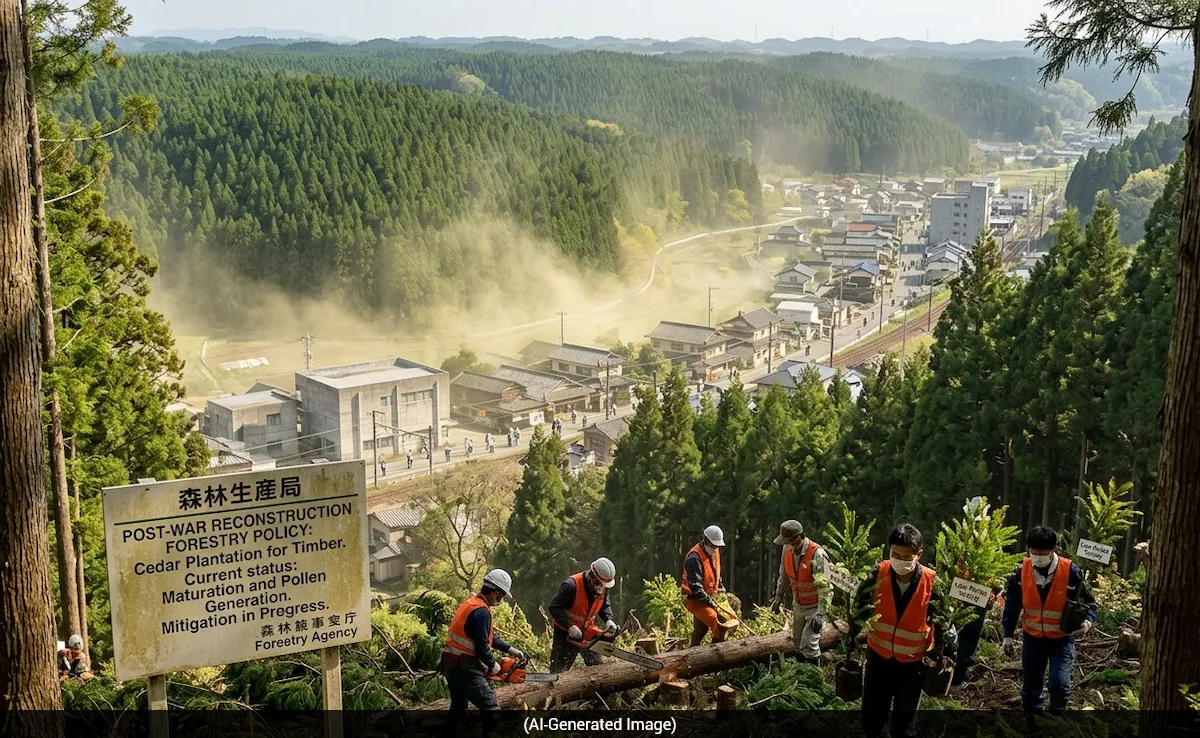
Japan's severe hay fever epidemic can be traced back to a post-war forestry policy introduced in the 1950s, according to a report by BBC. Today, millions of people across Japan suffer from seasonal allergies caused primarily by cedar pollen, making hay fever one of the country's most widespread health issues. However, the roots of the crisis lie in an economic recovery strategy adopted decades ago after the Second World War.
As reported by the BBC, Japan aggressively planted vast numbers of fast-growing cedar and cypress trees to meet rising demand for timber during the country's reconstruction boom. At the time, the policy was viewed as a practical solution to support housing and infrastructure development.
But many of these trees have now matured simultaneously, releasing enormous quantities of pollen every spring. Experts say this has created a public health problem affecting nearly half the Japanese population in some regions.
The BBC report noted that urbanisation and climate change have worsened the issue. Warmer temperatures are extending pollen seasons, while air pollution may be increasing people's sensitivity to allergens.
In response, Japanese authorities have started cutting down older cedar forests and replacing them with low-pollen tree varieties. Researchers are also exploring medical treatments and preventive therapies to reduce allergic reactions.
Despite these efforts, hay fever continues to disrupt daily life across Japan every spring, affecting schools, workplaces and public transport systems. Many residents rely heavily on masks, medication and air purifiers during peak pollen season.
The situation is increasingly being viewed as an example of how long-term environmental planning decisions can produce unintended health consequences decades later.
Track Latest News Live on NDTV.com and get news updates from India and around the world


