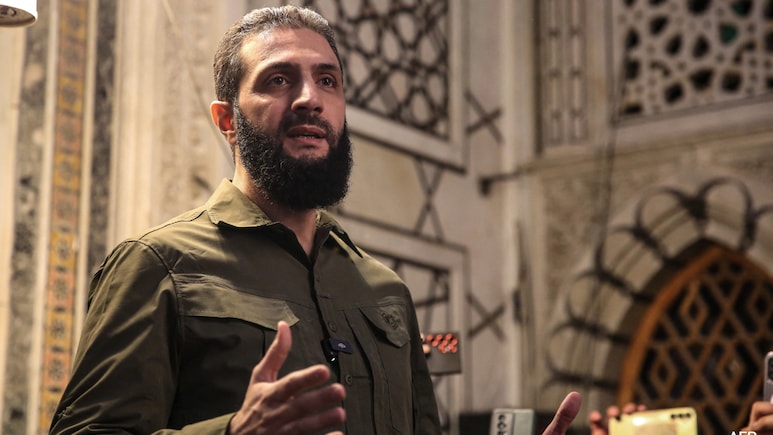
He once fought American troops in Iraq and spent years behind bars at Abu Ghraib, the notorious prison that became synonymous with the US detention programme in the country. Today, Ahmad al-Sharaa is Syria's president.
The 43-year-old leader's transformation is one of the most striking stories to emerge from the Syrian civil war. In May last year, al-Sharaa stood alongside US President Donald Trump, shaking hands with the man who once represented the very power he had fought against.
From Saudi Arabia To The Battlefields Of Iraq
Al-Sharaa was born in Saudi Arabia to a Syrian family whose roots lie in the Israeli-occupied Golan Heights. He later grew up in Damascus, Thomas Warrick, a former Department of Homeland Security assistant secretary for counterterrorism, told ABC News.
However, his path changed after the US invasion of Iraq in 2003.
Al-Sharaa joined al-Qaeda and took the war name Abu Mohammad al-Jolani. The name was closely tied to his family history, "al-Jolani" means "of the Golan" in Arabic.
His time as an insurgent eventually brought him into direct conflict with US forces. He was captured and held at Abu Ghraib as well as other detention facilities.
After his release sometime following the beginning of the US military withdrawal from Iraq in 2007, al-Sharaa returned to Syria.
Building An Al-Qaeda Affiliate In Syria
Back home, al-Sharaa established the al-Nusrah Front, an al-Qaeda affiliate that became one of the most powerful rebel forces fighting Syrian President Bashar al-Assad.
But his relationship with al-Qaeda's leadership eventually broke down.
Al-Sharaa fell out with Abu Bakr al-Baghdadi after the Islamic State leader moved to establish a territorial caliphate. The split marked an important turning point in al-Sharaa's career.
He would later transform the al-Nusrah Front into Hay'at Tahrir al-Sham, or HTS.
The group established its stronghold in Idlib in northwestern Syria, close to the Turkish border. Despite al-Sharaa's political transformation, HTS remains on the US State Department's list of foreign terrorist organisations.
How Al-Sharaa Built His Power
Apart from military strength, his organisation also developed ways of generating money from the territory it controlled. One important source was traffic moving between Turkey and Syria.
Al-Sharaa began "what would be considered either taxation or extortion" of trucks crossing the border, according to Warrick.
He also collected money from businesses and people who needed to move through or remain in territory controlled by his forces.
That revenue helped turn him into a powerful warlord in northwestern Syria, giving his organisation the resources needed to maintain its influence.
The Final Push Against Assad
By 2024, the Assad government was already severely weakened.
More than a decade of war had devastated Syria, while US intervention in the conflict and Israeli missile strikes had further weakened Assad's military position.
The situation was also creating enormous pressure on neighbouring Turkey. More than 1 million Syrians had fled across the border, placing a major burden on Ankara.
Turkish President Recep Tayyip Erdogan sought concessions from Assad to help address the refugee crisis. But the relationship between the two leaders deteriorated after Assad rejected Erdogan's request.
Meanwhile, al-Sharaa and other anti-Assad rebel factions were preparing their own offensive.
With Turkish backing, al-Sharaa's forces and other rebel groups launched their campaign. The offensive ultimately brought down the Assad regime and forced Bashar al-Assad from power.
From Terrorist To Diplomatic Partner
Toppling Assad was only the beginning of al-Sharaa's biggest challenge. The former terrorist had to persuade Western governments that he was no longer the same man who had once fought alongside al-Qaeda.
His transformation was helped by powerful regional figures, including Erdogan and the Saudi Crown Prince. Within months, al-Sharaa had begun securing recognition and political support across the region.
He met the Emir of Qatar and expanded his diplomatic outreach as Syria's new leadership sought to establish itself on the international stage.
Then meeting Trump became one of his biggest breakthroughs.
The US president's decision to lift sanctions on Syria was viewed by many Syrians as a major achievement for the new government.
For al-Sharaa, the symbolism was difficult to miss. A former prisoner of the US who had once fought American forces was now standing beside the US president as Syria's leader.
Al-Sharaa's rise may have been extraordinary, but governing Syria presents a challenge of an entirely different scale.
More than a decade of civil war has left the country shattered, with infrastructure destroyed, millions displaced and its economy badly damaged.
As president of the interim administration, al-Sharaa now has to move beyond the battlefield and prove that his political transformation is more than a change of name.
Track Latest News Live on NDTV.com and get news updates from India and around the world


