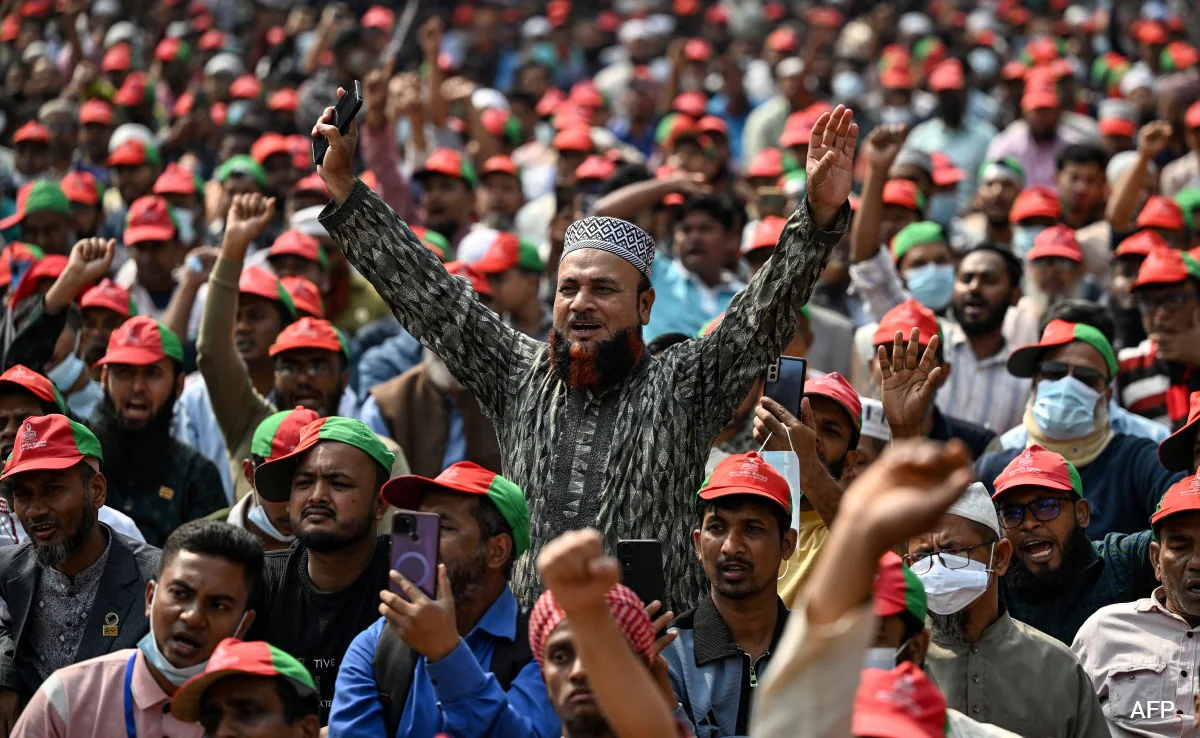
- BNP-led alliance won 210 seats, Tarique Rahman to become Bangladesh's male PM after 35 years
- Bangladesh held a referendum on the July National Charter 2025 with 60.26% voter turnout
- The Charter proposes 84 reforms, including 47 constitutional amendments to restructure governance
February 12 was more than just general elections for Bangladesh. The results showed that the BNP-led alliance has triumphed in 210 seats, setting the stage for the formation of a new government led by party chairman Tarique Rahman, who is set to become Bangladesh's first male prime minister in almost 35 years.
However, there was also the national referendum on the implementation of a reform package, which saw a 60.26 per cent voter turnout in Bangladesh, with the 'yes' vote winning a clear majority, the Election Commission announced Friday.
Per the official figures, 4,80,74,429 votes were cast in favour of "yes", while 2,25,65,627 voters chose "no", EC Senior Secretary Akhtar Ahmed said while talking to reporters at the EC.
What is the July Charter?
The referendum sought people's consent to the July National Charter 2025, which aims to completely change how the country is governed. The July Charter outlines a total of 84 reform points related to state restructuring.
It was drafted after the July 2024 student-led uprising that resulted in the ouster of Prime Minister Sheikh Hasina.
A Constitutional Reform Council is expected to execute these reforms within 270 working days.
What does the Charter propose?
The Charter's main aim is to prevent the concentration of executive power to prevent a "recurrence of authoritarian and fascist rule" by fundamentally restructuring key state institutions. Out of the 84 reform proposals, 47 require constitutional amendments, while the rest of the 37 will be implemented through laws or executive orders, according to Bangladesh's Business Standard.
Term Limits: Implementation of strict term limits for prime ministers to prevent long-serving autocratic rule.
Bicameral Parliament: Creation of a new 100-seat upper house, with seats allocated based on party national vote share, aimed at balancing legislative power.
Reduced Executive Power: Strengthening the role of the president to reduce the concentration of power in the prime minister's office.
Judicial And Institutional Independence: Measures to ensure the judiciary and other key state institutions are free from political influence.
Opposition Participation: Inclusion of provisions for opposition leaders to head key parliamentary committees and serve as deputy speaker.
Protection To "July Fighters": It also proposed granting protections to participants in the uprising, called "July Fighters".
Women's Representation: It also includes increased representation of women in parliament.
This is the third time a charter of reforms has been presented in Bangladesh.
(With inputs from agencies)
Track Latest News Live on NDTV.com and get news updates from India and around the world


