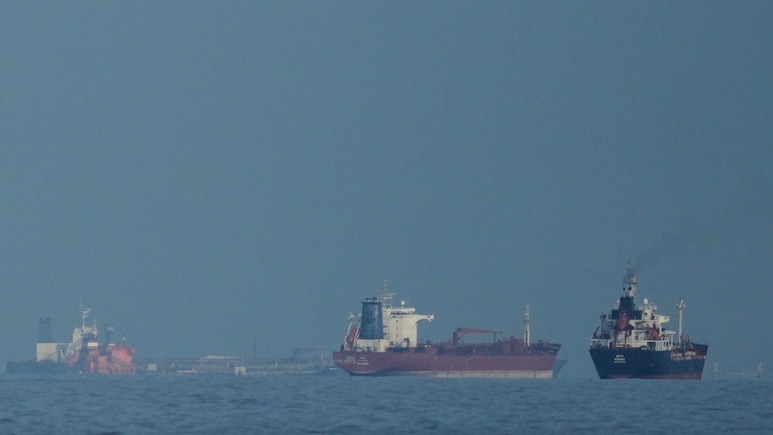
- More than 20 US warships are deployed in the Middle East enforcing a blockade on Iran
- US forces have redirected 55 commercial vessels, disabled two, and boarded two since blockade start
- Tensions rise near Strait of Hormuz, a key route for 20% of global crude and natural gas shipments
The United States has reiterated that more than 20 of its warships remain deployed across the Middle East, enforcing a naval blockade against Iran even as President Donald Trump said Washington is only "semi-negotiating" with Tehran to end the war in the Middle East. US Central Command (Centcom), in a post on X, said that US forces have redirected at least 55 commercial vessels, disabled two of them, and boarded two others since the blockade came into force.
"US Sailors stand watch on the bridge of USS Ross (DDG 71). Ross is one of over 20 US warships deployed to the Middle East supporting military missions, including strict enforcement of the US blockade against Iran. As of August 9, CENTCOM has redirected 55 commercial vessels, disabled 2, and boarded 2 to ensure compliance," the post read.
U.S. Sailors stand watch on the bridge of USS Ross (DDG 71). Ross is one of over 20 U.S. warships deployed to the Middle East supporting military missions, including strict enforcement of the U.S. blockade against Iran. As of Aug. 9, CENTCOM has redirected 55 commercial vessels,… pic.twitter.com/B5NCpX7Nxw
— U.S. Central Command (@CENTCOM) August 9, 2026
The post came amid heightened tensions around the Strait of Hormuz, with Tehran maintaining its demands that must be met before it removes its chokehold from the strategic waterway for commercial shipping. The narrow waterway connecting the Persian Gulf to the Gulf of Oman and the Arabian Sea -- through which about one-fifth of global crude and natural gas passes in peacetime-- has emerged as one of the major flashpoints in President Trump's war of choice.
Where US-Iran Talks Stand
Iran has said it was nearing a final pact with Oman defining new shipping lanes between them through Hormuz. But it repeated that the US must meet other conditions, including compensation and an end to sanctions and military threats, before the strategic waterway is reopened.
The deal with Iran would set out the new shipping lanes to be used once the U.S. fulfils those conditions and the strait is reopened, Iran's Mehr news agency quoted Iranian Foreign Minister Abbas Araqchi as saying.
Iran and the US are not engaged in direct talks, and Tehran will not start them as long as Washington breaches an interim deal signed in June, Araqchi said, adding that messages were being exchanged through intermediaries.
US President Donald Trump said in an interview with Axios that the US was "low-keying" it with Iran. "We are only semi-negotiating with them. We are just watching Iran with its huge inflation and the fact that they have no money."
Iran's Conditions
Araqchi said reopening the strait would depend in part on the US paying compensation for damage it caused in widespread attacks on Iran.
The secretary of Iran's top national security body, Mohammad Baqer Zolqadr, also listed Tehran's conditions, including ending any further US threats against Iran, halting aggression toward Iran and its Lebanese, Palestinian, Yemeni and Iraqi allies, removing a US naval blockade in the Gulf, lifting sanctions on Iran, and releasing frozen Iranian assets.
Track Latest News Live on NDTV.com and get news updates from India and around the world


