



Solar Activity
-
{
- All
- News
-

Astrophotographer Captures Giant Human-Shaped Solar Prominence
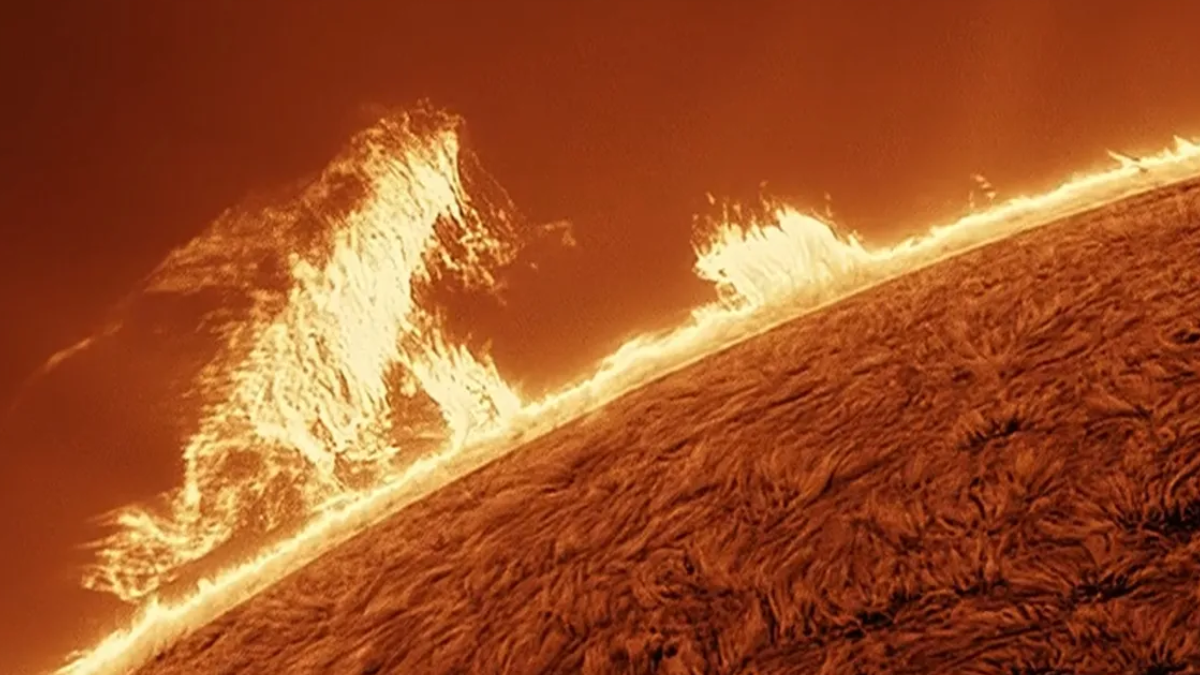
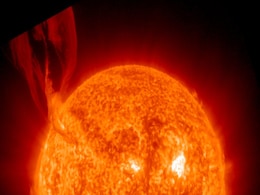
Astrophotographer Mark Johnston captured a remarkable solar prominence resembling a giant figure rising above the Sun. The image highlights how magnetic fields shape vast clouds of plasma during the Sun's active solar maximum phase.
-
Sun Unleashes Triple Solar Flare Blast, Triggering G3 Geomagnetic Storm Alert
Three powerful solar flares erupted from active sunspot AR 4455, sending Earth-directed plasma clouds into space. NOAA has issued a G3 geomagnetic storm watch, increasing the chances of widespread auroras.
-
ISRO Team Confirms Sun's Activity Is Forcing Old, Dead Satellites To Fall Back To Earth
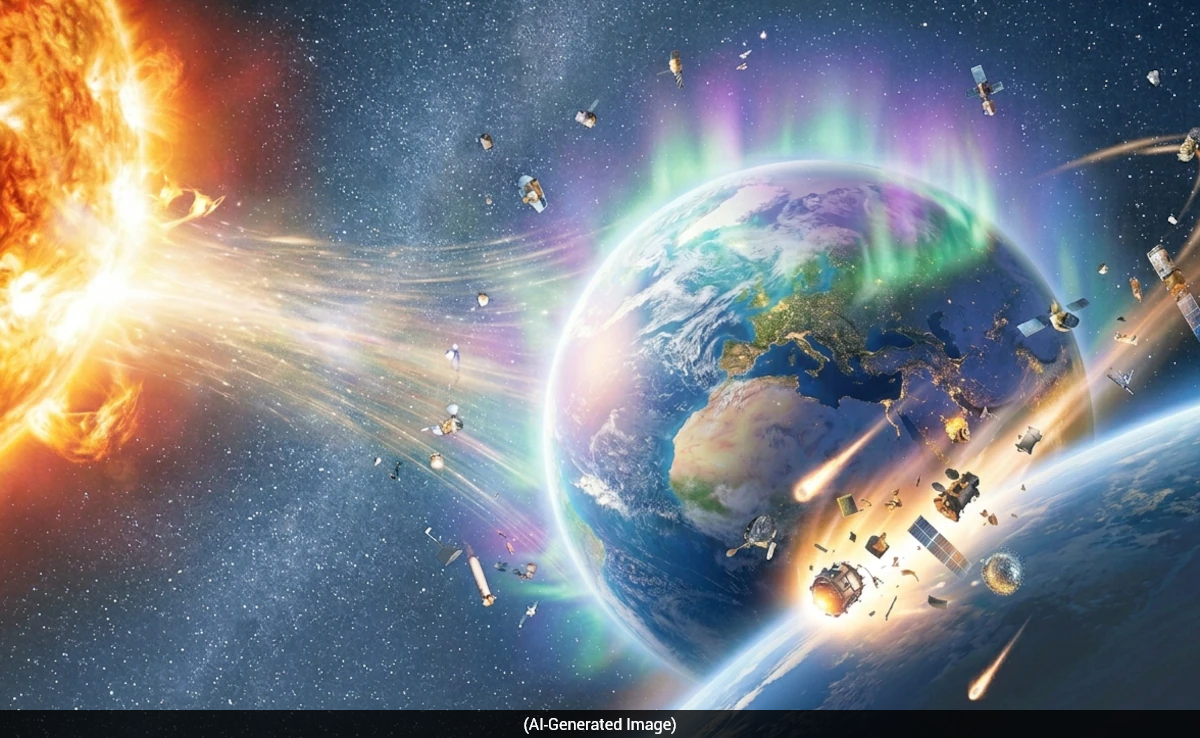
Researchers have confirmed for the first time that peaks in solar activity accelerate the orbital decay of space debris, offering a valuable tool for safer space mission planning amid growing concerns over orbital clutter.
-
Sun Shows Signs of Rising Activity Following Decades of Weakening, Study Finds
A new NASA study shows the Sun’s activity has been rising since 2008, reversing decades of decline. The unexpected trend suggests greater risks from solar storms, flares, and plasma ejections. Scientists stress improved forecasting is essential, with upcoming missions like IMAP and SWFO-L1 set to expand space weather monitoring and protection eff...
-
Colossal Solar Filament Eruption Sculpts 250,000-Mile 'Canyon of Fire' on the Sun’s Surface
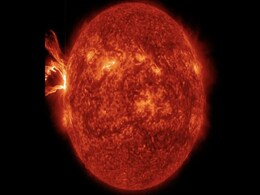
A massive July 15 filament eruption from the sun’s limb carved a 250,000‑mile‑long plasma canyon captured by NASA’s SDO. The spectacular rift, formed as magnetic fields realigned, featured 12,400‑mile‑high plasma walls. Although the eruption launched a coronal mass ejection into space, SOHO and GOES‑19 imagery confirm it’s heading a...
-
Scientists Warn of Inadequate Solar Storm Forecasting: What You Need to Know
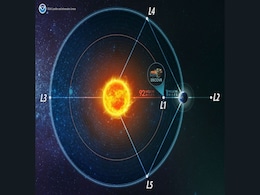
Scientists warn that Earth remains exposed to solar storms due to missing early data on its magnetic fields. Current satellites offer just minutes of warning, limiting our ability to protect power grids, satellites, and GPS systems. Without broader solar observation from multiple angles, a major storm could cause catastrophic disruptions, emphasisi...
-
Massive X1.1-class Solar Flare Causes Radio Blackouts Across America
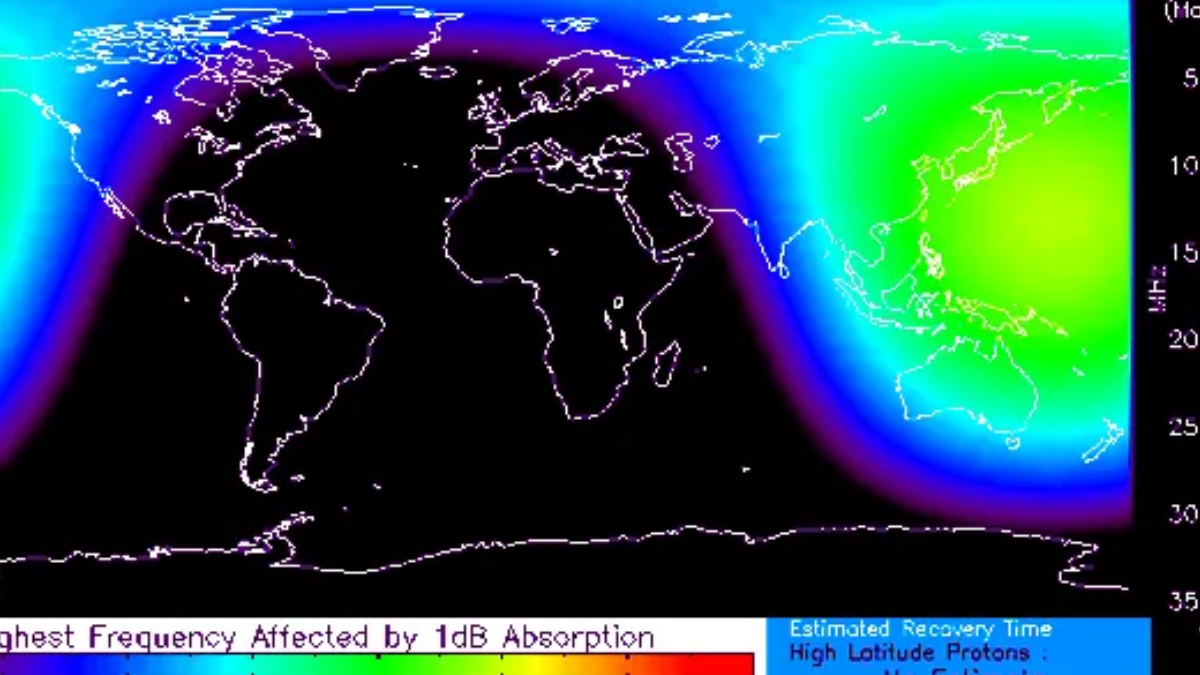
A strong X1.1-class solar flare erupted from sunspot AR4046 on March 28, 2025. The flare caused major radio blackouts in North and South America, affecting high-frequency communications. A coronal mass ejection (CME) followed the flare but is not expected to hit Earth. More solar activity is anticipated from sunspot AR4046 and AR4048, with a 15% ch...
-
ESA Uses Solar Orbiter to Turn Solar Flares into Sound, Offering New Insights
The European Space Agency (ESA), in collaboration with NASA, has used data from the Solar Orbiter mission to convert solar flares into audible sound. By mapping solar flare data into blue circles and pairing them with tones, a new way to experience solar activity has been created. This process is linked to the sun’s 11-year solar cycle, with curr...
-
Top 10 Solar Flares of 2024: The Most Powerful Solar Events and Their Impact
The Sun experienced significant solar activity in 2024, with over 50 X-class solar flares recorded. These powerful flares, originating from active regions like AR 13664, were accompanied by coronal mass ejections (CMEs) that caused geomagnetic storms and spectacular auroras across the globe. Among the strongest flares was the X9.0 recorded on Octob...
-
Solar 'Battle Zone' Could be Even Worse Than Solar Maximum, Experts Warn
Experts warn that the sun's next phase, the "battle zone," could result in increased geomagnetic activity, lasting until 2028. This period could bring heightened solar flares and coronal holes, which may cause disruptions to satellites in low-Earth orbit. Space weather experts, including Scott McIntosh from Lynker Space, have noted that this phase ...
-
Solar Activity Increase Results in Shortens Lifespan of Binar CubeSats
Curtin University’s Binar CubeSats, launched with a six-month mission lifespan, re-entered Earth's atmosphere after only two months due to unexpectedly high solar activity. This surge in solar phenomena has increased atmospheric drag, impacting the stability of satellites in low Earth orbit. As solar forecasting remains limited, smaller satellite...
-
NASA Utilises Supercomputing to Drive Space Exploration and Earth Research
NASA continues to push the boundaries of science by using supercomputing to advance space exploration and climate research. From refining the Artemis II launch pad to leveraging AI for weather forecasting, NASA’s technology is revolutionising space missions and Earth science. Supercomputing helps simulate complex cosmic phenomena, including solar...
-
Solar Surge Cuts Binar Satellites' Mission Short, Underscoring Space Weather Effects on Earth and Orbiting Satellites
Binar-2, 3, and 4, part of Curtin University's space program, re-entered Earth’s atmosphere unexpectedly due to an increase in solar activity. Low Earth orbit satellites are especially vulnerable to such conditions, with atmospheric drag accelerating their descent. While solar cycle 25 has proven stronger than anticipated, experts expect solar ac...
-
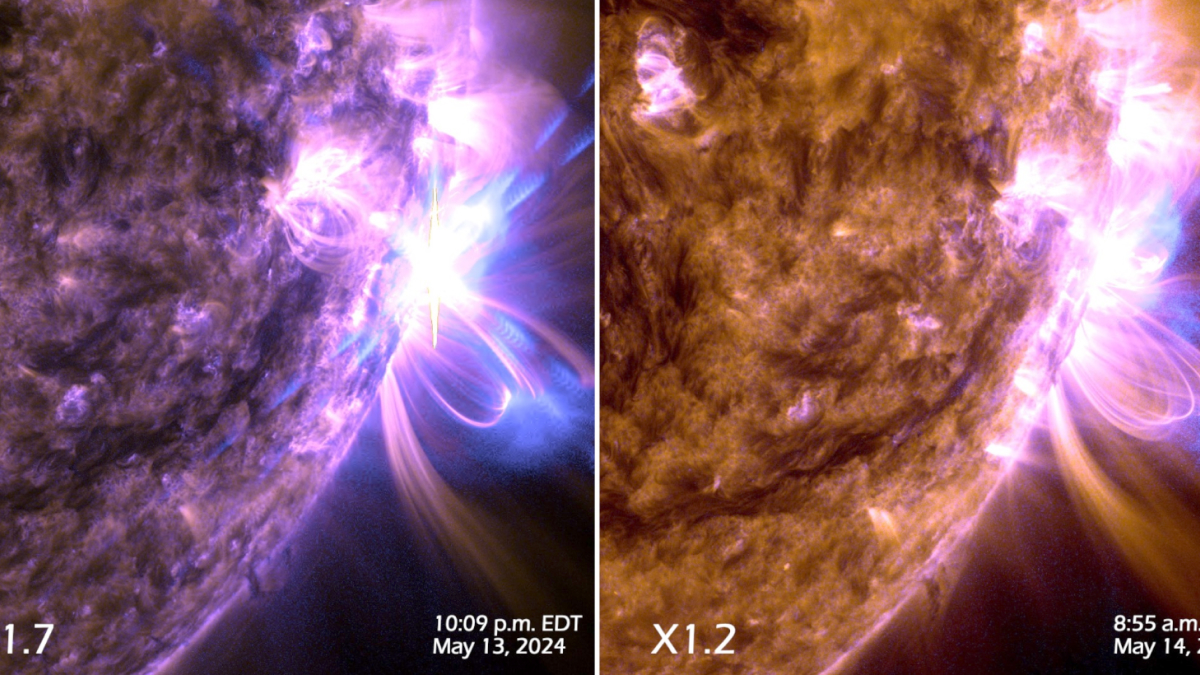
Sun Erupts with X2.3 Solar Flare, Causes Radio Blackouts
On November 6, 2024, sunspot AR 3883 unleashed a powerful X2.3 solar flare, causing radio blackouts in parts of South America and Africa. The flare, classified as a strong solar event, disrupted high-frequency radio signals. Scientists are awaiting data from NASA’s SOHO spacecraft to assess the potential impact of a coronal mass ejection (CME) on...
-
NOAA's New Solar Telescope Captures Dramatic Footage of the Sun Spraying Huge Charged Particles
The National Oceanic and Atmospheric Administration (NOAA) has unveiled remarkable footage from the new Compact Coronagraph (CCOR-1), which is aboard the GOES-19 satellite. This advanced telescope captures charged particles and solar eruptions from the Sun’s corona, vital for monitoring solar activity as it approaches its peak in 2025. By blockin...



-
Astrophotographer Captures Giant Human-Shaped Solar Prominence
Astrophotographer Mark Johnston captured a remarkable solar prominence resembling a giant figure rising above the Sun. The image highlights how magnetic fields shape vast clouds of plasma during the Sun's active solar maximum phase.
-
Sun Unleashes Triple Solar Flare Blast, Triggering G3 Geomagnetic Storm Alert
Three powerful solar flares erupted from active sunspot AR 4455, sending Earth-directed plasma clouds into space. NOAA has issued a G3 geomagnetic storm watch, increasing the chances of widespread auroras.
-
ISRO Team Confirms Sun's Activity Is Forcing Old, Dead Satellites To Fall Back To Earth
Researchers have confirmed for the first time that peaks in solar activity accelerate the orbital decay of space debris, offering a valuable tool for safer space mission planning amid growing concerns over orbital clutter.
-
Sun Shows Signs of Rising Activity Following Decades of Weakening, Study Finds
A new NASA study shows the Sun’s activity has been rising since 2008, reversing decades of decline. The unexpected trend suggests greater risks from solar storms, flares, and plasma ejections. Scientists stress improved forecasting is essential, with upcoming missions like IMAP and SWFO-L1 set to expand space weather monitoring and protection eff...
-
Colossal Solar Filament Eruption Sculpts 250,000-Mile 'Canyon of Fire' on the Sun’s Surface
A massive July 15 filament eruption from the sun’s limb carved a 250,000‑mile‑long plasma canyon captured by NASA’s SDO. The spectacular rift, formed as magnetic fields realigned, featured 12,400‑mile‑high plasma walls. Although the eruption launched a coronal mass ejection into space, SOHO and GOES‑19 imagery confirm it’s heading a...
-
Scientists Warn of Inadequate Solar Storm Forecasting: What You Need to Know
Scientists warn that Earth remains exposed to solar storms due to missing early data on its magnetic fields. Current satellites offer just minutes of warning, limiting our ability to protect power grids, satellites, and GPS systems. Without broader solar observation from multiple angles, a major storm could cause catastrophic disruptions, emphasisi...
-
Massive X1.1-class Solar Flare Causes Radio Blackouts Across America
A strong X1.1-class solar flare erupted from sunspot AR4046 on March 28, 2025. The flare caused major radio blackouts in North and South America, affecting high-frequency communications. A coronal mass ejection (CME) followed the flare but is not expected to hit Earth. More solar activity is anticipated from sunspot AR4046 and AR4048, with a 15% ch...
-
ESA Uses Solar Orbiter to Turn Solar Flares into Sound, Offering New Insights
The European Space Agency (ESA), in collaboration with NASA, has used data from the Solar Orbiter mission to convert solar flares into audible sound. By mapping solar flare data into blue circles and pairing them with tones, a new way to experience solar activity has been created. This process is linked to the sun’s 11-year solar cycle, with curr...
-
Top 10 Solar Flares of 2024: The Most Powerful Solar Events and Their Impact
The Sun experienced significant solar activity in 2024, with over 50 X-class solar flares recorded. These powerful flares, originating from active regions like AR 13664, were accompanied by coronal mass ejections (CMEs) that caused geomagnetic storms and spectacular auroras across the globe. Among the strongest flares was the X9.0 recorded on Octob...
-
Solar 'Battle Zone' Could be Even Worse Than Solar Maximum, Experts Warn
Experts warn that the sun's next phase, the "battle zone," could result in increased geomagnetic activity, lasting until 2028. This period could bring heightened solar flares and coronal holes, which may cause disruptions to satellites in low-Earth orbit. Space weather experts, including Scott McIntosh from Lynker Space, have noted that this phase ...
-
Solar Activity Increase Results in Shortens Lifespan of Binar CubeSats
Curtin University’s Binar CubeSats, launched with a six-month mission lifespan, re-entered Earth's atmosphere after only two months due to unexpectedly high solar activity. This surge in solar phenomena has increased atmospheric drag, impacting the stability of satellites in low Earth orbit. As solar forecasting remains limited, smaller satellite...
-
NASA Utilises Supercomputing to Drive Space Exploration and Earth Research
NASA continues to push the boundaries of science by using supercomputing to advance space exploration and climate research. From refining the Artemis II launch pad to leveraging AI for weather forecasting, NASA’s technology is revolutionising space missions and Earth science. Supercomputing helps simulate complex cosmic phenomena, including solar...
-
Solar Surge Cuts Binar Satellites' Mission Short, Underscoring Space Weather Effects on Earth and Orbiting Satellites
Binar-2, 3, and 4, part of Curtin University's space program, re-entered Earth’s atmosphere unexpectedly due to an increase in solar activity. Low Earth orbit satellites are especially vulnerable to such conditions, with atmospheric drag accelerating their descent. While solar cycle 25 has proven stronger than anticipated, experts expect solar ac...
-
Sun Erupts with X2.3 Solar Flare, Causes Radio Blackouts
On November 6, 2024, sunspot AR 3883 unleashed a powerful X2.3 solar flare, causing radio blackouts in parts of South America and Africa. The flare, classified as a strong solar event, disrupted high-frequency radio signals. Scientists are awaiting data from NASA’s SOHO spacecraft to assess the potential impact of a coronal mass ejection (CME) on...
-
NOAA's New Solar Telescope Captures Dramatic Footage of the Sun Spraying Huge Charged Particles
The National Oceanic and Atmospheric Administration (NOAA) has unveiled remarkable footage from the new Compact Coronagraph (CCOR-1), which is aboard the GOES-19 satellite. This advanced telescope captures charged particles and solar eruptions from the Sun’s corona, vital for monitoring solar activity as it approaches its peak in 2025. By blockin...

