Life In Planet
- All
- News
- Videos
- Web Stories
-
Newly Found ‘Super-Earth’ GJ 251 c Could Be One of the Most Promising Worlds for Alien Life
- Sunday October 26, 2025
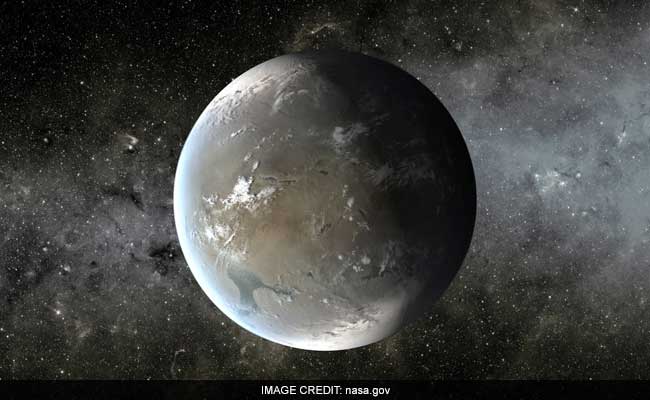
A new super-Earth, GJ 251 c, has been found orbiting a nearby red dwarf star within its habitable zone. About four times Earth’s mass, it may host liquid water. Detected via the radial-velocity method using Penn State’s Habitable Zone Planet Finder, it’s a prime target in the search for life.
-
www.gadgets360.com
-
One Of The World's Rarest Whales Grows In Population In The Atlantic
- Tuesday October 21, 2025
- World News |
One of the rarest whales on the planet has continued an encouraging trend of population growth in the wake of new efforts to protect the giant animals, according to scientists who study them.
-
www.ndtv.com
-
James Webb Space Telescope Spots Planet-Building Dust in the Butterfly Nebula
- Friday August 29, 2025
The James Webb Space Telescope has unveiled stunning new details of the Butterfly Nebula, a planetary nebula 3,400 light-years away. Using its infrared vision, Webb detected crystalline silicates, large dust grains, and carbon-rich PAH molecules within the nebula’s dusty torus. These discoveries reveal how dying stars recycle minerals and organic...
-
www.gadgets360.com
-
NASA Telescope Detects Possible Signs Of Alien Life On Distant 'Water World'
- Wednesday August 27, 2025
- Science |
Researchers using the Webb telescope found traces of two gases, dimethyl sulfide (DMS) and dimethyl disulfide (DMDS), in the atmosphere of K2-18b, a planet 124 light-years away.
-
www.ndtv.com
-
A New 'Earth' Next Door? Scientists Detect Possible Habitable Planet Around Closest Sun-Like Star
- Friday August 15, 2025
- Science |
Astronomers using JWST have detected a giant exoplanet in the habitable zone of Alpha Centauri A, our nearest Sun-like star.
-
www.ndtv.com
-
NASA Missions Uncover a Diverse Galaxy of Super-Earths, Raising New Questions About Planetary Evolution
- Thursday August 14, 2025
Super-Earths are among the most common planets in the galaxy, yet none exist in our solar system. Larger than Earth but smaller than Neptune, they range from ocean-covered worlds to scorched, atmosphere-less rocks. Some orbit within habitable zones, making them prime candidates for life. NASA’s Kepler and TESS missions, along with upcoming telesc...
-
www.gadgets360.com
-
Habitable Zone Explained: The ‘Goldilocks Zone’ Where Life-Friendly Planets May Exist
- Tuesday August 12, 2025
The habitable zone, or “Goldilocks zone”, is the region around a star where conditions allow liquid water to exist. Varying with star type, this zone is key in the search for life. Earth’s location in the Sun’s habitable zone has made life possible, and astronomers seek similar rocky exoplanets in other systems to explore the possibility of...
-
www.gadgets360.com
-
Scientists Explore Role of Space Radiation in Powering Alien Microbial Life
- Wednesday August 6, 2025
A new study proposes that life may exist far from sunlight in a “radiolytic habitable zone” deep beneath the icy surfaces of Mars, Europa, and Enceladus. Cosmic rays, which can penetrate rock and ice, break water molecules apart to release hydrogen, oxygen, and energy-rich electrons. These can fuel microbes in subsurface water, much like bacter...
-
www.gadgets360.com
-
Crystalline Ice Discovered in Space: New Study Reveals Hidden Order in Cosmic Ice
- Tuesday July 15, 2025
A groundbreaking study from University College London and the University of Cambridge reveals that water ice in space, long believed to be completely amorphous due to extreme cold, may actually contain up to 25% crystalline structure. Simulations and X-ray diffraction experiments confirm the presence of nanocrystals in so-called low-density amorpho...
-
www.gadgets360.com
-
Earth’s Spin to Speed Up Briefly, Causing Shorter Days This Summer
- Monday July 14, 2025
Scientists report that Earth will briefly spin faster on July 9, 22, and August 5, shortening those summer days by 1.3 to 1.5 milliseconds. Though undetectable in daily life, this shift offers clues to how lunar gravity and seasonal changes affect planetary dynamics. Experts note that while timekeeping systems like GPS are unaffected, this rare spe...
-
www.gadgets360.com
-
Newly Found ‘Super-Earth’ GJ 251 c Could Be One of the Most Promising Worlds for Alien Life
- Sunday October 26, 2025
A new super-Earth, GJ 251 c, has been found orbiting a nearby red dwarf star within its habitable zone. About four times Earth’s mass, it may host liquid water. Detected via the radial-velocity method using Penn State’s Habitable Zone Planet Finder, it’s a prime target in the search for life.
-
www.gadgets360.com
-
One Of The World's Rarest Whales Grows In Population In The Atlantic
- Tuesday October 21, 2025
- World News |
One of the rarest whales on the planet has continued an encouraging trend of population growth in the wake of new efforts to protect the giant animals, according to scientists who study them.
-
www.ndtv.com
-
James Webb Space Telescope Spots Planet-Building Dust in the Butterfly Nebula
- Friday August 29, 2025
The James Webb Space Telescope has unveiled stunning new details of the Butterfly Nebula, a planetary nebula 3,400 light-years away. Using its infrared vision, Webb detected crystalline silicates, large dust grains, and carbon-rich PAH molecules within the nebula’s dusty torus. These discoveries reveal how dying stars recycle minerals and organic...
-
www.gadgets360.com
-
NASA Telescope Detects Possible Signs Of Alien Life On Distant 'Water World'
- Wednesday August 27, 2025
- Science |
Researchers using the Webb telescope found traces of two gases, dimethyl sulfide (DMS) and dimethyl disulfide (DMDS), in the atmosphere of K2-18b, a planet 124 light-years away.
-
www.ndtv.com
-
A New 'Earth' Next Door? Scientists Detect Possible Habitable Planet Around Closest Sun-Like Star
- Friday August 15, 2025
- Science |
Astronomers using JWST have detected a giant exoplanet in the habitable zone of Alpha Centauri A, our nearest Sun-like star.
-
www.ndtv.com
-
NASA Missions Uncover a Diverse Galaxy of Super-Earths, Raising New Questions About Planetary Evolution
- Thursday August 14, 2025
Super-Earths are among the most common planets in the galaxy, yet none exist in our solar system. Larger than Earth but smaller than Neptune, they range from ocean-covered worlds to scorched, atmosphere-less rocks. Some orbit within habitable zones, making them prime candidates for life. NASA’s Kepler and TESS missions, along with upcoming telesc...
-
www.gadgets360.com
-
Habitable Zone Explained: The ‘Goldilocks Zone’ Where Life-Friendly Planets May Exist
- Tuesday August 12, 2025
The habitable zone, or “Goldilocks zone”, is the region around a star where conditions allow liquid water to exist. Varying with star type, this zone is key in the search for life. Earth’s location in the Sun’s habitable zone has made life possible, and astronomers seek similar rocky exoplanets in other systems to explore the possibility of...
-
www.gadgets360.com
-
Scientists Explore Role of Space Radiation in Powering Alien Microbial Life
- Wednesday August 6, 2025
A new study proposes that life may exist far from sunlight in a “radiolytic habitable zone” deep beneath the icy surfaces of Mars, Europa, and Enceladus. Cosmic rays, which can penetrate rock and ice, break water molecules apart to release hydrogen, oxygen, and energy-rich electrons. These can fuel microbes in subsurface water, much like bacter...
-
www.gadgets360.com
-
Crystalline Ice Discovered in Space: New Study Reveals Hidden Order in Cosmic Ice
- Tuesday July 15, 2025
A groundbreaking study from University College London and the University of Cambridge reveals that water ice in space, long believed to be completely amorphous due to extreme cold, may actually contain up to 25% crystalline structure. Simulations and X-ray diffraction experiments confirm the presence of nanocrystals in so-called low-density amorpho...
-
www.gadgets360.com
-
Earth’s Spin to Speed Up Briefly, Causing Shorter Days This Summer
- Monday July 14, 2025
Scientists report that Earth will briefly spin faster on July 9, 22, and August 5, shortening those summer days by 1.3 to 1.5 milliseconds. Though undetectable in daily life, this shift offers clues to how lunar gravity and seasonal changes affect planetary dynamics. Experts note that while timekeeping systems like GPS are unaffected, this rare spe...
-
www.gadgets360.com