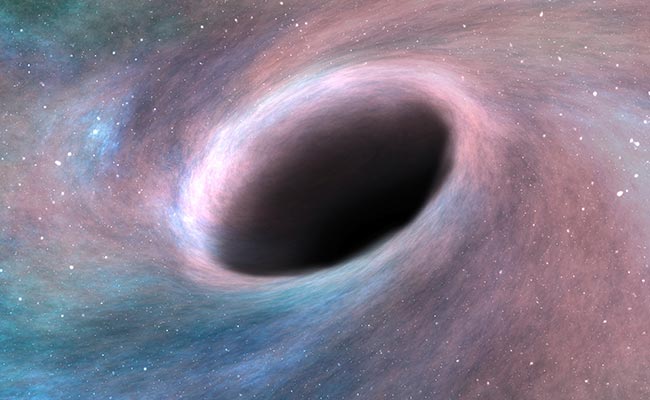
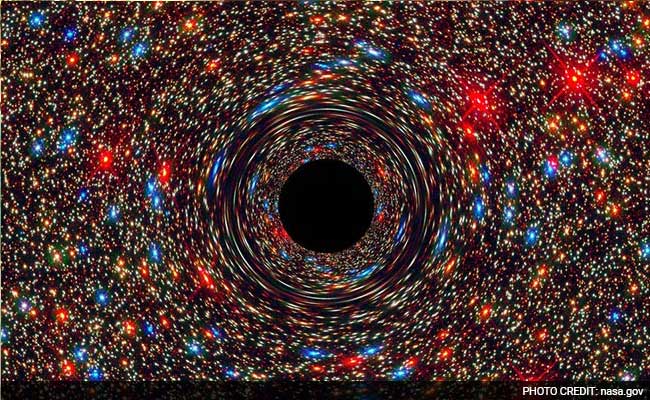
Giant Black Hole
- All
- News
- Videos
-
James Webb Telescope Finds Evidence Of Giant "Dinosaur" Stars From Early Universe
- Tuesday December 16, 2025
- Science |
The research also suggests that these massive stars transformed directly into black holes at the end of their lives without undergoing a supernova explosion.
-
www.ndtv.com
-
Indian Team Finds 53 Massive Quasars Blasting Jets Millions of Light-Years Long
- Tuesday December 2, 2025
Astronomers in India have identified 53 previously unknown giant radio quasars powered by supermassive black holes, each releasing enormous plasma jets reaching up to 7.2 million light-years—nearly 50 times the Milky Way’s diameter. Using GMRT data, the team expanded the catalog of known giant quasars and offered valuable clues about how black ...
-
www.gadgets360.com
-
Do Aliens Exist? India, Japan Team Up To Answer Question With Giant Telescope
- Tuesday November 25, 2025
- Science |
The goal of the Thirty Metre Telescope project is to peer deeper into the cosmos than ever before, studying black holes, distant galaxies, and, most intriguingly, searching for signs of life beyond Earth.
-
www.ndtv.com
-
Tiny Red Dots Spotted By NASA’s James Webb Telescope Could Be Black Hole Stars
- Thursday September 25, 2025
NASA’s James Webb Space Telescope revealed mysterious “little red dots” that seem too bright and mature for their age. A new study suggests they may be black hole stars—giant hydrogen spheres powered by black holes—helping explain the rapid growth of early supermassive black holes.
-
www.gadgets360.com
-
Most Distant Mini-Halo Discovered in Galaxy Cluster 10 Billion Light-Years Away
- Monday June 30, 2025
Astronomers have uncovered the most distant mini-halo ever detected, located around the galaxy cluster SpARCS1049, a staggering 10 billion light-years from Earth. Using the LOFAR radio telescope network, which spans eight European countries, researchers detected a faint, diffuse glow—evidence of a giant cloud of high-energy particles and magnetic...
-
www.gadgets360.com
-
ASKAP Telescope Discovers 15 Massive Giant Radio Galaxies, Largest Objects in the Known Universe
- Wednesday June 11, 2025
Astronomers using the ASKAP telescope have discovered 15 Giant Radio Galaxies, including one stretching 12.4 million light-years. These vast structures offer new clues about black hole life cycles and jet activity. The unprecedented detail of ASKAP’s deep-sky imaging reveals both ancient and recent radio lobes, opening a new chapter in understand...
-
www.gadgets360.com
-
Scientists Predict Ultramassive Black Holes Can’t Grow Beyond 100 Billion Suns
- Monday December 9, 2024
Scientists led by Dr Priyamvada Natarajan from Yale University have discovered that ultramassive black holes likely cannot exceed 100 billion solar masses. These giants regulate their own growth by emitting gas jets that heat and expel surrounding material, cutting off their gas supply. Additionally, the team is exploring intermediate-mass black ho...
-
www.gadgets360.com
-
Supermassive Black Hole at the Centre of the Milky Way Is Spinning Unexpectedly
- Sunday September 15, 2024
Sagittarius A* (pronounced Sagittarius A Star), the supermassive black hole at the centre of the Milky Way, is spinning in an unusual way, and scientists now believe they may know why. Based on new data from the Event Horizon Telescope, researchers suggest that this cosmic giant likely merged with another black hole billions of years ago. This colo...
-
www.gadgets360.com
-
NASA James Webb Space Telescope Unearths Oversupply of UV Light from Early Stars and Black Holes
- Thursday September 12, 2024
NASA’s James Webb Space Telescope (JWST) has revealed surprising new details about the universe's reionization process. The telescope has found an unexpected oversupply of ultraviolet (UV) light emitted by early stars and giant black holes, contradicting previous theories. This discovery suggests a more complex reionization process, potentially d...
-
www.gadgets360.com
-
See These Iconic Images of Dust Filled Disks of Galaxies Captured by Hubble
- Monday May 9, 2022
- Edited by Gadgets 360 Newsdesk
NASA's Hubble Instagram page shared iconic Hubble images that captured disks of dust fuelling black holes at the centres of galaxies. The first image showed a giant disk of cold gas dust fuelling a black hole at the centre of an elliptical galaxy, named NGC 4261.
-
www.gadgets360.com
-
Giant Black Hole Discovered At Centre Of Cosmic "Spider's Web"
- Thursday October 1, 2020
- Science | Agence France-Presse
Astronomers have discovered six galaxies ensnared in the cosmic "spider's web" of a supermassive black hole soon after the Big Bang, according to research published Thursday that could help explain the development of these enigmatic monsters.
-
www.ndtv.com
-
NASA Spots Biggest Explosion Seen in the Universe, Caused by Supermassive Black Hole. Pune Telescope Helped
- Friday February 28, 2020
- Darab Mansoor Ali
The discovery was made by NASA scientists using X-ray data from NASA's Chandra X-ray Observatory and ESA's XMM-Newton, coupled with radio data sourced from Murchison Widefield Array (MWA) in Australia and India's Giant Metrewave Radio Telescope (GMRT).
-
www.gadgets360.com
-
Cosmic Explosions Even More Powerful Than First Thought: Study
- Thursday November 21, 2019
- Agence France-Presse
The biggest explosions since the Big Bang set the universe in motion some 13 billion years ago produced even more energy than first thought, scientists said Wednesday.
-
www.gadgets360.com
-
James Webb Telescope Finds Evidence Of Giant "Dinosaur" Stars From Early Universe
- Tuesday December 16, 2025
- Science |
The research also suggests that these massive stars transformed directly into black holes at the end of their lives without undergoing a supernova explosion.
-
www.ndtv.com
-
Indian Team Finds 53 Massive Quasars Blasting Jets Millions of Light-Years Long
- Tuesday December 2, 2025
Astronomers in India have identified 53 previously unknown giant radio quasars powered by supermassive black holes, each releasing enormous plasma jets reaching up to 7.2 million light-years—nearly 50 times the Milky Way’s diameter. Using GMRT data, the team expanded the catalog of known giant quasars and offered valuable clues about how black ...
-
www.gadgets360.com
-
Do Aliens Exist? India, Japan Team Up To Answer Question With Giant Telescope
- Tuesday November 25, 2025
- Science |
The goal of the Thirty Metre Telescope project is to peer deeper into the cosmos than ever before, studying black holes, distant galaxies, and, most intriguingly, searching for signs of life beyond Earth.
-
www.ndtv.com
-
Tiny Red Dots Spotted By NASA’s James Webb Telescope Could Be Black Hole Stars
- Thursday September 25, 2025
NASA’s James Webb Space Telescope revealed mysterious “little red dots” that seem too bright and mature for their age. A new study suggests they may be black hole stars—giant hydrogen spheres powered by black holes—helping explain the rapid growth of early supermassive black holes.
-
www.gadgets360.com
-
Most Distant Mini-Halo Discovered in Galaxy Cluster 10 Billion Light-Years Away
- Monday June 30, 2025
Astronomers have uncovered the most distant mini-halo ever detected, located around the galaxy cluster SpARCS1049, a staggering 10 billion light-years from Earth. Using the LOFAR radio telescope network, which spans eight European countries, researchers detected a faint, diffuse glow—evidence of a giant cloud of high-energy particles and magnetic...
-
www.gadgets360.com
-
ASKAP Telescope Discovers 15 Massive Giant Radio Galaxies, Largest Objects in the Known Universe
- Wednesday June 11, 2025
Astronomers using the ASKAP telescope have discovered 15 Giant Radio Galaxies, including one stretching 12.4 million light-years. These vast structures offer new clues about black hole life cycles and jet activity. The unprecedented detail of ASKAP’s deep-sky imaging reveals both ancient and recent radio lobes, opening a new chapter in understand...
-
www.gadgets360.com
-
Scientists Predict Ultramassive Black Holes Can’t Grow Beyond 100 Billion Suns
- Monday December 9, 2024
Scientists led by Dr Priyamvada Natarajan from Yale University have discovered that ultramassive black holes likely cannot exceed 100 billion solar masses. These giants regulate their own growth by emitting gas jets that heat and expel surrounding material, cutting off their gas supply. Additionally, the team is exploring intermediate-mass black ho...
-
www.gadgets360.com
-
Supermassive Black Hole at the Centre of the Milky Way Is Spinning Unexpectedly
- Sunday September 15, 2024
Sagittarius A* (pronounced Sagittarius A Star), the supermassive black hole at the centre of the Milky Way, is spinning in an unusual way, and scientists now believe they may know why. Based on new data from the Event Horizon Telescope, researchers suggest that this cosmic giant likely merged with another black hole billions of years ago. This colo...
-
www.gadgets360.com
-
NASA James Webb Space Telescope Unearths Oversupply of UV Light from Early Stars and Black Holes
- Thursday September 12, 2024
NASA’s James Webb Space Telescope (JWST) has revealed surprising new details about the universe's reionization process. The telescope has found an unexpected oversupply of ultraviolet (UV) light emitted by early stars and giant black holes, contradicting previous theories. This discovery suggests a more complex reionization process, potentially d...
-
www.gadgets360.com
-
See These Iconic Images of Dust Filled Disks of Galaxies Captured by Hubble
- Monday May 9, 2022
- Edited by Gadgets 360 Newsdesk
NASA's Hubble Instagram page shared iconic Hubble images that captured disks of dust fuelling black holes at the centres of galaxies. The first image showed a giant disk of cold gas dust fuelling a black hole at the centre of an elliptical galaxy, named NGC 4261.
-
www.gadgets360.com
-
Giant Black Hole Discovered At Centre Of Cosmic "Spider's Web"
- Thursday October 1, 2020
- Science | Agence France-Presse
Astronomers have discovered six galaxies ensnared in the cosmic "spider's web" of a supermassive black hole soon after the Big Bang, according to research published Thursday that could help explain the development of these enigmatic monsters.
-
www.ndtv.com
-
NASA Spots Biggest Explosion Seen in the Universe, Caused by Supermassive Black Hole. Pune Telescope Helped
- Friday February 28, 2020
- Darab Mansoor Ali
The discovery was made by NASA scientists using X-ray data from NASA's Chandra X-ray Observatory and ESA's XMM-Newton, coupled with radio data sourced from Murchison Widefield Array (MWA) in Australia and India's Giant Metrewave Radio Telescope (GMRT).
-
www.gadgets360.com
-
Cosmic Explosions Even More Powerful Than First Thought: Study
- Thursday November 21, 2019
- Agence France-Presse
The biggest explosions since the Big Bang set the universe in motion some 13 billion years ago produced even more energy than first thought, scientists said Wednesday.
-
www.gadgets360.com