



Black Holes Study
- All
- News
- Videos
-

Scientists Spot Ultra-Fast Pulsar Near Milky Way’s Supermassive Black Hole
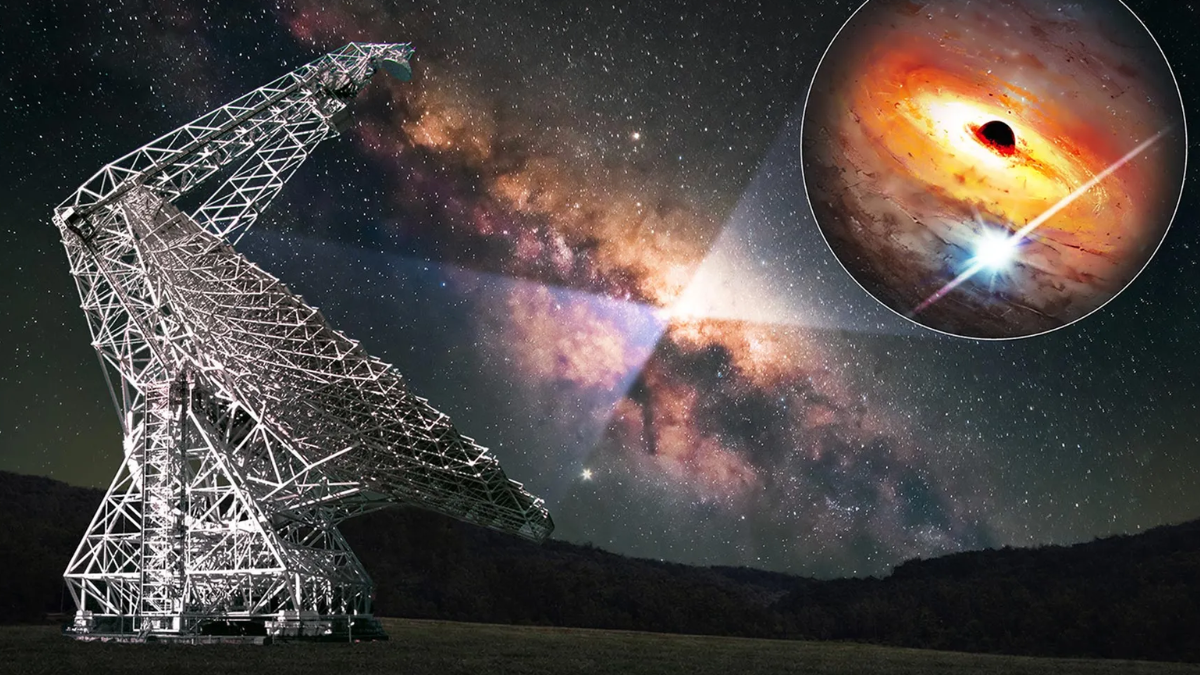
Scientists have detected a possible ultra-fast pulsar spinning every 8.19 milliseconds near the Milky Way’s central black hole. If confirmed, this rare object could act as a precise cosmic clock, helping researchers study how gravity behaves in extreme environments and offering a powerful new way to test Einstein’s theory of general relativity ...
-
Study Reveals Rare Black Hole Blast Behind Powerful Neutrino That Hit Earth In 2023
Scientists believe that studying these explosions can help understand where such powerful neutrinos came from and can also provide new information in understanding the mystery of dark matter.
-
NASA’s JWST Uncovers a ‘Feeding Frenzy’ That Births Supermassive Black Holes
Astronomers may have solved how supermassive black holes formed so soon after the Big Bang. New simulations show that gas-rich, turbulent early galaxies allowed brief super-Eddington feeding bursts, enabling ordinary stellar-mass black holes to grow rapidly into the giants seen by JWST.
-
New Dark Matter Simulation Could Change How Galaxies Are Thought to Evolve
Scientists at the Perimeter Institute have developed a new simulation code, KISS-SIDM, to study self-interacting dark matter. The tool shows how rare dark matter interactions can heat and collapse galaxy halos, potentially explaining dense galactic cores and the early formation of supermassive black holes.
-
Hypothetical ‘Dark Stars’ Could Rewrite Early Cosmic History, Research Suggests
Hypothetical dark stars could explain three early universe mysteries: the abundance of supermassive black holes, dense blue monster galaxies, and compact little red dots. Powered by dark matter rather than fusion, these stars may have formed before normal stars, collapsing to create black hole seeds and influencing early galaxy observations, accord...
-
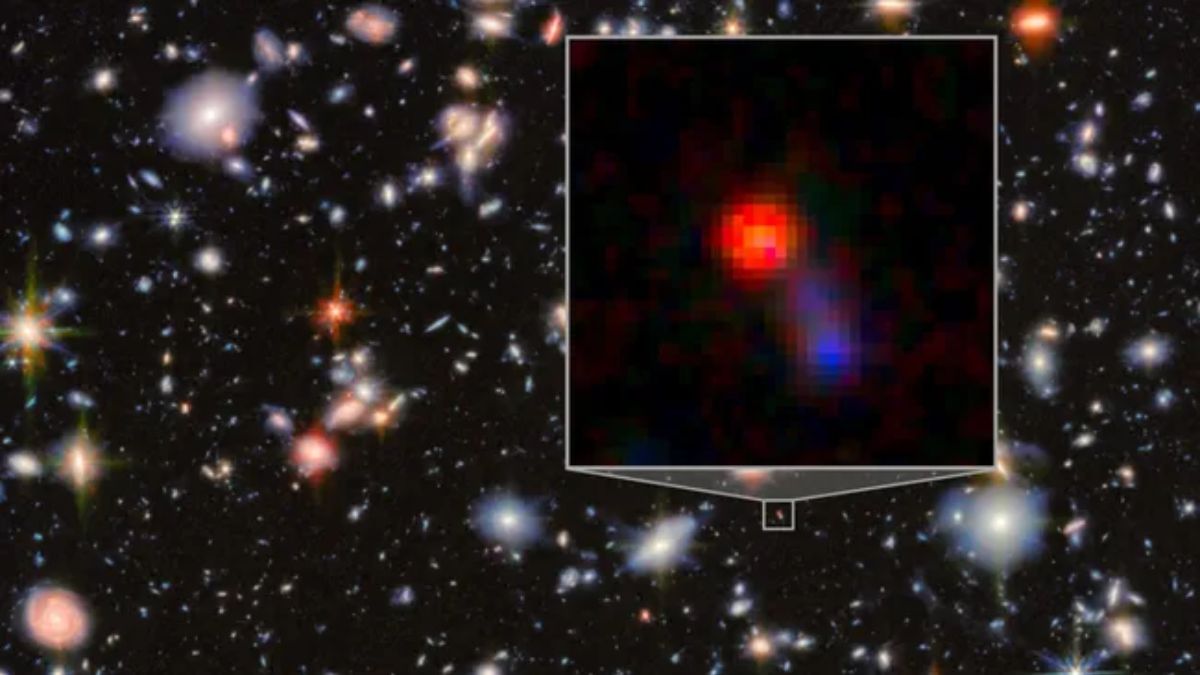
NASA's James Webb Space Telescope Might Have Spotted Hidden Supermassive Black Holes
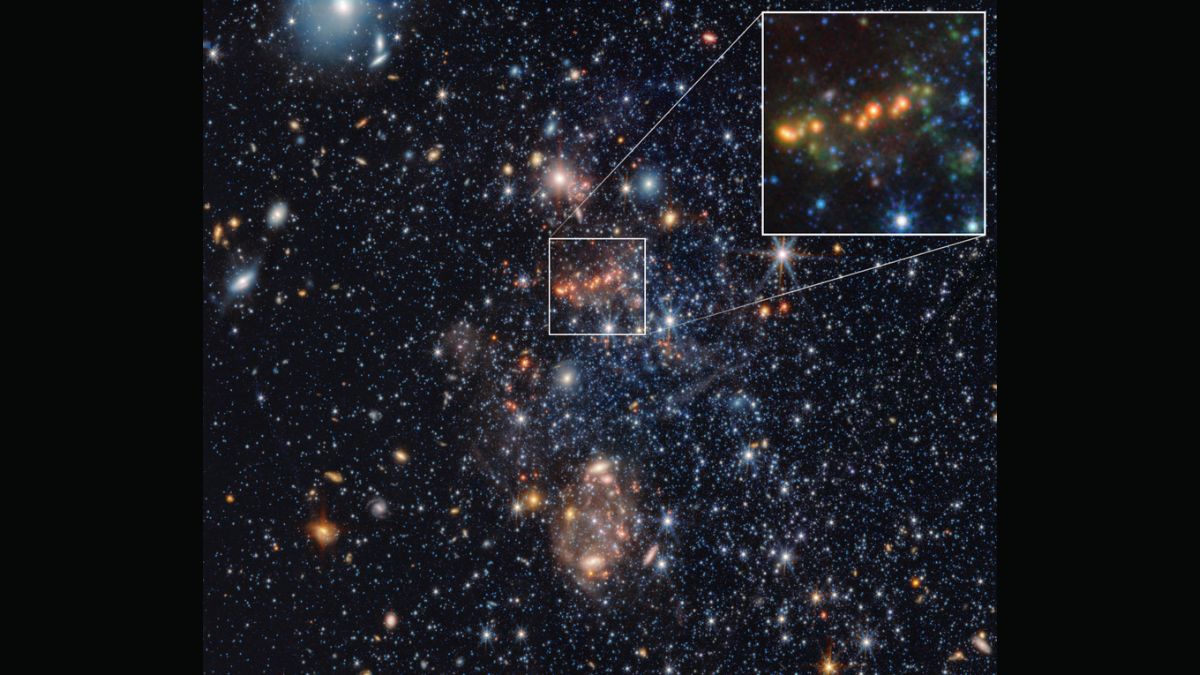
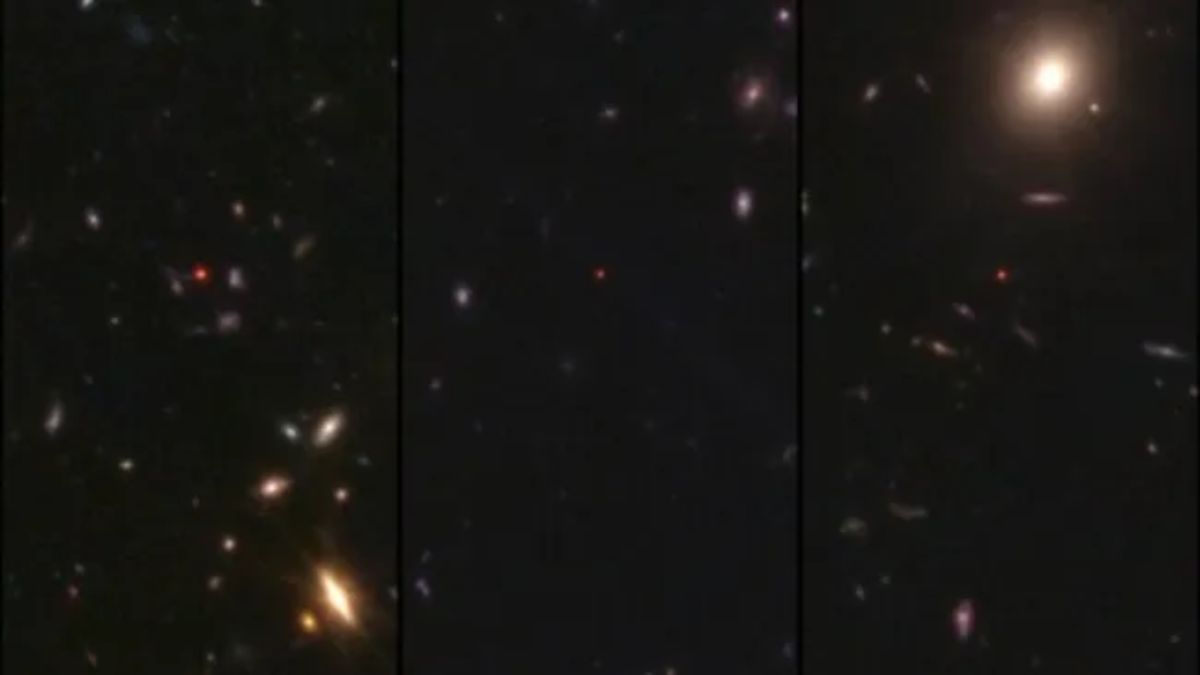
Mysterious “little red dots” spotted by the James Webb Space Telescope may not be tiny galaxies after all. A new study suggests they are supermassive black holes wrapped in dense gas and dust, perfectly disguised in the early universe and shining intensely in infrared light.
-
A Massive Black Hole Starved Pablo’s Galaxy, Ending Its Star Formation
Astronomers using the James Webb Space Telescope and ALMA have uncovered how a massive black hole shut down star formation in Pablo’s Galaxy. Powerful winds expelled gas at hundreds of kilometres per second, leaving almost no cold fuel behind. The findings suggest many early galaxies did not die explosively, but were slowly starved by their centr...
-
Scientists Spot Black Hole Twisting Space-Time While Devouring Star
The study was published on Wednesday, December 10, in the journal Science Advances.
-
NASA James Webb Telescope Reveals ‘Jekyll and Hyde’ Star System Hiding a Supermassive Black Hole
For decades, astronomers have studied galaxy formation, but the James Webb Space Telescope (JWST) has now revealed a galaxy with a dual personality, earning it the nickname “Jekyll and Hyde.” Known as Virgil, the galaxy shows a mild-mannered side, forming stars quietly, while its hidden core harbours a heavily obscured supermassive black hole t...
-
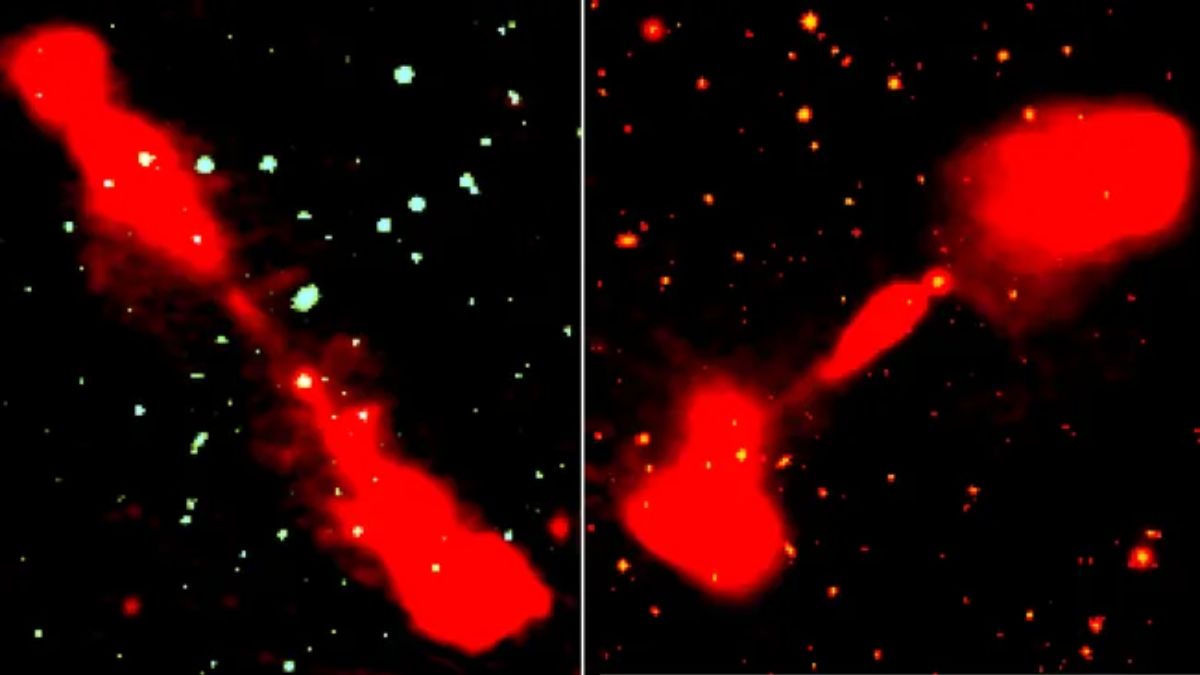
Indian Team Finds 53 Massive Quasars Blasting Jets Millions of Light-Years Long
Astronomers in India have identified 53 previously unknown giant radio quasars powered by supermassive black holes, each releasing enormous plasma jets reaching up to 7.2 million light-years—nearly 50 times the Milky Way’s diameter. Using GMRT data, the team expanded the catalog of known giant quasars and offered valuable clues about how black ...


-
Scientists Spot Ultra-Fast Pulsar Near Milky Way’s Supermassive Black Hole
Scientists have detected a possible ultra-fast pulsar spinning every 8.19 milliseconds near the Milky Way’s central black hole. If confirmed, this rare object could act as a precise cosmic clock, helping researchers study how gravity behaves in extreme environments and offering a powerful new way to test Einstein’s theory of general relativity ...
-
Study Reveals Rare Black Hole Blast Behind Powerful Neutrino That Hit Earth In 2023
Scientists believe that studying these explosions can help understand where such powerful neutrinos came from and can also provide new information in understanding the mystery of dark matter.
-
NASA’s JWST Uncovers a ‘Feeding Frenzy’ That Births Supermassive Black Holes
Astronomers may have solved how supermassive black holes formed so soon after the Big Bang. New simulations show that gas-rich, turbulent early galaxies allowed brief super-Eddington feeding bursts, enabling ordinary stellar-mass black holes to grow rapidly into the giants seen by JWST.
-
New Dark Matter Simulation Could Change How Galaxies Are Thought to Evolve
Scientists at the Perimeter Institute have developed a new simulation code, KISS-SIDM, to study self-interacting dark matter. The tool shows how rare dark matter interactions can heat and collapse galaxy halos, potentially explaining dense galactic cores and the early formation of supermassive black holes.
-
Hypothetical ‘Dark Stars’ Could Rewrite Early Cosmic History, Research Suggests
Hypothetical dark stars could explain three early universe mysteries: the abundance of supermassive black holes, dense blue monster galaxies, and compact little red dots. Powered by dark matter rather than fusion, these stars may have formed before normal stars, collapsing to create black hole seeds and influencing early galaxy observations, accord...
-
NASA's James Webb Space Telescope Might Have Spotted Hidden Supermassive Black Holes
Mysterious “little red dots” spotted by the James Webb Space Telescope may not be tiny galaxies after all. A new study suggests they are supermassive black holes wrapped in dense gas and dust, perfectly disguised in the early universe and shining intensely in infrared light.
-
A Massive Black Hole Starved Pablo’s Galaxy, Ending Its Star Formation
Astronomers using the James Webb Space Telescope and ALMA have uncovered how a massive black hole shut down star formation in Pablo’s Galaxy. Powerful winds expelled gas at hundreds of kilometres per second, leaving almost no cold fuel behind. The findings suggest many early galaxies did not die explosively, but were slowly starved by their centr...
-
Scientists Spot Black Hole Twisting Space-Time While Devouring Star
The study was published on Wednesday, December 10, in the journal Science Advances.
-
NASA James Webb Telescope Reveals ‘Jekyll and Hyde’ Star System Hiding a Supermassive Black Hole
For decades, astronomers have studied galaxy formation, but the James Webb Space Telescope (JWST) has now revealed a galaxy with a dual personality, earning it the nickname “Jekyll and Hyde.” Known as Virgil, the galaxy shows a mild-mannered side, forming stars quietly, while its hidden core harbours a heavily obscured supermassive black hole t...
-
Indian Team Finds 53 Massive Quasars Blasting Jets Millions of Light-Years Long
Astronomers in India have identified 53 previously unknown giant radio quasars powered by supermassive black holes, each releasing enormous plasma jets reaching up to 7.2 million light-years—nearly 50 times the Milky Way’s diameter. Using GMRT data, the team expanded the catalog of known giant quasars and offered valuable clues about how black ...

