Opinion | The Anti-Putin 'Op-ed': Why Europe Must Stop Lecturing India Like It's 1905
Europe has had it easy for centuries. Today, two non-European powers - the US and Russia - are deciding its fate. What really stings the old continent today is this acute feeling of impotency, a sense of irrelevance.
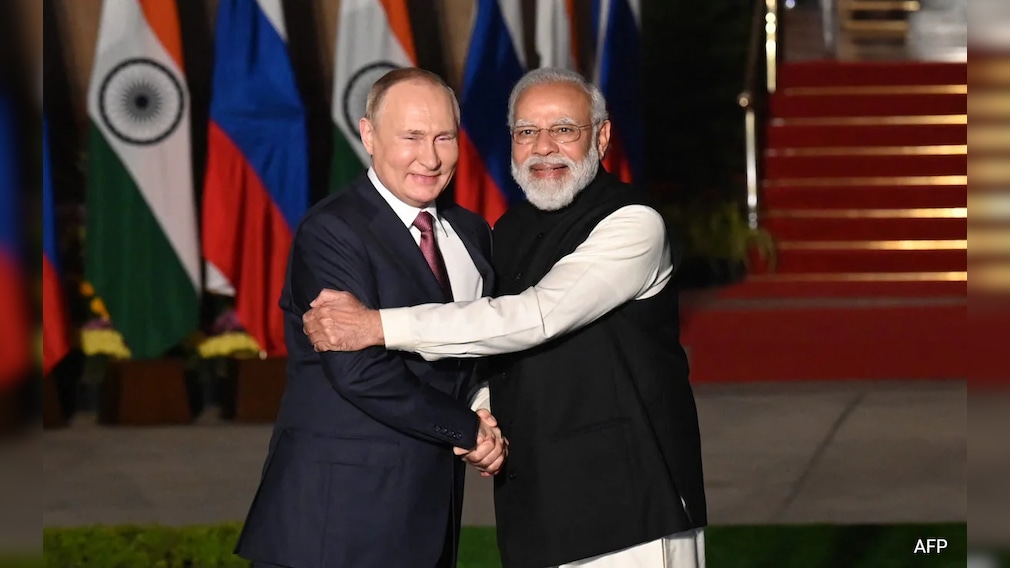
Sitting here in the heart of Europe and reading the op-ed written by three European diplomats in an Indian daily, I genuinely wondered how daft Britain and the European Union's leaders have become. It was so baffling and so needlessly provocative that I almost didn't want to believe it actually happened. Yes, I have been sensing the leadership crisis unfolding across Europe, especially since President Trump returned to the Oval Office in January. But this was a step too far.
The British part of me wants to hang my head in shame. The Indian in me wants to confront them for daring to lecture India while taking a moral high ground. The article is being widely debated here, and judging by many of the readers' comments, it is safe to say that the diplomats of Britain, France and Germany have shot themselves in the foot by jointly warning India about Russian President Vladimir Putin, who is on a state visit to India on Thursday and Friday.
A Growing Desperation
Europe may be crying foul over Russia's invasion of Ukraine, but its own history is littered with wars, invasions and bloody skirmishes. One must note what many Europeans themselves say about the EU - that it has quietly become a war project. As Yanis Varoufakis, the Greek economist and former finance minister who has witnessed Europe's dysfunction up close, put it recently: "The EU is now a fully fledged war project... warmongering has seeped into the very fabric of the Union. Europe will either land in permanent war or bankrupt itself, or both."
And this comes at a time when Europe is struggling economically, politically and strategically. President Trump has pushed them off the high chair they once so proudly occupied. The ongoing war in Ukraine, a conflict not remotely of India's making, is the most dangerous obsession of European leaders currently.
And it is not limited to political leaders. Think-tanks now parrot hawkish talking points. Media outlets compete to be the loudest anti-Putin voice. Anti-Russia and anti-Putin propaganda is passed off as credible news. No one fact-checks these materials. "Putin is suffering from a strange disease" was a news item carried by almost all credible Western media in the early years of the war in 2022. It was shamelessly repeated. And now we know it was garbage. Even some far-right people I have met here insist that Russia must be defeated "just as Germany was defeated", to quote historian Timothy Snyder.
This phenomenon becomes easier to understand when one looks at Europe's own violent past, including its very recent past. Remember the Hundred Years' War between Britain and France? Napoleon's invasion of Russia? The two World Wars? And in our times, the invasions of Iraq and Afghanistan, the bombing of Serbia, Libya and Syria?
Ukraine Has Become Europe's Albatross
Since the invasion of Ukraine in February 2022, Europe and Britain have poured more than EUR 100 billion into military, humanitarian efforts and financial support. The economies of Germany, France and the UK, the biggest European donors, are wobbly. Ukraine has truly become an albatross around Europe's neck, dragging it into an economic drain the continent has never witnessed at this scale in peacetime. Energy prices skyrocketed after Europe largely cut off Russian gas. Industrial production shrank. Public confidence is low. Yet, Europe continues to write cheques to Kyiv while lecturing the Global South on fiscal prudence. Germany is flirting with recession. France is struggling with heavy debts, deficits and protests. Britain is experiencing its worst economic stagnation in years. The governing Labour Party, which returned to power with a handsome majority only last year, would be lucky to cross 100-120 seats if elections were held today. These are what polls are saying.
The ongoing peace negotiations between US representatives and Russia (talks that again ended in deadlock on Tuesday in Moscow) form part of a series of serious pushes for peace US President Donald Trump has made since his return to the White House in January. He has often ignored Europe and NATO because he recognises that European leaders are interested only in raising uncalled-for objections. European governments demand a seat at the negotiating table but bring little to meaningful diplomacy.
It is no surprise, then, that Putin on Tuesday accused European governments of blocking progress towards peace during talks with Trump's envoys. It must be hurting the European leaders to feel that their continent is no longer shaping the war, but merely reacting to it.
A Diplomatic Misstep
The European diplomats' article accused Russia of "escalatory incursions", "indiscriminate attacks", "undermining democratic institutions" and "global destabilisation". They described Putin as the "one leader who could end the war anytime he wishes". I have heard these allegations many times in recent weeks. My question to them is: why say all of this in Delhi? I interpret it as their attempt to influence the Indian public. This is unacceptable as far as India is concerned.
The diplomats must answer these questions. It amounts to interfering in India's affairs while it was preparing to welcome one of its all-weather, trusted friends. The timing was so provocative that former Foreign Secretary Kanwal Sibal labelled it a "diplomatic insult to India". For good reason. After all, it is not Europe's place to tell India which leaders it may welcome. Nor is it Europe's business to dictate the terms of Indo-Russian engagement. It is a relationship built over seven decades, across governments and across ideological shifts. Europe was not there when India needed support - Russia was. That is why India engages with Moscow with confidence and without apology. And that is why provocations, such as the joint op-ed in question, ring hollow.
If anything, Europe should be asking India how it has managed to maintain stable ties with both Washington and Moscow without provoking either. This is something India can certainly teach Europe.
The Hangover Remains
The write-up in a way reflects Europe's colonial hangover. It still harbours a belief that former colonies in the assertive Global South must fall in line. That India's choices must be supervised. That India should not buy Russian oil. That India should not deepen defence ties with Moscow. That India's diplomacy must be aligned with Western geostrategy, not its own sovereign interests. Yet, when India purchases discounted Russian crude to keep inflation under control for 1.4 billion people, Europe sees it as a betrayal (America, too).
Ukraine's Fears Are Real - So Is Europe's Hypocrisy
Ukrainian President Volodymyr Zelensky's assertion that Ukraine's territorial integrity should not be compromised is valid. International law does not accept annexations by force. No peace plan can simply reward aggression. But Europe's approach has usually been negative. It is busy exporting weapons to Ukraine, fuelling anti-Russia rhetoric and hampering peace negotiations. That has not helped Ukraine. In fact, given Kyiv's unrealistic expectations, it has prolonged the war, and pushed the EU into a permanent security crisis.
Now, as peace negotiations move forward, however slowly, Europe finds itself sidelined and sulking. Had Europe been ready to play a positive role from the time Trump returned to power, the latter might even have made them the third party in the negotiations. But the US president had little patience with Europe's antics.
Europe has had it easy for centuries. Today, two non-European powers - the US and Russia - are deciding its fate. What really stings the old continent today is this acute feeling of impotency, a sense of irrelevance.
(Syed Zubair Ahmed is a London-based senior Indian journalist with three decades of experience with the Western media)
Disclaimer: These are the personal opinions of the author
-
Opinion | Rs 30 Petrol Hike To Currency Crisis, What Oil At $150 Can Really Do To The World

At $125 per barrel, petrol and diesel retail prices will need to rise by Rs 8-14 per litre. At $150 - which experts think is now likely - these figures could touch Rs 26-30 per litre.
-
Opinion | The Problem With Trump's Fantasy Of A 'Crippled' Iran
Even a relatively insulated US economy cannot entirely escape the ripple effects of sustained disruptions in one of the world's most critical energy corridors.
-
Opinion | Trump's Iran War Is About To Become Someone Else's Problem Soon
Start alone, end alone - that may be the harshest lesson for Trump as he now tries to dash for the door in Iran.
-
What Happens If Iran War Actually Ends In 2 Weeks: The Challenges Ahead
Trump said the war could end in two weeks sans a deal to re-open the Hormuz. Analysts say it could take six to weight weeks more for oil flows to normalise, with each extra week of fighting adding seven to 14 days of recovery.
-
Opinion | Why 2 Gulf States Want Iran War To Continue - Even As They're Battered By It
If Trump withdraws from this war, the UAE, Saudi Arabia and other Gulf countries would be left to face the music alone, with an angrier, fiercer, and possibly more vengeful Iran.
-
Opinion | Why A 'Defeat' Is Now Essential For The Disoriented Left In Kerala
Power and arrogance have turned the Left in Kerala into what it once fought against. It now needs to lose its last bastion to cleanse itself of its maladies.
-
Opinion | On April Fools' Day, A Reality Check For US, Iran And The World
The paradox is this: Iran wins simply by surviving, while the US must achieve a far more overwhelmingly convincing result to claim success.
-
Opinion | Pakistan, And The One Big Difference Between 'Broker' And 'Mediator'
Neither Washington nor Tehran appears willing to invest Pakistan with the political capital required for mediation.
-
Houthis Threaten Strait No 2 As Iran War Expands. What It Means For India
Yemen's Houthi rebels have opened a second front in the Iran war, threatening Bab al-Mandab just as the Strait of Hormuz comes under pressure, and squeezing one of the world's most important oil corridors from both ends.