






The sudden catapulting of the Cockroach Janta Party (CJP) to India's democratic consciousness is easy to misread. In a country where politics is often reduced to pro-BJP or anti-BJP reflexes, the temptation is to see the CJP as another flash of dissent against the ruling party. That, however, would be too convenient. The deeper truth is perhaps more uncomfortable: the cockroach has crawled across the entire political floor. It is not merely mocking those in power. It is exposing those who wish to replace them.
The CJP began after remarks attributed to Chief Justice Surya Kant, who reportedly referred to some unemployed youngsters as "cockroaches" and "parasites", before clarifying that the comments concerned people with fraudulent degrees, not India's youth. The phrase detonated online because it seemed to compress a generation's humiliation into one insect metaphor. Within days, the satirical movement that is the CJP had crossed millions of Instagram followers, overtaking the BJP's official Instagram count at one point, while its X account was withheld in India after a legal demand.
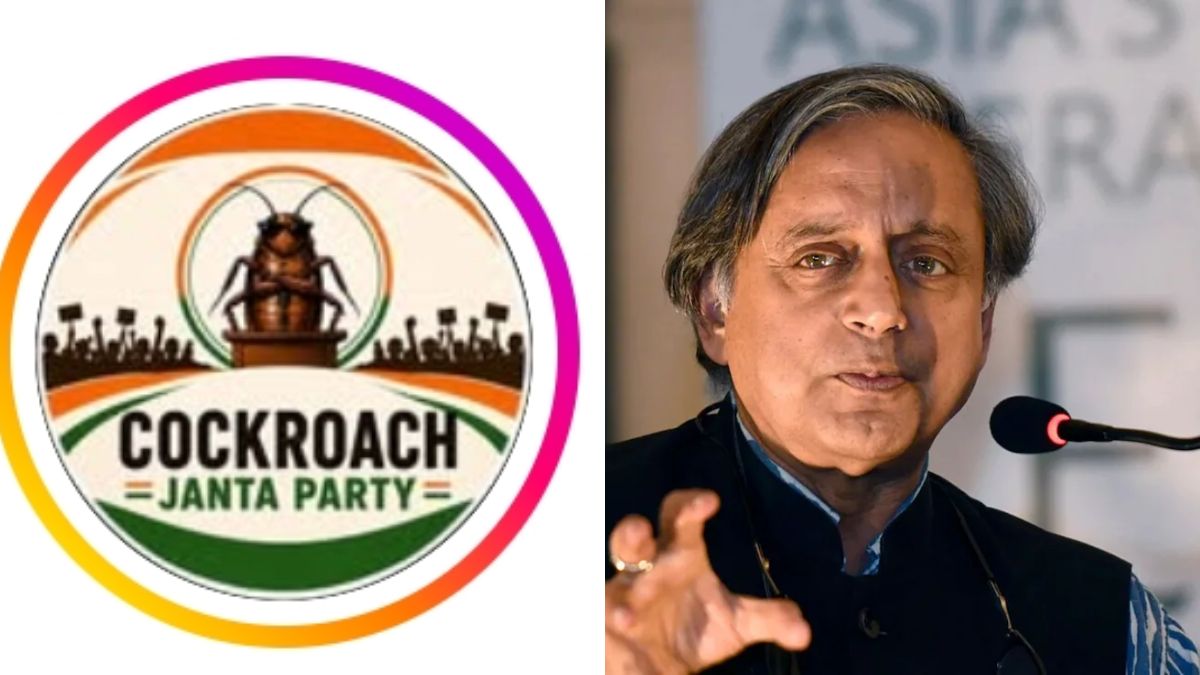
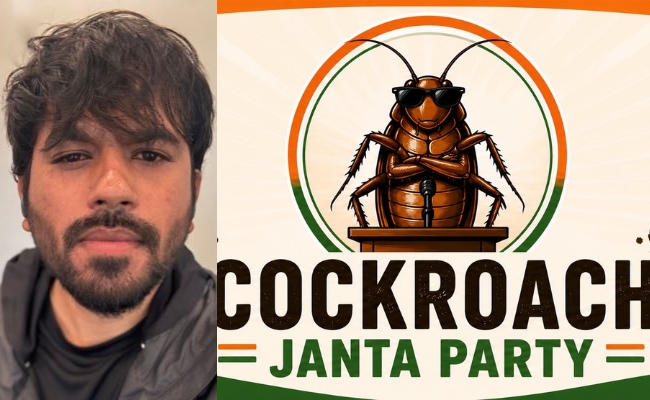
But the numbers are less important than the emotional code. The CJP website calls itself the "Voice of the Lazy & Unemployed" and "a political party for the people the system forgot to count". Its poster says, "They tried to step on us. We came back." That is not just a meme. It is the grammar of a generation that feels insulted by institutions, ignored by parties, and patronised by leaders who still speak in the language of obedience.
The Opposition Has Got It Wrong
Umang Singhar, the senior Congress politician and Leader of the Opposition in the Madhya Pradesh Assembly, publicly referred to the CJP on May 21, voicing his support on his official social media pages in an encouraging example of active listening and generational empathy in a democracy.
At the same time, the opposition should be careful before celebrating the CJP as a ready-made, anti-BJP youth wave. Gen Z's irritation with the ruling establishment is real. But it does not automatically convert into faith in the opposition. Echoing similar sentiments, noted poll strategist Naresh Arora wrote on X, "The viral success of the Cockroach Janata Party should not be seen only as a dissent against the ruling party [ BJP-NDA] but also a mirror to the opposition," and added thoughtfully, "India's Gen Z youth feel neither side is listening to them."
Even Congress MP Shashi Tharoor said, "I am uncertain about the future of this movement but I hope the youngsters behind it find a way to bring this energy into mainstream politics or perhaps express it through their vote to be a voice of change and in doing so, become impossible to ignore. This is an opportunity that the Opposition must seize.
That is the central lesson of this moment. Many young Indians are not saying, 'The BJP has failed us; therefore, the Congress or the regional opposition will save us'. They are saying something harsher - 'None of you is listening'.
This is where the opposition's crisis begins. The Congress speaks often, and sometimes powerfully, about unemployment, inequality, and constitutional values. Yet it still carries the burden of dynastic politics. Tharoor himself, from within the Congress ecosystem, has written that when elected office is treated like a family heirloom, governance suffers. Academic analysis has similarly pointed to personalism, dynasticism, and generational factionalism as factors in the Congress's decline.
For young voters raised on algorithmic irreverence, legacy is not charisma. Surnames do not awe them. They interrogate everything. They can admire Rahul Gandhi's constitutional language and still ask why India's oldest party so often appears organisationally older than the Republic itself.
Regional parties have their own problems. Many built genuine social coalitions and linguistic-cultural pride. But too many now carry the stain of corruption, entitlement, or family control. The West Bengal teacher recruitment scandal, in which the Supreme Court upheld the dismissal of over 25,000 teachers and non-teaching staff after severe irregularities were found, is precisely the kind of episode that wounds young aspirants most directly: jobs, exams, fairness, futures. In Tamil Nadu, the Enforcement Directorate's renewed push for sanction to prosecute DMK leader V. Senthilbalaji in an alleged cash-for-jobs case speaks to the same corrosion of trust around public employment.
Data from the 2024 Lok Sabha also showed that candidates with declared criminal cases had a far higher success rate than candidates with clean backgrounds, with criminality cutting across parties, including national and regional formations.
So, when the CJP asks, in its deliberately cheeky way, "where the money went?", it is not posing that question only to the North Block. It is asking every state secretariat, every party office, every local strongman, every dynasty, every fixer, and every "youth leader" who is already in their fifties.
Vijay Is The Sign
The most dramatic electoral proof of this appetite for rupture came earlier this month from Tamil Nadu, where actor-politician Vijay's Tamilaga Vettri Kazhagam (TVK) emerged as the single-largest party in the 2026 Assembly election, winning 108 of 234 seats and breaking the age-old DMK-AIADMK binary.
Vijay's success should not be lazily dismissed as celebrity politics, in spite of Tamil Nadu's long history of cinema-politics overlap. The 2026 verdict was not only about star power. It was about a public mood, ready to punish familiarity. The official TVK language speaks of "people-centric politics" and "concrete welfare-driven actions" - phrases that are conventional on paper but, when combined with a new face and digital mobilisation, became an instrument against fatigue.
The lesson for the opposition space is stark. In a BJP-dominated national climate, simply being anti-BJP is no longer a sufficient political identity. Voters, especially young voters, are looking for freshness, authenticity, risk, and recognisable anger. They want political language that feels lived, not focus-grouped. They want leaders who look like they have arrived from outside the durbar, not inherited a room inside it.
This is why the CJP matters even if it never becomes a real party. It has already performed one function that many opposition parties struggle with: capturing the mood at speed. Its absurdity made it legible. Its humour made it shareable. Its anger made it sticky.
The New Opposition May Not Look Like A Party
Across India, political attention is increasingly moving through creators, comedians, explainers, and unruly interviewers. Samdish Bhatia's Unfiltered by Samdish has built an audience by taking politics out of studio stiffness and into awkward, funny, wandering conversations with politicians, journalists, and public figures. Comedians like Kunal Kamra and Varun Grover, meanwhile, have become symbols of political satire under pressure.
These figures are not substitutes for parties. But they show where political trust is migrating. The young are not waiting for a press conference. They are watching a reel, a roast, a field interview, a parody song, a meme manifesto. This is not because they are frivolous. It is because satire often reaches where solemn politics has lost credibility.
That should terrify the opposition more than the BJP. The BJP still has an enormous organisational machine, ideological coherence, welfare delivery networks, and a leader-centric brand. The opposition, by contrast, often depends on anti-incumbency without building a counter-imagination. It offers critique, but not always culture. It offers alliances, but not always energy. It offers arithmetic, but not always effects.
The CJP's genius lies in turning contempt into community. It takes the insult - cockroach - and reverses the power. The creature meant to signify filth becomes a symbol of survival. The supposedly lazy become hyperactive online organisers. The unemployed become political communicators. The joke becomes a gathering place.
For India's opposition, the message is clear. Stop assuming young voters are merely waiting to be mobilised against Modi. They want credible jobs, fair exams, affordable futures, free speech, clean institutions, and political entry without family passwords. They are not anti-politics. They are anti-stale politics.
B.R. Ambedkar, one of the founding fathers of India, had long warned that democracy is not merely a form of government, but "a conjoint communicative experience... an attitude of respect and reverence towards fellowmen." The viral cockroach moment shows what happens when that respect collapses.
(Rasheed Kidwai is an author, columnist and conversation curator)
Disclaimer: These are the perosnal opinions of the author


