Opinion | How Iran Has Pierced The One 'Shield' That Protected America For 30 Years
In the past, US campaigns in Iraq, Afghanistan and Libya were conducted against relatively weak air defences. That has not turned out to be the case with Iran, puncturing the long-held myth of America's 'indomitable' air power.
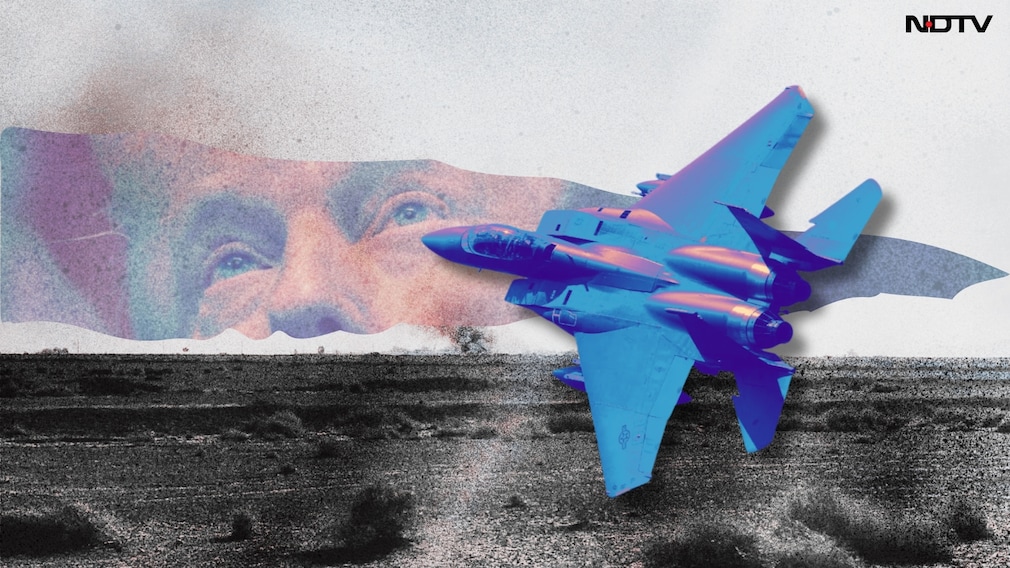
If the early weeks of the 2026 Iran conflict were intended to showcase the return of decisive American airpower, the events of last week have served as a sobering corrective. Wars against capable state adversaries rarely conform to technological optimism, and this episode underscores the limits of even overwhelming military superiority.
The downing of an American F-15E Strike Eagle over western Iran marks a significant inflexion point in the conflict not because of the scale of the loss, which remains limited, but because of its symbolism. For the first time in this war, a manned American combat aircraft has been brought down by enemy fire in hostile airspace. The potential loss of a crew member and the launch of a high-risk combat search-and-rescue operation by the US, though ultimately successful, reinforces the enduring reality that even a single aircraft loss can generate cascading operational, political, and psychological consequences.
A Pattern, Not An Anomaly
This incident did not occur in isolation. On the same day, an A-10 Thunderbolt II ground-attack aircraft was also lost to Iranian fire over Kuwait near the Persian Gulf, with the pilot ejecting.
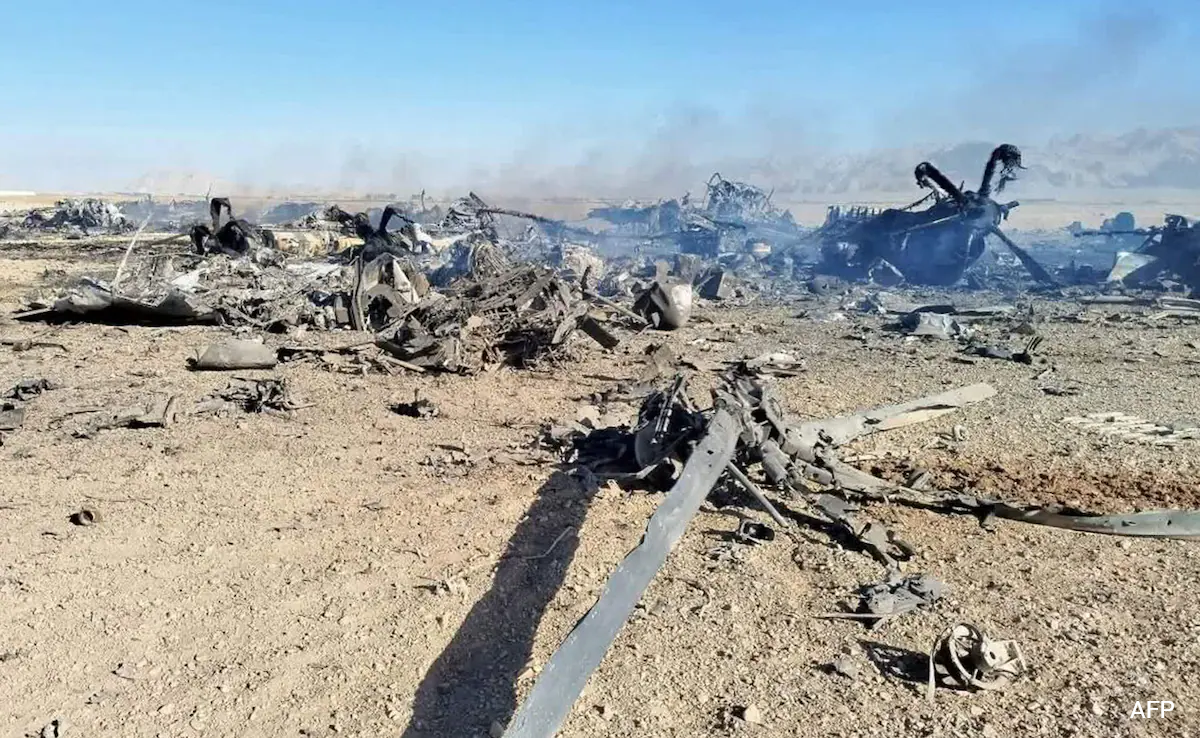
These developments point to a pattern rather than an anomaly. The vulnerability of non-stealth, low-altitude platforms operating in contested environments is once again being laid bare. The damage sustained by accompanying rescue helicopters - according to Iran's Revolutionary Guards, at least five people were killed, and several "flying objects" were destroyed, including a transport plane, during the rescue operation for the downed fighter jet crew member - further illustrates the layered risks of modern warfare, where efforts to recover personnel can expose additional assets to enemy fire.
It is true that these setbacks do not fundamentally alter the strategic balance. The United States retains overwhelming advantages in terms of airpower, precision strike capability, and operational reach. American aircraft continue to conduct sustained sorties across Iranian territory, targeting infrastructure, missile systems, and military installations. Official statements from Washington have emphasised this asymmetry, highlighting the degradation of Iran's air defences and the broader military pressure being exerted.
US' Manned vs Unmanned Systems
Such assertions, however, deserve closer scrutiny. Degradation is not destruction. Iran's integrated air defence system, though weakened, has demonstrated resilience. The ability to shoot down advanced aircraft, even sporadically, suggests that sufficient capability remains to impose costs. This is not trivial. In high-intensity conflicts, the ability to inflict even limited attrition can shape operational choices, slow campaign tempo, and impose political constraints.
Also Read | 7,000 Feet Up, Alone, Armed With Handgun: US Airman's 48 Hours In Iran
The broader pattern of US losses reinforces this point. Earlier in the campaign, a significant number of MQ-9 Reaper drones were shot down over key Iranian locations such as Isfahan and Bushehr. These unmanned systems, often viewed as relatively expendable, have proven vulnerable against layered air defences. While individually less politically sensitive than manned aircraft, their cumulative loss, both in financial and operational terms, is far from negligible.
More importantly, the distinction between manned and unmanned losses begins to blur in strategic impact. Drones enable persistence and reduce risk to personnel, but they are not immune to denial. Their attrition limits surveillance coverage, targeting precision, and operational flexibility. At the same time, the loss of even a single manned aircraft introduces a qualitatively different dimension - raising questions of escalation, domestic perception, and the risks associated with pilot capture or casualty.
America's Air Superiority Isn't Absolute
What emerges from these developments is a more complex and less reassuring picture of contemporary airpower. Air superiority, long viewed as the cornerstone of US military doctrine, no longer guarantees invulnerability. It provides access, freedom of manoeuvre, and the ability to shape the battlespace, but within constraints imposed by increasingly capable adversaries.
This has implications that extend well beyond the immediate conflict. For much of the post-Cold War era, US air campaigns - in Iraq, Afghanistan, and Libya - were conducted against relatively weak or degraded air defences. This created an expectation, both within military planning and public discourse, of low-risk intervention. Airpower was seen as a tool capable of delivering rapid, decisive outcomes with minimal cost.
The Iran conflict challenges that assumption. Alongside lessons from the Russia-Ukraine war, it reinforces the reality that state-on-state conflicts involving capable adversaries are inherently contested. Integrated air defence systems, even when partially degraded, can deny airspace, impose attrition, and complicate operational planning. The battlefield is no longer permissive; it is dynamic, adaptive, and unforgiving.
Where Does The US Go From Here?
In response, doctrinal and technological shifts are likely to accelerate. Greater emphasis will be placed on stealth platforms, stand-off weapons, electronic warfare, and the suppression and destruction of enemy air defences (SEAD/DEAD). The role of autonomous systems and "loyal wingman" concepts will also gain prominence as militaries seek to distribute risk and enhance survivability. At the same time, the importance of human capital - pilot training, mission planning, and resilience under pressure - remains undiminished.
Also Read | "Flying Objects" Hit, C-130 Plane Downed, 5 Killed In US Pilot Rescue Op: Iran
Equally, the events of April 3 highlight the importance of multi-domain integration. Airpower alone, however advanced, cannot deliver decisive outcomes in isolation. It must be complemented by cyber operations, intelligence capabilities, ground manoeuvre, and diplomatic engagement. The notion of quick, clean wars driven primarily by aerial dominance appears increasingly untenable.
Ultimately, the April 3 losses are a moment of strategic introspection. They don't fundamentally undermine US military superiority but puncture its narrative of effortless dominance. The United States continues to hold the advantage, but it is an advantage that must be exercised with caution, adaptability, and a clear recognition of its limits.
In that sense, the real significance of these events lies not in what was lost, but in what they reveal. Contemporary warfare, even for the most advanced militaries, is neither frictionless nor predictable. The mythology of invulnerable airpower should give way to a more grounded understanding - one in which effectiveness coexists with risk, and dominance is always contested rather than absolute.
(Harsh V Pant is Vice President for Studies at Observer Research Foundation, New Delhi.)
Disclaimer: These are the personal opinions of the author
-
How Iran Sucker-Punched Trump Into 'Escalation Trap' 'Hellhole'

Trump is now under pressure, not just from allies but also within; the President's approval rating is the lowest it has ever been with mid-term elections in November.
-
Eagle Down: How US Carried Out Precision Search And Rescue Op In Hostile Iran
How the United States transformed a tactical failure into a narrative of national resolve.
-
Opinion | 450 Missile, 2,000 Drone Attacks Later, Why Is UAE Still Not Fighting Iran?
The UAE is Iran's second-largest trading partner and also home to roughly half a million Iranians. Why, then, has it absorbed more fire than any other Gulf state?
-
In Numbers: How Has India Kept Fuel Prices Low Even As Europe Sees 70% Spikes?
India imports 88% of its crude. Why then is it not seeing massive price hikes for fuel and LPG? Inside the unique strategy it's following...
-
Opinion | India Just Decided To Let Chinese Capital In Again. But There's A Catch
In March 2026, India eased regulations that had restricted Chinese capital in local companies, in a development that marks New Delhi's cautious approach towards capital flows from Beijing.
-
Trump's Iran 'Knocked Out' Claim Blown Up By US Intel On Missiles, Drones
Donald Trump claimed this week the war would end in two to three weeks as he threatened to send Iran back to the Dark Ages. But based on these reports the fighting is far from over, even if US President wants to push a contrary narrative.
-
Opinion | Rs 30 Petrol Hike To Currency Crisis, What Oil At $150 Can Really Do To The World
At $125 per barrel, petrol and diesel retail prices will need to rise by Rs 8-14 per litre. At $150 - which experts think is now likely - these figures could touch Rs 26-30 per litre.
-
Opinion | The Problem With Trump's Fantasy Of A 'Crippled' Iran
Even a relatively insulated US economy cannot entirely escape the ripple effects of sustained disruptions in one of the world's most critical energy corridors.
-
Opinion | Trump's Iran War Is About To Become Someone Else's Problem Soon
Start alone, end alone - that may be the harshest lesson for Trump as he now tries to dash for the door in Iran.