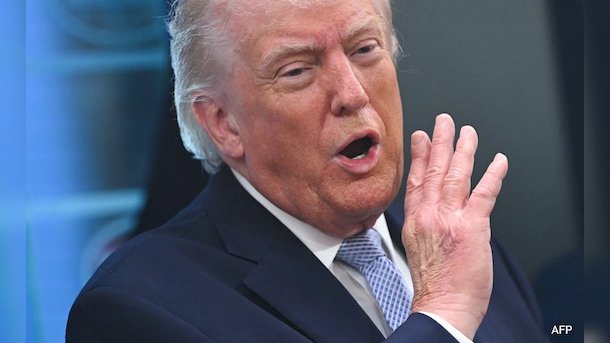
The Imran Khan I Know - By Shashi Tharoor
"I have known Imran Khan in three distinct phases of his life. Our first meeting was in New York, during my UN years. His sister, a UN colleague, hosted a gathering, and Imran, then a cricket celebrity, was present. I was struck by his warmth."
As the mystery surrounding jailed former Pakistan PM Imran Khan deepens, with his family asking for "proof of life", Shashi Tharoor reflects on his early encounters with the cricketer-turned-statesman and his lasting impact on Pakistan's turbulent politics
Imran Khan, the charismatic cricketer-turned-politician who once embodied Pakistan's hopes for reform and renewal, is rumoured to have died under murky circumstances in Rawalpindi's Adiala Jail, where he has been held since 2023. His son, Kasim Khan, has now demanded proof of life and his father's release. Imran Khan is 72. His death - if confirmed - would mark a tragic end to a life that spanned global acclaim, national leadership, and, ultimately, political persecution.
Born in Lahore in 1952 into a privileged Pashtun family, Imran Khan rose to international fame as one of cricket's most gifted all-rounders. Educated at Aitchison College, Royal Grammar School Worcester, and Keble College, Oxford, he combined athletic prowess with intellectual polish. His cricketing career, which began in earnest in the early 1970s, culminated in Pakistan's historic victory at the 1992 Cricket World Cup - a moment that etched him permanently into the nation's sporting mythology. As captain, he was admired for his strategic acumen, fierce competitiveness, and ability to inspire a team often riven by internal divisions.
After retiring from cricket, Khan turned to philanthropy, founding the Shaukat Khanum Memorial Cancer Hospital in memory of his mother. It was the first of its kind in Pakistan, offering free treatment to thousands and funded largely through public donations - a testament to his enduring popularity and persuasive appeal.
A Tumultous Turn
But it was politics that consumed the second half of his life. In 1996, he founded the Pakistan Tehreek-e-Insaf (PTI), a party that struggled for years on the margins before surging to prominence in the 2010s. His message - anti-corruption, national dignity, and Islamic welfare - resonated with a generation disillusioned by dynastic politics and military interference. In 2018, he became Prime Minister, promising a "Naya Pakistan". His tenure, however, was beset by economic challenges, diplomatic tightropes, and the ever-looming shadow of Pakistan's military establishment - the "deep state" that ultimately proved his undoing.
I knew Imran Khan in three distinct phases of his remarkable life. Our first meeting was in New York, during my years at the United Nations. His sister, a UN colleague, hosted a gathering at her home, and Imran - then still a global cricket celebrity - was present. I was struck by his warmth, his easy charm, and his ability to make everyone feel at ease. He was not the aloof icon one might expect, but a man of genuine curiosity and affable grace.
Years later, I encountered him more frequently as a retired cricketer visiting India. He attended social events where I was present, and we often found ourselves on the same news programmes on Indian television channels, engaging in spirited exchanges. He was articulate, provocative, and always keen to challenge received wisdom, whether on cricket, politics, or Indo-Pak relations. Despite the tensions between our countries, he remained a popular figure in India, especially among women, and was widely admired for his sporting legacy and his affable grace.
The Hour-Long Conversation
But my most memorable engagement with Imran came in 2017, when I led an Indian parliamentary delegation to Islamabad for an Asian parliamentarians' conference. Imran, then Leader of the Opposition, asked to meet me. The Pakistani government, citing security concerns, refused to let me leave my hotel. Undeterred, Imran volunteered to come to me. He arrived with half a dozen aides, and I received him formally, with my two BJP colleagues - Swapan Dasgupta and Meenakshi Lekhi - present alongside, to ward off suggestions of any impropriety on my part in holding such a meeting.
What followed was an hour-long conversation not about politics, but about history. Imran had just finished reading my book An Era of Darkness, and was brimming with enthusiasm for it. He quoted passages and facts, asked probing questions, and shared his own reflections on British imperialism in undivided India. He insisted I return to Pakistan as his guest to speak publicly on the subject. That event never materialised, but the encounter left a deep impression. Here was a man who, despite his political ambitions, remained intellectually engaged and emotionally invested in the subcontinent's shared past.
A Study In Contradictions
Imran's premiership, obtained through the active sponsorship of the military, was a study in contradictions. He sought peace with India but was constrained by the military's strategic calculus. He promised economic reform, but struggled with inflation and debt. He championed anti-corruption, yet faced allegations himself. His downfall began in 2022, when his impatience with military interference led to a doomed confrontation with the Pakistani deep state, which engineered the no-confidence vote that ousted him from office. What followed was a relentless campaign of legal cases, arrests, and isolation. By 2023, he was imprisoned, convicted in multiple cases that were widely seen as politically motivated.
The last few years have been marked by increasing repression. Denied access to family, subjected to harsh conditions, and cut off from his party, Imran Khan became a symbol of resistance for many Pakistanis. His sisters, who protested outside Adiala Jail, were reportedly assaulted by police - a chilling reflection of the state's determination to erase his influence.
The rumours about his death remain unclear. Allegations of foul play abound, with some saying that he has been killed by elements within the military-intelligence apparatus. No official confirmation has been issued, but the silence itself speaks volumes. If true, his death in custody would mark a dark chapter in Pakistan's tortured and murky political history - a reminder of the perils faced by those who challenge entrenched power.
Dreams Undone
Imran Khan's legacy is complex. He is a national hero, a global icon, a reformist leader, and a flawed statesman. He inspired millions, disappointed many, and remained defiant to the end. His life is a testament to ambition, whether sporting, personal, national, or political. His death, if confirmed, would be a tragedy not just for Pakistan, but for all who believe in the possibility of principled leadership in turbulent times. It echoes that of another charismatic, larger-than-life Pakistani politician who thought he could transcend the powerful military but paid for his illusions with his life - Zulfiqar Ali Bhutto.
For me, Imran will remain the man who came to my hotel in Islamabad, not to talk politics, but to discuss history. A man of ideas, passion, and conviction, whose dreams for his country were ultimately undone by the very forces of the deep state he sought to ride to power, then to curb, and ultimately failed to overcome.
(Shashi Tharoor has been a Member of Parliament from Thiruvananthapuram, Kerala, since 2009. He is an author and a former diplomat)
Disclaimer: These are the personal opinions of the author
-
Opinion | The Last Bet? What Trump's 'Mother Of All Bombs' Could Actually Do To Iran

Can an MOAB deliver a decisive blow to Iran that may force it to surrender immediately, as Japan did after Hiroshima and Nagasaki in World War 2?
-
Hit Songs, Empty Pockets: The Hidden Math Behind India's Viral Music Boom
Over 80,000 brands and five lakh creators in India make branded content. The opportunity is worth around Rs 1,500 crore.
-
Opinion | Great 'Exceptions': How The Oil India Was Attacked For Is The Oil Trump Now Seeks
A law written to punish the buyers of Russian oil was suspended by the US to protect a purchase of Russian oil. India spent fourteen months being lectured for less.
-
Opinion | Louis Vuitton Loot, Torched Cars: France Protests Have An Unlikely Beneficiary
It's an unbelievable moment. Crowds looting the most exclusive stores in Paris, including the famed Luis Vuitton. But what's behind this meltdown?
-
Blog: Kolkata Didn't Learn From 2015. Eleven Years Later, It Proved To Be Fatal
The City of Joy isn't a stranger to crowd control. Be it during Pujo or Christmas at Park Street, Eden Gardens cricket matches, or Derbies between Mohun Bagan and East Bengal. But during Pujo, the entire city is on alert.
-
Opinion | Slurs, Threats, Now A Temple Attack Plot: When Did America Become So Hostile To Indians?
The rising tide of anti-India, anti-Hindu, and racist attacks serves as a stark reminder that economic prosperity does not automatically guarantee social immunity from bigotry.
-
A Step Behind Neha Bora: What Rahul Gandhi's Gesture Says About Congress' Gen-Z Pitch
At INDIA bloc's march to Supreme Court, Rahul Gandhi placed himself a step behind two women, hands resting on their shoulders. One was his sister Priyanka. The one on his right was Neha Bora. Here's what the image means for the protest wave now, and for Rahul's politics in general.
-
Opinion | Imran Khan, And The Perils Of Having An 'Opinion' In Bollywood
The reality of the industry is quite grimy. More often than not, its inhabitants have been fairweather friends, happy to sing the praises of whoever is in a position of authority.
-
Exclusive: India's Food Safety Problem Goes Beyond Just Dirty Kitchens - By Tukaram Mundhe
On World Food Day, Maharashtra's Commissioner of Food Safety explains why instead of taking stopgap measures, the entire supply chain in India needs to be held accountable and made transparent.
-
Opinion | India Has Enough Coal. So Why Are Power Plants Running Short? A 76 Million 'Crunch'
As of October 5, as many as 82 of the 191 thermal plants monitored by the Central Electricity Authority were in the 'critical' category