Opinion | What's Behind Araghchi's Visit To China Right Before Trump-Xi Meeting?
Beijing remains indispensable to Tehran as an economic backer and diplomatic shield, but it is not prepared to become its war ally.
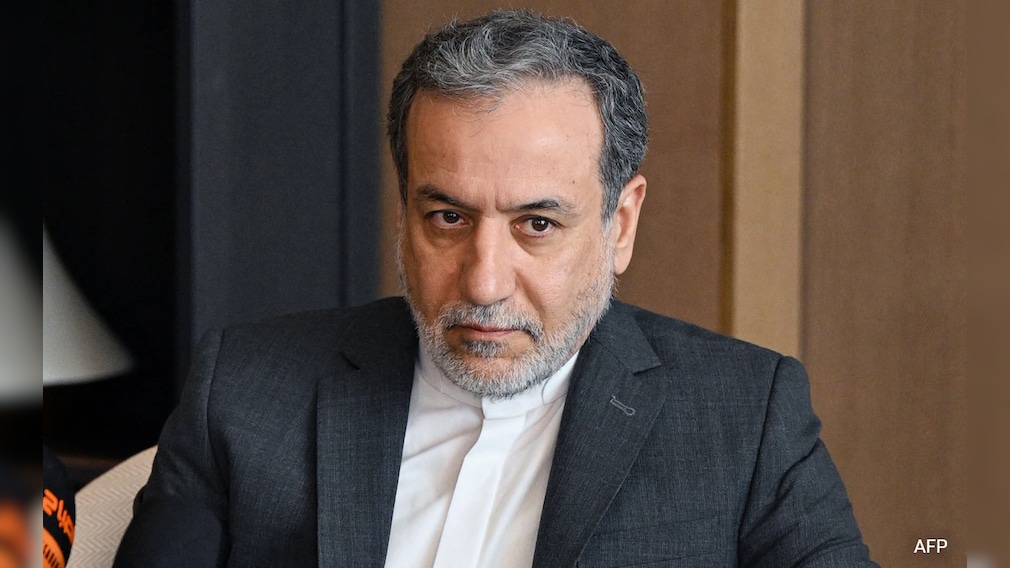
Iranian Foreign Minister Abbas Araghchi travelled to Beijing last week for consultations with Chinese Foreign Minister Wang Yi. The visit carried considerable geopolitical weight. It marked Araghchi's first trip to China since the onset of the US-Israeli military campaign against Iran on February 28 - conflict that has unsettled regional balances, disrupted global energy markets, and culminated in Tehran's closure of the Strait of Hormuz.
The timing was equally revealing. Araghchi arrived in Beijing only days before US President Donald Trump was scheduled to hold talks with Chinese President Xi Jinping. Unsurprisingly, discussions ranged across bilateral ties, regional stability, the reopening of Hormuz, sanctions, and Iran's nuclear programme. Beijing reiterated its now familiar emphasis on de-escalation, diplomacy, and respect for Iranian sovereignty, while simultaneously underlining the imperative of restoring stability to global energy flows. Araghchi, for his part, endorsed elements of China's four-point peace proposal and projected Iran's resilience by arguing that the crisis had elevated Tehran's international standing.
This visit underlines China's evolving role in the US-Iran confrontation: influential, indispensable in some respects, yet fundamentally cautious and constrained by its own strategic calculations.
China today functions as Iran's principal economic lifeline. It remains by far the largest purchaser of Iranian crude, at times absorbing nearly 90% of Tehran's oil exports despite sanctions pressure. This relationship has provided Iran with critical financial breathing space even as Western restrictions tightened. Beyond oil, reports linking Chinese firms to dual-use supplies, including missile and drone-related components as well as chemicals such as sodium perchlorate, reinforce perceptions that Beijing has quietly enabled aspects of Iran's strategic resilience while maintaining plausible deniability.
Diplomatically, China has sought to position itself as a responsible stabilising power. Beijing has condemned US-Israeli strikes as violations of international law, defended Iran's "legitimate rights", and projected itself as a potential mediator through calls for ceasefires and broader regional dialogue. This posture aligns with China's wider effort to contrast its preferred image of order and predictability with what it portrays as American-led instability. The sequencing of the Araghchi visit before the Trump-Xi engagement was, therefore, hardly accidental; it allowed Beijing to signal strategic relevance in West Asia without directly confronting Washington.
Yet, China's approach remains deeply transactional. Beijing benefits from discounted Iranian oil and from a United States distracted by another regional crisis, but it has shown little appetite for deep strategic entanglement. Unlike a formal ally, China has avoided overt military commitments to Tehran and continues to balance its ties carefully across the region, particularly with Saudi Arabia, the United Arab Emirates, and even Israel where economic interests remain substantial. Reports of limited material support to Iran appear calibrated precisely to avoid triggering direct confrontation with the United States or jeopardising broader Chinese interests.
The broader geopolitical context is equally important. The Iran crisis offers Beijing useful leverage in its larger strategic competition with Washington, whether on trade, technology, or Taiwan. At the same time, China's self-image as leader of the Global South and advocate of a "community of shared future" is reinforced when it presents itself as a voice for restraint and sovereignty. But these ambitions are ultimately bound by pragmatism. As the world's largest crude importer, China's overriding priority remains energy security and the prevention of prolonged disruptions that could damage its already fragile economic recovery.
This explains the limits of Chinese leverage over Iran. The relationship is asymmetric, but not in ways that necessarily translate into decisive influence. Iran depends heavily on China for energy revenues and sanctions circumvention, yet China retains multiple alternative energy options and has historically underdelivered on ambitious investment commitments, including the much-publicised 2021 strategic partnership agreement. Moreover, much of the Iranian oil trade flows through semi-private Chinese refiners, limiting the degree of direct political control Beijing can exercise.
More significantly, China offers Tehran no meaningful security guarantees. Beijing has consistently avoided commitments that could entangle it militarily in West Asian conflicts or threaten its economic ties with rival regional actors. Iran, despite its dependence, continues to pursue an autonomous strategic course shaped by regime survival and ideological considerations rather than Chinese preferences. Previous episodes involving regional proxies and militia networks have already demonstrated the limits of Beijing's ability to shape outcomes on the ground.
Ultimately, the Araghchi visit underscored both the importance and the limitations of the China-Iran partnership. Beijing remains indispensable to Tehran as an economic backer and diplomatic shield, but it is not prepared to become Iran's war ally or strategic guarantor. China can encourage de-escalation, push for the reopening of Hormuz, and leverage the crisis in its broader engagement with Washington. What it cannot do - and appears unwilling to attempt - is fundamentally dictate Iranian strategic choices. This reflects the larger pattern of Chinese statecraft in West Asia: pragmatic, risk-averse, and carefully calibrated to maximise influence without assuming the burdens of regional leadership.
Disclaimer: These are the personal opinions of the author
-
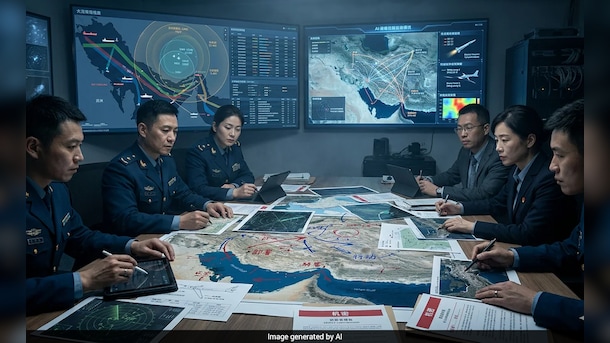
China Is Mining The Iran War For Lessons On US Military Power

China is studying two wars at once: Op Sindoor for lessons on Indian air defence and Beijing-backed Pakistani systems, and in Iran for US strike doctrine, AI targeting and air-defence saturation - with Taiwan as a likely endgame.
-
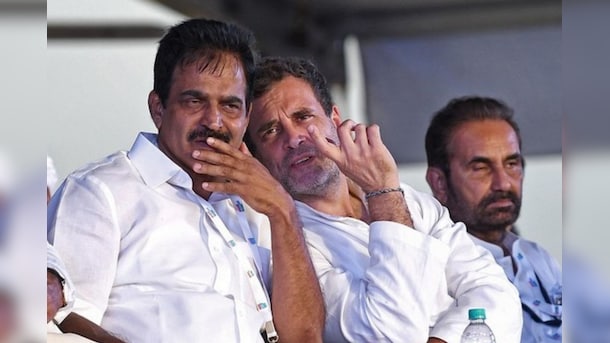
Opinion | KC Venugopal, And The Paradox Of Being The Man Rahul Can't Do Without
If KCV, Rahul's most trusted lieutenant in Delhi, ends up becoming Kerala Chief Minister, the Congress will have put its own credibility on the line in the state. But does the party care?
-
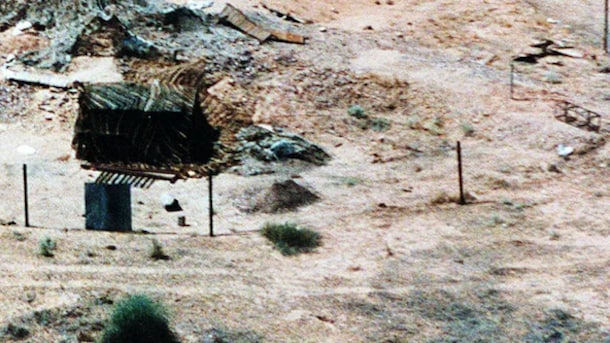
How 'Smiling Buddha' In Pokhran Permanently Altered India's Place In Global Politics
On May 18, 1974, coinciding with Buddha Purnima, India conducted what it officially described as a 'Peaceful Nuclear Explosion', code named 'Smiling Buddha'.
-
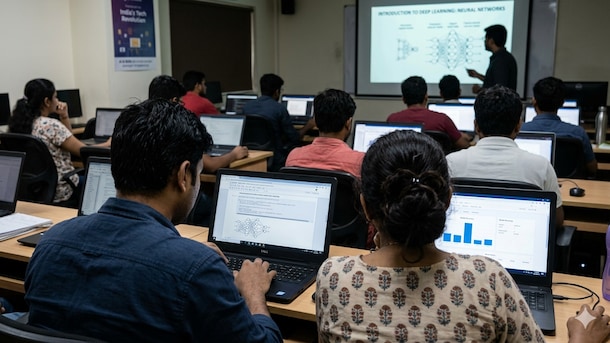
AI Courses Are India's New Craze. But Are They Helping Students Land Jobs?
National Technology Day: From campuses to workplaces, Indians are racing to learn AI for jobs, fuelling a nationwide surge in practical AI courses.
-
Blog | Suvendu Adhikari: The Man Who Never Forgot How He Was Denied A Stage In 2011
The story of Suvendu Adhikari begins in 2011 - from a stage in Dharmatala that made him invisible and denied him the limelight he thought should've been his.
-
Analysis | What Are Vijay's 5 Big Options Right Now? Look At Maharashtra, Bihar, And Karnataka
Governor's 'discretion' can play a big role in what happens after an assembly election throws up a hung verdict. Here's how three states navigated this deadlock.
-
Opinion | One Year Of Op Sindoor: Why 'Round 2' Will Be A Different Beast Entirely
Drones, China and Trump. A sequel to Operation Sindoor is not just likely, but it will also be highly challenging.
-
Opinion | Is INDIA Bloc Set To Split After Tamil Nadu, Bengal Results? A Look At The Mess
Curiously, the disintegration of the Opposition alliance is something a section of leaders within the Congress might even be looking forward to. Here's what may come next for the bloc...
-
Opinion | Wrong To Delay Vijay 'Sarkar', Two Leaves Must Blow The Whistle
This is a clear case - Vijay's TVK is the number one party by a mile in a hung verdict and needs to have the chance to prove its numbers on the floor of the house