Opinion | What's Behind Araghchi's Visit To China Right Before Trump-Xi Meeting?
Beijing remains indispensable to Tehran as an economic backer and diplomatic shield, but it is not prepared to become its war ally.
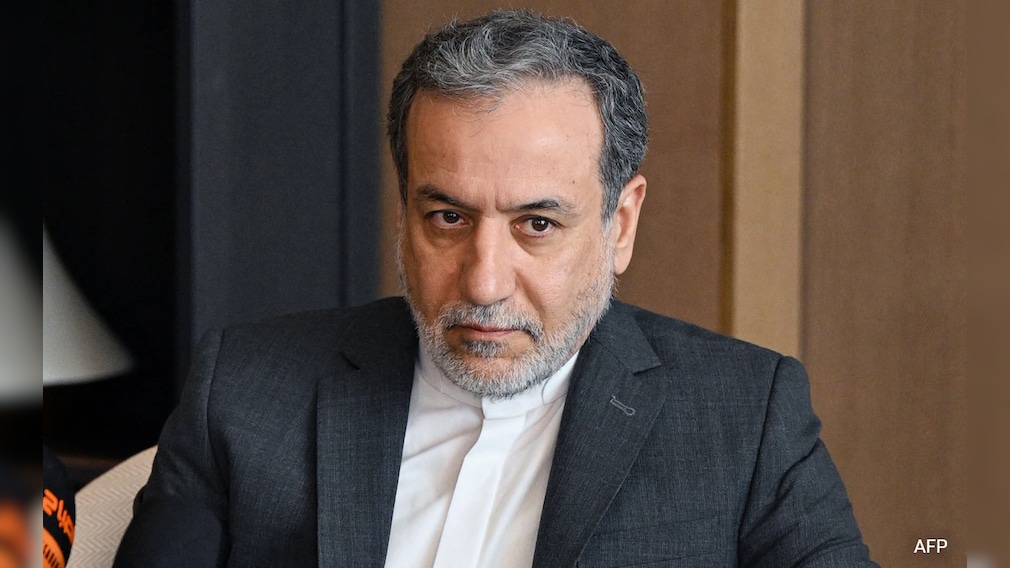
Iranian Foreign Minister Abbas Araghchi travelled to Beijing last week for consultations with Chinese Foreign Minister Wang Yi. The visit carried considerable geopolitical weight. It marked Araghchi's first trip to China since the onset of the US-Israeli military campaign against Iran on February 28 - conflict that has unsettled regional balances, disrupted global energy markets, and culminated in Tehran's closure of the Strait of Hormuz.
The timing was equally revealing. Araghchi arrived in Beijing only days before US President Donald Trump was scheduled to hold talks with Chinese President Xi Jinping. Unsurprisingly, discussions ranged across bilateral ties, regional stability, the reopening of Hormuz, sanctions, and Iran's nuclear programme. Beijing reiterated its now familiar emphasis on de-escalation, diplomacy, and respect for Iranian sovereignty, while simultaneously underlining the imperative of restoring stability to global energy flows. Araghchi, for his part, endorsed elements of China's four-point peace proposal and projected Iran's resilience by arguing that the crisis had elevated Tehran's international standing.
This visit underlines China's evolving role in the US-Iran confrontation: influential, indispensable in some respects, yet fundamentally cautious and constrained by its own strategic calculations.
China today functions as Iran's principal economic lifeline. It remains by far the largest purchaser of Iranian crude, at times absorbing nearly 90% of Tehran's oil exports despite sanctions pressure. This relationship has provided Iran with critical financial breathing space even as Western restrictions tightened. Beyond oil, reports linking Chinese firms to dual-use supplies, including missile and drone-related components as well as chemicals such as sodium perchlorate, reinforce perceptions that Beijing has quietly enabled aspects of Iran's strategic resilience while maintaining plausible deniability.
Diplomatically, China has sought to position itself as a responsible stabilising power. Beijing has condemned US-Israeli strikes as violations of international law, defended Iran's "legitimate rights", and projected itself as a potential mediator through calls for ceasefires and broader regional dialogue. This posture aligns with China's wider effort to contrast its preferred image of order and predictability with what it portrays as American-led instability. The sequencing of the Araghchi visit before the Trump-Xi engagement was, therefore, hardly accidental; it allowed Beijing to signal strategic relevance in West Asia without directly confronting Washington.
Yet, China's approach remains deeply transactional. Beijing benefits from discounted Iranian oil and from a United States distracted by another regional crisis, but it has shown little appetite for deep strategic entanglement. Unlike a formal ally, China has avoided overt military commitments to Tehran and continues to balance its ties carefully across the region, particularly with Saudi Arabia, the United Arab Emirates, and even Israel where economic interests remain substantial. Reports of limited material support to Iran appear calibrated precisely to avoid triggering direct confrontation with the United States or jeopardising broader Chinese interests.
The broader geopolitical context is equally important. The Iran crisis offers Beijing useful leverage in its larger strategic competition with Washington, whether on trade, technology, or Taiwan. At the same time, China's self-image as leader of the Global South and advocate of a "community of shared future" is reinforced when it presents itself as a voice for restraint and sovereignty. But these ambitions are ultimately bound by pragmatism. As the world's largest crude importer, China's overriding priority remains energy security and the prevention of prolonged disruptions that could damage its already fragile economic recovery.
This explains the limits of Chinese leverage over Iran. The relationship is asymmetric, but not in ways that necessarily translate into decisive influence. Iran depends heavily on China for energy revenues and sanctions circumvention, yet China retains multiple alternative energy options and has historically underdelivered on ambitious investment commitments, including the much-publicised 2021 strategic partnership agreement. Moreover, much of the Iranian oil trade flows through semi-private Chinese refiners, limiting the degree of direct political control Beijing can exercise.
More significantly, China offers Tehran no meaningful security guarantees. Beijing has consistently avoided commitments that could entangle it militarily in West Asian conflicts or threaten its economic ties with rival regional actors. Iran, despite its dependence, continues to pursue an autonomous strategic course shaped by regime survival and ideological considerations rather than Chinese preferences. Previous episodes involving regional proxies and militia networks have already demonstrated the limits of Beijing's ability to shape outcomes on the ground.
Ultimately, the Araghchi visit underscored both the importance and the limitations of the China-Iran partnership. Beijing remains indispensable to Tehran as an economic backer and diplomatic shield, but it is not prepared to become Iran's war ally or strategic guarantor. China can encourage de-escalation, push for the reopening of Hormuz, and leverage the crisis in its broader engagement with Washington. What it cannot do - and appears unwilling to attempt - is fundamentally dictate Iranian strategic choices. This reflects the larger pattern of Chinese statecraft in West Asia: pragmatic, risk-averse, and carefully calibrated to maximise influence without assuming the burdens of regional leadership.
Disclaimer: These are the personal opinions of the author
-
Opinion | India Has A 'Lobbying' Problem In Washington, And It Has Come Back To Haunt It

While the EU, Japan, the UK and South Korea secured quick deals, India's efforts were getting drained in prolonged negotiations and the wrong kind of lobbying.
-
Opinion | The AI Boom Has Run Into A Big 'Debt' Trap Problem. Inside The 5% Danger Line
For most of the AI buildout's first two years, hyperscalers funded it the easy way: out of operating cash flow. That era is over.
-
Opinion | Iran To Saudi, Pakistan Is Now Fast Running Out Of Sides To Play
Pakistan's long history of playing all parties to its own benefit may have reached the end of its road.
-
Gyanesh Kumar Has An Immunity Pin. Why A Petition Says He Can't Use It
The Opposition wants the Chief Election Commissioner prosecuted for alleged manipulation of voter rolls, but a 2023 law stands in the way. A petition in the Supreme Court now says the law has a gap.
-
Opinion | Is The World Staring At A Big Stock Market Crash - And Recession? 5 Uneasy Signs
On Wednesday, the US bond market recorded its worst day since Trump's "Liberation Day" tariffs rattled markets in April 2025. The 30-year US Treasury yield topped 5.43%, putting it on track for its highest close since 2004.
-
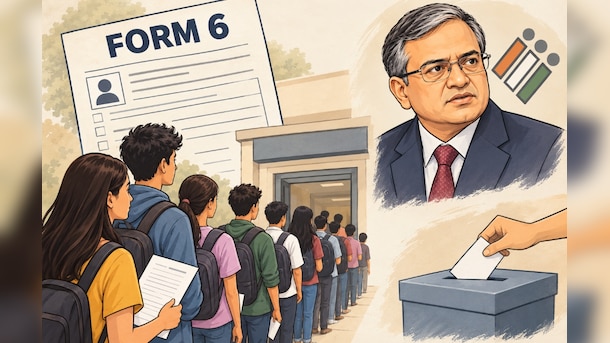
Form 6 For New Voters: When A Small Change Triggered A Big Row
In July 2026, the online version of Form 6 on the ECI's ECINet portal was modified to include a new declaration.
-
Opinion | Saudi Arabia's China Turn Has Begun - After Learning Much The Hard Way
Leaning on China just makes sense for the Saudis right now. The question is, can its other great 'ally' stomach it?
-
Opinion | Bihar Assault, Hisar Marriage Ban: Who'll Stop The Guardians Of Indian 'Culture'?
Why exactly does the sight of a young couple seeking a bit of alone time somewhere tend to particularly provoke a certain kind of Indian men?
-
Opinion | The Trump-Xi Summit, And India's Many Worries Of Its Own
Washington and Beijing may have chosen coexistence over confrontation. For India, that could be both a relief and a warning.