Opinion | There Are Two Big Problems Trump May Run Into If He Actually Attacks Iran
It is impossible to predict with certainty if the US will take the military option, but if they do, it will be from a position of discomfort.
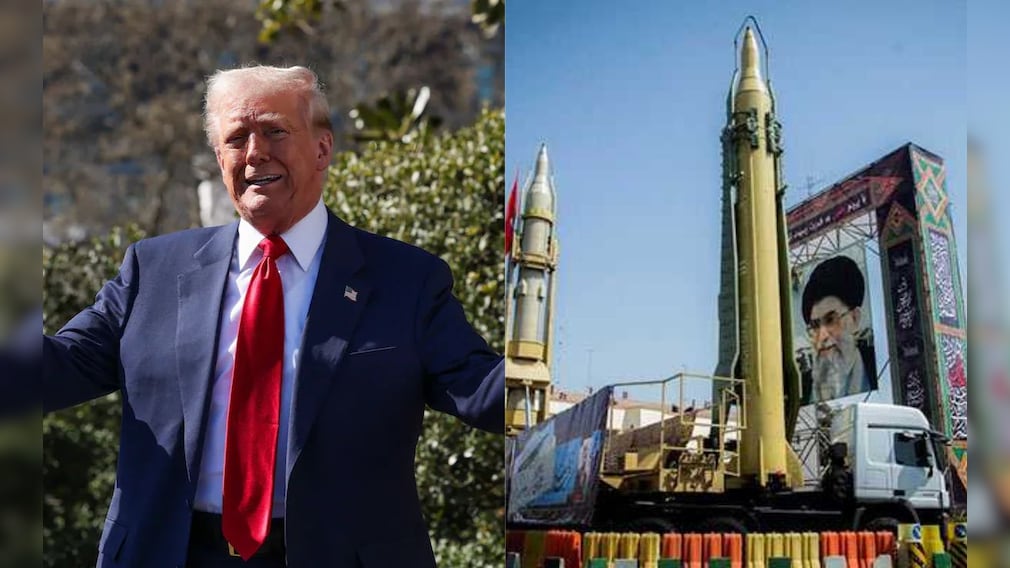
The growing US military presence in the Gulf signals a potential military operation targeting Iran. While the objectives remain unclear, any use of military force would come with distinct constraints for the Trump administration.
The Trump administration faces two broad military options with differing objectives and limitations. The first is a limited air operation aimed at the destruction of the Iranian leadership and the Islamic Revolutionary Guard Corps (IRGC) and/or destroying the country's nuclear-enriched stockpiles. The second option involves a sustained campaign aimed at ensuring that the current Iranian regime and its nuclear programme are eradicated from their roots and are replaced by a system that is acceptable to the United States and its regional allies. For the administration, the first option has several external, long-term constraints despite being a comfortable immediate one. The second option might have greater domestic, immediate constraints, but might be safer for attaining the desired outcome in the long term.
Limited Strike
This option carries the fewest immediate constraints. It also appears the most likely outcome given the current US military posture, which has limited ground offensive capability but strong air and maritime capability. Without a sustained on-ground troop deployment, such an operation would not require prior Congressional backing. It would also limit risks to US personnel and assets. A limited strike would receive support from partners such as Israel, as was seen during the June 2025 strikes. The United Kingdom is also likely to play a defensive role focused on asset protection.
The primary constraints under this option emerge in the post-conflict phase. Israel, the central US partner in this scenario, seeks a permanent end to the Iranian threat. This would require the removal of the current regime, its replacement with a pro-Western system, and the destruction of Iran's nuclear stockpile. As demonstrated during the June 2025 confrontation, limited strikes alone do not guarantee the desired outcomes.
Recommended
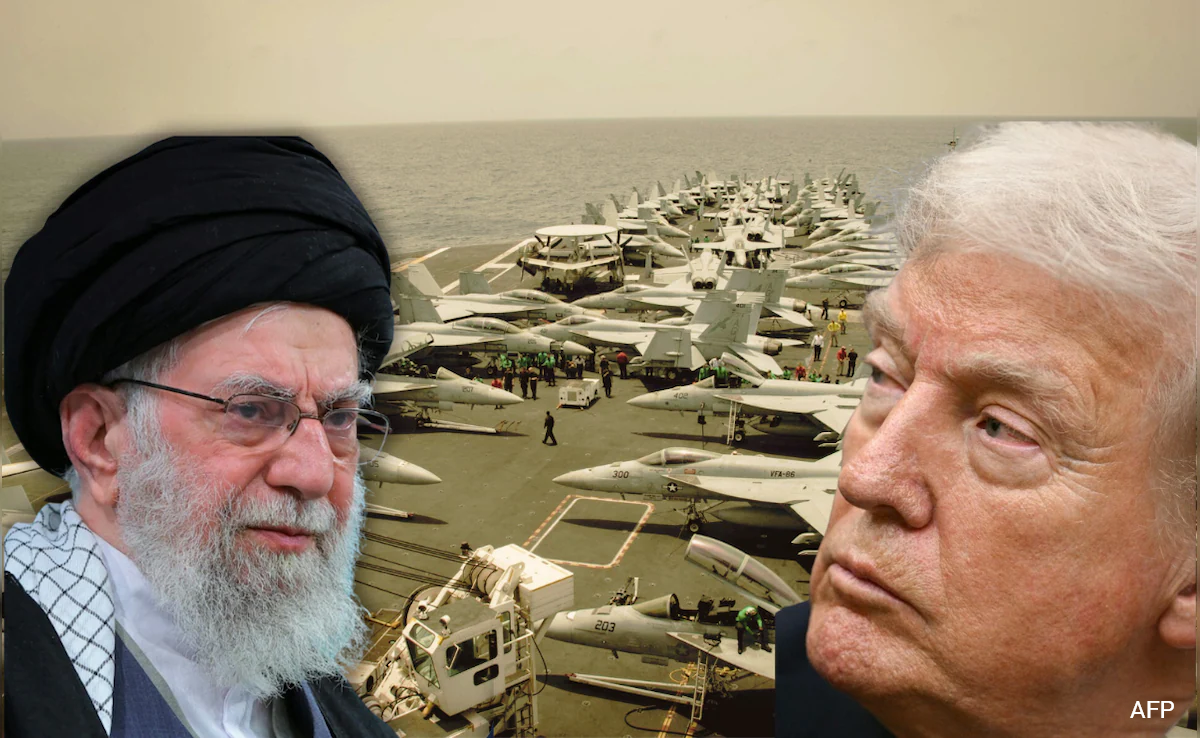
Also Read | Iran Requires a Regime Change, Just Not The Kind America Wants
The destruction of nuclear stockpiles without a regime change is likely to provoke strong Iranian retaliation in the short term. Over the longer term, Iran would attempt to re-establish its nuclear programme. This, in turn, would stall negotiations between Iran and the West for the foreseeable future, while sanctions remain in place. Iran would be left more distrustful of the West, allowing greater leverage for China and Russia.
If regime change were to follow the destruction of the IRGC, the administration would face the challenge of managing the resulting power vacuum. Wider instability within Iran and the surrounding region would become likely. On-ground troop deployment remains the only effective means of ensuring post-regime change stability and the establishment of civilian governance. However, this option is constrained by political and coalition limits.
Limits To A Sustained Campaign
If Trump were to launch a sustained ground campaign in Iran, he would face significant resistance from Congress and from allied partners. These constraints would narrow operational flexibility and increase pressure to bring the campaign to a rapid conclusion.
There is bipartisan consensus within Congress against sustained military intervention in Iran. This opposition is driven by fears of prolonged foreign entanglement and the risk of regional escalation. At the same time, Congress has expressed concern over deteriorating human rights conditions within Iran.
The members have repeatedly expressed growing concerns about the misuse of presidential authority to deploy force that is largely derived from Authorization for Use of Military Force (AUMF) provisions. This concern was first expressed in early December, when, as part of the National Defence Authorization Act, 2026, Congress repealed the AUMF on Iraq. This was followed by the Congressional opposition to the administration's use of force in capturing Venezuelan President Nicholas Maduro in early January this year.
Also Read | Iran's Long History Of Failed US Plots Using Low-Level Criminals
Congress is currently engaged in negotiations over the federal budget and associated appropriations bills. In the case of an escalation with Iran, Congress retains the power to introduce provisions restricting funding for a sustained military campaign. It must also approve the use of US forces in a prolonged ground operation.
Electoral considerations ahead of the November 2026 mid-term elections further constrain support. Potential US military casualties, damage to national assets and erosion of international prestige would weigh heavily on decision-making. Disruptions to global supply chains and oil shocks resulting from a potential blockade of the Strait of Hormuz would also factor into Congressional calculations. The elections will also keep the administration cautious from pursuing a "fait accompli" approach, whereby the Congress would be compelled to support the administration's military actions against Iran.
In all scenarios, Congressional support remains essential for sustaining a prolonged military campaign.
How Partner States May Respond
The United Kingdom has joined US troop deployments in the region, focusing on the protection of UK assets and the defence of partners such as Qatar. Israel is also likely to support US military action against Iran due to shared strategic interests, as seen during the July 2026 strikes. Kurdish groups may also play a role in a sustained campaign. The US maintains bases across multiple regional states that could become operational during conflict.
However, this apparent support also creates challenges. Several regional partners, including Qatar, Oman, the UAE, Iraq and Saudi Arabia, have denied the US their airspace for carrying out attacks against Iran. These states oppose regime change in Iran and fear regional instability and retaliatory escalation that would undermine their interests.
US treaty allies and NATO partners such as Japan, Australia, the UK and France are also reluctant. While they supported earlier campaigns in Iraq and Afghanistan, a conflict with Iran presents higher political and strategic risks. China's growing assertiveness constrains Japan's ability to contribute troops. NATO is also experiencing internal divisions and declining confidence in US leadership following the rift over Greenland. Some states may still feel compelled to contribute due to their partnership with Israel.
Israel may be willing to deploy troops into Iran, but a sustained campaign risks triggering internal instability and renewed pro-Palestinian militant activity. These risks would limit the scale and duration of Israeli troop contributions. The Kurds remain an important regional partner and potential contributors. However, they have also expressed declining trust in the US as a reliable ally following developments in Syria.
All these political and coalition constraints significantly limit the Trump administration's ability to execute a sustained military campaign against Iran. Taken together, the Trump administration faces strong limits on conducting any form of military strikes against Iran. These limitations also explain the renewed attempts at US-Iran negotiations and the administration's seeming preference to maintain the status quo despite the built-up over the past few weeks. It is impossible to predict with certainty if the US will take the military option, but if they do, it will be from a position of discomfort.
(Abhishek Kadiyala is a Research Analyst at Takshashila Institution's Indo-Pacific programme with a focus on the United States and US-India relations. Views expressed in this article do not represent the views of the institution)
Disclaimer: These are the personal opinions of the author
-
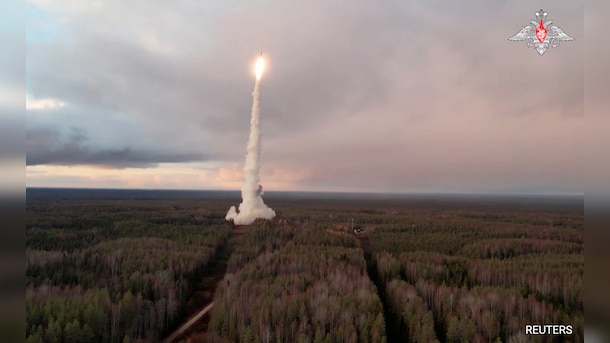
No START To Check US-Russia Nuclear Arms Race. What It Means For India

With New START expiring and uncapping US-Russia nuclear arsenals, India is seen as facing heightened risks, sandwiched between China's 600-warhead surge and Pakistan's buildup while North Korea watches.
-
The Washington Post 'Bloodbath': $100 Million Losses And Trump 2.0 Shadow
The Washington Post - which made history by exposing President Richard Nixon in the Watergate scandal - has announced "substantial" cuts to its estimated 1,000-strong journalism roster.
-
Blog | The Descent Of Man (And MP) - By Shashi Tharoor
"Having spent decades navigating the slippery slopes of policy and the treacherous inclines of debate, it was, quite ironically, a simple marble step that proved to be my undoing."
-
Blog | Salman Khan, Now Rohit Shetty: The Bishnoi Threat Isn't New For Bollywood
The recent attacks on Rohit Shetty and Salman Khan have rekindled flashes from a chapter many thought had long been buried.
-
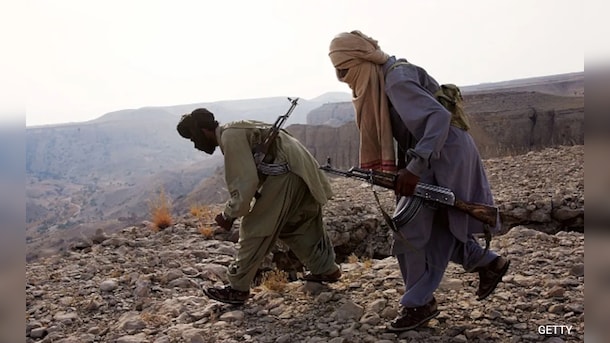
Opinion | Who Lit The Fire In Balochistan? Pak's Explanation Avoids The Obvious
It's time sensible Pakistanis did a rehash of just who their enemies are. They might get a surprising list.
-
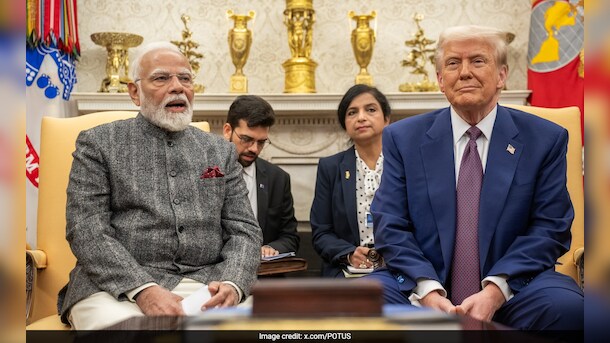
Opinion | Two Peculiar Reasons Behind The Timing Of India-US Trade Deal
India should be clear-eyed about risks. What proclamations give, proclamations can take away. If compliance is judged by mere political mood, sanctions and penalty tariffs can return with little warning.
-
Opinion | Pak's India Match Boycott: How To Self-Destruct To Make A 'Point'
In the long run, it will be Pakistan who will be wounded the most by this, left bleeding from not one but multiple cuts - hefty fines, potential legal action, and maybe even a ban. All for some chest-thumping.
-
Opinion | US Trade Deal: Is This Trump's 'FOMO' After The India-EU Pact?
The India-EU free trade pact wrong-footed the US, turning on its head the very playbook Trump was using to browbeat America's trading partners.
-
Decoding India's EU, US Trade Deals And A Likely $150 Billion Boost
India announced two mega trade deals - one with the European Union and another with the United States - in the space of a week.
-
Opinion | Budget 2026: Is 'Invisible Kerala' Paying The Price For Being 'Unaligned'?
What Kerala needs is not just sympathy or slogans. We need an alternative that commands respect in Delhi and delivers development in Kerala. Right now, we have neither.