Opinion | Trump-Xi Meeting, And The Problem With Dismissing America Too Soon
America is bruised, sure. But appearances can be deceptive in great-power politics.
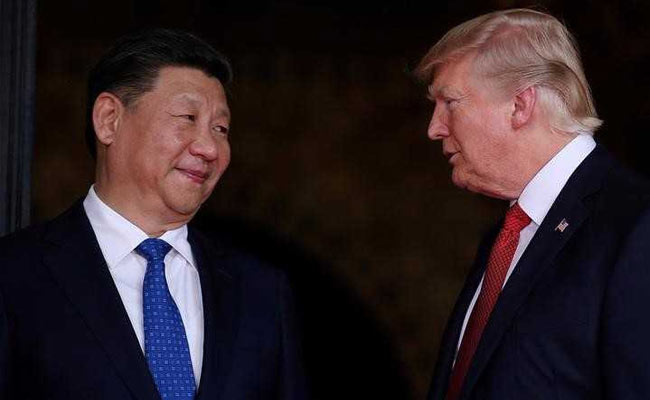
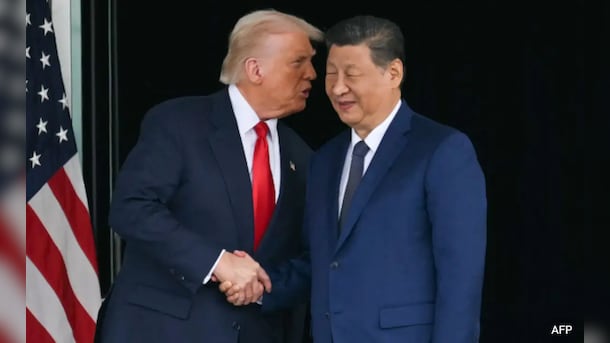
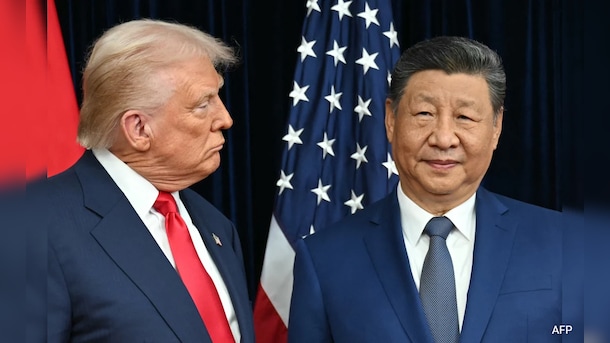
In the opening hours of Donald Trump's first day of meetings in China, Xi Jinping appears to be sending a clear message: let's address the hard stuff upfront. Central to Xi's messaging was the warning that the "Taiwan question" remains fundamental to the future of Sino-US ties. At the same time, Xi emphasised the possibility of Washington and Beijing evolving into economic partners rather than strategic rivals. And in his outreach to American CEOs, he signalled China's willingness to further open its economy to US businesses.
These almost perfunctory messages are along expected lines, and most don't expect much to come out of Trump's maiden visit to China during his second term. The real intrigue regarding this trip stems from the domestic and global political circumstances Trump finds himself in. As he boarded the Air Force 1 to Beijing, the general perception was that a significantly weakened American leader was meeting his Chinese counterpart.
The question is, is this perception accurate? And if yes, does it give Xi greater leverage?
Let's consider Trump's position across three different parameters.
On the broad question of geopolitics and the US's position in the world as the preeminent power, America has taken an undeniable beating. The summit with Xi was originally scheduled to take place in April, but Trump postponed it to May with the hope that he could end the war in Iran before taking the trip to Beijing. But that didn't happen; the Strait of Hormuz continues to be closed, and Washington and Tehran are arguably as close to a deal as they were before this war started.
More than the actual outcome of the war, what seems to be looming in the background is the supposed reputational hit the US will suffer from initiating this stalemate of a war. Standard international relations speak suggests that historically, empires die when they overstretch. However, neither this war will end the US's superpower status, nor has any of the US's previous reckless outings in Iran, Afghanistan or Vietnam.
On the question of reputational ramifications, the verdict so far seems to be a bit mixed. While the US Central Command's inability to retain its dominance over Hormuz is striking, it might be a stretch to extrapolate from it. After all, Hormuz is arguably the trickiest of chokepoints. More structurally, the fact that no other country has the capacity to even pretend to be a security partner (or guarantor) to such a vast number of countries makes Washington distinctly indispensable.
When it comes to Trump's economic performance, it's much more complicated. While the US markets seem to be scaling new heights, a closer look paints a much darker picture. According to research by UBS, just 42 stocks are responsible for the S&P 500's total returns. This number generally hovers around 100. Rapid economic growth and booming markets - driven by the AI boom - seem increasingly schizophrenic in the face of rising inflationary pressure from the tariff and energy shocks.
The US just recorded its highest wholesale inflation reading since 2022, with producer prices rising 6.1%. Its ramifications are being felt across the economy. "Higher energy and food costs, combined with SNAP and Medicaid cuts, are pressuring the bottom-income quintile," noted a recent research note by Goldman Sachs. It shows how even the US middle class is beginning to see a fall in its disposable income. Another report by the Financial Times shows that the prices for petrol have risen to $4.55 a gallon, from $1.9 on the eve of the war. Meanwhile, diesel, which fuels the US industry and transportation, has hiked to $5.66, close to the all-time high of $5.82. Expectedly, this is affecting Americans unevenly. While the top third of US income earners have been unaffected, the bottom third have reduced their consumption by 7%.
Additionally, the hit to the US fiscal math is also significant. Before the war commenced, the US Federal Reserve was expected to cut interest rates. It was precisely to cut rates that Trump brought in his handpicked choice as the next Fed Chair, Kevin Warsh. As inflationary pressure begins to creep up, the Fed might have to seriously contemplate a rising rate. For Trump, rate cuts seem mostly off the table before the midterm elections later this year.
Lastly, what does this mean for Trump politically, especially given the lingering midterms? Trump rose to power by positioning himself as the messiah of large swathes of the US population that had been left out during the decades of US-led hyperglobalisation. During the 2024 polls, Trump was highly popular among the lower-middle- and middle-income Americans. These will be the most hit sections by the rising costs. Besides, the MAGA consensus was all about staying away from mindless wars. How the protracted Iran war will affect Trump's popularity among his MAGA base also remains to be seen.
Now add to it China's stranglehold over a large portion of merchandise goods and its growing willingness to weaponise its dominance over critical inputs and rare earth magnets, and Trump's relatively weak hand vis-à-vis Xi makes itself obvious. "Trump arrives in Beijing as an unpopular leader in a weakened position. But Xi may be satisfied with incremental gains for now. He can afford to play a long game," argued Gideon Rachman in the Financial Times.
However, it is precisely this "long game" being played by China that requires some unpacking. There are primarily two components here.
First, China's dominance over global supply chains has now reached unprecedented levels, as was evident in its $1.2 trillions goods surplus in 2025. But much like the US, headline numbers hide the real story. The Chinese model is built on severe financial repression, which suppresses household savings and consumption, and directs the financial surplus to industries in the form of cheap credit. Following the 2020 real estate crash, the surplus money was rapidly directed to a plethora of industries - batteries to electronic vehicles to solar - in the form of staggering central and local government subsidies. These are precisely the sectors that are now flooding global markets with cheap exports and account for China's gargantuan trade surplus.
This would have been a story of exceptional industrial success, were it not for domestic Chinese producers who are essentially facing a rapid rise in export volumes, but with no profits to show. In China, this phenomenon is referred to as "neijuan" (meaning involution), which effectively highlights an excessive competitive dynamic between firms, forcing all of them to engage in price wars and leaving them profitless. What is driving this involution? The ever-growing size of industrial subsidies in China.
The issue is that the Chinese domestic political economy - primarily a function of intense inter-provincial competition - is designed to continue these subsidies. There is no easy way out of this model. For Xi, the problem is that Chinese firm owners are beginning to speak up - a rare occasion in the Communist Party's tightly controlled system. The costs of the underlying export-oriented model on steroids are beginning to become apparent.
However, it is outside China where the true costs of China's raging trade surplus are felt the most. While China Shock 1.0 de-industrialised parts of the US, its ongoing second iteration is hollowing out industrial sectors across Europe and Southeast Asia. The catch here is that China relies on the rest of the world to absorb its exports. If these countries someday choose otherwise - arguably at the cost of severe medium-term inflation - what options would Beijing have?
As it stands, not only does the US continue to enjoy a highly dynamic economy, but it remains the strongest military power - never mind the greatest consumer of Chinese goods. As Xi meets Trump later this week, it doesn't really matter if more than half of America is suffering on account of the war in Iran. After all, it is not that Xi draws his strength from popular legitimacy among the Chinese populace.
Disclaimer: These are the personal opinions of the author
-
Opinion | One Person In Gandhi Family Is Smiling Over Satheesan's Kerala Win - Despite Rahul

Rahul Gandhi was seen as leaning towards Venugopal. Priyanka Gandhi favoured Satheesan, while Sonia Gandhi was more sympathetic to Chennithala. In that triangular power play, Priyanka's reading prevailed.
-
Opinion | Congress's Old Problem Is Back: Over-Confidence Without Numbers
Rahul Gandhi's recent assertion at a rally in Gurugram, that the Congress alone can defeat the BJP, is puzzling. When has arrogance ever worked for the party?
-
VD Satheesan: The Man Who Saved Congress - And Yet Almost Got Ignored For It
Satheesan's biggest achievement is not simply winning an election. It was rebuilding trust inside a broken organisation through the idea of "Team UDF".
-
Iran's Missiles Still Flying, So Is Hormuz Threat. US May Be Running Out
Reports the Iranian military is far from the spent force the Trump administration wants everyone to believe it is have been followed by news that attacks may resume.
-
Opinion | The Man Who Split AIADMK: Edappadi Palaniswami And His Politics Of Self-Sabotage
The fact that 25 AIADMK MLAs voted for Vijay and only 22 voted against the TVK government shows that Palaniswami no longer has the control of the legislature party. The writing is on the wall.
-
Opinion | The Great Gulf Divorce: The UAE Has Broken From The Arab Order - But For What, Really?
For half a century, the UAE survived by balancing Arabia, America and Iran. Now, it seems to have chosen a side.
-
Opinion | The Beijing Visit: Why Does Trump Suddenly Need Xi Jinping?
There is a real possibility that in the mid-term elections in November, Trump may lose the House of Representatives and may become a lame-duck president. How far should it invest in an agreement with him is the question.
-
Opinion | NEET Paper Leak: When Incompetence Becomes The System
India had been here before, exactly two years ago. The language was the same. The apology was the same. The promise was the same. Only the year had changed.
-
Opinion | Trump-Xi Talks: When One Is Playing Chess, And Other Is Flipping The Board
Xi seeks cumulative advantage. Trump? Short-term spectacle. This distinction will decide what comes of the talks between the two leaders this week.
-
Opinion | 'Hellish Difficulty': Why India Should Be Keeping An Eye On China's New 'Shipborne' Drone
The GJ-21, which has a reported combat attack radius of up to 1,500 kilometres, when combined with a land-attack long-range precision-strike system, can have the ability to strike deep within a territory's mainland.