Opinion | Prashant Kishor Is Now Facing The Hardest Test Of His Entire Career
The strategist who once told parties how to win must now prove that he knows how to do that himself.
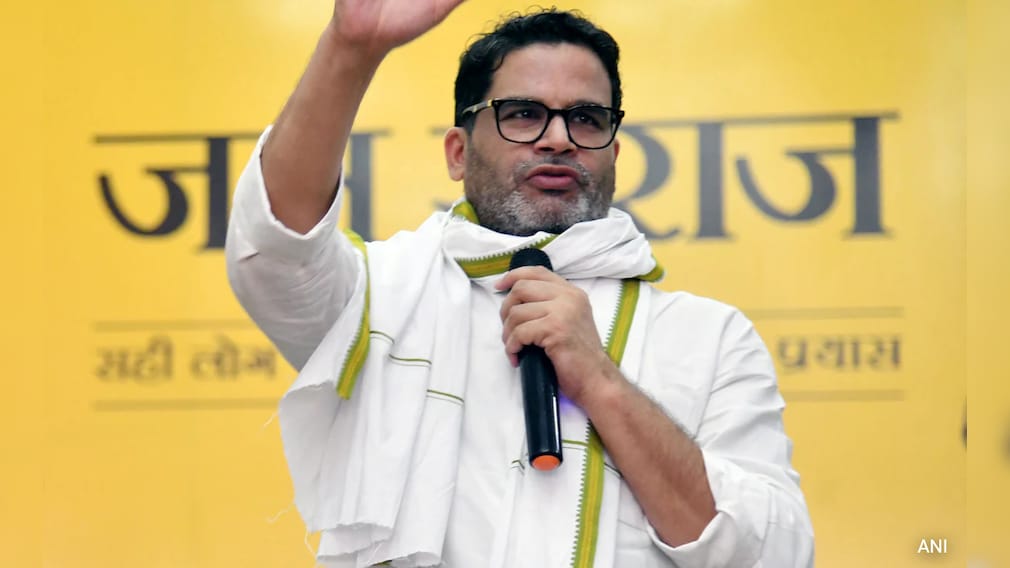
For more than a decade, Prashant Kishor has been an unusually visible invisible man. He helped craft campaigns, read voter moods, found language for leaders, shaped alliances, advised parties, and often seemed to understand Indian politics better than many who practised it full-time. Yet his power lay in remaining adjacent to authority. He could influence outcomes without having to suffer the permanent injuries of elected politics. Bankipur changes that.
The by-election for Bihar's Bankipur Assembly seat is scheduled for July 30. The seat fell vacant after Nitin Nabin resigned as MLA following, first, his elevation as the BJP National President, and then his subsequent election to the Rajya Sabha. Ordinarily, this may have been treated as a routine vacancy in a safe seat. But it has acquired disproportionate interest because Jan Suraaj's Prashant Kishor has announced that he will contest from here, marking his first real plunge into the electoral arena.
During the 2025 assembly elections in Bihar, Kishor had repeatedly generated speculation around his own candidature but eventually stayed out of the contest. Jan Suraaj contested widely but failed to win a seat. His decision not to contest was widely seen as one of the reasons the party's poor performance hurt its credibility more than it might otherwise have.
Bankipur is, therefore, not a debut in the romantic sense. It is a corrective examination after a failed first attempt. The strategist who once told parties how to win must now prove that he knows how to be chosen.
From Congress's War Room To Bihar's Mohalla
There is a revealing thread running through Kishor's political journey. In 2021 and 2022, when his talks with the Congress appeared serious, the central issue was not whether he had ideas. The Congress did not doubt his skills. The problem was authority.
Kishor reportedly wanted a free hand to revamp the party's political strategy, alliance-making, and election machinery. The Congress, in its familiar style, appeared willing to create panels, but not necessarily the kind of executive freedom he sought. There were old anxieties, too: should he be treated as a consultant, an office-bearer, a member, a strategist, or a disruptor?
Kishor's eventual break with the Congress was not just a failed negotiation; it also marked a psychological turn. If established parties would not give him the authority to change them, he would build a vehicle of his own. Jan Suraaj came out of that conviction.
Bankipur Is An Opportunity And A Trap
Bankipur is a tempting battlefield for Kishor. It is one of Patna's most talked-about and VIP urban seats. It is part of the Patna Sahib Lok Sabha constituency and sits inside the capital's political imagination. It is urban, visible, media-friendly, and politically alert. Voters here are likely to respond to the vocabulary of governance, public services, corruption, jobs, infrastructure, and middle-class aspiration. For a leader who speaks the language of systems and state capacity, Bankipur offers a constituency that can understand his argument.
But it is also a trap. Bankipur is not some virgin land. It is a BJP fortress, and, by most measures, an unusually strong one.
The seat came into existence after the 2008 delimitation. Before that, this area was part of the Patna West Assembly seat. In the 1980s, the Congress and Janata Dal influence was visible here. But from the mid-1990s, the constituency and its predecessor space began turning decisively towards the BJP.
In 1995, BJP leader Nabin Kishore Prasad Sinha won from here and remained MLA till 2005. After his death, his son Nitin Nabin inherited the political legacy. Between father and son, the family has given the BJP a near-continuous hold over this urban seat: Nabin Kishore Prasad Sinha won four times, and Nitin Nabin followed with five victories of his own.
Since 1985, except for two occasions, the BJP has won every time at Bankipur. Turnout has often been modest, but BJP victories have been emphatic.
Credibility Before Power
A single bypoll will not alter Bihar's power structure. The government will not fall. The opposition will not be resurrected. Bankipur will not redraw the state's map. But it can redraw Kishor's credibility.
The immediate stakes are not legislative power but political seriousness. Jan Suraaj's biggest challenge after 2025 is not that it lost. New parties lose. Its deeper problem is that it did not convert intellectual and moral energy into enough electoral weight. It was discussed more than it was voted for. Bankipur can repair that gap.
A victory would transform Kishor from commentator to claimant. It would give him an Assembly platform, constant visibility, and a direct constituency. It would also puncture the comfortable argument of his rivals that he is only a vote-cutter or a media-savvy strategist who cannot survive real politics.
A respectable performance would also matter. If Kishor disrupts the BJP's margin, consolidates urban anti-incumbency, or overtakes the opposition in a visible seat, he will be able to say that Jan Suraaj has found a starting constituency: urban, aspirational, impatient, and open to a governance-first appeal.
But a weak result would be brutal. It would suggest that Bihar listens to Kishor, but does not yet trust him with power.
What BJP And Opposition Will Watch
When it comes to Bankipur, there is also a larger BJP calculation at play. Since the 2024 Lok Sabha election, where the party fell short of a majority on its own, it has had reason to be cautious about avoidable Lok Sabha bypolls. Every parliamentary seat is valuable. This is why the party has generally avoided creating unnecessary Lok Sabha vacancies by moving MPs into state roles or constitutional offices.
In Bihar, the assembly arithmetic offers more comfort. The BJP is in a position where it can remain in government with allies even without needing the same level of seat-by-seat anxiety that exists in the Lok Sabha. This perhaps explains why Nitin Nabin could be moved out of Bankipur and sent to the Rajya Sabha. The party appears confident it can retain the assembly seat.
The opposition will watch Kishor with equal interest. The Congress may be tempted to support him, but the Rashtriya Janata Dal (RJD) is expected to field its own candidate. A triangular contest may make the BJP's task easier. But it also gives Kishor what he seeks most: a stage where he is not merely an observer of Bihar politics, but a principal actor in it.
For the RJD-led opposition, Kishor's rise carries a different anxiety. Kishor may not immediately defeat the BJP statewide, but he can disturb the anti-BJP space. In Bihar, opposition politics has often depended on the assumption that dissatisfaction with the government will eventually return to familiar anti-NDA parties. Jan Suraaj challenges that assumption.
Can Jan Suraaj Become Social, Not Merely Strategic?
Kishor has always been excellent at locating political vacancies. Bihar has many. There is fatigue with dynastic entitlement. There is fatigue with administrative stagnation. There is fatigue with migration, exam uncertainty, unemployment, corruption, crumbling public services, and the old argument that Bihar must choose only between fear and familiarity.
Jan Suraaj speaks to this fatigue. It invokes governance, dignity, education, employment, and local problem-solving. It asks voters to look beyond inherited loyalties.
But Bihar is not governed by abstract fatigue alone. It is governed by social coalitions. Lalu Prasad Yadav did not merely speak of social justice; he embodied backward assertion. Nitish Kumar did not just highlight governance; for a time, he became the administrative correction to disorder. The BJP does not simply stand for nationalism and aspiration; it combines ideology with booth machinery.
What does Kishor embody? This is the unresolved question.
A party cannot live forever on the founder's intellect. It needs local custodians, district intermediaries, caste bridges, booth workers, small donors, grievance handlers, and candidates who can survive without the founder's shadow.
Bankipur may give Kishor his first elected foothold. It will not, by itself, give Jan Suraaj a social base. That work remains longer, slower, and less glamorous.
(Rasheed Kidwai is an author, columnist and conversation curator)
Disclaimer: These are the personal opinions of the author
-
How Batman: The Animated TV Series Predicted Modern AI In 1992

Long before ChatGPT and AI agents, Batman was already asking the questions the world is debating today.
-
How 'Chitta' Took Over Himachal Pradesh, One Drainpipe Drop At A Time
'Chitta' has become dangerously common across Himachal Pradesh. The numbers are staggering and underscore that drug abuse is no longer limited to cities
-
Opinion | Pak Has A Kashmir Crisis - And It May Already Be Planning To Export It To India
The lie of 'Azad Kashmir' is fast catching up with Pakistan. But it might just use it to push India into a tough spot.
-
Ringside View | Portugal's Greatest Mistake Was Making The World Cup About Cristiano Ronaldo
Cristiano Ronaldo is still a great player, but he is nowhere near where he used to be. Other teams do not fear him as much as they used to.
-
Opinion | America, Trump, And The Politics Of Belonging In A Connected World
Many commentators view the current debate as another chapter in Donald Trump's political story. That explanation is incomplete.
-
AI Behaved Well Until Scientists Made It Think Nobody Was Watching
Anthropic researchers found Claude was more willing to resort to blackmail in a simulated test after they removed its internal awareness that it was being evaluated.
-
Opinion | Vladimir Putin Hasn't Looked This Desperate In Over 25 Years
As the Russian position weakens, there is possibility of a coup against Putin, for whom just too many things have gone wrong in the last four years.
-
Can A Transition To Electric Vehicles Solve Delhi's Air Pollution?
Delhi EV policy: From 1 April 2028, only new electric two-wheelers will be registered in Delhi.
-
Biggest Hamas Decision In 20 Years Leaves One Critical Question Unanswered
For almost 20 years Hamas has combined armed resistance with day-to-day administration in the Gaza Strip. It has operated ministries, schools, municipal services and health institutions while simultaneously maintaining an armed organisation.
-
Story Behind Satluj: Revisiting Jaswant Singh Khalra Case And A Wife's Decades-Long Fight
Jaswant Singh Khalra exposed and documented illegal cremations and enforced disappearances during Punjab's militancy years at the hands of the Punjab Police.