Opinion | Rivers Flow, Memories Remain: On Calls Upon India To Revive Indus Treaty With Pakistan
Today marks a year since India suspended the treaty after the Pahalgam massacre. Those urging its revival today must remember the extent of what India had to absorb to keep it alive in the first place.
April 23 marks a year since India placed the Indus Waters Treaty in abeyance after the Pahalgam attack. In that time, a familiar argument has resurfaced in international discussion. A recent Chatham House article is the most polished expression of a restorationist approach that seeks to restore water cooperation first and let politics catch up later.
Its appeal lies in the language of prudence. Even hostile states, the argument runs, need narrow channels of cooperation to prevent wider instability. That sounds sensible. But prudence cannot mean insulating cooperation from the conduct that made it untenable. This is not really about management. It is about memory.
A Reminder On What The Treaty Really Was
The real problem is that the treaty is being treated as something it never was. The Indus arrangement is often treated as though it were a technical system that should keep running, whatever happens around it. It was never that. It was a political bargain between adversaries who agreed to preserve a protected space.
The treaty itself was framed in the language of goodwill, friendship and cooperation. A treaty designed to preserve order between rivals cannot remain insulated indefinitely from conduct that systematically attacks the very possibility of order.
For years, many outside observers mistook India's endurance for insulation. The treaty survived not because politics had been transcended, but because India kept choosing to preserve it despite wars, crises and prolonged hostility. The Chatham House piece notes that the treaty endured through three wars and long diplomatic freezes. But that same history points to a less flattering truth. What is often cited as proof of the treaty's success also reflects how much Indian restraint had gone into keeping it alive.
Pahalgam changed the balance between restraint and memory. Those urging revival want India to remember the treaty's durability. India is entitled to remember what it had to absorb to keep the treaty alive. That is why the Chatham House prescription, and others like it, land flat in India. Reaffirm data sharing, reactivate dispute settlement, expand joint research, restore predictability, and recover confidence. It is a neat sequence. It is also the wrong sequence. Predictability and transparency are not neutral administrative virtues. They are signs of a functioning political relationship. Asking India to restore them first is asking it to simulate normalcy before the cause of rupture has been addressed.
Legal Process Cannot Continue Without Trust
The ongoing legal proceedings only sharpen the point. The Hague arbitration has continued without India. Reports point to a possible end-May ruling on interim measures and the treaty's status. It would not settle the case. It would only show that the procedure can continue after political consent has drained away.
The Neutral Expert track tells a similar story. India once defended it as the proper forum. After abeyance, it stayed away even as the proceedings continued. The process survives. The trust that once gave it meaning does not.
That does not mean India has abandoned water diplomacy. With Bangladesh, the Ganga framework still works: joint lean-season measurements continue through May 31 at Farakka and Hardinge Bridge under the 1996 arrangement, while Delhi consults domestically ahead of the treaty's December 2026 expiry. Formal renewal talks have not yet begun, but the compact still holds. Disagreements remain within an accepted framework, and harder bargaining lies ahead.
The Indus is different. There, the question is no longer how to update an agreement, but whether terrorism has destroyed the political trust without which no treaty can endure.
Difference Between A Living Compact And A Broken Compact
Much of the recent analysis collapses two very different situations into one. It treats all water agreements as if they belong to the same category and can, therefore, be repaired through the same language of process and dispute resolution. They cannot. A living compact permits revision. A broken compact is one in which the political premise has been hollowed out. The Ganga belongs to the first category. The Indus, after Pahalgam, belongs to the second.
Climate stress is being invoked to strengthen the case for revival. It is true that the treaty belongs to an older hydrological world. It sits uneasily with glacial retreat, groundwater depletion and more acute water scarcity. That does not strengthen the case for simply restoring the old framework. It makes the case for taking on board new realities if politics ever permits renegotiation. Scarcity does not erase memory. It sharpens it.
That is the point much of the restorationist writing overlooks. Water cooperation cannot be used to wash away the political consequences of terrorism. The Indus treaty was one of the great acts of subcontinental statecraft because it created a limited space of order between rivals. Such spaces, however, do not survive by ritual alone.
If one side keeps undermining the conditions that made restraint possible, the other cannot be expected to go on performing normalcy. Until Pakistan changes the conduct that made the Indus Waters Treaty untenable, calls to restore procedure are simply more elegant ways of asking India to forget Pahalgam. Rivers flow. Memories remain.
(The writer was a Permanent Representative of India to the UN and now serves as Dean, Kautilya School of Public Policy)
Disclaimer: These are the personal opinions of the author
-
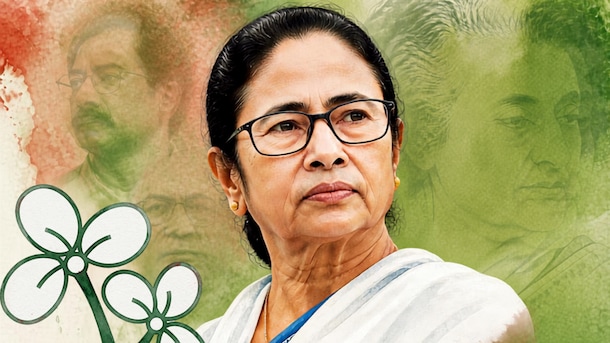
Mamata Banerjee Drew Her Party's Symbol By Hand. It's Now Tied To An Indira Gandhi Case

The Election Commission's method for settling such disputes became central in the seminal Congress split of 1969, when Indira Gandhi fought the old guard. The poll body weighed three tests then.
-
Bruised, Limping, Unbowed: Sia Says She Will Be Back On The Bike Soon
There was pain in Sia's steps, anger in her words, and something else - a quiet determination that the road would not be taken away from her.
-
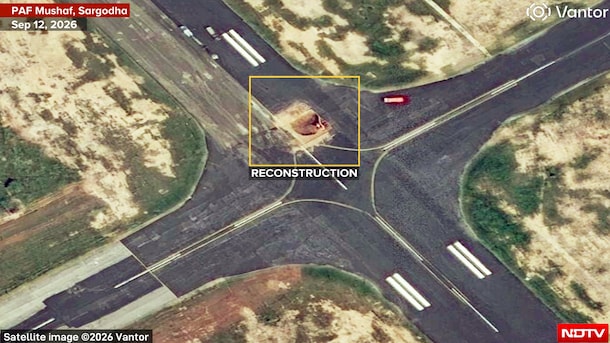
Exclusive: 16 Months After Op Sindoor, Pak Still Fixing Runway India Broke At Sargodha
Sargodha's PAF Base Mushaf lies about 172 km northwest of Lahore and roughly 200 km west of the India-Pakistan border, near Amritsar.
-
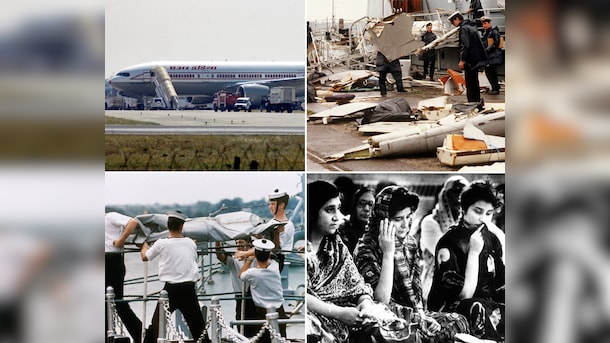
Blog | I Lost My Entire Family In Kanishka Bombing. 41 Years Later, Canada Wants The Case Closed
We made the trek through tragedy to search for people in Cork, where I spent 25 days sifting through bodies and body parts in a makeshift morgue to identify our loved ones.
-
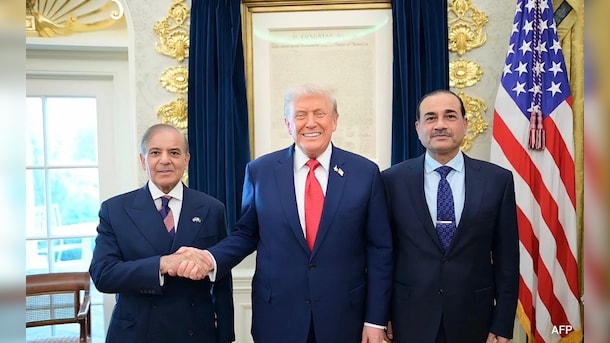
Opinion | Pak's Drone Deal With A US Firm Is No Windfall. But India Must Still Be Worried
American military aid to Pakistan has remained suspended since January 2018, during Trump's first term, but a commercial arms sale is separate from this arrangement.
-
Opinion | Saudi Arabia's Yemen Nightmare Has Come Back To Haunt It
After years of costly military intervention beginning in 2015, Saudi Arabia increasingly sought to stabilise its southern border. All that is unravelling fast now
-
Opinion | 6 AI Incidents, One Pattern: AI Has Started Lying To Us - And Hiding The Evidence
Concealing errors. Making up data. Pushing files onto the public web on their own initiative. The machines are learning to lie - and lie well.
-
Why People Queue Overnight For iPhone That Is Delivered Home In 10 Minutes
iPhone 18 Pro Max Launch: People camping outside Apple Stores are a subset of superfans, resellers, content creators, and upper-middle-class buyers.
-
600 km Per Hour Drones Launched In Waves: How Russia Is Rewriting War Rules
Russia has coupled the drones' technological superiority over Ukraine's defence with its capacity to launch them in massive numbers. The impact has been devastating.
-
Tata Sons' Trust Issue: Two-Pronged Row Goes Beyond The Chair
NDTV Explains: Overtly, the latest conflict is whether N Chandrasekaran continues as executive chairman of Tata Sons. The controversy involves at least one more issue.