Opinion | Talking 'Peace', Moving Troops: What Does Trump Really Want From Iran?
The approach is emblematic of the Trump method of functioning. But has he really blinked?
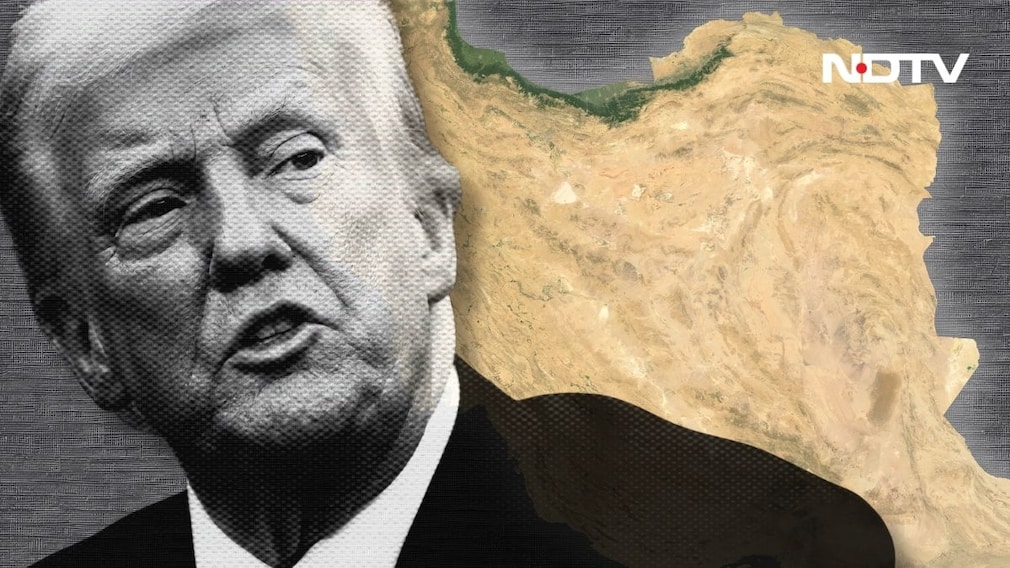
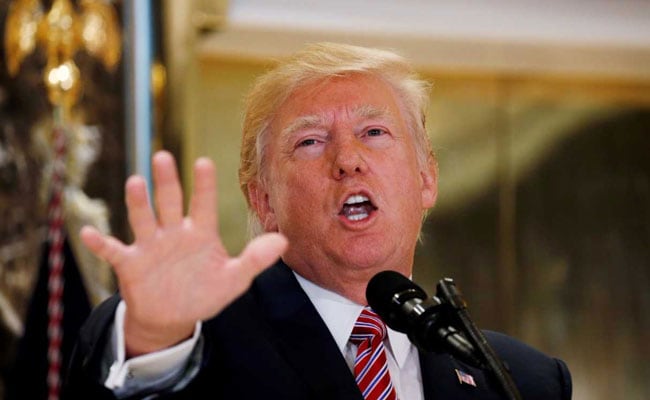
US President Donald Trump blinked. Or did he? The peace-making efforts are evidence that the war he launched with Israel against Iran is not going his way.
Iran's leaders haven't blinked. They are staring back from the toll booth of Hormuz and dictating who they will talk to from the US side. Vice President JD Vance is acceptable; Trump's all-purpose team of Jared Kushner and Steve Whitkoff is not.
Iran Hasn't Backed Down
Trump's 'war of choice' has met Iran's war of survival. A ferocious air campaign and 10,000 targeted strikes decapitated Iran's top leaders and destroyed much of the military infrastructure, but it hasn't “obliterated” Tehran's ability to retaliate. That's because Iran is fighting an unconventional war, not the kind the US and Israel anticipated.
Dispersal of weapons and delegation of authority to those next and next-to-next in line has allowed Iran to continue and spread the war horizontally. Anyone in the line of Iranian missiles is a target, as Gulf countries have found, with their American security umbrellas blown.
The weaponisation of the Strait of Hormuz has also given extraordinary leverage to Iran - and the biggest headache to America. Iran effectively controls 20% of the oil flows, 33-38% of the fertilizer trade and more than one-third of the helium needed for semiconductors, defence and medical uses, all of which flow normally through the Strait. Given that it's a lifeline for the world, freeing Hormuz from Iran's grip has become Trump's top objective because of the impact on the global economy.
Hormuz Really Came To A Halt
The narrow body of water has long been a point of contention between Iran and the US, with threats flying both ways during past crises. As US sanctions over Iran's nuclear programme increased economic pressure, Tehran periodically threatened a closure of Hormuz but didn't actually in practice. It didn't cross the red line even after the US-Israeli attacks on its nuclear sites last June. IIran's strategy to keep the Strait as a weapon of last resort may have lulled American and Israeli strategists so much they didn't anticipate Iran would ever actually use that card. Or, perhaps, they were confident the war wouldn't last long enough to bring Hormuz into play.
While Trump hints at peace, he has ordered the elite 82nd Airborne Division to West Asia to add to thousands of Marines already being sent to the region. Some 50,000 US troops are said to be deployed in the conflict zone. The news of reinforcements came after Trump decided not to bomb Iran's power plants and hinted at talks.
Symptoms Of War Or Signs Of Peace?
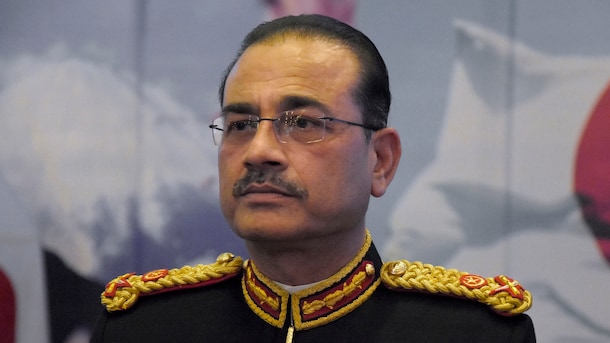
As Trump concentrates the US military in the region, he has sent a 15-point proposal to Iran via Pakistan. The points include freezing Iran's nuclear programme, placing enriched uranium under international supervision, US assistance for civilian nuclear power and lifting of sanctions.
Iran has rejected the list and countered with its own demands, including the closure of US bases in the region, lifting of sanctions, guarantees against future aggression and accepting Tehran's right to collect fees from ships transiting the Strait of Hormuz, as Egypt does with the Suez Canal. However, the first salvos are always maximalist and hope glimmers in the fact that the two sides are exchanging messages.
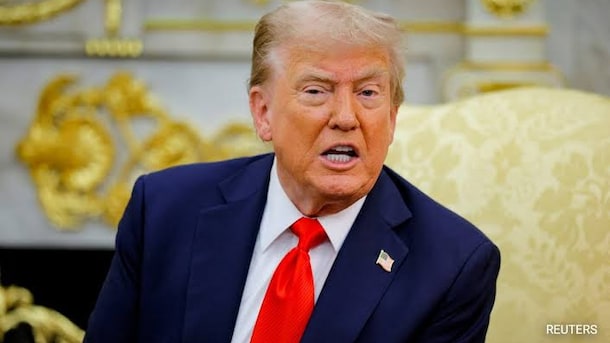
Even so, amassing troops while offering an olive branch are contradictory realities, emblematic of the Trump method of functioning. A photo of Trump glowering, pasted with the slogan "Peace through Strength", is regularly posted by White House on social media as a reminder to "beware". Over the last three weeks, Trump has declared several times that he has "won" the war since he destroyed Iran's Navy and 80% of its missile launchers. The message is directed at the restive base or the 'Make America Great Again' faithful. They are not enamoured of the Iran war, since the promised "Golden Age" under Trump was supposed to be without wars. But by and large, MAGA elements are supportive, save a few vocal stars such as podcasters Tucker Carlson and Megyn Kelly.
The Curious 'Peace Proposal'
The peace proposal for Iran appears aimed at the markets, with Trump timing the announcement with an eye on the price of oil. Petrol and diesel have climbed, as have anxiety levels among consumers. Unfavourable polls have put Trump under pressure to cut costs and wind up the war.
The sudden five-day pause announced on March 23, which lowered the price of crude, allowed several well-informed traders to make millions, because for some reason, they happened to bet on prices coming down minutes before Trump's 7.04 am post on Truth Social. Insider trading is being alleged, but no one is expecting an investigation. Kushner and Whitkoff are known to mix their business (real estate) with political business as they go around meeting sheikhs and sultans to make peace.
Israel Unhappy
One party to the war that is not cheering for the pause for peace is Israel. It has different war objectives. The idea has alarmed Israel enough to rush to complete its target list inside Iran and Lebanon. Opening the Strait of Hormuz is not on the list because its dependency on the chokepoint is minimal.
Israeli Prime Minister Benjamin Netanyahu sees Iran as an existential threat - Tehran is sworn to the destruction of Israel. He doesn't want to end the war before eliminating Iran's ballistic missile threat, ensuring that its nuclear capability is rendered null and changing the ground reality enough for the Iranian people to take charge of their country.
Netanyahu hasn't shared the secret of how he will ensure or ascertain that the conditions have been met. After all, his intelligence officials assured him, and, in turn, he assured Trump that Iranians would rise and fill the streets once the top leaders were eliminated. But decapitation didn't inspire a new revolution, only fear and loathing among the people.
It's unlikely Iranians would risk their lives anytime soon after the brutal putdown of protesters in January and the recent public hanging of three men by the regime.
As for the Gulf countries, they have criticised the war while also asking the US to "finish the job" and not allow Iran to become a threat again. They have also learned that the risk of hosting US military bases is higher than the protection they received in return. But they are caught between a rock and a hard place. It's one thing to co-exist with Iran's theocracy and its proxies in the region and quite another to live with perpetual war. While they won't cut ties with the US, they will recalculate and might seek security guarantees from others.
When the war finally ends, the region and the world may look very different.
(Seema Sirohi is a Washington, DC-based columnist and the author of 'Friends With Benefits: The India-US Story', a book about the past 30 years of the relationship)
Disclaimer: These are the personal opinions of the author
-
Why Doesn't Congress Boycott If Polls Are "Fixed"? Answer Lies Beyond Rahul Gandhi's "Distraction" Quip

The starkest demand for a boycott has come from outside the political Opposition, from the Cockroach Janta Party. But does a boycott help? Here's what research, examples, and expert analysis tell us.
-
'Sully' To Gimli, Sioux To Patna: When Pilots Got It Unbelievably Right
Captain Smit Machchhar fought off his co-pilot after being stabbed and opened the cockpit door, saving 174 people.
-
Opinion | Are Saudi Arabia And UAE Reuniting Again After 10 Years?
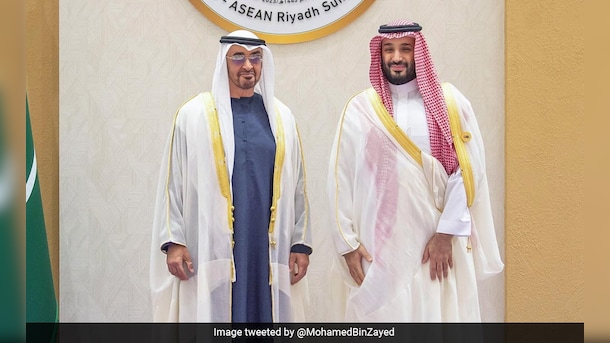
On Tuesday, the UAE's Vice President, Deputy Prime Minister and Chairman of the Presidential Court, Mansour bin Zayed, met Saudi Crown Prince Mohammed bin Salman.
-
Opinion | 'Lies, Damned Lies, Statistics': On The Controversy Around India's GDP Growth Figures
The debate is less about a single figure than about a decade-long erosion of trust in official statistics.
-
Opinion | Why India Cannot Keep 'Overestimating' Its Value To Washington
Some of India's value to Washington came from the tension between the US and China. That is changing now.
-
Opinion | India Has A 'Lobbying' Problem In Washington, And It Has Come Back To Haunt It
While the EU, Japan, the UK and South Korea secured quick deals, India's efforts were getting drained in prolonged negotiations and the wrong kind of lobbying.
-
India Is Getting Old Before Getting Rich, Will Turn 'Aged' In 16 Years: Moody's
Countries with the steepest fertility declines today will age the fastest in the coming decades. India's drop has been steep.
-
Opinion | Why Does Trump Want To Sell Arms To A US 'Adversary'? Inside His Strange Bargain
Trump's aides maintain that no such offer had been made. But the story points to a larger strategy
-
Opinion | The AI Boom Has Run Into A Big 'Debt' Trap Problem. Inside The 5% Danger Line
For most of the AI buildout's first two years, hyperscalers funded it the easy way: out of operating cash flow. That era is over.
-
Opinion | Iran To Saudi, Pakistan Is Now Fast Running Out Of Sides To Play
Pakistan's long history of playing all parties to its own benefit may have reached the end of its road.