Opinion | Trump's Iran War Is About To Become Someone Else's Problem Soon
Start alone, end alone - that may be the harshest lesson for Trump as he now tries to dash for the door in Iran.
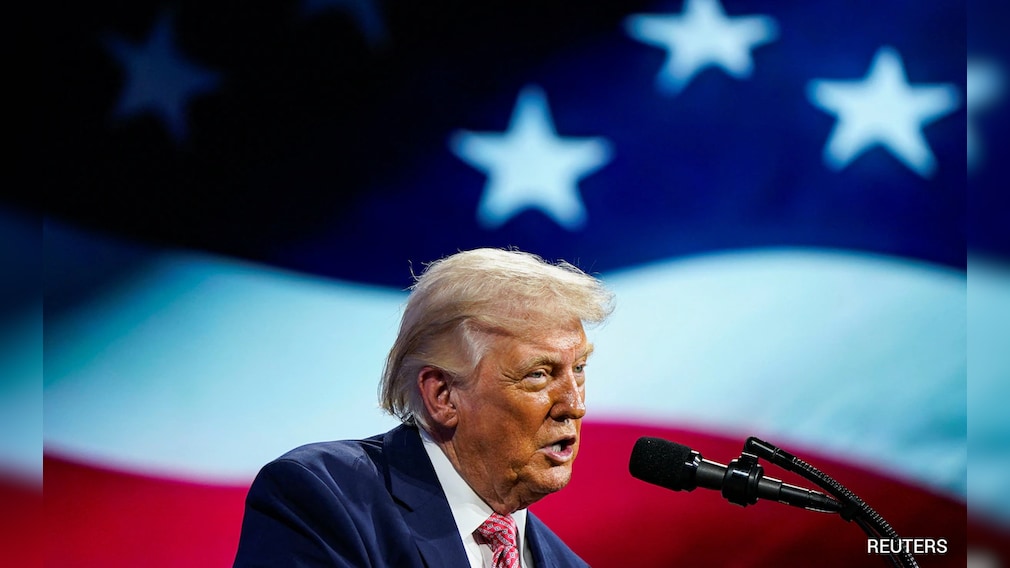
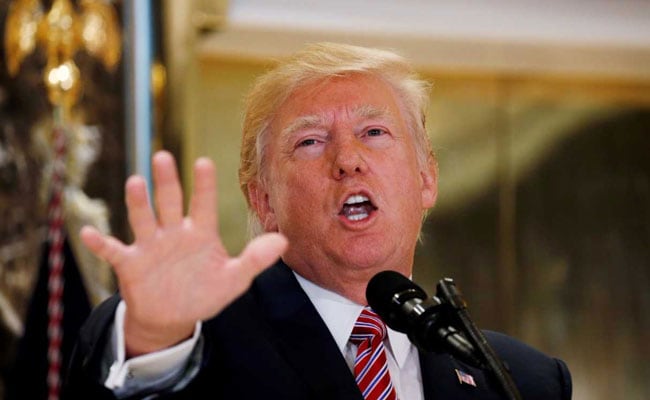
Iran's stubborn resistance and its ability to withstand the US and Israel's relentless military campaign for over a month have disrupted Donald Trump's calculations. The war's increasing economic and political costs have pushed him to seek a quick exit. He now wants to leave Iran in two to three weeks, whether or not there is a deal. His comment, ahead of a national address on Wednesday evening, underlines a stark reality: even after losing its leadership and suffering significant damage to its military and economic infrastructure, Tehran has shown no signs of being as desperate as Trump to end the war.
In his latest comment at the Oval Office on Tuesday, Trump insisted again that Iran was "begging" for a deal, adding that whether it happens is irrelevant to America's timetable. Iran strongly denied that it was engaged in negotiations with the US to reach a deal, while admitting that messages had been exchanged between the two sides. Iran's president, Masoud Pezeshkian, has said his country has the "necessary will" to end the war with the United States and Israel as long as certain conditions are met.
Trump's comment came amid a growing buildup of US forces in the Gulf. Thousands of US Marines have already reached the region and many more are on their way. The US military also began flying B-52 bomber missions over Iran on Tuesday for the first time in the war, a sign that Trump is keeping the option open of escalating in the belief that it would help end the conflict swiftly.
Trump's Ever-Changing Wishlist
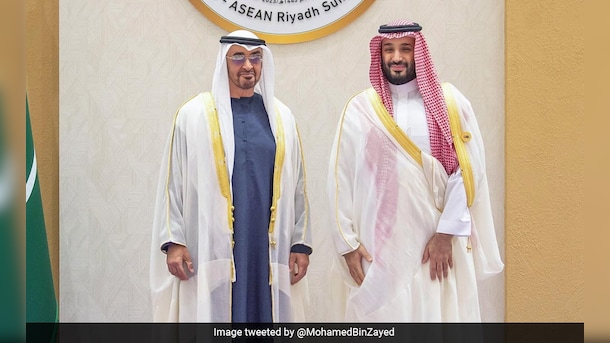
Trump has maintained that the US has achieved its goal of addressing Iran's nuclear programme, despite roughly 450 kg of enriched uranium still being present in Iran, believed to be hidden in Isfahan. His previous objective of regime change also remains unfulfilled, although he says the regime has already changed. He claims that Iran's new regime is reasonable, disregarding the fact that more hardline elements now appear to be in control of the country. Some of his Gulf allies, including the UAE and Saudi Arabia, want him to carry on the military operation for that reason.
The most important strategic card Tehran has played in the war has been to block the Strait of Hormuz, through which about a fifth of the world's oil and gas passes. The near-closure of Hormuz, along with attacks on US bases and energy targets in Gulf countries, has driven global crude oil prices to $117 per barrel on Tuesday and the average petrol price in the US to exceed $4 per gallon for the first time in nearly four years. Now, Trump claims Hormuz is a problem for other countries to handle. Oil prices fell after Trump's comments about leaving Iran.
Allies No More?
Donald Trump has been angry with America's European allies for their refusal to get more involved in the Iran war, particularly for not sending their warships to protect ships at Hormuz. "Go get your own oil," from the Strait of Hormuz, Trump said on Tuesday, lashing out at his allies. But his anger at US partners in Europe is not limited to Hormuz. He wants them to join the American and Israeli military in fighting Iran, a war he started with Israel, without any consultation with his allies.
"You'll have to start learning how to fight for yourself, the USA won't be there to help you anymore, just like you weren't there for us," Trump told his European allies in a post on Truth Social on Tuesday. Two weeks ago, he had angrily declared, "We don't need anybody; we're the strongest nation in the world", adding that his request for assistance in reopening the Strait of Hormuz instead amounted to a "loyalty test of America's allies".
What Trump forgets is that unlike previous US Presidents, he went to war with Iran without building any support at home or abroad. President George HW Bush in 1991 formed a coalition of more than 40 countries when he launched Operation Desert Shield to free Kuwait from Iraqi dictator Saddam Hussein. Two decades later, his son, President George W Bush, also received support from his allies for launching another war against Iraq, though it was based on the false premise of getting rid of weapons of mass destruction. Europe was part of both coalitions, though the second time, France and Germany didn't join America's war.
Not Europe's War To Lose
NATO members in Europe have made clear that the current conflict in the Gulf is not their war. They do not feel obliged to join it because no NATO country has been attacked. On the other hand, Iran has been hit by the US and Israel. They have reminded Trump that the only time NATO's Article 5, which states that an attack on one member is an attack on all, was invoked was when the US suffered terror attacks on September 11, 2001, by al-Qaeda. Back then, NATO had joined America in a coalition to invade Afghanistan.
However much they loathe Iran's Islamic regime, the priority for Europeans is not the Middle East. It's the threat from Russia they want to guard themselves against. The Europeans have sent some defence equipment to protect their Gulf allies from Iran's missiles and drones, but they don't want to fight alongside the US and Israel. The war is also widely unpopular with the public, as reflected in the decisions of European governments. Spain has openly defied Trump from the beginning, calling the US and Israeli actions illegal. Although Britain has permitted American fighter planes to use its bases, after initial hesitation, it has refused to send any warships to the Gulf. On Tuesday, France angered Trump by denying the US access to its airspace for American planes carrying ammunition to Israel. Even Italy, governed by a right-wing administration, refused to allow US military planes to land at one of its bases en route to the Middle East.
Lessons From Gallipoli
For Europeans, a disastrous campaign during the First World War serves as an important reminder to exercise caution before getting militarily involved in Hormuz. Britain's late leader Winston Churchill devised a plan to force passage through the narrow strait of the Dardanelles in Turkey, which connected the Aegean Sea to the Sea of Marmara and beyond to the Black Sea, then controlled by the Ottoman Empire. The plan, known as the Gallipoli campaign, turned out to be one of the worst disasters, resulting in the deaths of 1.3 lakh men - 44,000 from Britain and its allies, and 86,000 Ottomans.
The fact remains that even US warships have not challenged Iran directly to lift its chokehold. So, why should Europeans do so and risk their soldiers' lives? They are open to joining a multinational mission in the Strait of Hormuz, but the US must be involved. Another concern for Europeans is that Trump keeps changing his narrative and objectives. Since he began the current conflict, Trump has claimed multiple times that either the war has already been won or is about to end soon. They have observed Iran's response and are also watching US troops gathering in the Gulf for a potential ground campaign. Even if they are inclined to join the US, they would prefer not to get involved in a conflict clouded by strategic confusion.
The Deal With Those Who Want War
Trump's decision to pull out of the Iran conflict soon will be welcomed by most people in the US, as opinion polls have shown the war is not backed by a majority of Americans. Even members of his own Republican party and MAGA supporters are opposed to a ground invasion. But it will disappoint the Iran hawks. One of them, Senator Lindsey Graham, boasted last week: "We've got two Marine expeditionary area units sailing to this island. We did Iwo Jima, we can do this.
What Graham didn't say was that 7,000 US soldiers died in the Battle of Iwo Jima (in Japan), one of the bloodiest military campaigns of the Pacific theatre in the Second World War. Graham was sharply criticised by fellow Conservatives. The strongest response came from Congresswoman Nancy Mace, a military veteran. "Graham has one foreign policy: send someone else's kids to war," she posted on X. "He was wrong about Iraq. He was wrong about Afghanistan. Now he's wrong about Iran."
Desperate Calls
All the evidence from the past five weeks of the war had indicated that Iran was unlikely to capitulate to US threats or even a ground invasion. Iran's proxy, the Houthis in Yemen, had already joined the military effort with missile attacks on Israel. The US ground invasion could lead them to obstruct shipping through the Bab al-Mandeb Strait, the Red Sea choke point equivalent to the Strait of Hormuz. That would wreak havoc on the world economy.
Trump's decision to end the war without achieving any of his previously stated objectives will be viewed by many as a cut-and-run move. Some will interpret this as an admission of defeat. Israel would be unhappy with Trump's decision, as Iran's military capabilities and its ability to make a nuclear weapon have not been destroyed. For Europe, the challenge is even bigger, as Trump told the British newspaper, The Telegraph, that he is considering pulling the US out of the NATO alliance.
Ultimately, even if the war is ended by all parties, the world economy is unlikely to recover from the damage the conflict has inflicted on it for many months.
Disclaimer: These are the personal opinions of the author
-
Congress Falls Back On A Fullback: Where Pargat Singh Fits In The Punjab Poll Play

Vijay Inder Singla, a Hindu face, was reportedly the frontrunner before the Congress replaced one Jat Sikh with another as its Punjab unit chief. How far does such arithmetic work in the state's politics? Pargat's appointment holds some of the answers.
-
Why Doesn't Congress Boycott If Polls Are "Fixed"? Answer Lies Beyond Rahul Gandhi's "Distraction" Quip
The starkest demand for a boycott has come from outside the political Opposition, from the Cockroach Janta Party. But does a boycott help? Here's what research, examples, and expert analysis tell us.
-
'Sully' To Gimli, Sioux To Patna: When Pilots Got It Unbelievably Right
Captain Smit Machchhar fought off his co-pilot after being stabbed and opened the cockpit door, saving 174 people.
-
Opinion | Are Saudi Arabia And UAE Reuniting Again After 10 Years?
On Tuesday, the UAE's Vice President, Deputy Prime Minister and Chairman of the Presidential Court, Mansour bin Zayed, met Saudi Crown Prince Mohammed bin Salman.
-
Opinion | 'Lies, Damned Lies, Statistics': On The Controversy Around India's GDP Growth Figures
The debate is less about a single figure than about a decade-long erosion of trust in official statistics.
-
Opinion | Why India Cannot Keep 'Overestimating' Its Value To Washington
Some of India's value to Washington came from the tension between the US and China. That is changing now.
-
Opinion | India Has A 'Lobbying' Problem In Washington, And It Has Come Back To Haunt It
While the EU, Japan, the UK and South Korea secured quick deals, India's efforts were getting drained in prolonged negotiations and the wrong kind of lobbying.
-
India Is Getting Old Before Getting Rich, Will Turn 'Aged' In 16 Years: Moody's
Countries with the steepest fertility declines today will age the fastest in the coming decades. India's drop has been steep.
-
Opinion | Why Does Trump Want To Sell Arms To A US 'Adversary'? Inside His Strange Bargain
Trump's aides maintain that no such offer had been made. But the story points to a larger strategy