Opinion | Hypocrisy, In Numbers: A List Of All That EU And US Still Buy From Russia
While the West's political rhetoric calls for total economic isolation, its own data reveal its selective exposure to Russia, not the kind of total 'divorce' news headlines have been implying.
Let's connect the dots: Prime Minister Modi is heading to China, ostensibly to attend the Shanghai Cooperation Organisation summit, by the end of this month. Russian President Vladimir Putin is scheduled to visit India before the year ends. Brazilian President Lula is also planning a trip to India - either by year-end or early next year - after a meaningful phone call with Modi, in which both leaders strongly underscored the need to promote multilateralism.
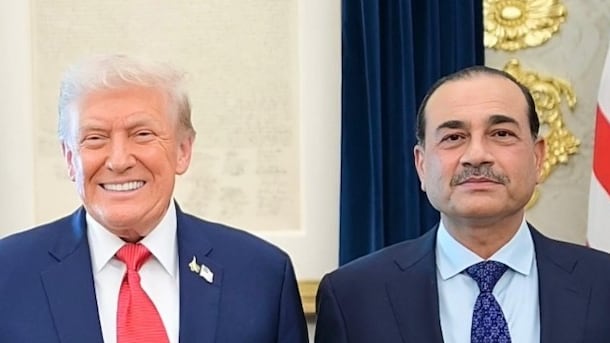
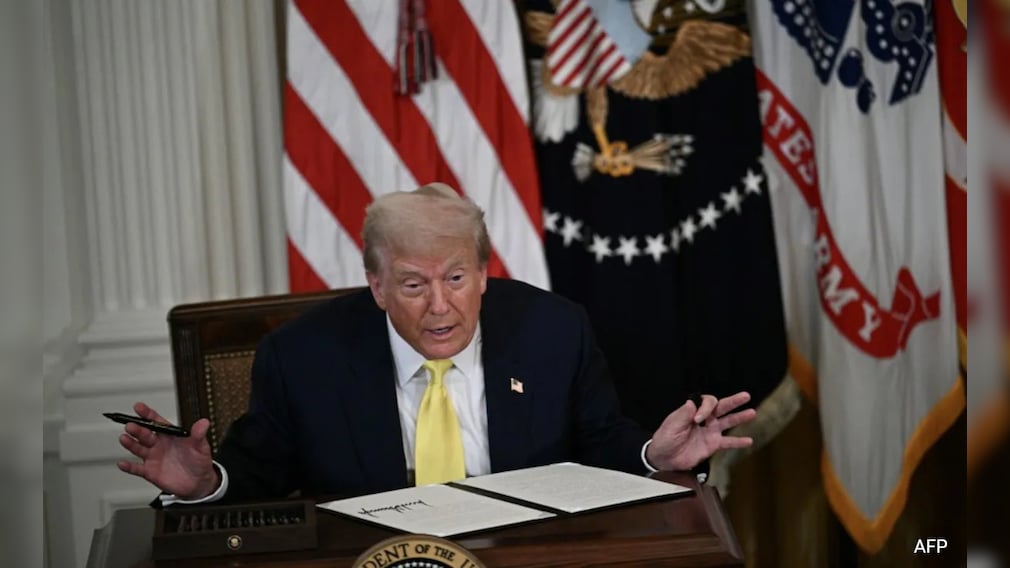
Read between the lines, and a pattern emerges: this is a coordinated signal to the United States and its maverick president, Donald Trump, who has passed an executive order to increase tariffs on Indian imports to a sweeping 50%. The order will come into force by the last week of the month. Trump, now seven months into his second term, has unleashed another wave of punitive tariffs on Indian exports, citing Delhi's continued purchases of Russian oil. Indian goods are now among the most heavily taxed imports in the United States, matched only by tariffs against Brazil. The White House's rationale is that India's Russian oil imports are "helping fund the war in Ukraine".
Also Read | Trump, Tughlaq, Tariffs: The Dangers Of Strength Without Sense
The President's actions have come in for sharp criticism in his own country. For example, Kurt Campbell, former US Deputy Secretary of State, criticised Trump's tariffs on India in a media interview. He said that the US-India relationship was now under threat because of the tariffs. These were his words: "America's most important relationship in the 21st century is with India. Much of that is now at risk," he said. "The way President Trump has spoken about India and PM Modi has put the Indian government in a difficult position."
India, for its part, has responded with calculated firmness. The Ministry of External Affairs called the tariffs "unfair, unjustified, and unreasonable", and pointedly highlighted the hypocrisy of Western nations that continue to import energy and strategic materials from Russia while pressuring India to stop.
Recommended

The numbers make that case clear.
Behind The Scenes
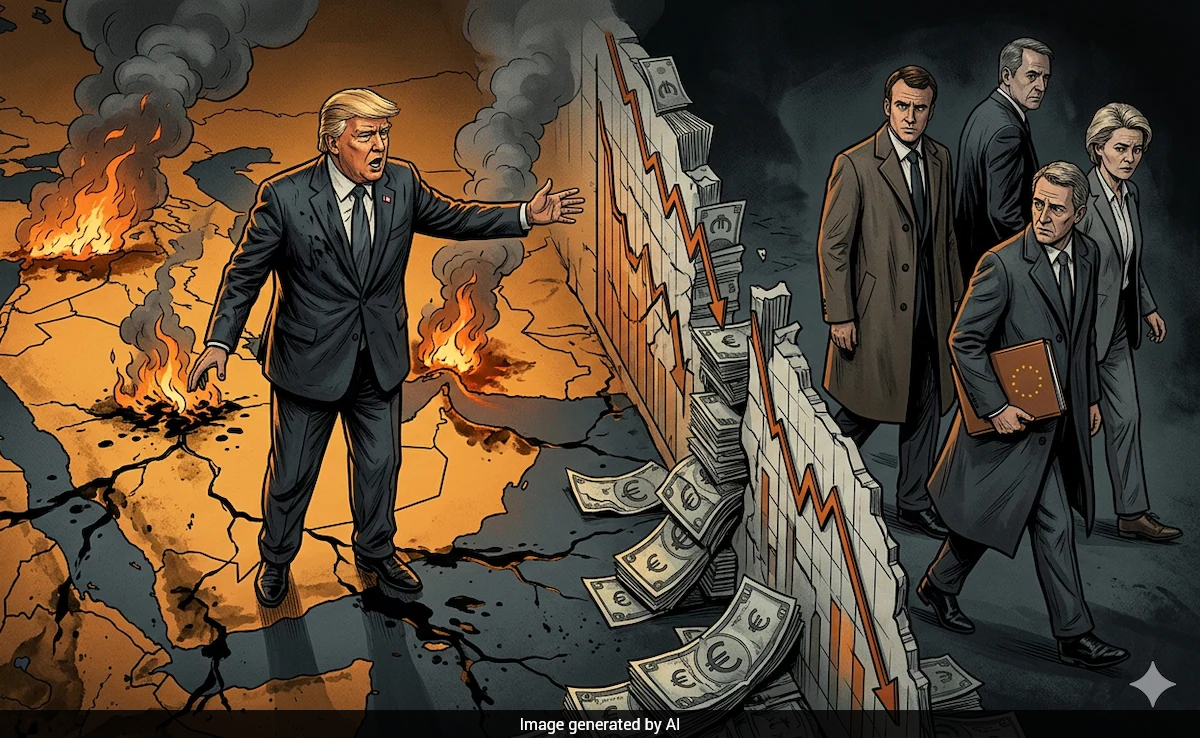
Since Russia's full-scale invasion of Ukraine in February 2022, trade flows have fallen sharply, but they have not vanished. EU imports from Russia dropped roughly 86% between Q1 2022 and Q1 2025; total EU imports from Russia in 2024 were on the order of EUR 36 billion, down from far higher pre-war levels. The United States likewise shrank its Russian trade: US goods imports from Russia were about USD 3-3.3 billion in 2024 (a steep fall from 2021 levels). These are big declines, but not the kind of economic divorce news headlines sometimes imply. Billions in trade value continued to move both ways in 2024 and in the first quarter of the current year.
The EU, for instance, sources several strategic commodities from Russia despite the sanctions squeeze. Energy remains the headline item: maritime crude oil shipments to the EU have collapsed. European Commission data suggest that Russia's share of EU oil imports fell from the high 30% range down to about 2% by 2025 in some measures. But refined products, pipeline gas and LNG-related flows have not been erased everywhere. Beyond hydrocarbons, the EU continues to import fertilizers, nickel, iron and steel and certain critical raw materials. Mind you, Russia remained the EU's major fertilizer supplier well into 2024-25. In short, energy and agricultural-input dependencies (and some metals) account for much of what the EU still buys from Russia.
Similarly, US imports from Russia are smaller in dollar terms but concentrated in high-impact, hard-to-replace items. Recent data show that a large share of US imports from Russia in 2024 consisted of fertilizers (urea, potassium-bearing fertilisers), palladium (used in catalytic converters), and uranium/enriched nuclear materials - together making up the lion's share of the remaining import value. These are not casual consumer goods; they feed manufacturing, automotive emissions controls and civilian nuclear fuel cycles, which complicates any push for immediate, total decoupling. According to the data provided by the United States Trade Representative, the Russian import items are critical and nearly impossible to replace.
Also Read | US Hypocrisy? 50% Tariff On India, Zero On EU That Bought Russian Oil
Europe's trade story mirrors this: while crude oil from Russia now mostly flows to Asia, Europe's remaining purchases are concentrated in fertilizers, metals and nuclear-related material. Political rhetoric may call for total isolation, but the data show selective exposure - essential goods still flow, because replacing them overnight would be expensive and disruptive.
The pattern explains the policy problem: sanctions can choke off some flows, but shutting every channel hurts critical supply chains and domestic consumers. Europe's trade picture shows a dramatic re-orientation of Russian crude exports towards Asia, and the remaining Western purchases tend to be concentrated in fertilizers, certain metals and nuclear-related material. The practical upshot is straightforward: while political rhetoric calls for total economic isolation, the data show selective exposure - essential inputs and uneven global demand mean a full cut-off is far harder to achieve without coordinated, costly alternatives.
Moscow's War And India's Logic
Against this backdrop, India's argument gains credibility. Delhi began purchasing discounted Russian oil not as an ideological endorsement of Moscow's war, but as a response to market disruptions caused by the West's sanctions. As European buyers snapped up Gulf supplies, Indian refiners turned to available, affordable sources. Today, Russia remains India's largest energy supplier, replacing traditional Gulf partners - ironically, with US encouragement at the start of the war.
But Trump's foreign policy has rarely followed traditional diplomatic contours. It is personal, transactional and often whimsical. Therein lies the ambiguity: is this a genuine policy pivot, or just an opening bid in a larger deal Trump wants to strike? No one seems to know.
"Extremely Shocking"
The Federation of Indian Export Organisations has called the tariffs "extremely shocking," estimating they could hit more than half of India's exports to the United States. According to the media, the Delhi-based Global Trade Research Initiative (GTRI) warned exports could fall by 40-50%. Ajay Srivastava, GTRI's founder and former Indian trade official, has urged patience: "India should remain calm, avoid retaliation for at least six months, and recognise that meaningful trade negotiations cannot proceed under threats or mistrust."
India's policy on China is not part of any third-country strategy: it is rooted in India's own national interest. In other words, India is not America's proxy - nor will it allow itself to be treated as one.
Taking the long view
Even more telling is India's refusal to take Trump's bait. Delhi has not retaliated with counter-tariffs or public theatrics. Instead, it has kept its focus on energy security, economic stability and geopolitical balance. The contrast is striking: India's calm maturity versus Trump's bombast.
Growing Discontent
Yet unease in Washington continues to grow. Some of the very officials who once championed stronger Indo-US ties now fear the relationship is slipping. They worry that Trump's tariff offensive risks squandering two decades of painstakingly built goodwill. As one former US ambassador to India remarked, "If India walks away from us, it won't run into China's arms. But it will carve its own path - and we may not like where that leads."
That independent path is already visible. From its growing role in BRICS to its leadership in the Global South, India is signalling it listens, but does not bend. This does not mean abandoning the West - but it does mean resisting being boxed into one bloc.
It must be noted that for decades, the US urged India to rise, modernise and assert itself. Now that it has, America seems uneasy with India's autonomy.
The coming weeks will show whether cooler heads prevail. Trade talks are scheduled before the new tariffs kick in on August 27, leaving a narrow window for dialogue and compromise. If the current trajectory holds, the fallout could extend far beyond economics.
In Delhi, one imagines the mood is cautious but confident. India will continue to act in its own national interest - as it should. If Washington wants to be part of that story, it must learn to listen.
(Syed Zubair Ahmed is a London-based senior Indian journalist with three decades of experience with the Western media)
Disclaimer: These are the personal opinions of the author
-
Opinion | Trump's Favourite Field Marshal: How Munir Became The President's Best Man

Pakistan and the United States are not obvious analogues. And yet, their respective leaders have made a comparison inevitable today.
-
A Missile On One Soldier's Shoulder Could Ground The US Air War In Iran
Iran shot down US jets while China denied arming Tehran. But reports of a Chinese spy satellite being used by Iran, the viral F-35 tutorial from a Chinese engineer, and now 1,000+ MANPADs reportedly on their way to the war suggests otherwise.
-
Opinion | Amid Trump's War On The World, How Effective Really Is India's Strategic Autonomy?
India cannot mechanistically base its positions on preferred international norms, unmindful of its own direct interests.
-
Opinion | In Stalin's Tamil Nadu vs Delhi Pitch, Flashbacks From A 2014 Jayalalithaa Episode
In 2014, Jayalalithaa had posed the question to the Tamil Nadu electorate,"Gujarat Modiyaa Tamil Nadu odu intha ladyaa"(Gujarat's Modi or this lady of Tamil Nadu), and tasted electoral success, winning 37 of the 39 seats in the state.
-
'Help', Said Trump In Iran. Why US' European Allies Hesitated, Walked Away
47 days into the war, Europe has rejected Trump's attacks on Iran on the back of $25B Hormuz blockade shock that spiked inflation to 2.5% and prompted 59% of EU voters to call the strikes illegal (71% Spain), while Trump's Pope spat draws ire from Italy.
-
Assassination That Took 20 Years: Spies, Missed Chances, Then A Final Moment
Before Osama bin Laden became the global face of transnational terrorism, there was another figure-more elusive, less theatrical, but arguably more influential in the evolution of modern guerrilla warfare. He was Imad Mughniyeh.
-
The Malacca Gambit: How China Oil-Choke Strategy Could Backfire On Trump
US President Donald Trump seems to be weaponising oil chokepoints - Venezuela, Hormuz, and Malacca - to pressure China, but Beijing's pipelines, reserves, and shadow fleets mean the real test is which side dares escalate further.
-
Opinion | 38% vs 18%: How Bengal Exposes The Biggest Irony Of Women's Reservation
Bengal with its duality - 38% women in Parliament versus 18% in the state contest - captures the core tension of the Bill better than any other example.
-
Opinion | Mines, Submarines, Drones: Why World's Mightiest Navy Won't Get Too Close To Hormuz
Iran is relying on the symmetric advantage of geography to fight against the brute power of the world's largest and most powerful navy, the US.
-
'Tawakkul al-Allah': Meet Sheikh Moussa, The Man Israel Can't Move
Sheikh Moussa refuses to leave his family home in Beirut's Dahieh despite decades of Israeli missile strikes. His faith - tawakkul al-Allah - keeps him rooted amid rubble, memories, and a doctrine designed to break Israel's rivals.