Opinion | The Kashmir Protest Pakistan Cannot Blame On India
Islamabad has long viewed political mobilisation in PoK through an external lens of alleged Indian 'interference'. But the recent uprisings in the region lays bare the limits of its own policy.
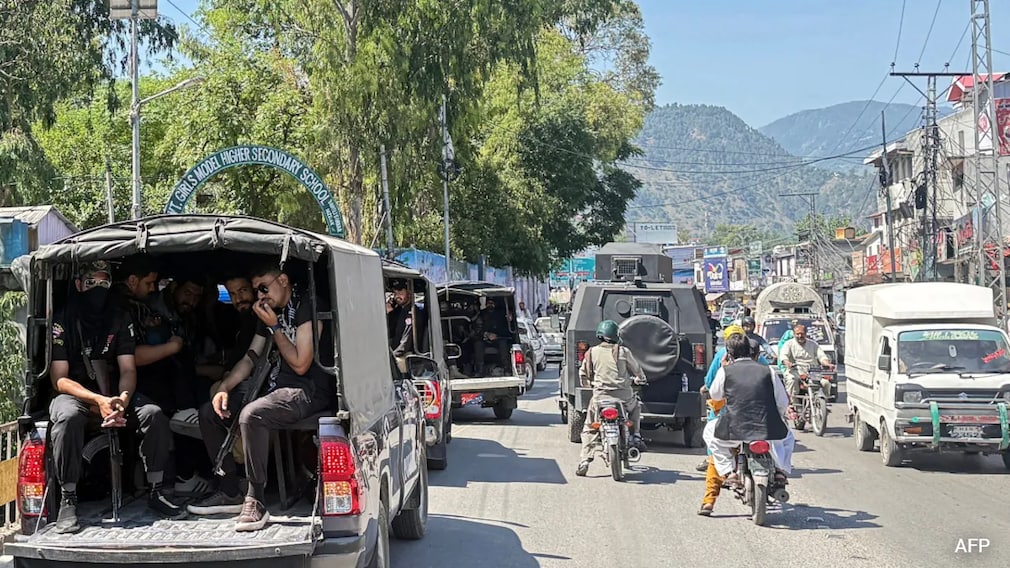
Historically, a common narrative regarding Kashmir administered on both sides of the Line of Control (LoC) has rested on the assumption that violence in these regions can only be understood through the lens of India-Pakistan rivalry. The ongoing anti-establishment uprising in Rawalakot, Muzaffarabad, and Mirpur, in Pakistan-occupied Kashmir (PoK), challenges that assumption, given its origins in Pakistan's own political history and deep-rooted grievances between the federal government and peripheral regions.
Islamabad has long viewed political mobilisation in PoK through an external lens of alleged Indian interference, so-called foreign conspiracies, and opposition party machinations. A closer examination shows the grievances driving the Joint Awami Action Committee (JAAC) movement remain localised, with serious concerns over electricity pricing, fiscal extraction, political representation, broken agreements, and the denial of meaningful local autonomy.
To put this in the context of Pakistan's political history, since its partition from India in 1947, Pakistan has found it challenging to reconcile a highly centralised federal state structure with the demands of its ethnically diverse regions. The federal framework has operated less as a mechanism for power-sharing and more as an instrument of the federal administration's overreaching authority. Similar grievances have echoed across Pakistan's peripheries - from Balochistan's demands for greater control over natural resources, to Sindh's concerns about federal encroachment, and Pashtun calls for political accountability in Khyber Pakhtunkhwa. In each case, political activism has centred on discontent over resource distribution, political representation, and provincial rights.
At the core of this recent uprising are 12 seats in the 49-member Legislative Assembly of PoK reserved for refugees from India's Jammu, after their migration to mainland Pakistan post-Partition. Despite settling in Pakistan's Sindh and Punjab provinces, these communities and individuals participate in PoK's electoral practices. The Joint Awami Action Committee (JAAC), a cross-party coalition of traders, lawyers, students, and civil society groups formed in 2023, argues that this arrangement has diluted local representation and undermined federal accountability. Tensions flared up when the Supreme Court of Pakistan ruled in June that the refugee seats had constitutional cover. The verdict represented a rejection of the movement's key political demands, leading to region-wide protests. Consequently, the Pakistani government banned JAAC, and used force against protesters by opening fire. In 2023, the dispute over rising electricity prices propelled the JAAC movement, indicating a new chapter involving diverse sectors and civil society members in the longstanding story of state neglect.
While the territory is administered by Pakistan, it remains outside the country's constitutional framework. As such, Islamabad views the reserved seats as sustaining its position of representing all of the former princely state of Jammu and Kashmir. However, the local grievances perceive this mechanism as a tool to dilute local participation, thereby reflecting the competing political logics of this region. It is in this context that this issue also separates itself from an externalized lens of the broader India-Pakistan conflict. The mobilisation has remained devoid of cross-border issues.
For Pakistan, the issue of refugee seats remains critical to its international claims on Kashmir. The existence of these seats bolsters Pakistan's legal position at the UN to project the representation of all of Kashmir - including Indian territory. Should Islamabad give up on these seats, it seemingly concedes that the territory is a settled part of Pakistan instead of a disputed region awaiting a plebiscite. In similar symbolism, New Delhi has kept parliamentary seats vacant to represent the entire former princely state, parts of which are controlled by Islamabad.
These protests reemphasise the brazen contradiction of Pakistan's Kashmir policy, which centres on self-determination. This gap between global posture and domestic conduct has long existed, despite little international attention.
The protests, however, will not have a direct impact on the Kashmir Valley. While the two territories share a dispute, their ethnic identity, language, and even political movements remain distinct. The native residents of PoK, predominantly Pahari, Gujari, and Punjabi-speaking are technically distinct from the Kashmiri-speaking population in the Valley. There remains no shared political structure or common leadership between JAAC and any Jammu & Kashmir political formation. While the optics of Pakistan deploying federal paramilitary forces and imposing an internet and communication blackout will temporarily weaken Pakistan's credibility and talking points in global forums on the Kashmir issue, the reputational costs are unlikely to last much longer in the transactional nature of international relations.
In the coming period, the suppression of JAAC and the Supreme Court verdict will continue to inflame anti-government discontent. With PoK elections scheduled for July 27, Islamabad will face difficult choices - either to hold elections in the territory under heavy security deployment or postpone the elections and compound the legitimacy questions.
(Aishwaria Sonavane is a research analyst at the Takshashila Institution)
Disclaimer: These are the personal opinions of the author
-
Maharaja Ranjit Singh To Bhagwant Mann: Inquisitions By Akal Takht

While for centuries, rulers and netas have visibly bowed to its authority, Bhagwant Mann is probably the first to directly confront the Akal Takht
-
Ringside View | FIFA World Cup 2026: Magic Of Cristiano Ronaldo Missing — But Why?
On a day when Lionel Messi found the net, Kylian Mbappe delivered again and Harry Kane added his name to the scoresheet, Cristiano Ronaldo's was conspicuously absent.
-
Public Assets, Private Capital: India's Next Reform Step
That gap between what India's sovereign assets are worth and what they currently earn is central to India's location in the low-middle income bracket.
-
Why Meta Is Suddenly Charging For Facebook, Instagram And WhatsApp
Facebook, Instagram and WhatsApp have long been free. So why is Meta suddenly asking users to pay? The answer may lie in Mark Zuckerberg's expensive AI ambitions.
-
US-Iran Peace Deal Could Save India Billions On Oil Import Bill
US-Iran peace deal finalised after 107-day war in which 10,000 were killed. Brent crude dropped 4.76% to $83 after deal -which includes reopening of the Strait of Hormuz - was announced. India set to save up to $15 billion on cheaper oil imports and shrink current account deficit.
-
Ringside View | Vaibhav Sooryavanshi Needs To Be Told Cricket Is Not A Contact Sport
Sooryavanshi could be the most unique product rolled out by the Indian cricket system in years. He just needs to give social proof to convert sceptics into believers.
-
The Tech That Warns Millions In Seconds And The Risk That Comes With It
Experts say when people receive too many warnings, especially for events that do not directly affect them, they begin to tune them out.
-
Peace In Middle East? But Nuclear File Is Real Test Of US-Iran Deal
Key challenges remain over Iran's nuclear program, with uncertain compliance and potential for covert enrichment activities.