Opinion | The 'Silent' Bengal Voter Was Always Keeping Score. Mamata Just Didn't See It
Bengal is not an easy audience. So if the saffron wave has broken in here, the deepest explanation is this: people did not vote only for a party. They voted for a different emotional contract.
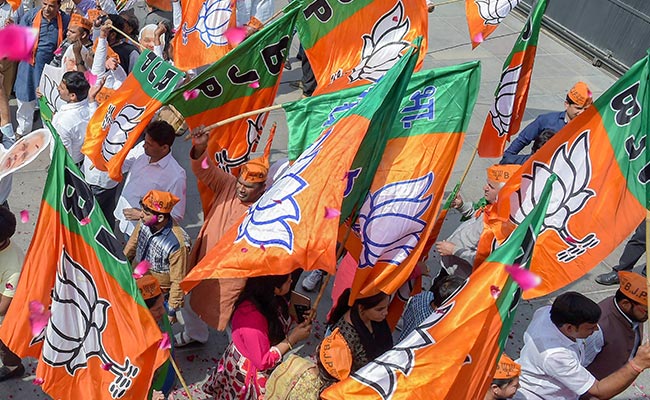
West Bengal has always been a place that refuses to be reduced - by any empire, by any ideology, by any single story that pretends to be whole. So when the Bharatiya Janata Party (BJP) sweeps the Bengal polls - when saffron seems to move through the state with the inevitability of weather - one is tempted, at first, to blame the strange mechanics of politics: alliances, strategies, the choreography of rallies.
But politics in India is never merely choreography. It is also climate.
A Mandate for Porivorton
In this monumental mandate for change, BJP has swept the Bengal polls leading in over 190 seats at the time of writing - a first, almost an astronomical rupture, because until now the party had not truly broken through West Bengal's long-held emotional geography. Even the narrative built by non-BJP politicians had been a kind of fatalism: that BJP was a creature of the Hindi heartland, trapped in its narrow "Hindi, Hindu, Hindustan" mold; destined, it was said, to remain a visitor rather than a resident.
Then came the wave. Not just an electoral rise, but a re-routing of belief - what you can call, without metaphor too excessive, a silent tsunami in the popular wave. The TMC - once the unshakable architect of the state - has reduced from 215 seats in 2021 to just 92. This is not merely loss; it is displacement, a kind of collective rearrangement.
Numbers, of course, are cold. But when the numbers gather into a pattern - when the swing is large enough to feel like a tectonic shift - they become the visible surface of something harder to measure: the mood of a people.
Why the Saffron Sweep?
And what, exactly, caused this saffron sweep?
The first and loudest answer is fierce anti-incumbency. For three consecutive terms, the TMC didn't only govern; it became the background texture of daily life - its successes remembered, its failures repeated, its promises worn into familiarity until familiarity itself began to feel like stagnation. In democracies, time can act like a solvent. What once felt like stability begins to feel like delay. What once felt like progress begins to feel like management of disappointment. Voters don't always switch because they suddenly fall in love with a new party - they switch because they can no longer live inside the old story.
Then came the second force: the presence of massive central security forces during elections. Fear is a shadow that changes quickly into hope when people believe the threat can be controlled. The election wasn't just about who would speak; it was also about whether speaking would be safe. In a country where the political and the personal often overlap, that kind of security reframes the decision. People who had been hesitant began to step forward - not with certainty of perfect outcomes, but with confidence that their vote could actually matter.
What followed was visible in the great, almost communal act of turning up.
Unprecedented Turnout
The silent euphoria among voters was measurable in the turnout itself. The first phase on 23rd April recorded an unprecedented 93.16% turnout. The second phase, in South East of Bengal across 142 constituencies, showed around 91% turnout. The average turnout across the entire state was over 92% - the highest turnout ever recorded, not only in the state but in the entire country. Democracy, for once, looked less like a ritual and more like an emergency response: a society moving together because it felt the moment demanded it.
And behind the turnout was a shift that cannot be reduced to strategy alone: women voters, who had backed TMC in 2021 in overwhelming numbers, switched sides in 2026 - largely on the issue of safety of women, after the historic protests of 2024 following the R G Kar medical college rape and murder of a young doctor. In political history, tragedies do not automatically translate into votes - but they can rewire the moral priorities of a population. When a society feels that the state has failed to protect, it begins to vote not only for policy, but for dignity.
The BJP, meanwhile, campaigned in a language that sounded like a promise rather than a complaint: "Poriborton" - transformation - into "Sonar Bangla". The word "Sonar" is not merely branding; it is memory with a future tense. It says: Bengal can shine again. It says: we can step out of the long corridor of stalled expectations.
Prime Minister Modi campaigned against what he framed as "Maha Jungle Raj" - the aura of lawlessness, neglect, and economic stagnation associated with 15 years of TMC rule. But beyond accusation, the BJP message offered a specific kind of hope: a double-engine government that would accelerate industrial growth, create jobs, and open genuine opportunities-especially for the young, whose restlessness is often mistaken for impatience, when it is, in fact, a demand to be seen.
On the borderlands, another campaign found receptive ears: "ghushpaiti" - the issue of illegal immigrants from Bangladesh-pressed close to rural anxieties. In border regions, identity becomes policy and policy becomes survival. When people feel their livelihood, their local order, and their cultural boundaries are under strain, they do not separate the debate from the ground beneath their feet.
Even the urban grievance, too, was made audible. The BJP highlighted what it called the pathetic infrastructure of Kolkata-the average speed of about 17.4 km per hour in public traffic, the narrow streets of the Kolkata presidency. Whether one agrees with the framing or not, the strategy was clear: take the everyday frustration of getting from one place to another, then turn it into a referendum on whether the system has been functioning.
Here, the contrast between campaigns became a kind of moral staging.
TMC Campaigned on Despair, BJP on Hope
The TMC's campaign leaned toward negativity-despair as a motive force. BJP's campaign was pitched as hope-not naive, not sentimental, but pitched as a remedy: change is possible, and therefore change is necessary. And that difference matters more than we like to admit. Despair asks people to endure. Hope asks them to act.
BJP also appeared to benefit from the broader advantage of SIR exercise carried out by the CEC - a detail that, in a diverse democracy, can still influence how voters think about fairness, legality, and whose vote is being protected.
And so, layer upon layer, SIR, anti-incumbency, voter fatigue, and hope of porivorton combined into what the numbers-especially turnout-suggest was not an ordinary swing. It was a silent wave. A movement that didn't need constant noise, because its urgency was already inside the electorate.
After this historic victory, BJP's reach expands across North India-from Gujarat in the west to Assam in the east-and in Assam it has even won a hattrick. This is the pattern of a party becoming not only national in ambition, but national in habit-learning new languages of power fast enough to survive local skepticism.
In West Bengal, skepticism has been historically intelligent. Bengal is not an easy audience. So if the saffron wave has broken here - if it has done so decisively enough to resemble a first-time conquest-then perhaps the deepest explanation is this: people did not vote only for a party. They voted for a different emotional contract with the future-one in which safety is promised, stagnation is denied, and transformation is made to sound not like a slogan, but like a timetable.
In India, a wave is always more than a wave. It is a society changing its mind about what it can tolerate - and what it can no longer wait for.
And Bengal, for the first time in this particular political story, has chosen - quietly, massively, and with the clarity that only a crowd at the ballot box can summon.
(The author is Editor, Research, NDTV)
Disclaimer: These are the personal opinions of the author
-
Opinion | The Rise Of Vijay, The Fall Of Stalin - And A Puzzle For Palaniswami

For the defeated Stalin, this verdict is almost a reminder of the misfortune that beset his father, who was brought down by Jayalalithaa in 1991, 2001 and 2011. Except that his father never lost an assembly seat.
-
Opinion | They Sniggered At Vijay In 2024. That Was DMK-AIADMK's Biggest Mistake
The mistake the DMK and AIADMK made vis-a-vis Vijay was to underestimate him. They did not realise what he quietly took away from them in two years.
-
India Sees Red: Left May Be Left With No Government In The Country
When the first elections were held in the country in 1951-52, it was the Communist Party of India that had the highest number of seats among Opposition parties in the Lok Sabha.
-
MK Stalin: The Boy From Chennai's Marina Beach
From a naming ceremony on Chennai's Marina Beach in 1953 to Tamil Nadu Chief Minister - this is the story of Muthuvel Karunanidhi Stalin, the DMK, and the 2026 election.
-
NTR, MGR, Jayalalithaa, Rajinikanth, Pawan Kalyan - Vijay, Respectfully, Is None Of Them
Vijay is unlike anything Tamil Nadu has ever seen. Comparing him to other star-turned-politicians is tempting, but unfair.
-
From Climbing On JP's Car To Ousting Left: Mamata Banerjee's Bengal Journey
Mamata Banerjee's political journey is a testament that she is at her most ferocious when she faces a difficult battle
-
Opinion | 35 US Lawmakers Just Moved A Bill That Could Upend Indian Techies' Careers
For years, Indian students going to America have followed a set path: F-1 student visa, then OPT, and later an H-1B visa. That may soon be off the table, thanks to a group of American lawmakers.
-
Opinion | Iran May Be Doing With Its Nukes What Another 'Rogue' Regime Did 20 Years Ago
A rogue state got away with its nuclear weapons programme decades ago, defying all sanctions. Iran may be going down the same path.
-
UAE Quits OPEC: What It Means For India's Oil Prices, Fuel Bills
Being able to deal with the UAE as a separate seller should give India the chance to re-adjust risk levels and pricing, particularly if some volume of crude is routed via overland pipelines to bypass the Hormuz blockade.