Opinion | Congress's 'Jamaat' Experiment In Kerala Can Backfire Badly. But Does It Care?
The Jamaat has always been sort of a political pariah in the state. Why, then, is the Congress warming up to it?
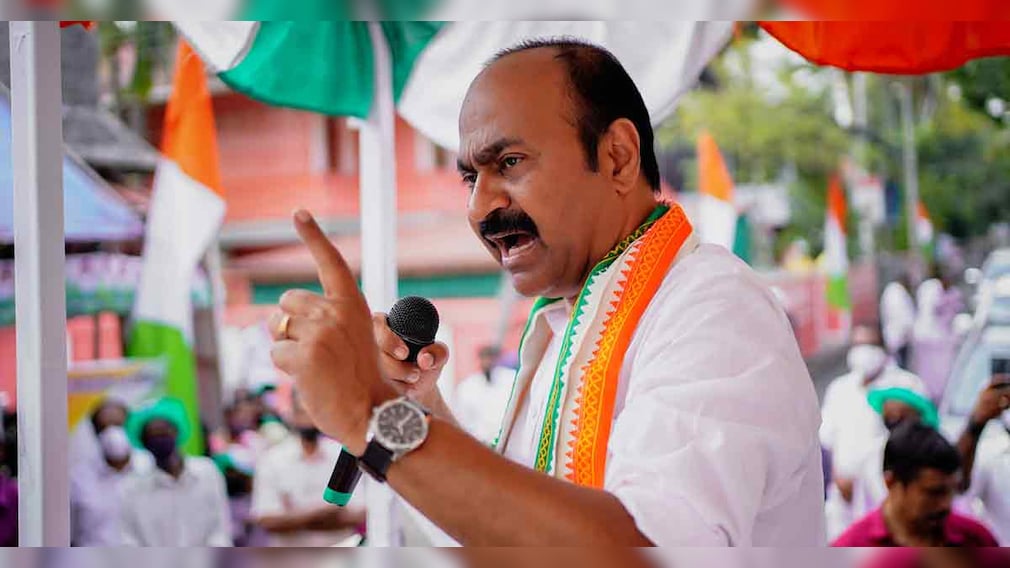
The literary term 'hamartia' was introduced by the Greek philosopher Aristotle, but it came to be popularly associated with the tragic heroes of Shakespeare. Hamartia is a fatal flaw or error of judgment that results in the downfall of Shakespeare's central characters. If hamartia were to be understood in the context of the politics of the day, the curious case of Kerala's Leader of Opposition (LoP), VD Satheesan, comes to mind. How he is seeking to whitewash the Jamaat-e-Islami Hind and defend its principle of 'theo-democracy' - or 'Hukumat-e-Ilahiya' - as espoused by its founder, Syed Abul Ala Maududi, is a case in point.
But why exactly is the Congress, buoyant after winning the local body polls held in December, warming up to the Jamaat-e-Islami in this election? The general defence from the party is to suggest that the consolidation of each and every vote matters. Sure, that makes sense arithmetically. However, Satheesan has gone one step further, issuing not once but twice a 'secular certificate' to the outfit. And this even as contrary voices emerged from the Jamaat itself on ideology, with secretary Shaikh Muhammad Karakunnu explicitly denying there has been any dilution towards the goal of an "Islamic Republic".
But what explains this embrace?
Once Bitten, Twice Not Shy?
It is important to recall how the Jamaat dalliance had cost the UDF dearly in the previous assembly polls, when incumbent Pinarayi Vijayan beat a four-decade pattern of alternating governments in the state. Back then, the UDF lost the delicate communal balance it had always upheld when the Church-backed Kerala Congress (Mani) quit the UDF to join the Left Democratic Front (LDF) on the eve of the local body polls. That led to Muslim groups commanding a greater space within the UDF - a fact that the LDF effectively milked, which, in turn, only exacerbated the polarisation between the Christian and Muslim communities in the run-up to the polls.
Congress reckons that the situation has changed this time around, with the Syro-Malabar Church throwing its weight behind it. However, there is unease among the clergy on the brand of ‘Political Islam' espoused by the Jamaat-e-Islami. To this, some Congress leaders are quick to point out that the Jamaat supported the Left in Kerala until the 2019 Lok Sabha polls. But they forget that there is a crucial difference: in the past, the Jamaat, unlike today, had little visibility and remained below the radar outside Malabar.
Another defence put forward by Congress leaders to justify the dalliance is the propaganda framework of the Jamaat-e-Islami, promoting 'Muslim opinion' through its news channel and newspaper. However, the jury is still out on whether this propaganda messaging actually gives the UDF an advantage or if it's a liability.
Jamaat-e-Islami's Complex History
The Jamaat-e-Islami has always punched above its weight in Kerala's public sphere despite having a limited following within the Muslim community. After distancing itself from the Students Islamic Movement of India (SIMI) and retracting its position on Jamaat members not joining government services, it started the Madhyamam daily in Malayalam in 1987. The daily was noticed for foregrounding the Bhagalpur riots of Bihar and was at the forefront of championing VP Singh. Through Madhyamam, the Jamaat was also engaged in a prolonged campaign to separate the IUML from the Congress.
Despite that vicious campaign in the wake of the Babri Masjid demolition, the IUML stayed put, though it eventually split, which led to the formation of the Indian National League (INL) under Ebrahim Sulaiman Sait. By targeting the Congress constantly, the Jamaat also succeeded in injecting a sense of alienation among Muslim youth. The news of former president Mohammed Najibullah's assassination and the takeover of Afghanistan by the Taliban in 1996 was celebrated as "Vismayam" (wonder) by Madhyamam.
Smuggling Political Islam
By smuggling political Islam into its coverage of international news and gradually becoming the Malayalam daily of choice among Malabar Muslims, Madhyamam succeeded in radicalising a couple of generations by varying degrees. It played an instrumental role in spreading hysteria among Muslim youth on issues such as the capture and assassination of Saddam Hussein and the Arab Spring; by that time, its agenda of political Islam had also become more blatant. Around that period, the Jamaat secured the licence for a news channel - MediaOne - and began broadcasting its political opinions across Kerala.
MediaOne began to acquire wider visibility from 2023 following the Gaza war, when its editorial show 'Out of Focus' began to act as an unofficial spokesperson for Hamas. While people initially found it funny and began likening C Dawood - the vocal managing editor of the channel - to Comical Ali, the show's potential to polarise people became evident as the coverage turned borderline antisemitic.
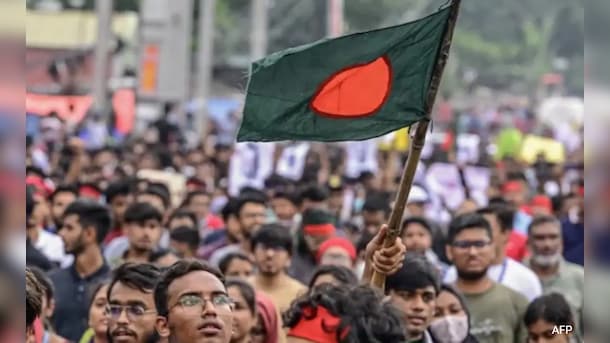
The show also manufactured false narratives on issues such as the Waqf property dispute in Munambam, threatening to create a chasm between the state's minority communities. While the Jamaat-e-Islami generally tries to couch its brand of political Islam behind the veil of anti-Americanism, MediaOne's coverage of the uprising in Bangladesh exposed it completely.
Why Everyone Is Wary Of Jamaat
It is not as if the Jamaat-e-Islami is acceptable to mainstream Muslim organisations in the state. The Sunni Muslims of Malabar mostly owe their allegiance to the Samatha Kerala Jemiyyathul Ulama (mononymously referred to as Samastha), divided into the EK and AP factions. The AP faction, named after Grand Mufti AP Aboobacker Musliyar, stands solidly behind the LDF, while the IUML derives its strength from the EK faction, which holds sway among two-thirds of Sunni Muslims. Beyond Sunnis, there is a bloc of Salafis (known as Mujahids in Kerala) divided into three groups, who haven't been swallowed by global Wahabism due to their association with Kerala Renaissance movements of the past.
The Mujahids have also thrown their political weight behind the IUML over the years. The Jamaat-e-Islami used to be a fringe outfit for decades before gaining prominence through its media ventures. When the IUML convened a peace meeting in Malappuram following the communally-charged atmosphere in the wake of the hand-chopping of TJ Joseph for alleged 'blasphemy' in 2010, the Jamaat was kept out of it, along with the Popular Front of India (PFI), especially because of the perceived role of Madhyamam in inflaming passions on it.
The centenary event of both factions of the Samastha this month adopted resolutions against the Jamaat-e-Islami, warning their followers against pan-Islamist theocratic movements and political Islam. The Jamaat hit back by accusing the Samatha of having collaborated with the British. The Samastha factions are known to be conservative when it comes to religion but they are also deeply seeped in Kerala's secular ethos, where communal amity takes precedence over sectarian agendas.
The IUML's predicament
In the complex web of the Muslim politics of Malabar, the IUML cannot be seen to be associated with the Jamaat-e-Islami directly, not only because it draws its cadre from the Samastha (EK faction) but also because its brand of moderate politics is incompatible with political Islam. However, after having spent years out of power in Kerala, the IUML has also been restless; its priority, more than anything else, is to win the assembly election at any cost.
In sum, the IUML has come around to the idea that there are benefits in associating indirectly with the Jamaat-e-Islami for the sake of Muslim vote consolidation, even if veteran PK Kunhalikutty himself isn't fully invested in this arrangement. It reckons that it can easily dissociate itself from the Jamaat after coming to power, and hence it relies on the Congress - specifically, VD Satheesan - to bear the cross for it.
Satheesan's Gameplan
VD Satheesan is a shrewd politician and tactician. So, it would be foolish to assume that Satheesan is unaware of the pitfalls of warming up to the Jamaat-e-Islami. Satheesan reckons that the massive levels of anti-incumbency will render the issue irrelevant in this election, notwithstanding the CPI(M)'s attempts to rake it up at every turn. With local body polls also vindicating him, Satheesan doesn't think there is any chance of a deja vu from 2021.
However, there is more to it than meets the eye for Satheesan in this arrangement. By taking the blame on behalf of the IUML, even at the cost of diluting his hard-earned secular image, Satheesan is ensuring its backing when it comes to the naming of the Chief Minister. Although it is primarily the Congress legislature party and the 'high command' who will take that call, the IUML still has a 'say' and a role to play. The likes of Oommen Chandy always made sure to keep the IUML in good humour to checkmate intra-party rivals.
However, even such carefully chalked-out plans can go haywire. And like Macbeth, Satheesan's chief ministerial ambitions may turn out to be his fatal hamartia, leaving the UDF snatching a loss from the jaws of victory.
There is another element to consider here: Malayalis historically voted for the IUML because of the moderate positions it adopted despite its contested legacy. But whenever the LDF or the UDF have openly wooed communal parties, it has ended up backfiring on them. A case in point is the public courting of controversial preacher Abdul Nazar Mahdani by Pinarayi Vijayan as CPI(M) state secretary in 2009, and the setback that the LDF endured throughout the state in the Lok Sabha election that year.
(Anand Kochukudy is a senior journalist and columnist)
Disclaimer: These are the personal opinions of the author
-
Opinion | A BAFTA Award, Straight From The Ashes Of Manipur's Moreh

The shooting for 'Boong' in Moreh wrapped up barely a week before violence engulfed the township. Many who stood behind and before the camera are today internally displaced.
-
Inside Mumbai's Worsening Air Pollution Crisis
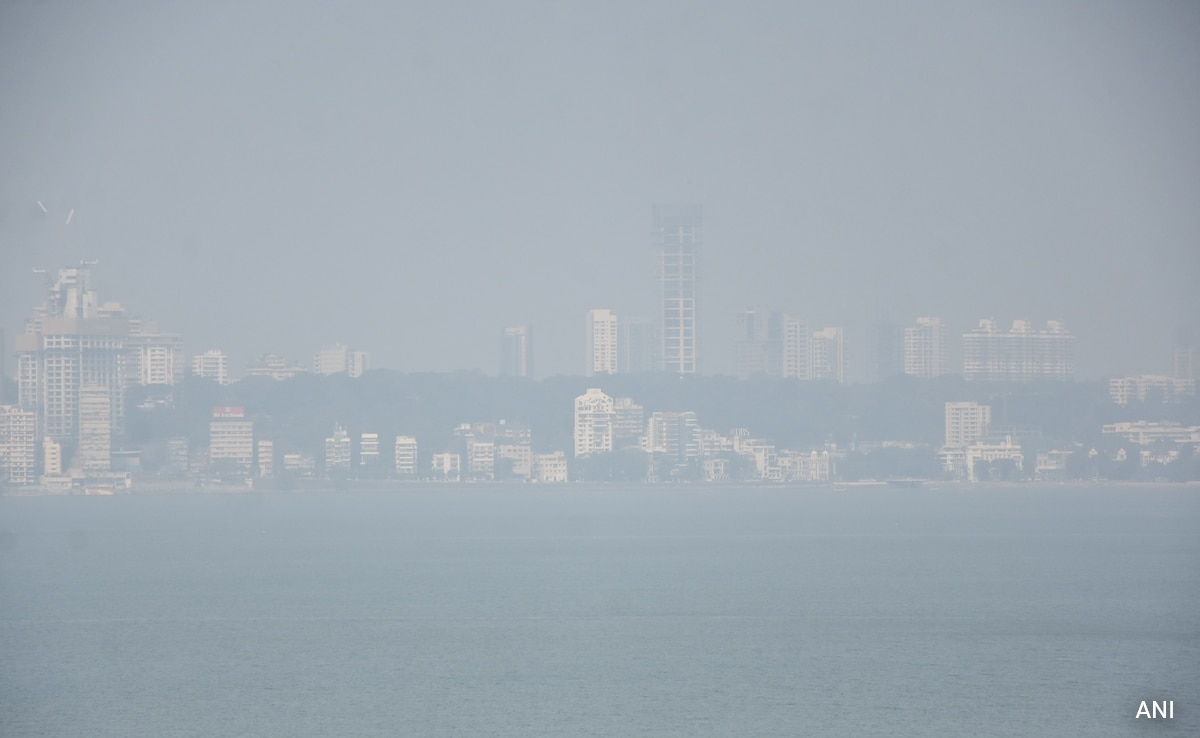
Mumbai Air Pollution: Mumbai 's overall Air Quality Index (AQI) on February 25 remained in the poor to unhealthy range.
-
Opinion | What's In An 'M'? The Empty Performance of Renaming Kerala
The 'm' at the end of Keralam will not stop the sea from encroaching, it will not fill the coffers of the state treasury, and it will not provide a bed in a super-specialty hospital.
-
6,800 km From Epstein Island, His Paris Lair Surfaces With Disturbing Details
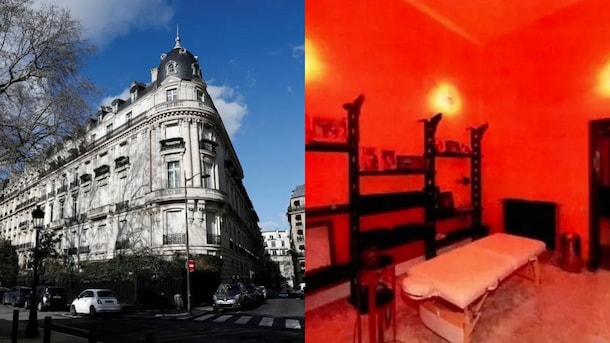
The photographs show an 18-room residence saturated in red, orange and pink tones. Walls are covered with framed images of naked or semi-naked young women.
-
Opinion | How Israel Once Defied Its Biggest Ally To Secretly Help India Against Pakistan
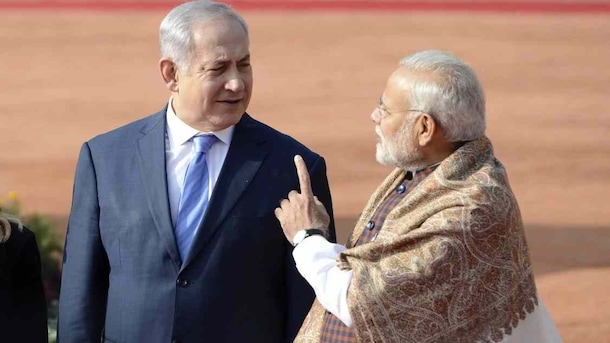
During the 1971 India-Pakistan war, Israel secretly supplied India with critical military equipment despite the absence of formal diplomatic ties. Then came an 'offer' against Pakistan in the 1980s.
-
Opinion | If You Don't Care About Taj Mahal's Architect, Why Cry Over Lutyens?
The parallel, if one has to be drawn, is not with Shah Jahan and the Taj. It is with the architect of the Taj, and most of us don't know his name either. Why, then, should we bother too much with a British architect?
-
Opinion | Inside Trump's Dirty Games With South Korea And Japan - And Why India Must Care
The US President's dealings with his two allies have become cautionary tales highlighting the difficulty of negotiating with Trump's America.
-
From "Jai Shree Ram" To "Jai Maa Kali": BJP's Cultural Rebranding In Bengal
The BJP's strategy seems to be to acknowledge that the intricate dance of politics, pre-Independence history and culture, when done with sincerity and respect, can unite rather than divide
-
Opinion | In Bangladesh, A Story Of Many Wins
The rain is over, and the clouds are clearing. Now, the hard work of rebuilding a nation begins, and India must be standing right there alongside as a friend.