Opinion | China, Pakistan, And The Trouble With Keeping Snakes In Your Backyard
While declaring that China opposes all forms of terrorism, its foreign ministry asserts that it seeks to foster amity. Does Beijing really think it can present itself as an honest broker even as it acts like a behind-the-scenes instigator?

India's Foreign Minister, S. Jaishankar, is in China for the Shanghai Cooperation Organization (SCO) meeting and has used the important multilateral forum to highlight New Delhi's concerns on cross-border terrorism.
Driving home the point subtly, Jaishankar has reminded Beijing that the SCO's raison d'être was combatting terrorism, separatism, and extremism, and that the "three evils" often occur together. The remarks were made in the context of the terrorist attack in Pahalgam on April 22 this year, in which 26 tourists were gunned down. The government's assessment of this dastardly terror attack has been that it was aimed at creating a chasm, given that the perpetrators singled out their victims on the basis of their religious identity. The objective of the Pakistan-sponsored terrorists was also to dent the economy of Jammu and Kashmir, which had been thriving on tourism since its return to normalcy. In the context of Jammu and Kashmir, the three-fold evils of terrorism, separatism, and extremism have indeed been reinforcing and compounding.
The Munir Doctrine
Pakistan mobilised terror groups in the Valley in the 1980s and pushed foreign fighters, which ultimately led to the killings of the local Hindu population and their subsequent exodus. The terror groups, whom Islamabad branded as 'freedom fighters', were seeking to carve out a separate state. Girding this approach is Pakistan's philosophy, that it was founded as a homeland of Muslims, and that Jammu & Kashmir is an unfinished agenda of the Partition of 1947.
In fact, Pakistan's Field Marshal, Asim Munir, had openly publicised this viewpoint before the Pakistan Overseas Convention just before the Pahalgam terror attack, dusting off the "two-nation theory" in his address and referring to Kashmir as Pakistan's "jugular vein". Incidentally, also, when the 2019 Pulwama suicide bombing attack took place, in which around 40 Indian service personnel were martyred, Munir was heading the Inter-Services Intelligence.
Jaishankar, Unfiltered
In his address to the SCO Council of Foreign Ministers' Meeting, Jaishankar underscored that the UN Security Council had condemned the Pahalgam terror attack and called for the perpetrators, organisers, financiers, and sponsors of terrorism to be held accountable and brought to justice. The Foreign Minister has thus tried to contextualise India's actions, such as keeping the Indus Water Treaty in abeyance and striking terror training camps and military infrastructure in Pakistan during Operation Sindoor. Jaishankar also exhorted SCO members to stay on course with the grouping's founding goal - combatting 'terrorism, separatism, and extremism' - if the multilateral grouping really wishes to present an uncompromising stance on the challenge.
This positioning throws a poser to China, which has its own worries about separatism and extremism and brings into question Beijing's duplicitous role. In his first visit to China since the military standoff, Jaishankar has underscored China's two-faced stand on terror.
The Dragon's Steady Support
In 2019, China joined hands with Pakistan to raise the Kashmir issue at the UN Security Council after India scrapped the erstwhile state's special status. While Beijing had floated the SCO ostensibly to fight terrorism, it has been instrumental in protecting the perpetrators of acts of terror committed on Indian territory. In the past, China has also blocked initiatives to place Jaish-e-Mohammad's Rauf Asghar and the Lashkar-e-Taiba's Sajid Mir and Abdur Rahman Makki on the UN sanctions list. China harbours Indian separatist leaders on its soil, and its state-backed publications threaten India with this supposed leverage.
China's formal position on Operation Sindoor has been to describe India's action as 'regrettable', urging New Delhi and Islamabad to arrive at a 'settlement' through political 'dialogue'. Not just that, but a recent report by the Stockholm International Peace Research Institute (SIPRI) has stated that 63% of Beijing's arms exports between 2020 and 2024 went to Pakistan. The Indian Army has also publicly revealed the details of the Chinese-made armaments, such as PL-15E long-range missiles, which were developed by China's Aviation Industry Corporation and used by Pakistan during the conflict. The official assessment of the Indian Army, expressed by Deputy Chief of Army Staff General Rahul Singh, is that China, along with Turkey, backed Pakistan by providing real-time inputs of India's actions during Operation Sindoor.
While declaring that China opposes all forms of terrorism, its foreign ministry further asserts that it seeks to play a constructive role in fostering amity. Does Beijing really think it can present itself as an honest broker even as it acts like a behind-the-scenes instigator? China should remember well former U.S. Secretary of State Hillary Clinton's sage advice, that snakes would eventually come to bite those who nurtured them in their backyard.
(Harsh V Pant is Vice President, Observer Research Foundation, New Delhi. Kalpit Mankikar is Fellow, China Studies, at ORF.)
Disclaimer: These are the personal opinions of the author
-
Maharaja Ranjit Singh To Bhagwant Mann: Inquisitions By Akal Takht

While for centuries, rulers and netas have visibly bowed to its authority, Bhagwant Mann is probably the first to directly confront the Akal Takht
-
Ringside View | FIFA World Cup 2026: Magic Of Cristiano Ronaldo Missing — But Why?
On a day when Lionel Messi found the net, Kylian Mbappe delivered again and Harry Kane added his name to the scoresheet, Cristiano Ronaldo's was conspicuously absent.
-
Public Assets, Private Capital: India's Next Reform Step
That gap between what India's sovereign assets are worth and what they currently earn is central to India's location in the low-middle income bracket.
-
Why Meta Is Suddenly Charging For Facebook, Instagram And WhatsApp
Facebook, Instagram and WhatsApp have long been free. So why is Meta suddenly asking users to pay? The answer may lie in Mark Zuckerberg's expensive AI ambitions.
-
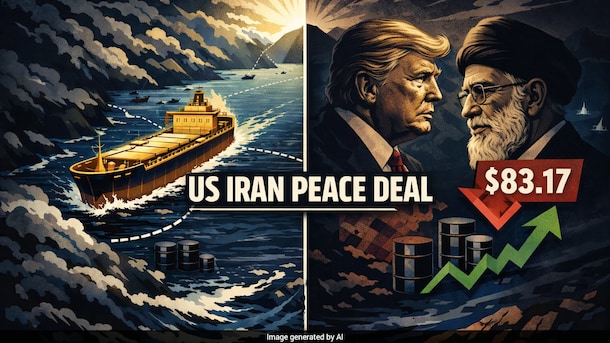
US-Iran Peace Deal Could Save India Billions On Oil Import Bill
US-Iran peace deal finalised after 107-day war in which 10,000 were killed. Brent crude dropped 4.76% to $83 after deal -which includes reopening of the Strait of Hormuz - was announced. India set to save up to $15 billion on cheaper oil imports and shrink current account deficit.
-
Ringside View | Vaibhav Sooryavanshi Needs To Be Told Cricket Is Not A Contact Sport
Sooryavanshi could be the most unique product rolled out by the Indian cricket system in years. He just needs to give social proof to convert sceptics into believers.
-
The Tech That Warns Millions In Seconds And The Risk That Comes With It
Experts say when people receive too many warnings, especially for events that do not directly affect them, they begin to tune them out.
-
Peace In Middle East? But Nuclear File Is Real Test Of US-Iran Deal
Key challenges remain over Iran's nuclear program, with uncertain compliance and potential for covert enrichment activities.