21-Year Tax Holiday, Rs 2,000 Crore Safe Harbour: India's Data Centre Bet
Data centres are infamously capital resources-hungry and require massive amounts of electricity (to run the computers), water (to cool servers), and land (on which to build).
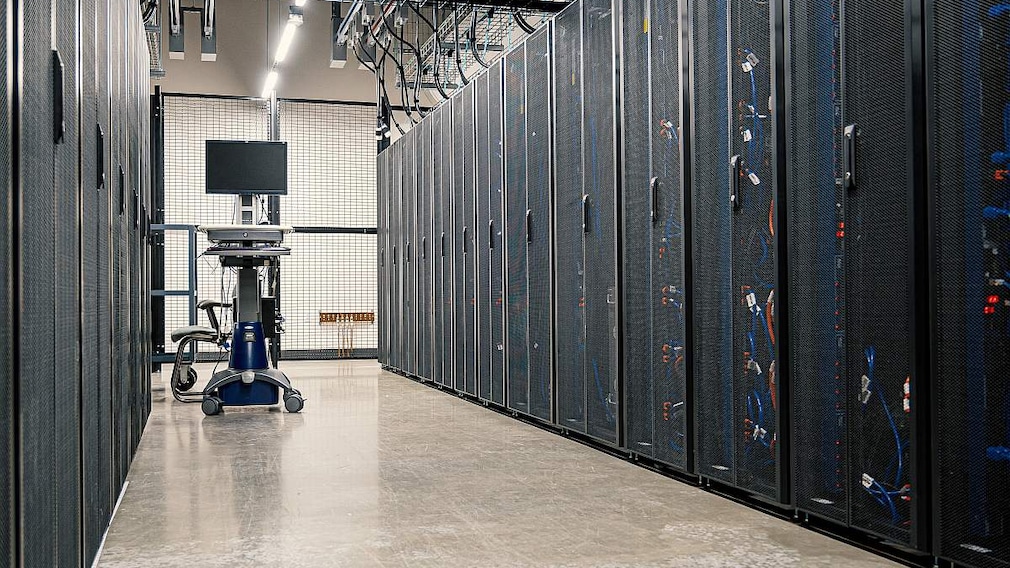
India on Sunday offered foreign companies providing cloud services a 21-year tax holiday in return for setting up data centres in the country, in an announcement designed to boost the growth of the information technology and artificial intelligence spaces.
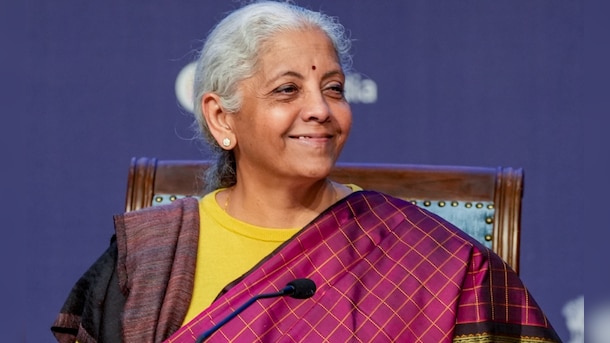
Presenting the 2026 union budget, Finance Minister Nirmala Sitharaman attributed the holiday – and a 15 per cent safe harbour with a threshold of Rs 2,000 crore - if the company providing the data centre services is Indian – to recognising the need to enable critical infrastructure and attract investment.
In a press note after the budget was tabled, the government said data centres, particularly those related to AI, "play a critical role in the infrastructure layer of sectoral architecture".
The tax holiday + safe harbour proposal, IT Minister Ashwini Vaishnaw said, was part of a "long-term policy framework… positions India among leading destinations for AI, cloud infrastructure."
The numbers
Data centre capacity in India reached 1.5 GW, or gigawatts, across seven major Indian cities by the end of last year, i.e., 2025. And it is expected to cross 1.7 GW by the end of this year.
RECAP | Google Announces AI Hub In India, Its Largest Outside US
Enhanced AI and cloud-related services, powered by data stored within the country, is widely seen as essential to support the Indian economy as it bids to cross the trillion-dollar mark.
The data is there with more coming with over 1,000 million active internet users as of September 2025 and an estimated eight per cent year-on-year increase in that number.
The AI tax holiday
The proposals are widely expected to interest global tech giants like Google, Microsoft, and Amazon, which require massive computing capacity to run their AI and cloud services.
NDTV Explains | What Microsoft's $17.5 Billion AI Investment Means For India
As of Q3 2025, the three companies' products - Cloud, Azure, and AWS – control a massive 63 per cent of the global cloud infrastructure market, and all three have already turned their attention to India to set up data centres needed to keep these essential services running.
This is a big money game; last year, for example, the three separately announced over $30 billion, to be spent over the next 14 years, to expand cloud and AI infrastructure in the country.
This focus on data storage isn't just a business gamble. It is also about controlling data – arguably an important strategic asset for businesses and governments in today's world.
Why it is important
India is an important source of that data; it generates nearly 20 per cent of the world's data, according to the Economic Survey for 2025/26. But it lacks the capacity to store that volume.
This means an estimated 95 per cent of data from Indian nationals is processed or stored abroad, which is a potential national security issue and also a challenge to Indian businesses.
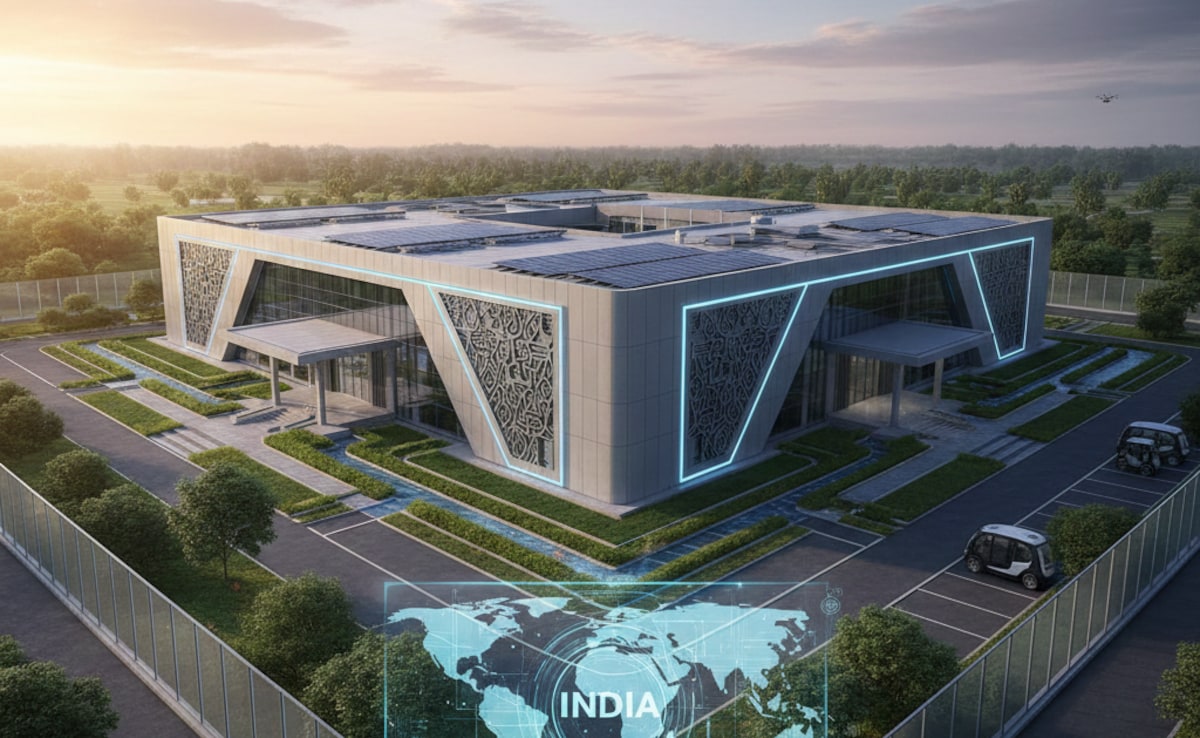
Photo Credit: Image generated by AI
The offer of a tax holiday, therefore, is expected to help bridge the divide between generation and storage, while also ensuring a boost for the economy and more jobs. It will also alleviate foreign companies' concerns about future taxes on global income via localised data centres.
And by offering that longer window foreign firms can commit to bigger capex investments, i.e., build more data centres and expand dedicated AI capabilities. This, in turn, drives down cost of computing and Indian businesses, including start-ups, can benefit from better cloud pricing.
What are the challenges
Data centres are infamously capital resources-hungry and require massive amounts of electricity (to run the computers), water (to cool servers), and land (on which to build).
The water needs alone, for example, are staggering; a report by British broadcaster BBC estimated existing centres used over 150 billion litres in 2025 and this could increase to 358 billion in five years.
These are significant challenges, particularly the supply of water in a country that regularly experiences heatwaves and droughts, a horrible combination, and in which millions, even today, do not have safe drinking water available in their homes.
Concurrently, data centre growth also has an impact on the country's energy supply, i.e., the increased use of power that could counter national decarbonisation plans. The International Energy Agency expects data centres' power needs to take up two per cent of total supply.
Clean and renewable energy sources are key but these are still not widely available.
The offset, though, is that India can offer these resources far cheaper than rivals like China and even, in some cases, western nations like the United States and Japan. And the reality is the world now runs on data and India must move to secure its position in such a world.
-
Opinion | How Budget 2026 Renders Kerala Invisible

What Kerala needs is not just sympathy or slogans. We need an alternative that commands respect in Delhi and delivers development in Kerala. Right now, we have neither.
-
Blog | "Hamberder" To "Furniture Of Children", Trump And His 'Unpresidented' English
Time and again, Donald Trump has proven that he possesses the best words. They just aren't always the ones in the dictionary.
-
Opinion | Union Budget 2026-27: Don't Look For Fireworks Here. Continuity Is The Goal
The latest Budget needs to be read as a statement of macroeconomic restraint under external stress. Its defining feature is calibration.
-
Opinion | In Trump's World, Wikipedia's Lesson On Collaboration
Wikipedia founder Jimmy Wales's life's work rests on a proposition that feels almost subversive in 2026: that most people, given the right framework, want to collaborate in good faith.
-
Opinion | Iran Requires a Regime Change, Just Not The Kind America Wants
Trump's dreams of effecting a regime change in Iran need to be considered along two factors related to the power structures within Iran, both of which US seems indifferent to.
-
Opinion | Beyond Ajit Pawar: What Happens To Sharad Pawar's 'Succession' Plan Now?
If Pawar fails to produce one last rabbit from his hat to revive his party after the massive loss of Ajit Pawar, the BJP juggernaut is bound to move in to occupy spaces vacated by the NCP.
-
Opinion | Ajit Pawar: The Politician Who Didn't Pretend
Ajit Pawar bent over backwards to be in power; when there, he commandeered it to work for the public while helping his party, of course.
-
NDTV Exclusive: The Hunters Of Lyman - Inside Ukraine's Deadliest Drone Unit
In an exhaustive interview with NDTV, drone pilots and operators from Ukraine's Signum Batallion go into details about drone warfare and what happens on the frontlines.
-
Ten Minutes From Kanpur, The Plane Crash That Killed Madhavrao Scindia
On September 30, 2001, the Congress lost one of its brightest leaders, Madhavrao Scindia, in a plane crash 10 minutes from Kanpur
-
Ajit Pawar, The No-Nonsense 'Dada' Of Maharashtra Politics
A seasoned politician, Ajit Pawar never hid his ambition he wanted to become Chief Minister of Maharashtra. Only, he never realised that dream, falling a step short an incredible six times.




-
News Updates
-
Featured
-
More Links
-
Follow Us On
