21-Year Tax Holiday, Rs 2,000 Crore Safe Harbour: India's Data Centre Bet
Data centres are infamously capital resources-hungry and require massive amounts of electricity (to run the computers), water (to cool servers), and land (on which to build).
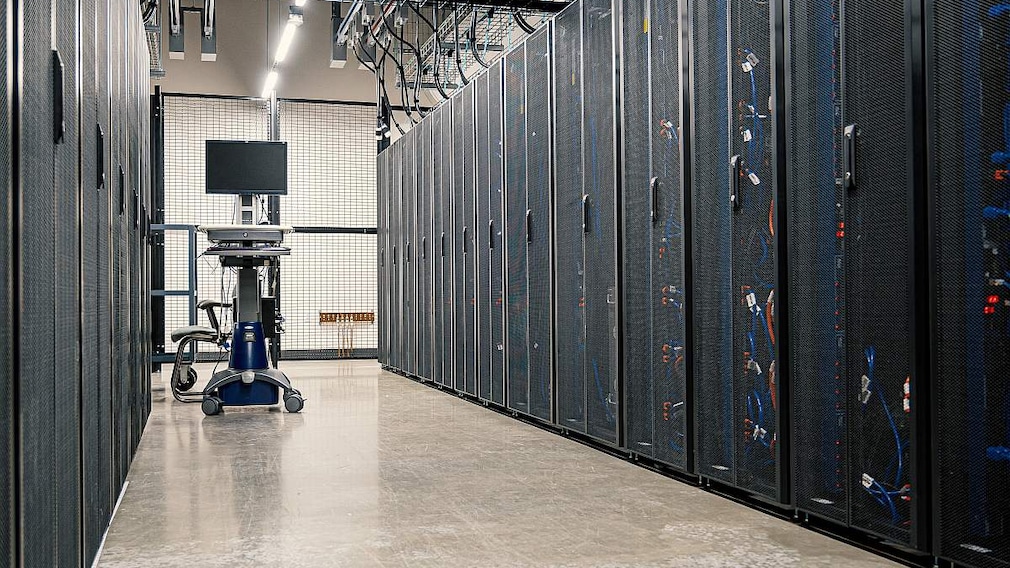
India on Sunday offered foreign companies providing cloud services a 21-year tax holiday in return for setting up data centres in the country, in an announcement designed to boost the growth of the information technology and artificial intelligence spaces.
Presenting the 2026 union budget, Finance Minister Nirmala Sitharaman attributed the holiday – and a 15 per cent safe harbour with a threshold of Rs 2,000 crore - if the company providing the data centre services is Indian – to recognising the need to enable critical infrastructure and attract investment.
In a press note after the budget was tabled, the government said data centres, particularly those related to AI, "play a critical role in the infrastructure layer of sectoral architecture".
The tax holiday + safe harbour proposal, IT Minister Ashwini Vaishnaw said, was part of a "long-term policy framework… positions India among leading destinations for AI, cloud infrastructure."
The numbers
Data centre capacity in India reached 1.5 GW, or gigawatts, across seven major Indian cities by the end of last year, i.e., 2025. And it is expected to cross 1.7 GW by the end of this year.
RECAP | Google Announces AI Hub In India, Its Largest Outside US
Enhanced AI and cloud-related services, powered by data stored within the country, is widely seen as essential to support the Indian economy as it bids to cross the trillion-dollar mark.
The data is there with more coming with over 1,000 million active internet users as of September 2025 and an estimated eight per cent year-on-year increase in that number.
The AI tax holiday
The proposals are widely expected to interest global tech giants like Google, Microsoft, and Amazon, which require massive computing capacity to run their AI and cloud services.
NDTV Explains | What Microsoft's $17.5 Billion AI Investment Means For India
As of Q3 2025, the three companies' products - Cloud, Azure, and AWS – control a massive 63 per cent of the global cloud infrastructure market, and all three have already turned their attention to India to set up data centres needed to keep these essential services running.
This is a big money game; last year, for example, the three separately announced over $30 billion, to be spent over the next 14 years, to expand cloud and AI infrastructure in the country.
This focus on data storage isn't just a business gamble. It is also about controlling data – arguably an important strategic asset for businesses and governments in today's world.
Why it is important
India is an important source of that data; it generates nearly 20 per cent of the world's data, according to the Economic Survey for 2025/26. But it lacks the capacity to store that volume.
This means an estimated 95 per cent of data from Indian nationals is processed or stored abroad, which is a potential national security issue and also a challenge to Indian businesses.

Photo Credit: Image generated by AI
The offer of a tax holiday, therefore, is expected to help bridge the divide between generation and storage, while also ensuring a boost for the economy and more jobs. It will also alleviate foreign companies' concerns about future taxes on global income via localised data centres.
And by offering that longer window foreign firms can commit to bigger capex investments, i.e., build more data centres and expand dedicated AI capabilities. This, in turn, drives down cost of computing and Indian businesses, including start-ups, can benefit from better cloud pricing.
What are the challenges
Data centres are infamously capital resources-hungry and require massive amounts of electricity (to run the computers), water (to cool servers), and land (on which to build).
The water needs alone, for example, are staggering; a report by British broadcaster BBC estimated existing centres used over 150 billion litres in 2025 and this could increase to 358 billion in five years.
These are significant challenges, particularly the supply of water in a country that regularly experiences heatwaves and droughts, a horrible combination, and in which millions, even today, do not have safe drinking water available in their homes.
Concurrently, data centre growth also has an impact on the country's energy supply, i.e., the increased use of power that could counter national decarbonisation plans. The International Energy Agency expects data centres' power needs to take up two per cent of total supply.
Clean and renewable energy sources are key but these are still not widely available.
The offset, though, is that India can offer these resources far cheaper than rivals like China and even, in some cases, western nations like the United States and Japan. And the reality is the world now runs on data and India must move to secure its position in such a world.
-
Opinion | Asim Munir Wants To Redraw Pakistan's Map - And He Has Big Ideas

Beneath the language of governance reform lies a potentially consequential attempt to restructure Pakistan's federal compact.
-
Saharanpur Showdown: For Congress MP Imran Masood It's Both Personal And Political
Saharanpur is more than just another constituency in the Congress-SP seat-sharing dispute. It is a district where geography, electoral arithmetic, community identities and family legacies intersect.
-
Opinion | How India's Constitution Was A Rebellion Against Its Own Past
The 145,000-word document did more than just free a nation from colonial rule. It also attempted to free Indians from the shackles of a deeply illiberal past.
-
TVS Succession Battle Explained: What Lakshmi Venu Wants From Family Empire
The TVS family dispute is no longer just a disagreement over division of businesses. It has become a legal question about ownership and inheritance.
-
Opinion | Indian Firms Are Making Record Profits. Why Are Foreign Investors Still Leaving?
In the July to September quarter of 2026-27, the 50 companies in the Nifty 50 increased profit after tax by 27% over the same quarter of the previous year - the highest growth in 17 quarters.
-
Battle Of Two Babas: What's Behind Ramdev Versus Dhirendra Shastri?
Why Ramdev chose to publicly criticise Shastri soon after attending his much-publicised and well-attended Ram Katha in Uttar Pradesh for an earlier comment remains an interesting question.
-
Opinion | There Are 5 Reasons Iran Won't Drop A Dirty Bomb On The US - And One Reason It Might
Iran is entirely capable of building a dirty bomb - as are other modern states with access to industrial radioactive materials. But how far will it really go?
-
Opinion | Too Big To Fail, Too Connected To Fall: Why Trump Needed Jensen Huang
Rumours are that Trump's own business stakes in Nvidia have helped him rake in millions of dollars as the company's shares zoomed back up after the plunge that followed Huang's exit. But that's just one part of the story.
-
BJP's UP Seat-Sharing Test: Four Allies, Many Ambitions And A 50-Seat Puzzle
This time, the BJP has to accommodate all four partners, each with its own electoral ambitions and areas of influence across western and eastern Uttar Pradesh.
-
From 'Spy Affair' To 'Nothing Wrong' In 11 Days: What Brought Jensen Huang Back As Nvidia Boss
Nvidia's Jensen Huang admitted to an extramarital affair with Alice Huang, a woman who worked at his company's Hong Kong-based customer firm and is alleged to be a Chinese spy. That brought with it many investigations. But he seems to have weathered most of it for now, within days.