Story Behind Satluj: Revisiting Jaswant Singh Khalra Case And A Wife's Decades-Long Fight
Jaswant Singh Khalra exposed and documented illegal cremations and enforced disappearances during Punjab's militancy years at the hands of the Punjab Police.
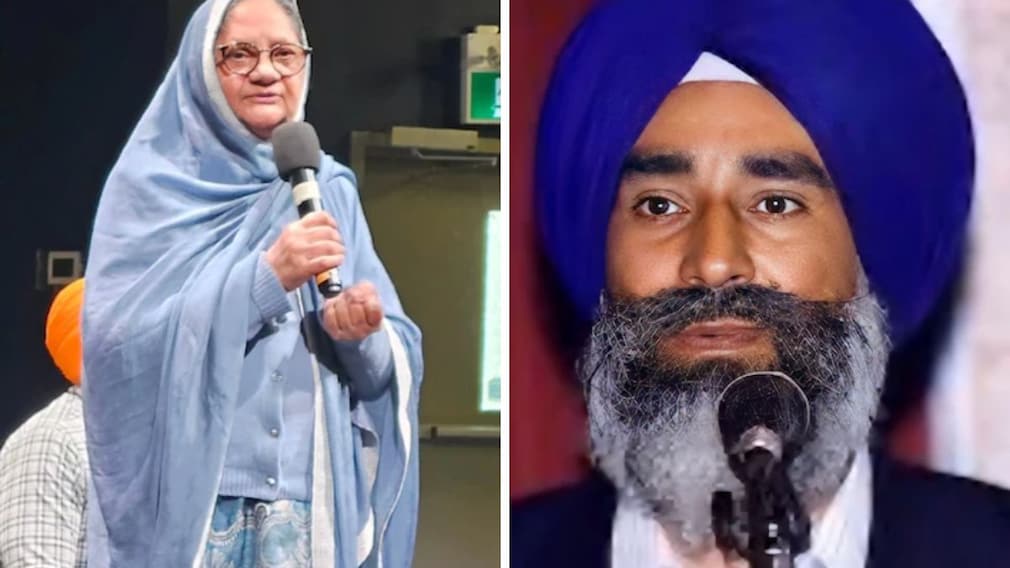
On September 6, 1995, human rights activist Jaswant Singh Khalra was washing his car outside his home at around 9.20 am in Kabir Park, Amritsar, when he was abducted by the Punjab Police. He was never seen again.
Jaswant Singh Khalra exposed and documented illegal cremations and enforced disappearances during Punjab's militancy years at the hands of the Punjab Police.
Since 1995, his wife, Paramjit Kaur Khalra, has ensured that her husband's work and sacrifice are not erased from public memory. She then began a decades-long fight to seek justice for her husband.
The latest controversy surrounding the Diljit Dosanjh-starrer Satluj- inspired from Khalra's story-has once again placed that struggle at the centre of national attention.
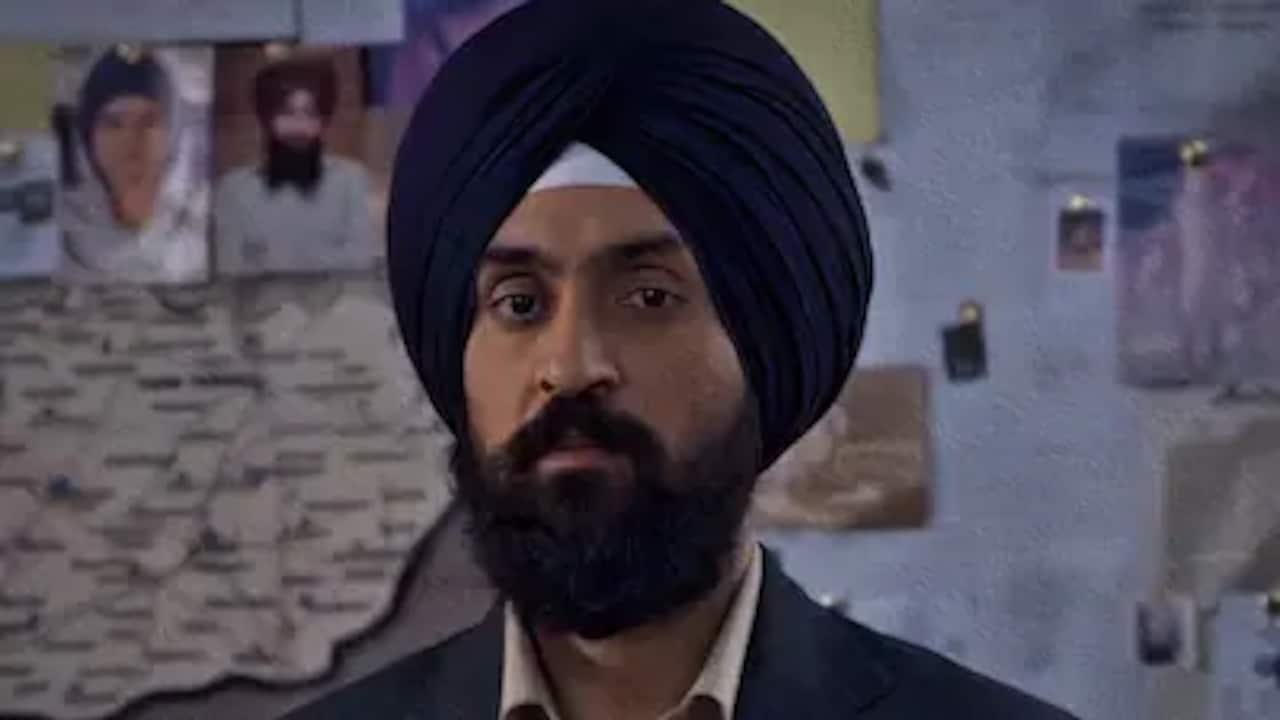
Diljit Dosanjh in the movie Satluj as Jaswant Singh Khalra.
Even after finally reaching viewers following years of legal and certification hurdles on July 3, the film has been removed from OTT platform Zee5. The removal marks yet another chapter in the turbulent journey of a film that was completed in 2022, remained entangled in a prolonged certification battle, missed its scheduled premiere at the Toronto International Film Festival in 2023 and was eventually released in its original, uncut form under a new title.
Here's a look back at the legal battle that followed the disappearance of Khalra.
A Telegram That Reached The Supreme Court
In September 1995, a message arrived not at the Supreme Court registry, but at the residence office of a judge Justice Kuldip Singh. Sent by Gurcharan Singh Tohra, then a senior Shiromani Akali Dal leader, the telegram carried a grave allegation: human rights activist Jaswant Singh Khalra had been kidnapped by the Punjab Police.
The urgency of the claim prompted an extraordinary judicial response.
On September 11, 1995, the Supreme Court treated the telegram itself as a habeas corpus petition, directing the Punjab Home Secretary, the Director General of Police and the Senior Superintendent of Police, Amritsar, to respond within a week. The court also ordered that notices be served immediately through telex, telephone and fax, underscoring the seriousness of the allegations.
Around the same time, Khalra's wife, Paramjit Kaur, also moved the Supreme Court under Article 32 of the Constitution, seeking a writ of habeas corpus and demanding that her husband be produced before the court.
According to her petition, Khalra was abducted in broad daylight on September 6, 1995, outside his home in Kabir Park, Amritsar, and later murdered.
The petition alleged that around 9.20 am, while Khalra was washing his car outside his residence, a sky-blue Maruti van stopped near him. Four armed men in police uniforms, wearing black patkas and carrying automatic weapons, allegedly emerged from the vehicle, overpowered him despite his protests and forced him into the van.
The petition further claimed that the men communicated over walkie-talkies, informing a superior officer that Khalra had been taken into custody and that the "mission" had been accomplished.
Following closely behind, it alleged, was a police Gypsy carrying several armed personnel and a senior officer, apparently providing cover to the van as it drove away.
The alleged abduction, the petition said, unfolded in full public view in a busy residential neighbourhood.
One of the key witnesses named in the petition was Rajeev Singh, who was said to have seen the incident from close range. According to the filing, he attempted to intervene but was pushed aside. He allegedly overheard the walkie-talkie conversation and noted down the registration number of the Maruti van.
The petition also claimed that several neighbours witnessed the incident, as it occurred during the morning rush when residents were leaving for work.
Supreme Court Intervention
In Khalra's case, the Supreme Court directed the CBI to complete the investigation within three months.
On 30 July 1996, the CBI presented its investigation report to the Supreme Court identifying nine Punjab police officials as responsible for the abduction of Jaswant Singh Khalra and recommended their prosecution.
It also found evidence that Jaswant Singh Khalra had been held at the Kang Police Station in Tarn Taran district after police picked him up but that he had been moved from there on 24 October 1995 after which time his whereabouts were unknown.
In 1996, the Supreme Court also expanded the scope of the case beyond the abduction of Jaswant Singh Khalra.
The top court took up another issue arising from a January 16, 1995, press note issued by the Human Rights Wing of the Shiromani Akali Dal.
Signed by Khalra and JS Dhillon, the note alleged that a large number of people had been illegally cremated by Punjab Police after being labelled as "unidentified".
Calling the allegations "horrifying" and warning that even partial verification would reveal "a gory tale of human rights violations", the Supreme Court ordered the Central Bureau of Investigation (CBI) to conduct a high-powered probe.
The CBI's final report, submitted in December 1996, found that 585 bodies had been fully identified, 274 partially identified and 1,238 remained unidentified.
Observing that the findings disclosed "flagrant violation of human rights on a mass scale", the court directed the CBI to continue investigating and registering criminal cases where necessary, while referring the broader issue to the National Human Rights Commission (NHRC).
It also asked the Commission to examine claims for compensation for the families of the identified victims, making any compensation awarded by the NHRC binding and enforceable.
Conviction Of Punjab Police Officers In Khalra's Case
16 years after disappearance and murder of human rights activist Jaswant Singh Khalra, the Supreme Court in November 2011 upheld the life imprisonment awarded to five Punjab Police officers in this case.
The five police officers, including a then head constable, three sub-inspectors and a deputy superintendent of police (DSP) were handed a life term by the Punjab and Haryana High Court in 2007.
A division bench of the High Court, on October 16, 2007, had increased the term from seven years, awarded by a lower Punjab court, to life imprisonment.
A Patiala Court in Punjab had awarded seven years imprisonment to the five police officers holding them guilty of murdering Khalra.
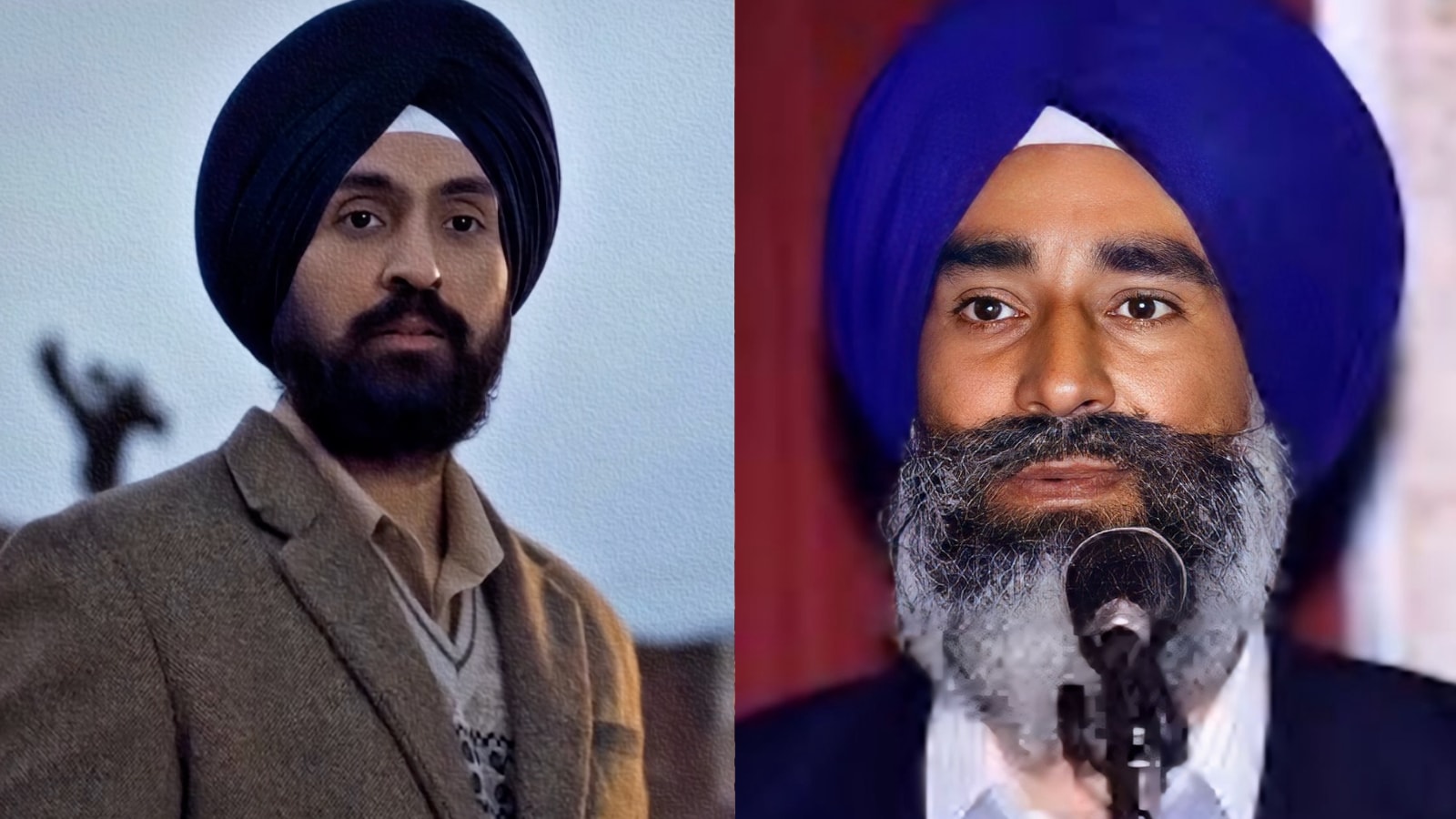
In the movie Satluj, Diljit Singh Dosanjh plays the role of Jaswant Singh Khalra.
Aggrieved, the five had challenged the sentence in High Court which further increased the sentence to life.
The accused then challenged the decision at the Supreme Court.
A division bench of the Supreme Court comprising Justice P Sathasivam and Justice BS Chauhan refused to set aside the High Court's decision and upheld the life imprisonment awarded to them.
Appearing on behalf of the Central Bureau of Investigation (CBI), Additional Solicitor General of India Mohan Jain had famously argued that such cases challenge the faith of the common man in the state's law enforcement agencies and thus it was the duty of the courts to put a firm foot down and set an example to reaffirm that dwindling faith.
-
Opinion | The Last Bet? What Trump's 'Mother Of All Bombs' Could Actually Do To Iran

Can an MOAB deliver a decisive blow to Iran that may force it to surrender immediately, as Japan did after Hiroshima and Nagasaki in World War 2?
-
Hit Songs, Empty Pockets: The Hidden Math Behind India's Viral Music Boom
Over 80,000 brands and five lakh creators in India make branded content. The opportunity is worth around Rs 1,500 crore.
-
Opinion | Great 'Exceptions': How The Oil India Was Attacked For Is The Oil Trump Now Seeks
A law written to punish the buyers of Russian oil was suspended by the US to protect a purchase of Russian oil. India spent fourteen months being lectured for less.
-
Opinion | Louis Vuitton Loot, Torched Cars: France Protests Have An Unlikely Beneficiary
It's an unbelievable moment. Crowds looting the most exclusive stores in Paris, including the famed Luis Vuitton. But what's behind this meltdown?
-
Blog: Kolkata Didn't Learn From 2015. Eleven Years Later, It Proved To Be Fatal
The City of Joy isn't a stranger to crowd control. Be it during Pujo or Christmas at Park Street, Eden Gardens cricket matches, or Derbies between Mohun Bagan and East Bengal. But during Pujo, the entire city is on alert.
-
Opinion | Slurs, Threats, Now A Temple Attack Plot: When Did America Become So Hostile To Indians?
The rising tide of anti-India, anti-Hindu, and racist attacks serves as a stark reminder that economic prosperity does not automatically guarantee social immunity from bigotry.
-
A Step Behind Neha Bora: What Rahul Gandhi's Gesture Says About Congress' Gen-Z Pitch
At INDIA bloc's march to Supreme Court, Rahul Gandhi placed himself a step behind two women, hands resting on their shoulders. One was his sister Priyanka. The one on his right was Neha Bora. Here's what the image means for the protest wave now, and for Rahul's politics in general.
-
Opinion | Imran Khan, And The Perils Of Having An 'Opinion' In Bollywood
The reality of the industry is quite grimy. More often than not, its inhabitants have been fairweather friends, happy to sing the praises of whoever is in a position of authority.
-
Exclusive: India's Food Safety Problem Goes Beyond Just Dirty Kitchens - By Tukaram Mundhe
On World Food Day, Maharashtra's Commissioner of Food Safety explains why instead of taking stopgap measures, the entire supply chain in India needs to be held accountable and made transparent.
-
Opinion | India Has Enough Coal. So Why Are Power Plants Running Short? A 76 Million 'Crunch'
As of October 5, as many as 82 of the 191 thermal plants monitored by the Central Electricity Authority were in the 'critical' category