'Did It My Way': Nitish Kumar Quits As Chief Minister After 20 Years Reshaping Bihar Politics
Nitish Kumar this week brought the curtains down on a two-decade journey as Chief Minister of Bihar ahead of a shift to the Rajya Sabha.
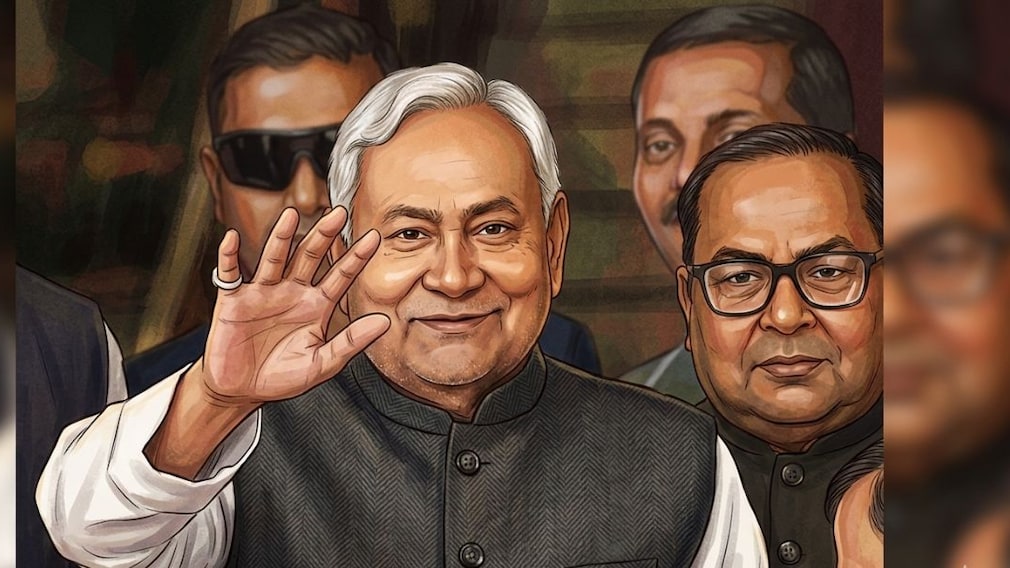
Nitish Kumar this week brought the curtains down on a two-decade journey as Chief Minister of Bihar ahead of a shift to the Rajya Sabha. The step back from the state's top job - after guiding his Janata Dal United to yet another election win in December 2025 - is significant on multiple levels, one of which is Bihar getting, for the first time, a chief minister from the Bharatiya Janata Party. But the most significant, perhaps, is that this is Nitish Kumar's Frank Sinatra-moment.
In December 1968 Sinatra, one of the world's most iconic singers, recorded his version of a French song released the year before. It has since become a classic, a cross-generational ode to the spirit of living life, highs and lows, on one's own term.
And that, in a nutshell, is what Nitish Kumar's time as Bihar Chief Minister has been, even if it has meant flip-flopping between the BJP and Lalu Prasad Yadav's Rashtriya Janata Dal.
At times feted and at others ridiculed - particularly over claims of cognitive decline in recent months, including an unfortunate incident in December where he pulled down a woman's hijab - the 75-year-old has left 1, Aney Marg in Patna on his terms, as a 10-time Chief Minister with an enviable election win-loss record who gave the state 'sushasan' and 'nishedh'.
From a policy perspective, both rank among his most consequential measures because they allowed him to define a political persona that won hearts across the state and carried him for 20+ years, winning him and JDU election after election.
'Sushasan babu'
Nitish Kumar waited 15 years to run the Bihar government on his terms.
The JDU recovered from a hung house in the February 2005 election to win 88 seats in the November re-poll.
Part of the BJP-led National Democratic Alliance then, Nitish Kumar took oath as Chief Minister for the second time; the first was five years ago, for seven days only. At the time, state machinery had collapsed into 'jungle raj' after six years of chaos, which included three chief ministers and eight months of President's Rule, robbed it of any authority.
READ | Why Nitish Kumar May Move To Rajya Sabha, And Who Can Replace Him
His response was to overhaul the judicial and law-enforcement systems that cracked down on criminal elements and made public safety a reality, particularly being able to travel at night.
And thus was born 'sushasan babu', an epithet underlined by an infrastructure push that saw roads being built and power supply being stabilised.
The EBC, 'mahadalits' strategy
Nitish Kumar realised early that Lalu Yadav had one advantage he did not - caste backing. At nearly 15 per cent of the population, the Yadav community is one of the largest OBC sub-groups and a key vote base for Lalu Yadav and the RJD.
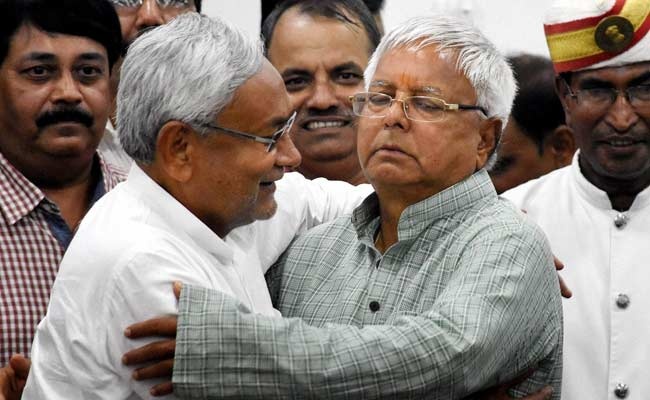
All-time frenemies, Nitish Kumar and Lalu Yadav share a hug (File).
He also realised that within the Dalit community the most marginalised were ignored.
And so Nitish pulled off a masterstroke of social engineering; he created sub-quotas within the OBCs and Dalit groups, naming them 'Ati Pichhda' and 'mahadalits' and showering them with quotas and welfare schemes.
The numbers this returned were staggering.
Between them these accounted for around 46 per cent of the population and they became fiercely loyal to Nitish Kumar, allowing him to trump the Yadav vote and win elections even when he shouldn't have been able to, such as the 2020 poll.
He also brought in measures like free bicycles and school uniforms for schoolgirls, which won him much adulation, and saw him return to power in 2010, leading the JDU-BJP coalition to a landslide victory in the assembly election that year.
Women's choice
Nitish's core vote bank was threefold - the 'Ati Pichhda', the 'mahadalit', and then women, who have voted for him since 2005 and became as central to his electoral arithmetic as the first two.
This was down to a women's self-empowerment push and the introduction of prohibition, or nishedh.
NDTV Special | Bihar's Woman Voters Are Nitish Kumar's Silent Weapon
From an urban-centred revenue perspective, banning liquor sales means losing massive amounts of excise revenue. For context, neighbouring Uttar Pradesh pocketed over Rs 52,000 crore from liquor sales in FY24/25.
That is a lot of money to lose, particularly for a state with development challenges, but it was a political masterstroke.
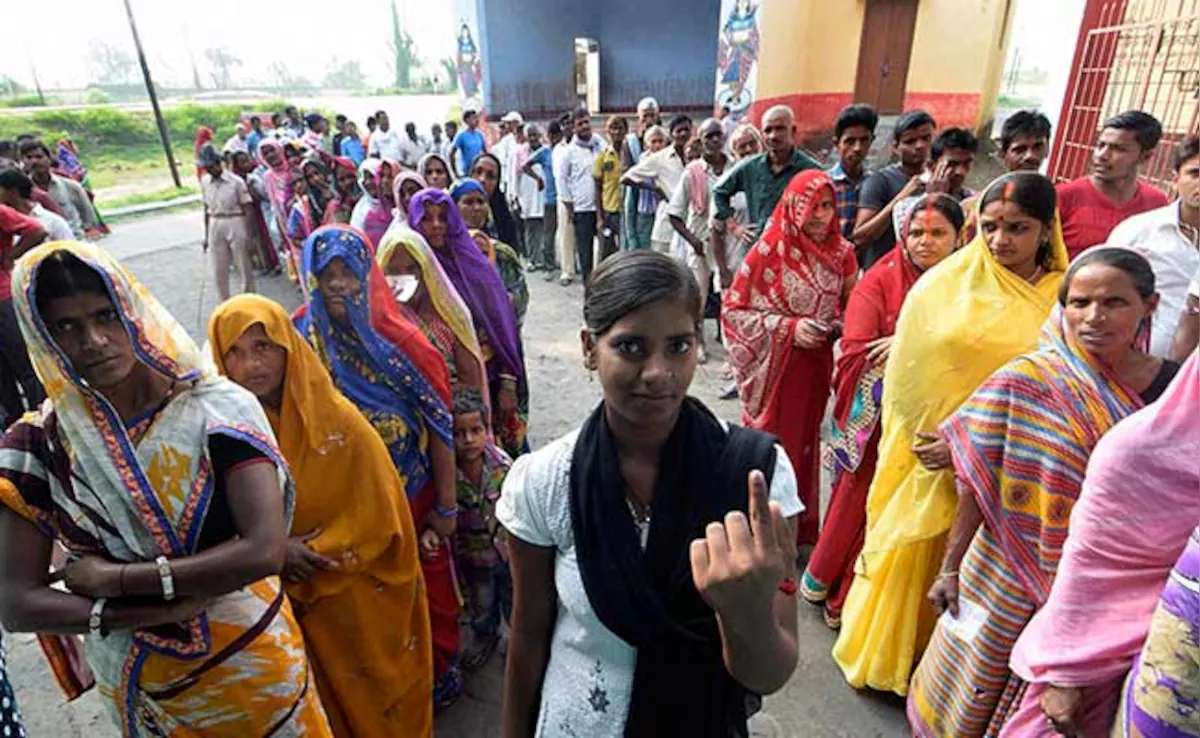
The 2025 election saw a record-breaking 71.6 per cent women voter turnout (File).
Women from poor families - who suffered domestic violence because of alcoholic husbands - backed the initiative and their support reflected in the results. Importantly, this base cut across castes and communities, with women often silently defying 'orders' from the men in their house to vote for candidate X and voting, instead for the JDU.
The 'paltu Kumar' story
No narrative about Nitish Kumar can be complete without mention of his political agility.
There were five jumps in a decade starting with January 2024; back then he walked away (again) from the RJD and allied with the BJP (again).
The first was in 2013 - he parted ways with the BJP over Narendra Modi's prime ministerial candidacy and formed the Mahagathbandhan with the RJD and Congress in 2015. He led the alliance to victory.
RECAP | 'Paltu Ram' Or Survivor-In-Chief? Nitish Kumar's Long Political Innings
In 2017, he ended the alliance with RJD over corruption allegations against his deputy, Tejashwi Yadav, and rejoined the NDA. Amazingly, he returned as Chief Minister the same day.
In 2020, the Nitish Kumar won, again, and returned, again, as Chief Minister. But then, in August 2022, he quit, left NDA, and rejoined the Mahagathbandhan, forming a new coalition.
But the focus isn't so much the flip-flopping as it is the willingness by each camp to re-negotiate and accept the JDU into its fold. The focus is also, as Sinatra sang, on 'doing it my way'.
NDTV is now available on WhatsApp channels. Click on the link to get all the latest updates from NDTV on your chat.
-
Opinion | Great 'Exceptions': How The Oil India Was Attacked For Is The Oil Trump Now Seeks

A law written to punish the buyers of Russian oil was suspended by the US to protect a purchase of Russian oil. India spent fourteen months being lectured for less.
-
Opinion | Louis Vuitton Loot, Torched Cars: France Protests Have An Unlikely Beneficiary
It's an unbelievable moment. Crowds looting the most exclusive stores in Paris, including the famed Luis Vuitton. But what's behind this meltdown?
-
Blog: Kolkata Didn't Learn From 2015. Eleven Years Later, It Proved To Be Fatal
The City of Joy isn't a stranger to crowd control. Be it during Pujo or Christmas at Park Street, Eden Gardens cricket matches, or Derbies between Mohun Bagan and East Bengal. But during Pujo, the entire city is on alert.
-
Opinion | Slurs, Threats, Now A Temple Attack Plot: When Did America Become So Hostile To Indians?
The rising tide of anti-India, anti-Hindu, and racist attacks serves as a stark reminder that economic prosperity does not automatically guarantee social immunity from bigotry.
-
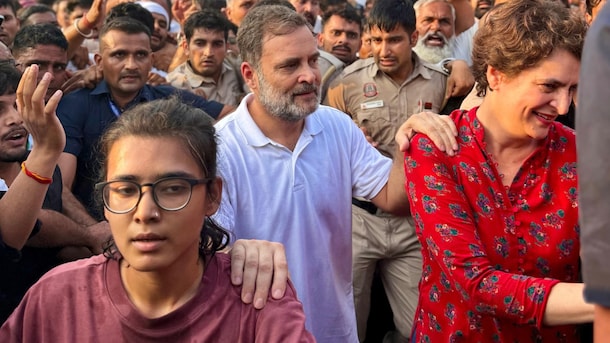
A Step Behind Neha Bora: What Rahul Gandhi's Gesture Says About Congress' Gen-Z Pitch
At INDIA bloc's march to Supreme Court, Rahul Gandhi placed himself a step behind two women, hands resting on their shoulders. One was his sister Priyanka. The one on his right was Neha Bora. Here's what the image means for the protest wave now, and for Rahul's politics in general.
-
Opinion | Imran Khan, And The Perils Of Having An 'Opinion' In Bollywood
The reality of the industry is quite grimy. More often than not, its inhabitants have been fairweather friends, happy to sing the praises of whoever is in a position of authority.
-
Exclusive: India's Food Safety Problem Goes Beyond Just Dirty Kitchens - By Tukaram Mundhe
On World Food Day, Maharashtra's Commissioner of Food Safety explains why instead of taking stopgap measures, the entire supply chain in India needs to be held accountable and made transparent.
-
Opinion | India Has Enough Coal. So Why Are Power Plants Running Short? A 76 Million 'Crunch'
As of October 5, as many as 82 of the 191 thermal plants monitored by the Central Electricity Authority were in the 'critical' category
-
Opinion | Starlink, India, And Why Elon Musk Must Know His Billionaire Tantrums Won't Work
India should neither be intimidated by Musk's global influence nor distracted by his theatrics.
-
Blog | 'Baap Da Brat': Kerala Mini Cooper Crash, And Why 'Daddy' Can't Keep Saving You
There are three things you should never underestimate in India: the power of 'jugaad', the elasticity of the law, and the confidence of a 'Baap da Brat' who believes his Papa Posh can fix absolutely anything.