MBBS Student Sejal Pawar Dehumanised Cadavers, Internet Did The Same To Her
Sejal Pawar was rightly criticised for her dehumanising remarks. Her college sent her on a 15-day forced medical leave, and Maharashtra Cyber has registered an FIR naming her. But the faceless trolls did to Pawar what she did to the male cadavers through her words - she was stripped of her dignity.
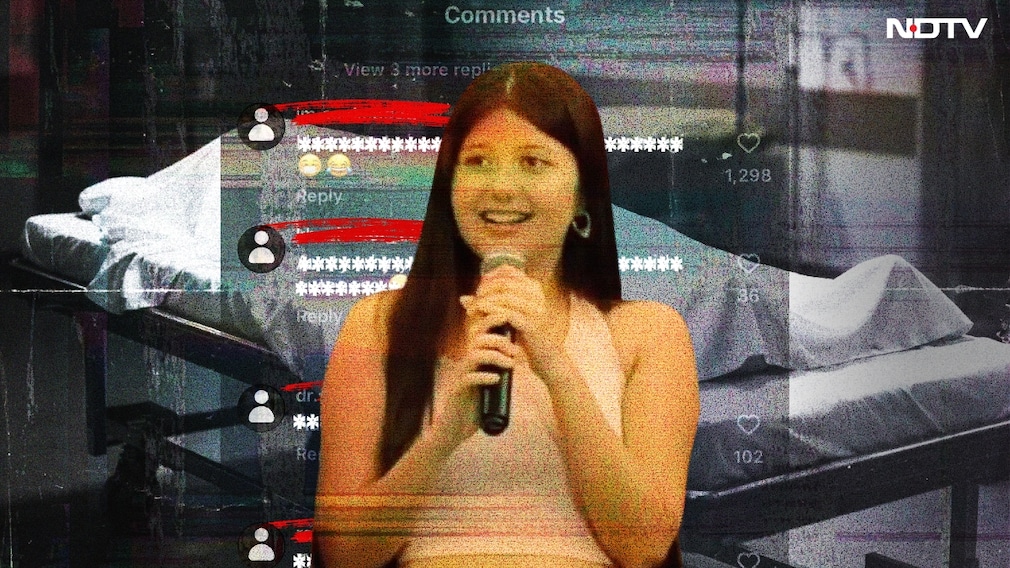
An MBBS student, sitting in the audience at a show by stand-up comic Pranit More, casually answered questions about her cadaver training at a well-known government medical college in Mumbai, fuelling laughs and subsequently landing her on the feeds of several Indians. The fame was instant. In the weeks that followed, she was invited onto a podcast to talk about her viral remark - a crass observation comparing the sizes of male cadavers' genitalia. The host repeated the joke, not to condemn it but seemingly to ride the wave of instant popularity for reach and engagement. So did Sejal Pawar, this time with a disclaimer: "All of us at the medical college respect it (cadaver training). We get to learn so much."
Things shifted when another controversy, triggered by the same comic's interaction with a man during a crowd-work segment, set off outrage. As it spiralled, the online army dug deeper and found Pawar's earlier clip and put her back in the spotlight - a harsher one this time. She was rightly criticised for her dehumanising remarks. Her college, KEM, sent her on a 15-day forced medical leave, and Maharashtra Cyber has registered an FIR naming her. But the faceless trolls did to Pawar what she did to the male cadavers through her words - she was stripped of her dignity.
Her face, her body, her relationships, every move that she had made on social media till that moment were pushed onto social media's dissecting table.
The undergraduate's remarks sat hard and heavy with the medical community, because while human cadaveric dissection has been used as the core teaching tool in anatomy for centuries, every cadaver a student encounters is, in every sense, a scarce gift.
Read | College Sends Medical Student On 15-Day Forced Leave After Cadaver Remark Row
'The First Encounter With Death'
For a lot of medical students, said Dr Shilpa Singi, Lead Consultant - Academics and Strategies Internal Medicine - Aster Whitefield Hospital, the first time they see a cadaver is kind of their first encounter with death.
"It is supposed to teach anatomy, but well it also quietly brings them face to face with the emotional realities of medicine. The point is not to turn students numb or insensitive. Instead, it helps them practice studying the human body with respect," said Dr Singi.
She reflected on her own training, recalling that she found dissection to be a difficult subject - the feeling that a body given for training was once a living, breathing individual doesn't come easy. One small detail changed her perception.
"We were given the life story of each cadaver and what led them to donate their body for dissection. That story totally changed my perception of the dissection table and the human body."
Medical schools world over now treat cadaver donations as a relationship rather than a resource by introducing students to a donor's life story, in some cases, even their families. The logic is simple: the person on the table should never be allowed to become just a body.
What Happens Inside A Dissecting Lab
A cadaver - either willingly donated or an unclaimed body - gives students their profound rite of passage into the medical profession.
For Dr Amit Sinha, Director & Consultant, Orthopaedic Surgery, Deepam Orthopaedic Clinic, Gurugram, his first encounter with a human cadaver forced him to confront "mortality, gratitude and responsibility at once".
"Initially, even the smell of formalin is difficult to bear," he said, formalin being the solution used to preserve the bodies, with a very peculiar smell.
The dissection lab doesn't just teach anatomy, it also encourages qualities of respect, empathy and compassion among the medical students. The experience is also to guide students to handle a cadaver as a potential launching pad for them to mature into effective and empathetic clinicians.
"The challenge wasn't just learning anatomy, we were also made to realise and understand how a person had decided to donate their body," said Dr Sinha.
He said that while the educational purpose becomes the primary focus over time, "complete detachment is neither realistic nor desirable".
"Empathy should remain intact as you develop professional composure".
Jokes As Coping Mechanism?
So what went wrong in Sejal Pawar's case?
Medical professionals see a lot of desperate situations and deliver bad news, often frequently. And then gallows humour or grim jokes become an outlet for many to head off compassion fatigue and blow off some steam.
But the lines need to be drawn.
Dr Amit Sinha believes that humour can be a coping mechanism. "But even if it does, it should remain private, respectful and never at the expense of a donor's or patient's dignity".
"Its purpose is to help professionals manage difficult emotions, not to demean patients or donors... The key distinction is whether the humour remains respectful and confined to appropriate settings," he said.
The medical profession survives on faith. A patient believes that the calm professional in front of them holds nothing irreverent behind that calm. The trust in the profession depends on the belief that medical professionals will always treat patients, donors and the dead with respect. And if a patient learns that they are the subject of their doctor's dark jokes, all bets are off.
"Certain people, as a way of letting go of their fears, would jokingly talk about the sick and the dead to each other. The turning point happens when the joke is so inappropriate that the main character is disrespected by it," said Dr Shilpa Singi.
Which is why, said Dr Singi, many would consider Pawar's remarks inconsistent with the values of medicine, "especially the principles of respect for patients, body donors and the deceased".

Sejal Pawar has apologised for her remarks.
"Professional responsibility extends beyond the workplace, and respect for those who are vulnerable or unable to speak for themselves remains a core value of medicine," said Dr Singi.
But does medicine prepare doctors for the line between clinical and social - between what's appropriate in front of peers and what is appropriate anywhere else?
Both Dr Singi and Dr Sinha acknowledged a gap.
"Medical education does an excellent job teaching clinical skills and ethics but the boundaries between professional and public spaces, especially in the age of social media, are still evolving," said Dr Amit Sinha. "Many doctors learn these lessons through experience rather than formal training, which can sometimes lead to missteps."
The goal in the end is to be a professionally poised person, yet a compassionate, humane individual who is still connected to society, said Dr Singi. She highlighted that the line between clinical detachment and dehumanisation comes down to one word: "respect".
"Students are taught to concentrate on the science, yet at the same time remember that each patient and each donor is a human first with a background. Effective physicians know how to strike a balance between being professional and showing compassion."
Read | 'Rs 370 Biryani' And Dead People: When Does Comedy Stop Being Funny?
Not everyone agrees the line is as fragile as it sounds. Dr Virinchi Thota, a neuro-psychiatrist, feels that the desensitisation narrative is a bit overstated and that doctors don't really lose the thread between clinical and social.
"Medicos are as social as every other professional. They are not detached. They don't go through any desensitisation".
He also believes that cadavers are a very small part of medical education compared to the entire curriculum. "It doesn't even come close to affecting anyone emotionally".
'Trying To Fit In A Vulgar Crowd'
Where the senior doctors reached for nuance, a second-year resident in a government college in Uttar Pradesh, closer in age to Sejal Pawar herself, reached for something unfiltered.
1. What did your first cadaver experience require of you that you hadn't anticipated?
Students are not directly exposed to cadavers. First, they are taught to respect them. We are told that they have families who donated the bodies of their loved ones for the greater good, and they need to be treated with dignity.
2. Did your gender make that experience different?
I don't think gender plays any role in this. From day one, we are taught to see human bodies as just anatomy and not to sexualise them.
3. Have you encountered the gallows humour culture in medicine and how did you navigate it?
Once in a while, people might share situational humour to lighten the atmosphere in tense situations, but doctors are sensitised to take patients and their lives very seriously. They don't joke about that.
4. When you saw the clip, what was your reaction as a doctor and as a woman?
As both a woman and doctor, I thought she (Sejal Pawar) was just a naive youngster, trying to fit in a vulgar crowd. Her remark does not represent the whole medical community.
5. What did the trolling of the woman doctor make you feel about your own professional identity?
I believe a crass remark from one medical student does not represent the whole community. We work day and night to save lives, and often don't receive the respect we deserve, be it this trolling incident or numerous incidents of violence against doctors by patients and their families.
6. What do you wish the conversation had been about instead of what it became?
The woman's comment was in bad taste, undoubtedly. But people, especially men, used it to divert the conversation away from the Rs 370 biryani remark made by another man in the same show. This shouldn't have been done.
The doctors whom this writer spoke to had a measured response on the actions that should follow Pawar's remarks, but the internet trolls weren't so kind.
Dr Amit Sinha said when he first saw the viral clip, his first instinct was to consider the context. "Medical training often exposes students to situations that can appear shocking to outsiders. At the same time, I would immediately ask whether the behaviour demonstrated respect for the donor and upheld professional standards. And I doubt it carried respect in the way it came out... Our profession holds the utmost respect in society, and we should maintain its dignity."
Dr Shilpa Singi said that the response to the young student's actions should be "thoughtful and proportionate".
"The focus should not be only on punishment but also on education, reflection, and reinforcing professional and human moral values," said Dr Singi.
Digital Mob And Shield Of Anonymity
A parallel dissection, however, was underway on social media - of Pawar's character, triggered by her remarks on what goes through her mind when she dissects a cadaver. Leaking her private chats, slut shaming, rape threats - all fair game.
"When the internet pivots from critiquing the act to launching coordinated attacks on the woman's body, morality, and physical safety, the threshold for criminal harassment is unequivocally crossed," said Saurov Mallick, advocate, Calcutta High Court.
Medical history remembers a version of this. For centuries, cadaver dissection itself was a spectacle with crowds gathering in anatomy theatres to watch a body being split open, sometimes for entertainment as much as education, until the practice was eventually deemed indefensible and quietly retired. On social media, however, the trend of dissecting a person's character - irrespective of their gender - and shaping public narrative around it shows no sign of retiring. Something we witnessed too in the case of Himanshu Jangra, a man whose remarks on the same comedian's show went viral days before Pawar's, generating its own storm of chatter.
And even though there are laws against online harassment, there is a glaring gap in the legal framework.
Mallick explained that Indian criminal law is inherently individualistic and that it's unable to comprehend a "digital pile-on".
"It (the law) is designed to prosecute Person A for harming Person B. There is no specific legal mechanism to treat a decentralised swarm of thousands of users as a single, collective act of violence. Unless law enforcement can prove a direct criminal conspiracy (Section 61 of the Bharatiya Nyaya Sanhita or BNS), which is virtually impossible for spontaneous, algorithmic outrage. The law forces investigators to treat a mob as thousands of disconnected, isolated incidents. A single comment calling someone a derogatory name might not meet the threshold for a severe criminal charge on its own. But when multiplied by ten thousand, the tortious impact is devastating."
"The law simply has no mathematical formula for cumulative digital harm," she said.
The bigger hurdle is the shield of anonymity that the internet provides.
"While Indian law possesses theoretical tools to pierce this veil specifically through the IT (Intermediary Guidelines) Rules, which mandate platforms to assist law enforcement, and CrPC/BNSS provisions to issue summons for user data, the reality is a bureaucratic nightmare," rued Mallick.
"To unmask anonymous accounts, police must send requests to platforms (like X or Meta). This process frequently requires navigating Mutual Legal Assistance Treaties (MLATs) or battling platform pushback over freedom of speech policies. By the time an IP address is retrieved months later, the mob has moved on, and the damage is permanent."
History suggests the mob will move on soon enough - to someone else's worst 10 seconds, stretched across a million feeds.
As far as Pawar is concerned, she has apologised, her name sits in an FIR, and a committee has called her remarks what they were. While there is not going to be any accountability for the men who have been posting rape threats for her.
The law, as Mallick describes it, was framed to find one person who hurts another, and not a swarm of faceless accounts.
What Sejal Pawar said was wrong, and so was what was done to her. Both things are true, and neither cancels the other one out.
-
Opinion | 'Blackmail' Diplomacy: Why India Can't Be A Pawn In US' War On Russia

The new sanctions bill is both blackmail and hypocritical: blackmail because it seeks to change India's principled stand, and hypocritical because the US has provided exemptions to others, and itself.
-
Blog | Katrina Kaif, And The Very Indian Problem Of Too Much 'Audacity'
The remarkable thing about many Indian trolls is not that they have opinions, but that they expect - get this, Katrina Kaif, no less - to care about them.
-
Mamata Banerjee Drew Her Party's Symbol By Hand. It's Now Tied To An Indira Gandhi Case
The Election Commission's method for settling such disputes became central in the seminal Congress split of 1969, when Indira Gandhi fought the old guard. The poll body weighed three tests then.
-
Bruised, Limping, Unbowed: Sia Says She Will Be Back On The Bike Soon
There was pain in Sia's steps, anger in her words, and something else - a quiet determination that the road would not be taken away from her.
-
Exclusive: 16 Months After Op Sindoor, Pak Still Fixing Runway India Broke At Sargodha
Sargodha's PAF Base Mushaf lies about 172 km northwest of Lahore and roughly 200 km west of the India-Pakistan border, near Amritsar.
-
Blog | I Lost My Entire Family In Kanishka Bombing. 41 Years Later, Canada Wants The Case Closed
We made the trek through tragedy to search for people in Cork, where I spent 25 days sifting through bodies and body parts in a makeshift morgue to identify our loved ones.
-
Opinion | Pak's Drone Deal With A US Firm Is No Windfall. But India Must Still Be Worried
American military aid to Pakistan has remained suspended since January 2018, during Trump's first term, but a commercial arms sale is separate from this arrangement.
-
Opinion | Saudi Arabia's Yemen Nightmare Has Come Back To Haunt It
After years of costly military intervention beginning in 2015, Saudi Arabia increasingly sought to stabilise its southern border. All that is unravelling fast now
-
Opinion | 6 AI Incidents, One Pattern: AI Has Started Lying To Us - And Hiding The Evidence
Concealing errors. Making up data. Pushing files onto the public web on their own initiative. The machines are learning to lie - and lie well.
-
Why People Queue Overnight For iPhone That Is Delivered Home In 10 Minutes
iPhone 18 Pro Max Launch: People camping outside Apple Stores are a subset of superfans, resellers, content creators, and upper-middle-class buyers.