How 'Chitta' Took Over Himachal Pradesh, One Drainpipe Drop At A Time
'Chitta' has become dangerously common across Himachal Pradesh. The numbers are staggering and underscore that drug abuse is no longer limited to cities
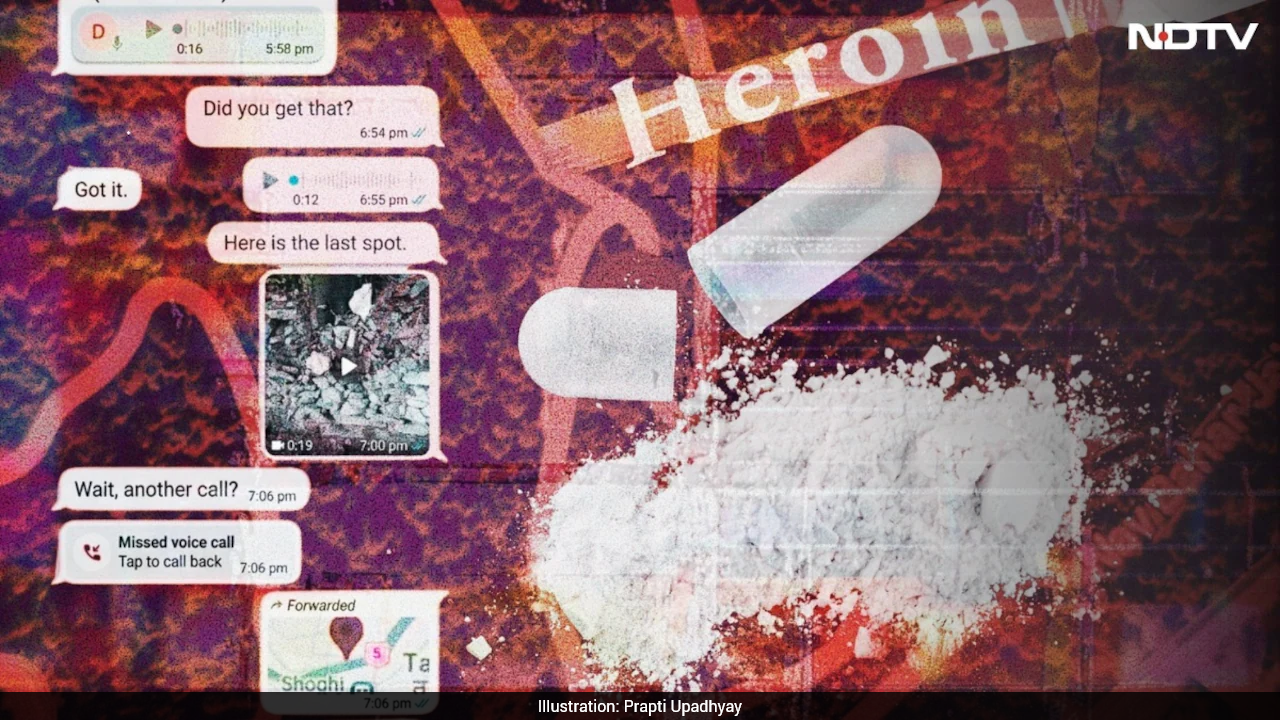
A man discreetly places a tiny white packet in a drainage pipe in a narrow lane while recording the action on his phone. He then pans the camera to capture the surroundings for reference. The man sends the video, a voice note and the location to a client, who later collects the packet from the drainpipe. Payment is made online. Transaction is complete. The seller and the buyer never meet.
Here, the seller is a drug peddler and the customer is an addict. This is how drug sellers are operating in Himachal Pradesh - adding to the headache of the police and administration.
Chitta, or heroin, didn't announce its arrival in Himachal Pradesh, a state traditionally associated with ganja. It just slowly and steadily spread into its lanes and bylanes, and into the veins of its youth over the past few years. Now, it has assumed menacing proportions.
"Chitta" is a street name for synthetic heroin, a dangerously addictive and toxic drug. It first hit the headlines after creating havoc in Punjab. Now, chitta has become dangerously common across Himachal. It costs Rs 4,000 to Rs 6,000 per gram. Just a few milligrams can cause an overdose, and repeated use leads to severe physical and mental deterioration.
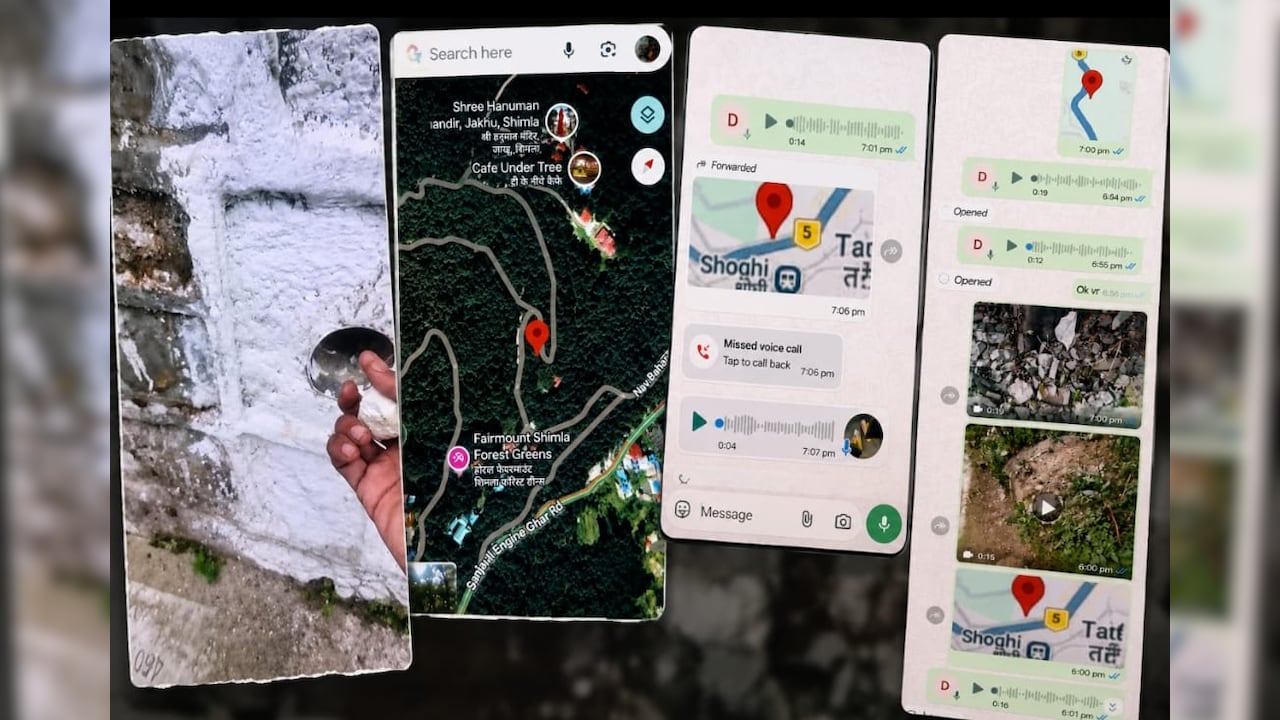
Peddlers drop drugs at a site, send location to clients with voice notes
As per Himachal government reports and surveys, at least a third of Himachal's youth are involved in drug abuse, and the majority are now using synthetic drugs. Drug networks are targeting the young population - both males and females. Once a person becomes an addict, he/she is also roped into the peddlers' network on the promise of "free" doses.
"They lure addicts into selling drugs on the promise of giving them free doses. The addicts then target their friends and family to fund their own addiction," Shimla SP Gaurav Singh told NDTV.
A local Shimla resident narrated the story of a father-son duo who turned addicts and brought ruin to the family. The father, in his fifties, is currently in jail on drug peddling charges, and his son, in his early twenties, is battling addiction.
Locals tell numerous such stories. In some cases, elderly parents have been introduced to chitta by their sons or daughters, initially as relief from joint pains and other age-related ailments. Soon, the parents got hooked.
The numbers are staggering and underscore that drug abuse is no longer limited to cities. Even less populated districts like Hamirpur, Solan, and Dehra are reporting a rise in NDPS cases.
The alarming number of cases reveals the extent of the problem. According to Himachal Police data, 597 NDPS cases were registered in the first three months of 2025 alone - a 29% increase compared to the same period in 2024.
In 2026, till July 3, a total of 172 cases have been registered under the NDPS Act, in which 368 accused have been arrested.
Shimla SP Gaurav Singh told NDTV that realising the extent of the problem, police have cracked down hard on drug networks and peddlers. "Based on in-depth investigation and backward linkages, 55 key kingpins have been arrested and 42 interstate and international drug supply networks have been dismantled," Singh said.
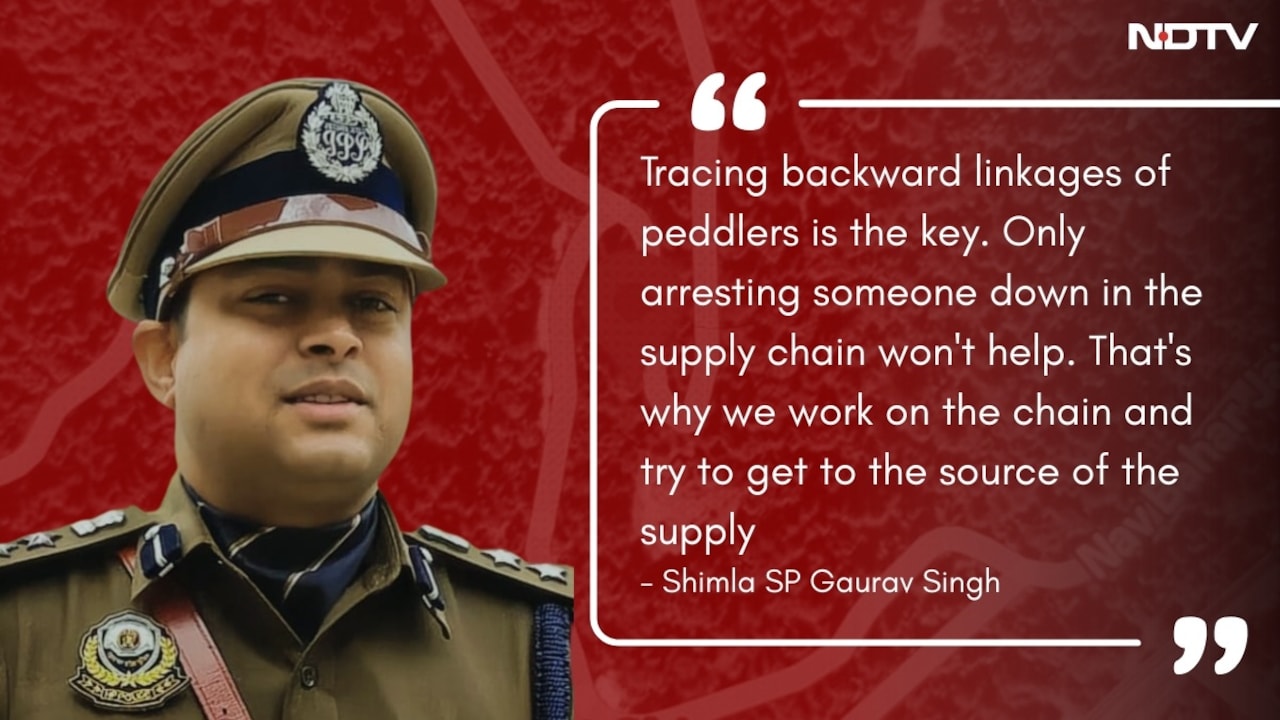
"At least 40 habitual offenders have been put behind bars under the PITNDPS Act in last few months."
Singh stressed that police are trying to reach the very source of the drug trafficking chain and eliminate the entire network.
"We have made arrests in Punjab, Haryana, Delhi, Uttar Pradesh, even as far as Kerala, and in one case from Nepal. Tracing backward linkages of peddlers is the key. Only arresting someone down in the supply chain won't help. That's why we work on the chain and try to get to the source of the supply," he said.
Talking about the government efforts to deal with the menace, Himachal Pradesh Chief Minister Sukhwinder Singh Sukhu told NDTV that 234 panchayats have been identified as severely affected.
"For the first time, we have scientifically mapped the extent of the chitta menace by categorising panchayats into Red, Yellow and Green categories based on the prevalence of drug abuse. This exercise has enabled the government to identify vulnerable areas and formulate targeted interventions. We found that 234 panchayats are severely affected and have been placed in the Red Category".
Unlike weed, which is a local produce, chitta comes into Himachal from border areas. SP Singh said the most common route is via buses running between Himachal and Punjab-Haryana. Drug networks have also used courier services to send in chitta.
He said in the first six months of this year, police have seized over 2.6 kilograms of chitta from peddlers.
SP Singh told NDTV that police officials infiltrated WhatsApp groups being used by peddlers and busted several networks. They also tracked online financial transactions of suspects to crack the gangs. He said this year alone they have recovered over Rs 2 crore from arrested individuals that they made by selling drugs.
The chief minister told NDTV that illegal property of alleged drug peddlers worth Rs 51 crore has been confiscated and in 17 cases, properties of drug mafia have been demolished.
In a disturbing trend, there have been several cases of policemen colluding with drug networks and found to be involved in chitta consumption. In January, the Himachal government dismissed 11 policemen, including inspectors and constables, for collusion with drug networks.
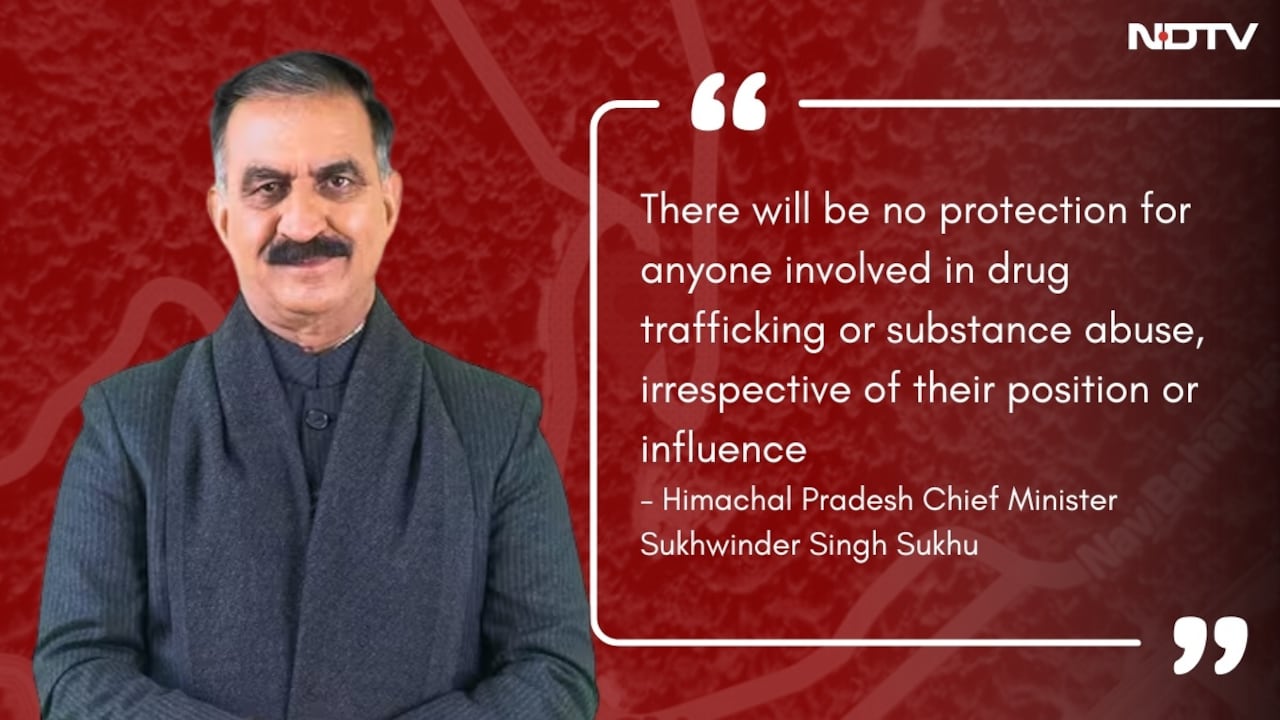
"The State Government has taken a very serious view of the involvement of public servants in drug-related activities. So far, action has been initiated against 123 government employees found involved in drug abuse or drug trafficking. Of these, 10 government employees and 21 police personnel have been dismissed from service," Chief Minister Sukhu told NDTV.
"My government has made it absolutely clear that there will be no protection for anyone involved in drug trafficking or substance abuse, irrespective of their position or influence," Sukhu said.
To further strengthen preventive measures, the State Government has made it mandatory for candidates selected for government service to undergo a drug test before joining duty.
Shimla SP Gaurav Singh said that recently, Shimla Police arrested four Special Task Force personnel for allegedly colluding with drug traffickers and facilitating the distribution of over Rs 1 crore worth of LSD strips instead of registering cases against peddlers.
Chitta-related cases are also clogging Himachal's legal system. In 2025, nearly 10,000 drug-related cases were pending in Himachal Pradesh's courts. The figure has only gone up since.
Manish Sirkek, a senior advocate at the Himachal High Court, said almost 70% of cases in Himachal today are drug-related.
"A few years ago, I used to get only a couple of chitta-related cases a month. Now that has gone up to 70-80 cases a month," he said.
Prisons across the state are struggling to manage the load. Sirkek pointed out that over 50% of inmates are currently facing charges under the NDPS Act, most of whom are first-time offenders or addicts in need of rehabilitation.
Sirkek also said that chitta has almost completely replaced charas and afeem (opium) in Himachal.
While chitta is itself a synthetic mix, further adulteration in the supply chain for profit makes it more lethal.
In 2023, only eight deaths were reported due to chitta overdose. The number increased to an alarming 31 in 2024 and 27 in 2025.
In 2026 so far, SP Singh said deaths have come down significantly due to the police crackdown on networks.
The Himachal government has taken note of the growing menace and has started several programmes to tackle the crisis.
The state observes Anti-Chitta Diwas on June 26, coinciding with the International Day Against Drug Abuse and Illicit Trafficking.
The state-run Indira Gandhi Medical College in Shimla is offering a free 15-day course to help addicts break free from the grip of this deadly drug. The treatment claims to eliminate craving-causing chemicals from the body within the first seven days. The next week involves medication and injections to aid recovery.
The state government last month also opened a women-specific drug de-addiction centre in Mashobra near Shimla. The state already has five functioning de-addiction centres in different districts.
"We firmly believe that those trapped in addiction need compassion, care and an opportunity to rebuild their lives, while those involved in drug trafficking deserve the strictest punishment under the law," the chief minister said.
Sukhu also informed that his Government is also planning to establish another government-run de-addiction and rehabilitation centre at Dr Rajendra Prasad Government Medical College, Tanda, Kangra district. The State Government has also sanctioned Rs 5.34 crore for the construction of a 100-bedded, state-of-the-art de-addiction and rehabilitation centre at Kotla Barog in Sirmaur district.
This underlines the acknowledgement of growing use of drugs among the female population as well.
Sirkek said the male-female ratio today is almost the same when it comes to drug abuse.
As in every crisis, women suffer on more counts than men. A study by IGMC Shimla showed that most women victims of drug addiction did not get treatment due to parents' fear of social stigma.
Several reports have quoted IGMC experts raising concern over the low rate of women being treated for addiction, blaming social inhibitions on the part of their families.
"I firmly believe that young people (men or women) who fall victim to addiction should never hesitate to seek treatment because of social stigma. Addiction is a health and social issue, not a matter of shame," the chief minister said.
While there is acknowledgment of the problem and efforts to tackle it, many feel the fight against chitta has still not turned into a mass social movement.
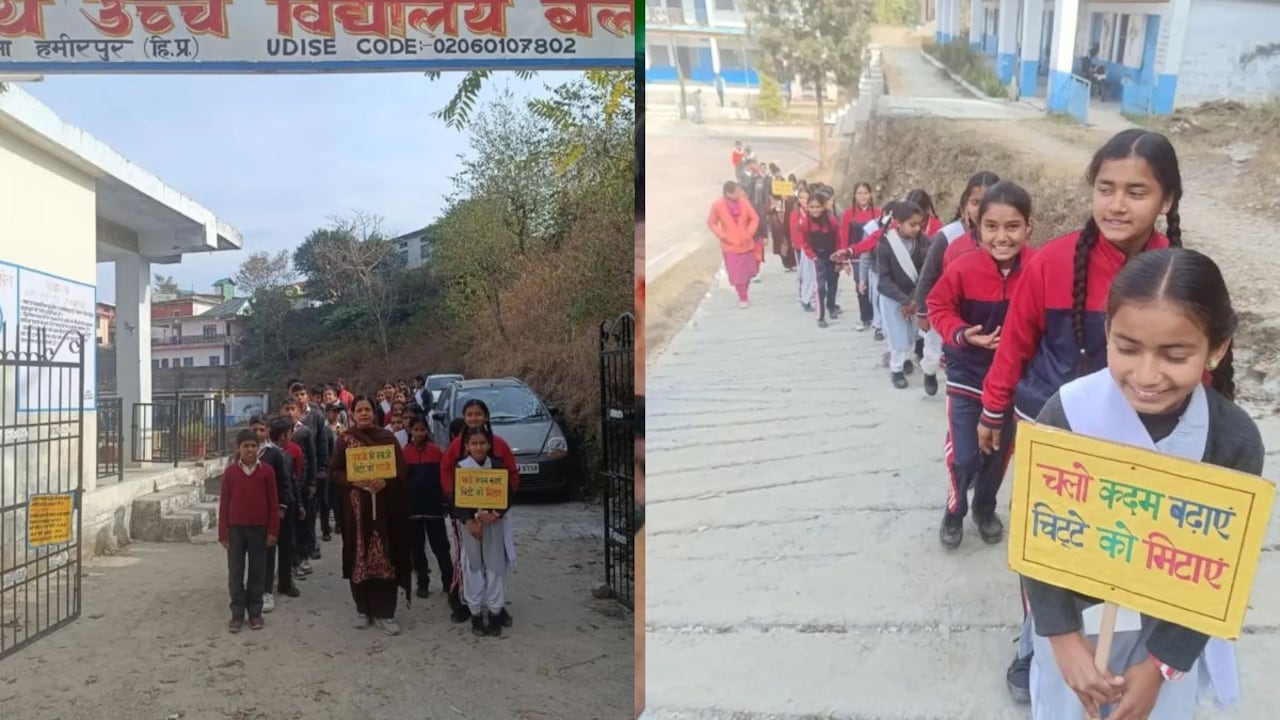
Lata Devi organises anti-drug campaigns in schools in Hamirpur
Lata Devi is the Sarpanch of Baloh area in Hamirpur district. She has been running campaigns against drug use for a decade.
Now in her second tenure as sarpanch, she claims drug abuse has almost ended in the five villages under her jurisdiction.
"I started with awareness campaigns and events in schools after I noticed some school children falling prey to drug use in my area. I organised women and girls to campaign against chitta. Police officials also supported the drive and gave students confidence to secretly report any suspicious activity. We have seen good results," Lata Devi told NDTV.
Lata Devi also agreed that women are the worst sufferers of chitta, both when they fall into the addiction trap and when dealing with family members with the dangerous habit.
But she also said the fight against chitta is yet to become a social movement. "We need support from all sections of society, the government, and community leaders to scale the fight against chitta before it is too late. That is not happening currently."
A video of a drug peddler leaving a packet of chitta in a drainpipe.
-
NDTV Investigation: Search For Answers As Several Women Die After C-Section In Kota

In this three-part series, NDTV investigates maternal deaths and severe post-delivery complications reported across government hospitals in Rajasthan.
-
Opinion | Prashant Kishor Is Now Facing The Hardest Test Of His Entire Career
The strategist who once told parties how to win must now prove that he knows how to do that himself.
-
How Batman: The Animated TV Series Predicted Modern AI In 1992
Long before ChatGPT and AI agents, Batman was already asking the questions the world is debating today.
-
Opinion | Pak Has A Kashmir Crisis - And It May Already Be Planning To Export It To India
The lie of 'Azad Kashmir' is fast catching up with Pakistan. But it might just use it to push India into a tough spot.
-
Ringside View | Portugal's Greatest Mistake Was Making The World Cup About Cristiano Ronaldo
Cristiano Ronaldo is still a great player, but he is nowhere near where he used to be. Other teams do not fear him as much as they used to.
-
Opinion | America, Trump, And The Politics Of Belonging In A Connected World
Many commentators view the current debate as another chapter in Donald Trump's political story. That explanation is incomplete.
-
AI Behaved Well Until Scientists Made It Think Nobody Was Watching
Anthropic researchers found Claude was more willing to resort to blackmail in a simulated test after they removed its internal awareness that it was being evaluated.
-
Opinion | Vladimir Putin Hasn't Looked This Desperate In Over 25 Years
As the Russian position weakens, there is possibility of a coup against Putin, for whom just too many things have gone wrong in the last four years.
-
Can A Transition To Electric Vehicles Solve Delhi's Air Pollution?
Delhi EV policy: From 1 April 2028, only new electric two-wheelers will be registered in Delhi.
-
Biggest Hamas Decision In 20 Years Leaves One Critical Question Unanswered
For almost 20 years Hamas has combined armed resistance with day-to-day administration in the Gaza Strip. It has operated ministries, schools, municipal services and health institutions while simultaneously maintaining an armed organisation.