From "Jai Shree Ram" To "Jai Maa Kali": BJP's Cultural Rebranding In Bengal
The BJP's strategy seems to be to acknowledge that the intricate dance of politics, pre-Independence history and culture, when done with sincerity and respect, can unite rather than divide
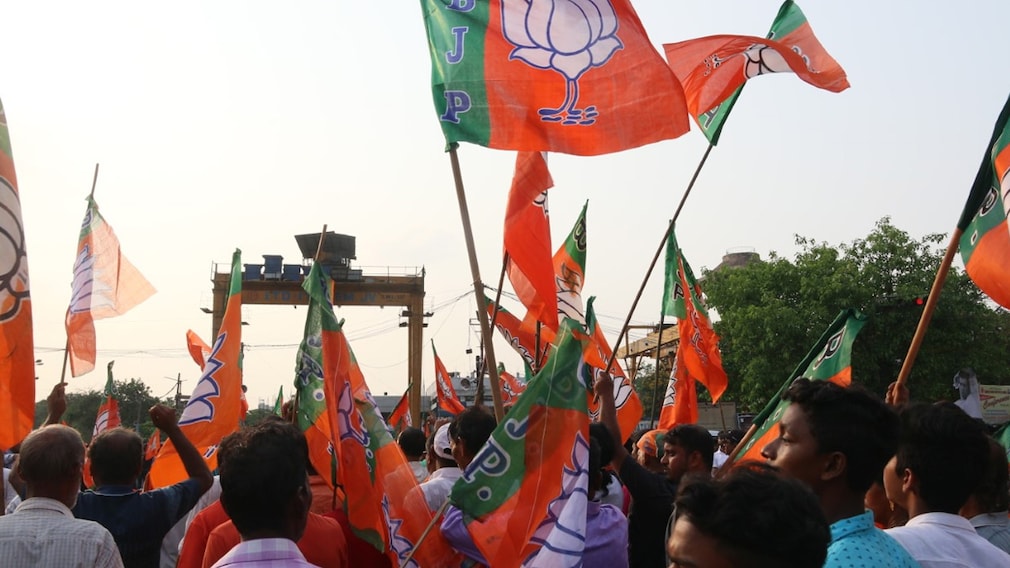
In the swirling tapestry of Indian politics, few threads are as vibrant - and as contentious - as the narratives woven around cultural symbols. Prime Minister Narendra Modi's recent embrace of "Jai Maa Kali" in his campaign for the West Bengal assembly election represents a significant pivot in the messaging of the BJP.
This shift not only marks a departure from the earlier "Jai Shree Ram" mantra - an emblem largely resonant with northern and western states - but also encapsulates a broader strategy to displace the "outsider" tag that has long shadowed the BJP in Bengal.
The invocation of Maa Kali and Maa Durga resonates deeply within Bengal's psyche. These deities, intrinsic to the region's cultural fabric, embody strength and resilience, acting as fortresses against adversity.
PM Modi's choice of language, delivered in letters to Bengal voters, underscores an earnest attempt to embed the BJP within the local socio-cultural ethos, fostering a sense of belonging among voters who may have previously viewed the party through the lens of alienation.
Rekha Gupta, BJP leader and Delhi Chief Minister, further elaborated on this cultural alignment in her address to the Mahila Morcha in Kolkata. By urging women to "invoke the power of Durga within yourselves," Gupta not only contextualised the party's approach to women's empowerment but also tapped into the deeply rooted significance of the goddesses in the fight against societal ills.
References to the tragic incidents of violence - RG Kar Medical College and Hospital rape and murder case, and Durgapur Medical College gang-rape case - echoed the necessity for strength and agency, transforming the narrative from mere religious invocation to a call for activism and solidarity among women.
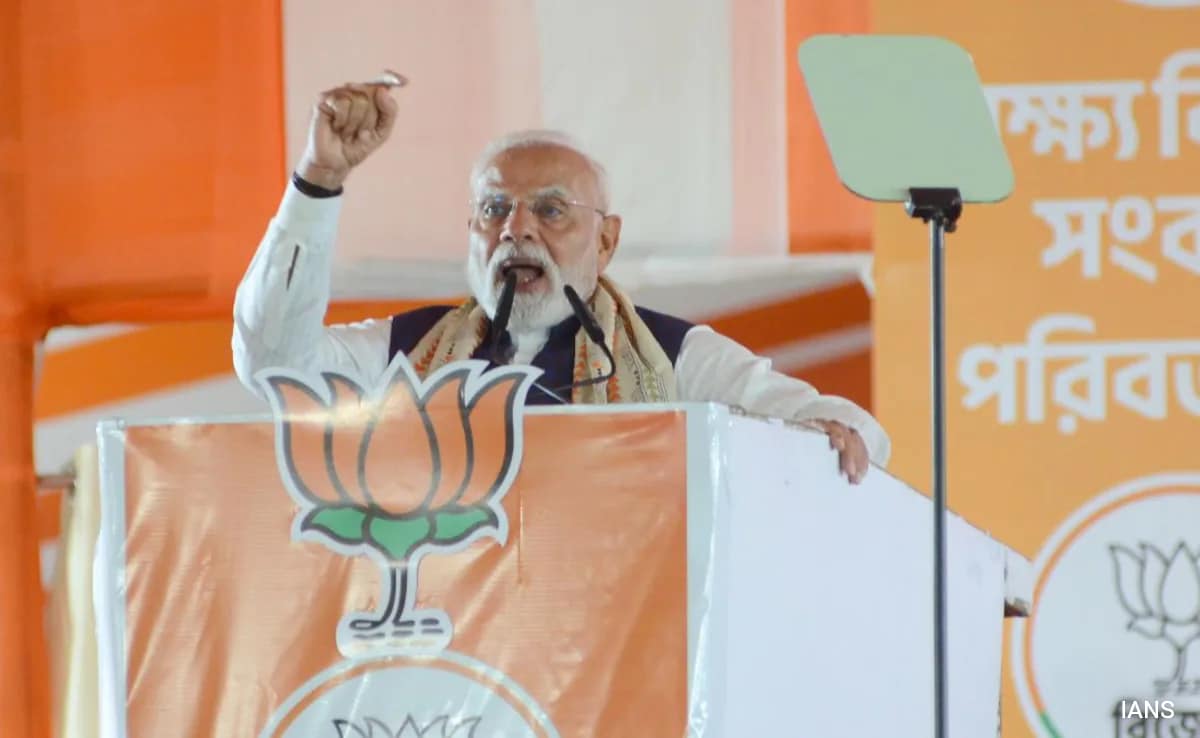
Aligning BJP With Bengal Ethos
This intentional rebranding serves two interlinked purposes. First, it aligns the party with the local ethos of Bengal, which has historically celebrated its deities prominently in daily life, festivals, and political rhetoric. By adopting these chants, the BJP attempts to reclaim the cultural terrain, previously dominated by regional parties, and frame its identity as an indigenous force rather than an external entity.
Women Voters Pivotal
Second, and equally crucial, is the party's strategic positioning toward women voters. Across India, from Bihar to Maharashtra, women have begun to emerge as a decisive electoral force, and Bengal is no exception. As the statistics reveal a rising trend in women's electoral participation, the BJP's rebranding efforts signal a conscious outreach to this significant demographic.
By invoking Goddess Kali and Goddess Durga, the BJP seeks not only to resonate with women's sentiments but also to evoke a spirit of empowerment, positioning itself as an ally in their quest for justice and dignity.
This transformation in messaging reflects a meticulous understanding of the prevailing social currents in Bengal, where deities are not mere symbols but powerful influences that shape identities and allegiances. By distancing itself from "Jai Shree Ram", the BJP appears to acknowledge the need for flexibility in its approach - an admission that political identity is as much about cultural resonance as ideological fidelity.
Yet, beyond the strategic calculus lies a deeper philosophical inquiry: what does it mean for a political party to align itself with such potent symbols?
The act of invoking Maa Kali is laden with implications beyond electoral gains; it embodies a commitment to honour strength and femininity. In a country grappling with gender-based violence and inequality, such messaging could hold the power to inspire and mobilise, transcending mere political rhetoric.
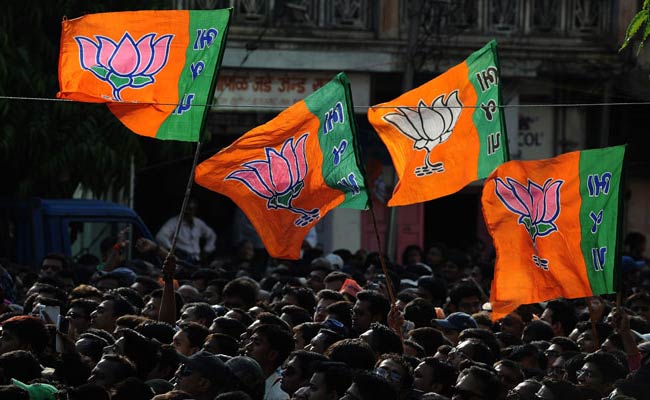
"Jai Maa Kali" And "Jai Maa Durga" Echo Bharat Mata And Vande Mataram
"Jai Maa Kali" and "Jai Maa Durga" also echo the invocation of Bharat Mata and Vande Mataram, powerful symbols used during the anti-colonial national movement, especially in Bengal, but later across the country.
"During the movement for freedom from the British rule, Vande Mataram and the associated chant of Bharat Mata ki Jai were associated with the Congress, although not exclusively," former MP Swapan Dasgupta said.
"The encapsulation of nationalism in Bharat Mata, the sacred nation, became a definitive facet of Hindu nationalist thought, which has endured till today. The idea was not confined to Bengal. It touched the nationalist movement throughout India and became inextricably associated with the Congress," Gupta, who is also a manifesto committee member of the BJP in Bengal, said.
With the BJP displacing the once hegemonic Congress from political battles, the invocation of "Bharat Mata ki Jai" and "Vande Mataram" has become associated with the BJP instead of the Congress.

Cooption Of Hindu Shakti Cult, Says Ashish Nandy
Ashis Nandy, a political psychologist and social theorist, has argued that the conceptualisation of the nation as a mother - or "nation as motherhood" - was a key feature of early Indian nationalism, particularly in Bengal during the late 19th and early 20th centuries.
Nandy analyses this phenomenon as a "co-option" of the existing cultural, and, specifically, Hindu Shakti cult (worship of the mother goddess) to serve modern political goals of anti-colonial nationalism.
The BJP's strategy seems to be to acknowledge that the intricate dance of politics, pre-Independence history and culture, when done with sincerity and respect, can unite rather than divide.
The challenge, however, remains in translating these powerful symbols into action that genuinely enhances the lives of the people they are meant to uplift, particularly the women of Bengal, who continue to navigate the complexities of identity, culture, and agency in a rapidly changing world.
Thus, what begins as a rebranding may yet evolve into a profound awakening - both politically and culturally.
(Ajit Kumar Jha is Editor, Research, NDTV)
-
Opinion | If You Don't Care About Taj Mahal's Architect, Why Cry Over Lutyens?

The parallel, if one has to be drawn, is not with Shah Jahan and the Taj. It is with the architect of the Taj, and most of us don't know his name either. Why, then, should we bother too much with a British architect?
-
Opinion | Inside Trump's Dirty Games With South Korea And Japan - And Why India Must Care
The US President's dealings with his two allies have become cautionary tales highlighting the difficulty of negotiating with Trump's America.
-
Opinion | In Bangladesh, A Story Of Many Wins
The rain is over, and the clouds are clearing. Now, the hard work of rebuilding a nation begins, and India must be standing right there alongside as a friend.
-
How El Mencho, El Chapo's Sons Forged A Drug Empire That Shook 2 Continents
Mexican authorities confirmed that Nemesio Oseguera Cervantes or 'El Mencho', 59, was killed during an army operation in southern Jalisco intended to capture him.
-
Opinion | 3 Reasons India Shouldn't Sign A Deal With A Court-Defeated Trump
Post the US Supreme Court's order striking down Trump's tariffs, the legal and economic baseline for an India-US deal has shifted sharply.
-
Opinion | Wanted, Desperately: A 'Fixer' For Rahul Gandhi
With Congress getting blindsided state after state, Rahul needs an 'Ahmed Patel' of his own who can fix things before they blow up into embarrassing crises.
-
Opinion | 10 Days After Bangladesh Polls, Lingering Questions About Pak, Hasina, US
No smooth sailing of bilateral relations can be expected. The effort would be to restore normalcy. The good days of India-Bangladesh ties under Sheikh Hasina are likely over.
-
Opinion | The 'Quiet Panic' That Led To Trump Blinking On Anti-India Tariffs
Experts estimate that this year, core goods inflation in the United States may reach levels comparable to the 2008 financial crisis. And Trump's tariffs aren't helping.
-
Opinion | Delhi Scorpio Tragedy: Why These Four States Top The Hit-And-Run List
The share of hit-and-run cases in total road fatalities has expanded from roughly 13-14% to nearly 18%, indicating that fleeing the scene has become a pattern in a growing proportion of fatal crashes.
-
News Updates
-
Featured
-
More Links
-
Follow Us On
