J&K Doctor With Ammonium Nitrate Arrested Near Delhi: How Dangerous Is It?
In simple terms ammonium nitrate is a salt consisting of one ion each of ammonium and nitrate that is formed by the reaction of ammonia (NH3) and nitric acid (HNO3).
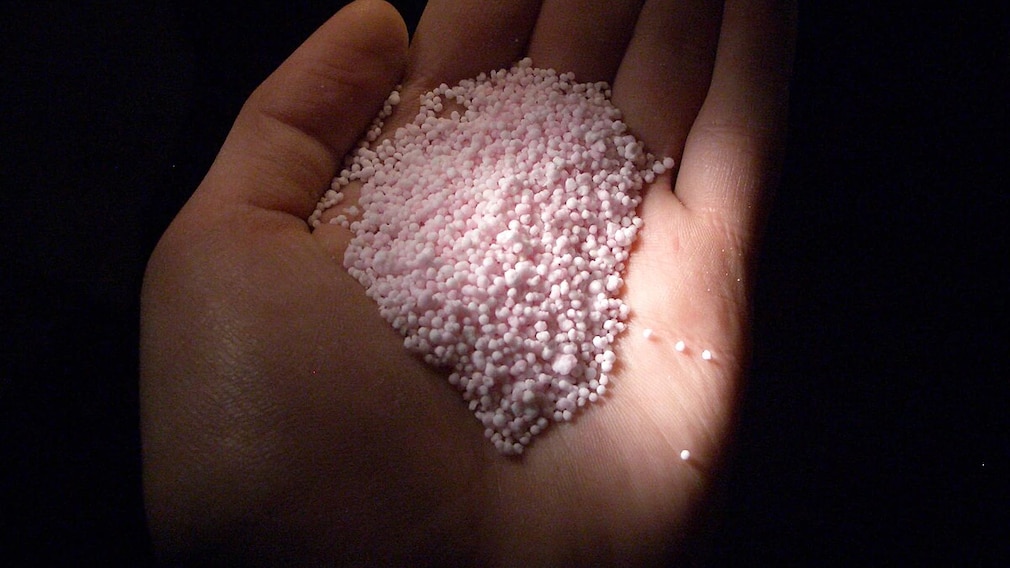
Three hundred and fifty kilograms of ammonium nitrate – an odourless, white crystalline chemical that is a powerful oxidiser and, under the right conditions, can cause a massive explosion – were recovered from Faridabad near Delhi Sunday night, leading to alarm bells around the national capital.
Police said an assault rifle and some ammunition, and explosive timers were also recovered from; this was after another assault rifle and some more ammo was found from a locker assigned to a Mujahil Shakeel at the Government Medical College in Jammu and Kashmir's Anantnag.
Sources said had the recovered amount been detonated (by combining it with an explosive) the blast radius could have ranged from 50 to 100 metres, within a third of which there would have been 'total destruction'. Damage could have been caused to structures even within 120 metres of the explosion.
The recovery was made by Jammu and Kashmir Police based on intel from Adil Ahmad Rahter, a terrorist arrested from Uttar Pradesh's Saharanpur, for allegedly pasting posters in Srinagar in support of banned terror group Jaish-e-Mohammed. The Pakistan-based Jaish-e-Mohammed is responsible for multiple attacks on India, including the 2001 Parliament assault and in Pulwama in 2019.
What is ammonium nitrate?
In simple terms it is a salt consisting of one ion each of ammonium and nitrate that is formed by the reaction of ammonia (NH3) and nitric acid (HNO3), which gives it the formula NH4NO3.
The high levels of ammonium and nitrate content make it an effective and widely-used fertiliser and, because it is a salt, it is water-soluble, making it suitable for use in irrigation systems.
Indeed, much of the world's food supply still relies on nitrate-based fertilisers.
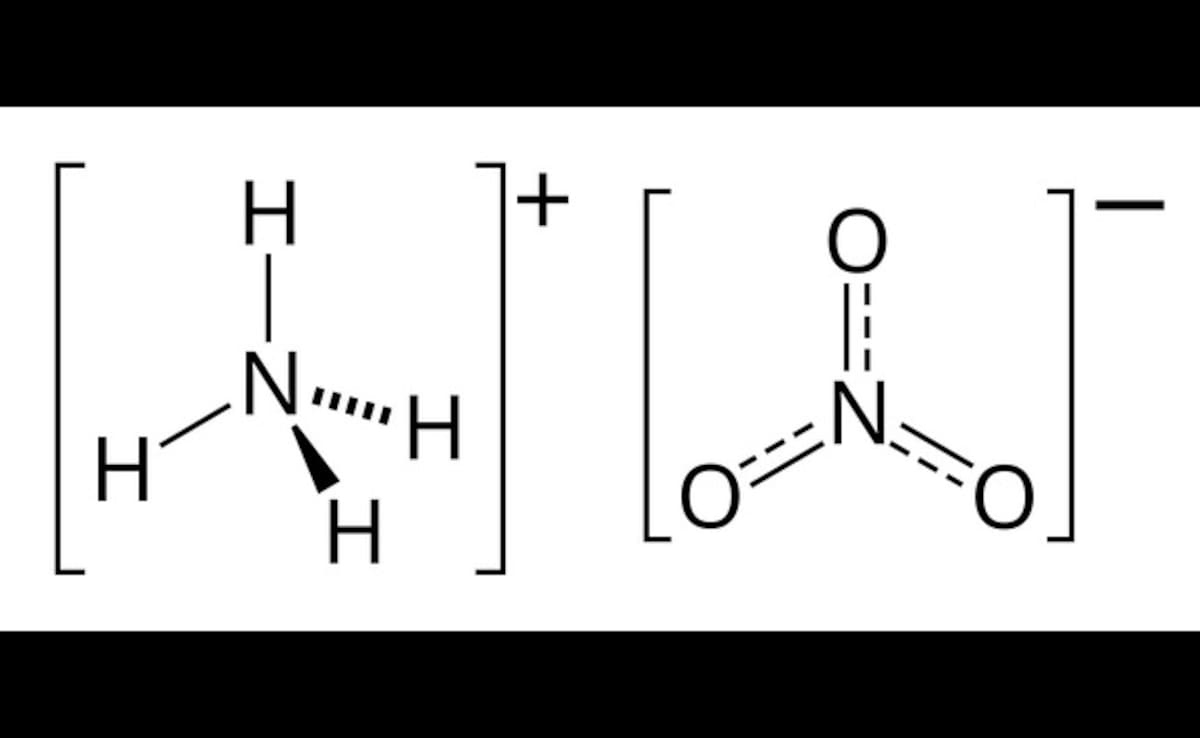
Chemical formula for ammonium nitrate.
But it is also an oxidiser, meaning it supplies oxygen to support combustion.
There are two ways ammonium nitrate can detonate.
The first is when it is exposed to fire or it mixes with a combustible substance during a fire, the most horrific recent example of which was in the Lebanese capital of Beirut in August 2020, in which more than 200 people were killed and over 6,000 injured after a fire ignited 3,000 tons of ammonium nitrate.
The substance had been stored in a port warehouse for over six years, Lebanese officials said.
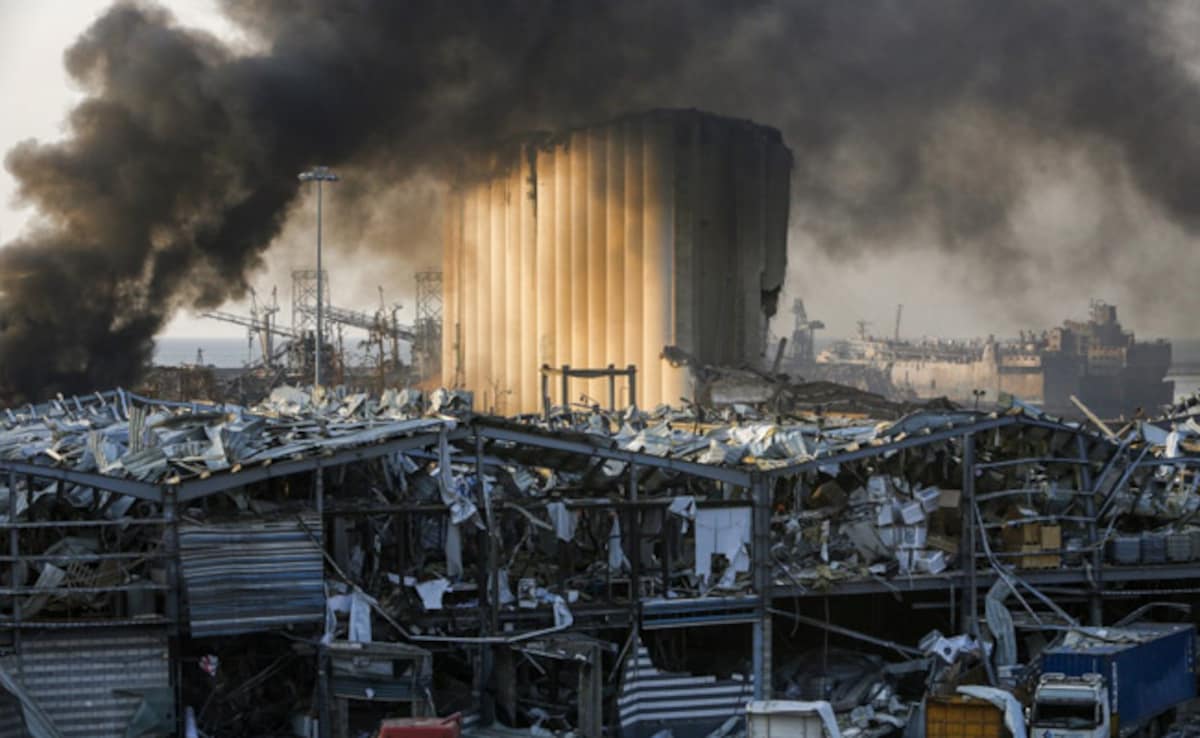
A destroyed silo at the scene of an explosion at the port in the Lebanese capital Beirut
A similar tragedy too place at the port in Tianjin in China in August 2015.
Two explosions took place 33 seconds apart; the second involved about 800 tons of ammonium nitrate. Chinese government data said 173 people were killed and 800 injured.
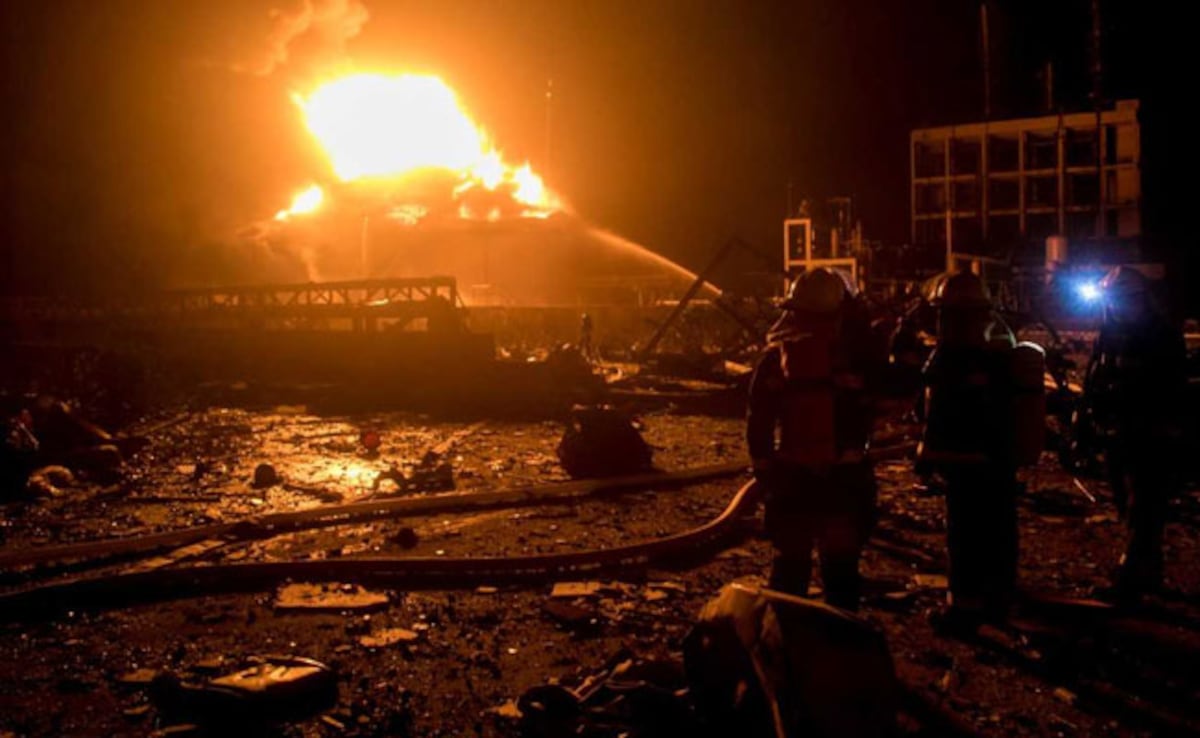
The Tianjin explosions also sparked fears of toxic pollutants in the air.
The other way it can detonate is when it mixes with an explosive substance.
Then it becomes a cheaply-made bomb that can cause significant damage.
This version is called ANFO, or ammonium nitrate fuel oil, and is used in controlled scenarios in various industries, such as construction and mining.
In fact, ammonium nitrate can be mixed with almost any kind of volatile substance. But the quality is important, since pure NH4NO3 is chemically and thermally stable, meaning it requires an external detonation. A stronger initial detonation is more likely to result in a larger and more stable explosion.
But, once detonation is achieved, ammonium nitrate's incendiary character takes over.
It is important to note that NH4NO3 is not a true explosive by itself.
If kept safely, and away from high heat, it is actually quite difficult to ignite. Incorrect storage, though, can lead it to deteriorate, rapidly, and that was the reason behind industrial accidents, like in Beirut.
Is sale ammonium nitrate of regulated in India?
Yes. Under rules framed in 2012, which sit within the Explosives Act of 1884, and "any combination with more than 45 percent of ammonium nitrate by weight including emulsions, suspensions, melts or gels (with or without inorganic nitrates) shall be called an explosive".
Licenses are required to manufacture and handle the chemical, and there are rules regulating how it is stored, transported, and/or sold. These include restrictions on storing them in populated areas. And, of course, import and export of ammonium nitrate is tightly controlled.
NDTV is now available on WhatsApp channels. Click on the link to get all the latest updates from NDTV on your chat.
-
Opinion | India Has A 'Lobbying' Problem In Washington, And It Has Come Back To Haunt It

While the EU, Japan, the UK and South Korea secured quick deals, India's efforts were getting drained in prolonged negotiations and the wrong kind of lobbying.
-
Opinion | The AI Boom Has Run Into A Big 'Debt' Trap Problem. Inside The 5% Danger Line
For most of the AI buildout's first two years, hyperscalers funded it the easy way: out of operating cash flow. That era is over.
-
Opinion | Iran To Saudi, Pakistan Is Now Fast Running Out Of Sides To Play
Pakistan's long history of playing all parties to its own benefit may have reached the end of its road.
-
Gyanesh Kumar Has An Immunity Pin. Why A Petition Says He Can't Use It
The Opposition wants the Chief Election Commissioner prosecuted for alleged manipulation of voter rolls, but a 2023 law stands in the way. A petition in the Supreme Court now says the law has a gap.
-
Opinion | Is The World Staring At A Big Stock Market Crash - And Recession? 5 Uneasy Signs
On Wednesday, the US bond market recorded its worst day since Trump's "Liberation Day" tariffs rattled markets in April 2025. The 30-year US Treasury yield topped 5.43%, putting it on track for its highest close since 2004.
-
Form 6 For New Voters: When A Small Change Triggered A Big Row
In July 2026, the online version of Form 6 on the ECI's ECINet portal was modified to include a new declaration.
-
Opinion | Saudi Arabia's China Turn Has Begun - After Learning Much The Hard Way
Leaning on China just makes sense for the Saudis right now. The question is, can its other great 'ally' stomach it?
-
Opinion | Bihar Assault, Hisar Marriage Ban: Who'll Stop The Guardians Of Indian 'Culture'?
Why exactly does the sight of a young couple seeking a bit of alone time somewhere tend to particularly provoke a certain kind of Indian men?
-
Opinion | The Trump-Xi Summit, And India's Many Worries Of Its Own
Washington and Beijing may have chosen coexistence over confrontation. For India, that could be both a relief and a warning.