- Body Mass Index (BMI) for Indians uses lower cut-offs than global WHO standards due to metabolic risks
- Indian adults' average BMI is around 22-23 kg/m2, within global normal range but higher risk in Indian context
- Waist circumference and metabolic markers are crucial alongside BMI for assessing health risks in Indians
Body Mass Index (BMI) is one of the most widely used tools to assess whether a person's weight is appropriate for their height. Yet for Indians, the interpretation of BMI is more complex than simply applying global standards. Research over the past two decades shows that South Asians, including Indians, develop type-2 diabetes, high blood pressure and heart disease at lower BMI levels compared to Europeans. This has prompted Indian health authorities to adopt lower BMI cut-offs tailored to the country's metabolic risk profile.
According to large-scale national datasets such as the ICMR-INDIAB study and the National Family Health Survey (NFHS-5), the average BMI of Indian adults falls within what global standards might consider "normal." However, a significant proportion of Indians in this "normal" range already have high blood sugar, abdominal obesity or lipid abnormalities.
So, what is the average BMI of Indian men and women? How does it vary by age? What about pregnant women? And how do Indian guidelines differ from World Health Organization (WHO) standards? Here's a clear breakdown of what the data show.
What Is BMI And Why India Uses Different Cut-Offs
BMI is calculated as weight (kg) divided by height (m2). The WHO classifies adults as:
- Underweight: below 18.5 kg/m2
- Normal weight: 18.5-24.9 kg/m2
- Overweight: 25-29.9 kg/m2
- Obesity: 30 kg/m2 or more
However, Indian expert groups, including those referenced by the Indian Council of Medical Research (ICMR) and the Research Society for the Study of Diabetes in India (RSSDI), recommend lower thresholds:
- Normal: 18.5-22.9 kg/m2
- Overweight: 23-24.9 kg/m2
- Obesity: 25 kg/m2 and above
This shift is based on evidence that Indians have higher body fat percentage and greater abdominal fat at lower BMI levels, increasing metabolic risk even when BMI appears "normal" by global criteria.
Also Read: Medical Trials To Now Focus On Indian Body Type, Data: New ICMR Mandate
What Is The Average BMI Of Indian Adults?
Overall National Average
The ICMR-INDIAB study, one of the largest diabetes and metabolic health surveys in India, reports a mean BMI of approximately 22-23 kg/m2 among adults, though this varies by state, urbanisation and sex. Urban populations tend to have higher average BMI than rural populations.
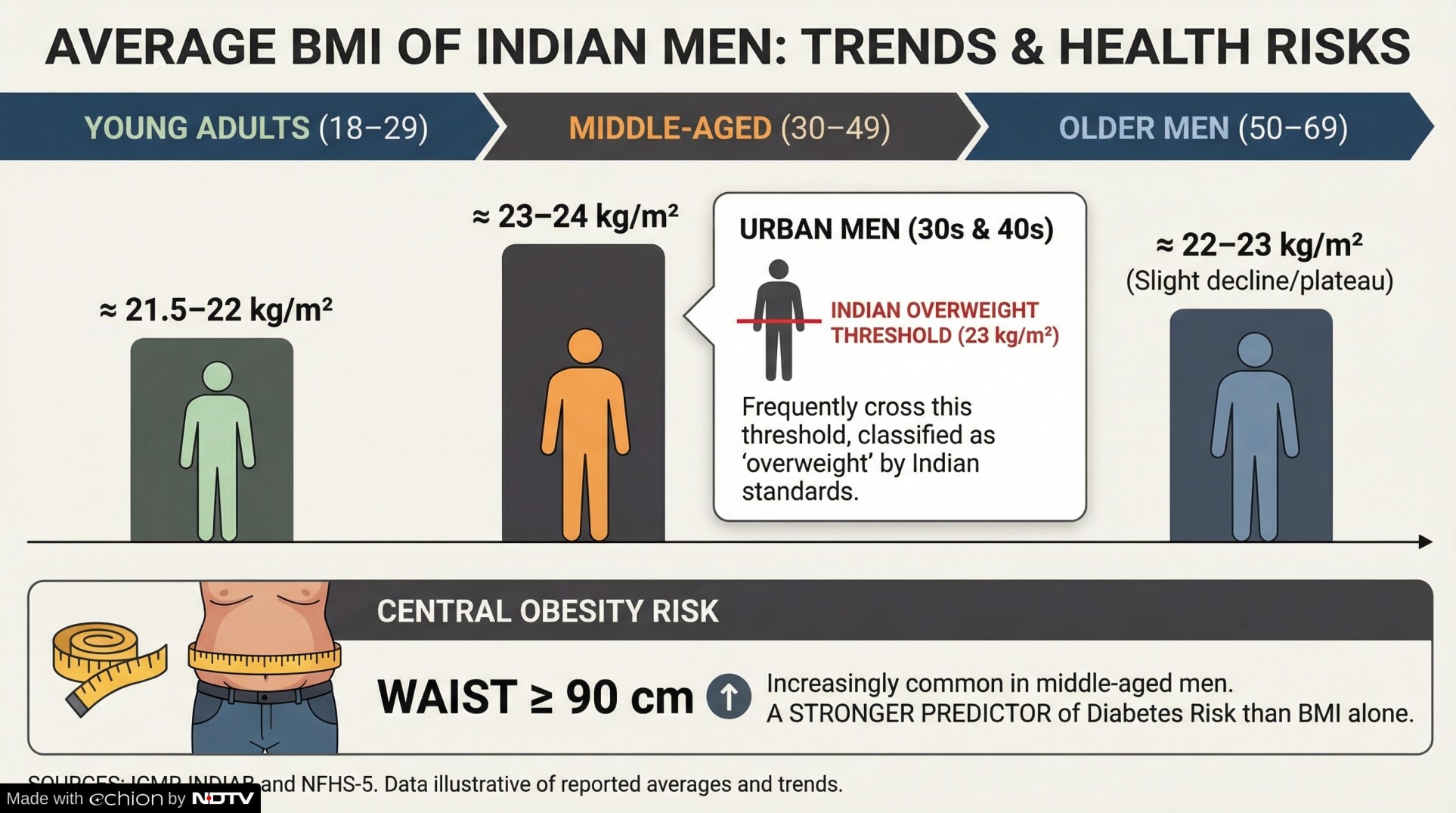
Average BMI Of Indian Men By Age
Data from ICMR-INDIAB and NFHS-5 show:
- Men aged 18-29 years: Average BMI around 21.5-22 kg/m2
- Men aged 30-49 years: Average BMI around 23-24 kg/m2
- Men aged 50-69 years: Slight decline or plateau around 22-23 kg/m2
Urban men in their 30s and 40s frequently cross the 23 kg/m2 threshold, meaning many are already "overweight" under Indian standards, even if classified as normal by WHO cut-offs.
ICMR data also indicate rising central obesity, with waist circumference of 90 cm (Indian male cut-off) or more, increasingly common in middle-aged men, a stronger predictor of diabetes risk than BMI alone.
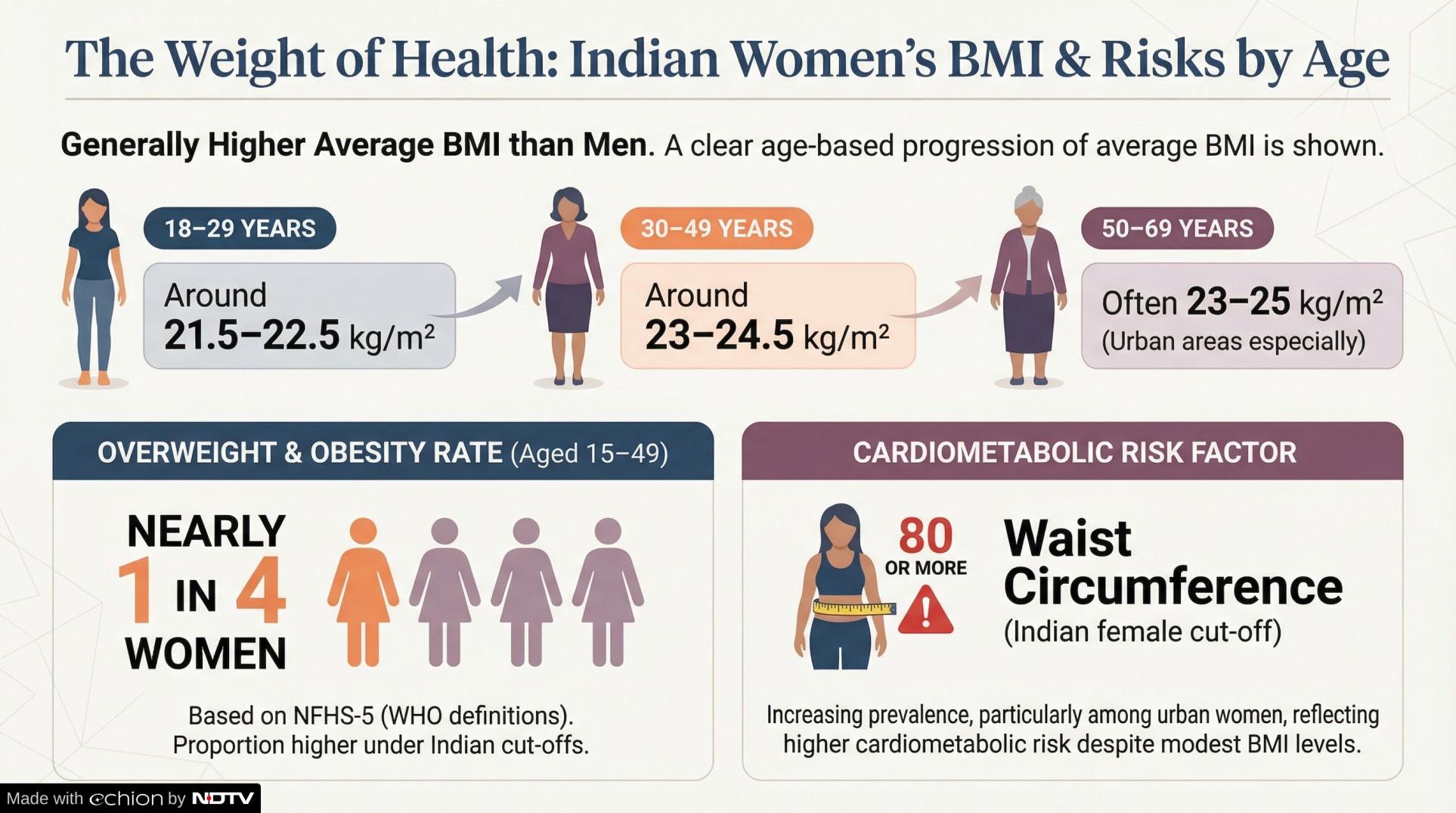
Average BMI Of Indian Women By Age
Women in India generally have slightly higher average BMI than men.
- Women aged 18-29 years: Around 21.5-22.5 kg/m2
- Women aged 30-49 years: Around 23-24.5 kg/m2
- Women aged 50-69 years: Often 23-25 kg/m2, especially in urban areas
NFHS-5 data show that nearly one in four women aged 15-49 years is overweight or obese using WHO definitions. Under Indian cut-offs, this proportion is even higher. Waist circumference of 80 cm or more (Indian female cut-off) is increasingly prevalent, particularly among urban women, reflecting higher cardiometabolic risk despite modest BMI levels.
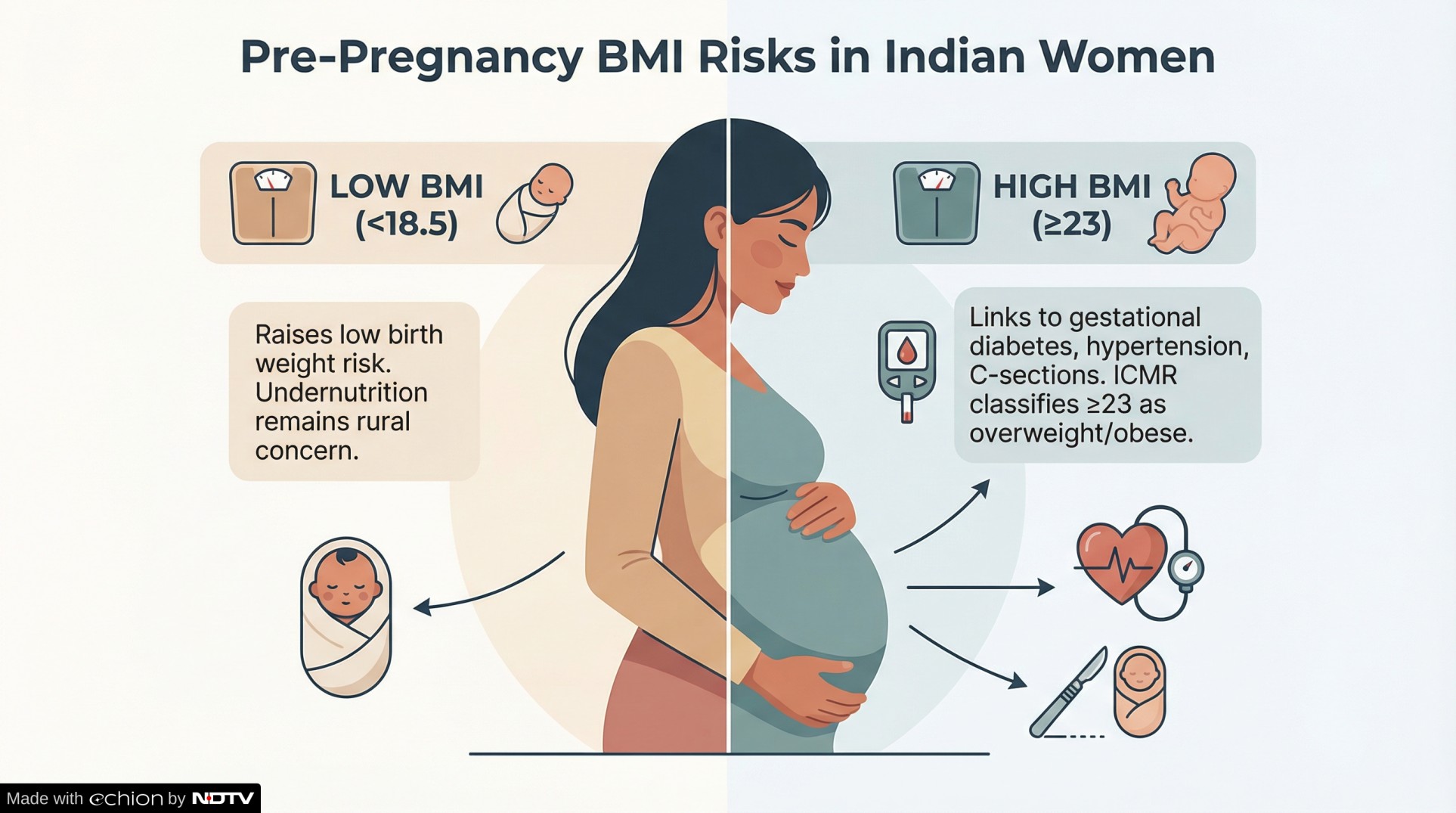
BMI In Pregnant Women
BMI interpretation during pregnancy is different. Pre-pregnancy BMI is used to assess risk. ICMR and obstetric guidelines classify:
- Underweight: Less than 18.5
- Normal: 18.5-22.9
- Overweight: 23-24.9
- Obese: Equal to or more than 25
Studies show that Indian women entering pregnancy with BMI equal to or more than 23 face higher risk of:
- Gestational diabetes
- Hypertensive disorders
- Caesarean delivery
- Higher birth weight infants
Conversely, undernutrition remains a concern in parts of rural India, where low pre-pregnancy BMI (less than 18.5) increases the risk of low birth weight babies.
Beyond BMI: Other Important Markers
ICMR guidelines stress that BMI alone is insufficient. Indians often have:
- Higher visceral fat at lower BMI
- Higher insulin resistance
- Elevated triglycerides and low HDL cholesterol
Key additional markers include:
- Waist circumference (equal to or more than 90 cm men; equal to or more than 80 cm women)
- Waist-to-height ratio (more than 0.5 indicates risk)
- Fasting glucose levels
- HbA1c (although recent studies have made this test's relevance doubtful)
- Lipid profile
Research published in Indian and international journals shows that metabolic syndrome prevalence rises sharply at BMI above 23 kg/m2 in Indians, supporting lower cut-offs.
How Indian Standards Differ From Global Standards
Under WHO criteria, a BMI of 24 kg/m2 is "normal." Under Indian guidelines, the same individual is already considered overweight and at increased metabolic risk.
This difference is critical in India, which has:
- Over 100 million people with diabetes (ICMR estimates)
- Rapidly rising cardiovascular disease rates
- Earlier onset of metabolic disorders compared to Western populations
- Using global BMI cut-offs alone may delay preventive intervention.
The average Indian adult BMI hovers around 22-23 kg/m2 , technically within the global "normal" range. However, due to unique body composition and metabolic vulnerability, Indians face higher risk of diabetes and heart disease at lower BMI levels. This is why ICMR-supported guidelines classify overweight starting at 23 kg/m2, rather than 25.
For Indians, BMI should be interpreted alongside waist measurements and metabolic markers. Understanding these India-specific standards is essential for early prevention in a country facing one of the world's fastest-growing burdens of lifestyle diseases.
Disclaimer: This content, including advice, provides generic information only. It is in no way a substitute for a qualified medical opinion. Always consult a specialist or your own doctor for more information. NDTV does not claim responsibility for this information.