- India faces rising dementia, depression, and Alzheimer's cases with an aging population
- Dementia affects about nine million Indians, with numbers expected to increase sharply
- Swiss start-up Bottneuro developed MiaMind, a personalized brain stimulation helmet
What were once seen as diseases of ageing societies in the West are now fast becoming a major public health challenge even for India. Dementia, depression and Alzheimer's disease are rising quietly but steadily as the country's population grows older, especially in rapidly urbanising regions.
India today has the world's largest population, and its demographic profile is shifting. The number of elderly citizens is increasing sharply, with projections suggesting that hundreds of millions will be over the age of sixty in the coming decades. With this rise comes a surge in age linked conditions, including neurodegenerative disorders.
Dementia alone already affects an estimated nine million people in India. That number is expected to grow significantly as life expectancy increases. Experts say the impact goes beyond health, placing a heavy emotional and financial burden on families. The cost of care can take up a large share of household spending, particularly in cities where nuclear families often struggle to provide long term support.
Alzheimer's disease, the most common form of dementia, leads to progressive memory loss and cognitive decline. Depression too is increasingly being recognised among older adults, often linked with isolation, physical illness and changing social structures.
Against this backdrop, researchers around the world are exploring new ways to treat these conditions. In Switzerland, a start-up called Bottneuro is working on an innovative approach that uses electrical stimulation of the brain.
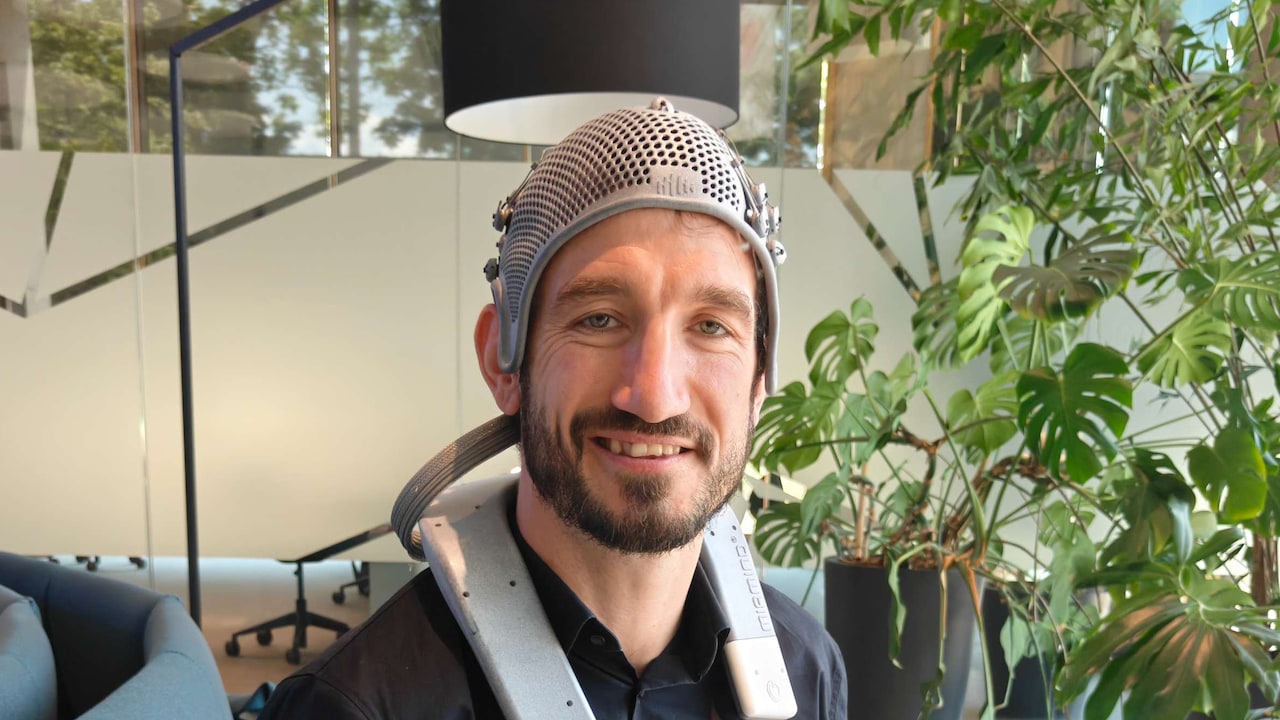
At their facility in Basel, a unique device developed by the company is drawing attention. It is a personalised helmet like system called MiaMind, designed to stimulate specific parts of the brain using very small electrical currents.
"The device is called MiaMind. It's a personalized device, custom made for each patient," said Dr Alois C. Hopf, co-founder of Bottneuro.
Unlike conventional therapies, the system is tailored to each individual. The patient undergoes an MRI scan, which is then used to map their brain. Based on this, a helmet with multiple electrodes is 3D printed to fit perfectly.
"We can select individual brain targets depending on the disease and the patient, and then apply electrical current to enhance neural activity or suppress it," Dr Hopf explained.
The technology behind the device is known as transcranial electrical stimulation. It works by delivering weak electrical currents through electrodes placed on the scalp. These currents can influence brain activity, potentially improving functions like memory, mood and motor control.
For Alzheimer's patients, the goal is to stimulate regions of the brain where activity has declined. In depression, the idea is to adjust neural circuits linked with mood regulation.
"We focus on cognition such as in Alzheimer's, to enhance memory function, and in depression we want to change the mood of the patient," Dr Hopf said.
One of the key features of the system is that it can be used at home. Patients wear the customised helmet and run therapy sessions using a computer tablet that powers the device and records usage. "The patient can use it in their own home for longer periods of time," he said. "This was a clear goal from the beginning, that patients should be able to use it themselves with support from caregivers" says Hopf.
The device is already being prescribed in parts of Europe as a medical therapy. It is registered as a custom made medical device and can be used under a doctor's supervision for different neurological and psychiatric conditions.
At the same time, researchers caution that the technology is still at an early stage. Clinical trials are underway to establish how effective it is, particularly for Alzheimer's disease.
"So far, we have shown safety of the device in healthy individuals," Dr Hopf said. "To show clinical efficacy, we are now running randomized controlled trials."
Safety is a major concern when it comes to brain interventions, but Dr Hopf said the procedure uses very mild electrical currents and has not shown serious side effects in testing. "We have run many sessions and did not have any severe adverse events," he said. "Patients usually feel a tingling or itching sensation, but this is transient."
Beyond medical use, the technology is also being explored for other applications. Dr Hopf said neuro-stimulation could potentially help improve focus and attention, including among gamers and others requiring sustained concentration.
While such uses remain exploratory, they point to the broader possibilities of influencing brain function in a controlled manner.
For countries like India, where the burden of neurodegenerative diseases is set to rise sharply, any new approach draws interest. The challenge is immense, with millions already affected and healthcare systems under strain.
Experts say there is no single solution to Alzheimer's or dementia yet. Treatment is usually focused on managing symptoms and slowing progression. In this context, even incremental advances are seen as important.
The work by Bottneuro represents one such step. A personalised, non-invasive therapy that can be delivered at home offers a different model of care, especially for chronic conditions that require long term management.
As research continues, the hope is that such technologies could add to the limited tools currently available to treat brain disorders.
For now, scientists remain cautious but optimistic. As Dr Hopf put it, "the technology has broad potential."
In a country like India, where the silent epidemic of dementia is only beginning to be recognised, that potential could one day make a meaningful difference.
(NDTV was invited to visit Basel by Presence Switzerland, Federal Department of Foreign Affairs, Switzerland)
Disclaimer: This content including advice provides generic information only. It is in no way a substitute for a qualified medical opinion. Always consult a specialist or your own doctor for more information. NDTV does not claim responsibility for this information.