- Summer heat and dry air cause nasal lining to crack, increasing nosebleed risk
- Heat causes blood vessels to expand, making them prone to rupture during irritation
- Dehydration dries mucous membranes, leading to fragile nasal tissues and bleeding
With temperatures soaring during summer and heatwaves becoming more frequent, many people notice an unusual but common problem, sudden nosebleeds. Although often harmless, nosebleeds can be alarming when they occur unexpectedly, especially during hot and dry weather. Medically known as epistaxis, a nosebleed occurs when tiny blood vessels inside the nasal lining rupture and bleed. These vessels lie very close to the surface and can break easily when irritated or damaged. According to medical experts, environmental factors such as hot temperatures, low humidity and dehydration can significantly increase the risk of nosebleeds during summer months.
The nasal passages normally remain moist through mucus and natural humidity in the air. However, heatwaves often bring extremely dry air, which can dry out the nasal lining and cause it to crack. Once the protective lining becomes dry or inflamed, even minor irritation such as sneezing, rubbing the nose or blowing it forcefully can trigger bleeding.
While most nosebleeds stop on their own with basic first aid, experts stress that understanding why they occur, and how to prevent them, can help people manage this common summer health issue safely.
Why Summer Heat And Heatwaves Cause Nosebleeds
1. Dry Air Damages The Nasal Lining
The inside of the nose contains many delicate blood vessels that help warm and humidify the air we breathe. However, these vessels are extremely fragile and can rupture easily if the surrounding tissue becomes dry or irritated. During heatwaves, the air often becomes hot and low in humidity. This dryness causes the nasal membrane to become crusty or cracked, making it more prone to bleeding when touched or irritated.
2. Heat Expands Blood Vessels
High temperatures can also cause vasodilation, meaning blood vessels widen in response to heat. In the nose, this expansion makes the thin capillaries closer to the surface more likely to rupture when exposed to pressure such as sneezing or nose blowing.
3. Dehydration Dries Out Mucous Membranes
Heatwaves increase fluid loss through sweating. If the body becomes dehydrated, the mucous membranes in the nose can dry out and lose their protective moisture. This dryness increases the risk of cracks and bleeding in the nasal lining.
4. Summer Allergies And Irritants
Pollen, dust, pollution and smoke are more prevalent in summer months. These irritants can inflame the nasal passages, causing frequent sneezing or nose rubbing, which may injure fragile blood vessels and trigger bleeding.
Who Is More Likely To Get Nosebleeds In Summer?
Although anyone can experience a nosebleed, certain groups are more vulnerable during hot weather:
- Children, whose nasal blood vessels are especially delicate
- Older adults, who may have slower blood clotting
- People with allergies or sinus infections
- Individuals taking blood-thinning medications such as aspirin or warfarin
- Those living in very dry or hot climates
Studies show that about 6 in 10 people experience at least one nosebleed in their lifetime, though most are minor and resolve quickly.
What To Do If You Get A Nosebleed
Most nosebleeds can be managed at home with simple first aid measures recommended by doctors.
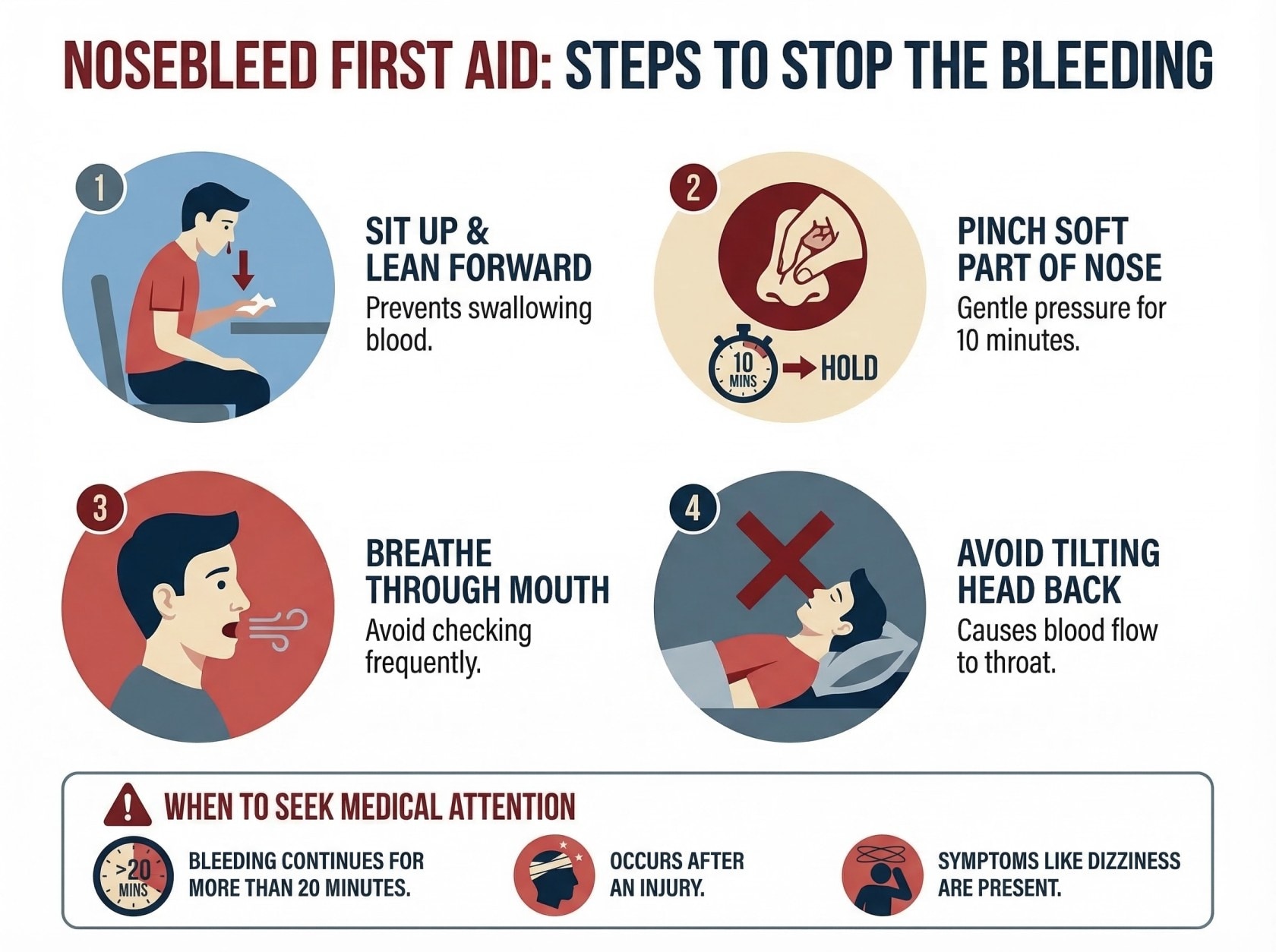
Step-by-Step First Aid For Nosebleeds
- Sit upright and lean slightly forward - This prevents blood from flowing down the throat.
- Pinch the soft part of your nose - Use your thumb and index finger to apply gentle pressure for about 10 minutes.
- Breathe through your mouth - Continue applying pressure without checking frequently.
- Apply a cold compress - Placing an ice pack on the nose or cheeks may help constrict blood vessels.
- Avoid lying down or tilting the head back - This can cause blood to flow into the throat.
- If bleeding continues for more than 20 minutes, or if it occurs after an injury or with symptoms such as dizziness, medical attention may be necessary.
What To Avoid During A Nosebleed
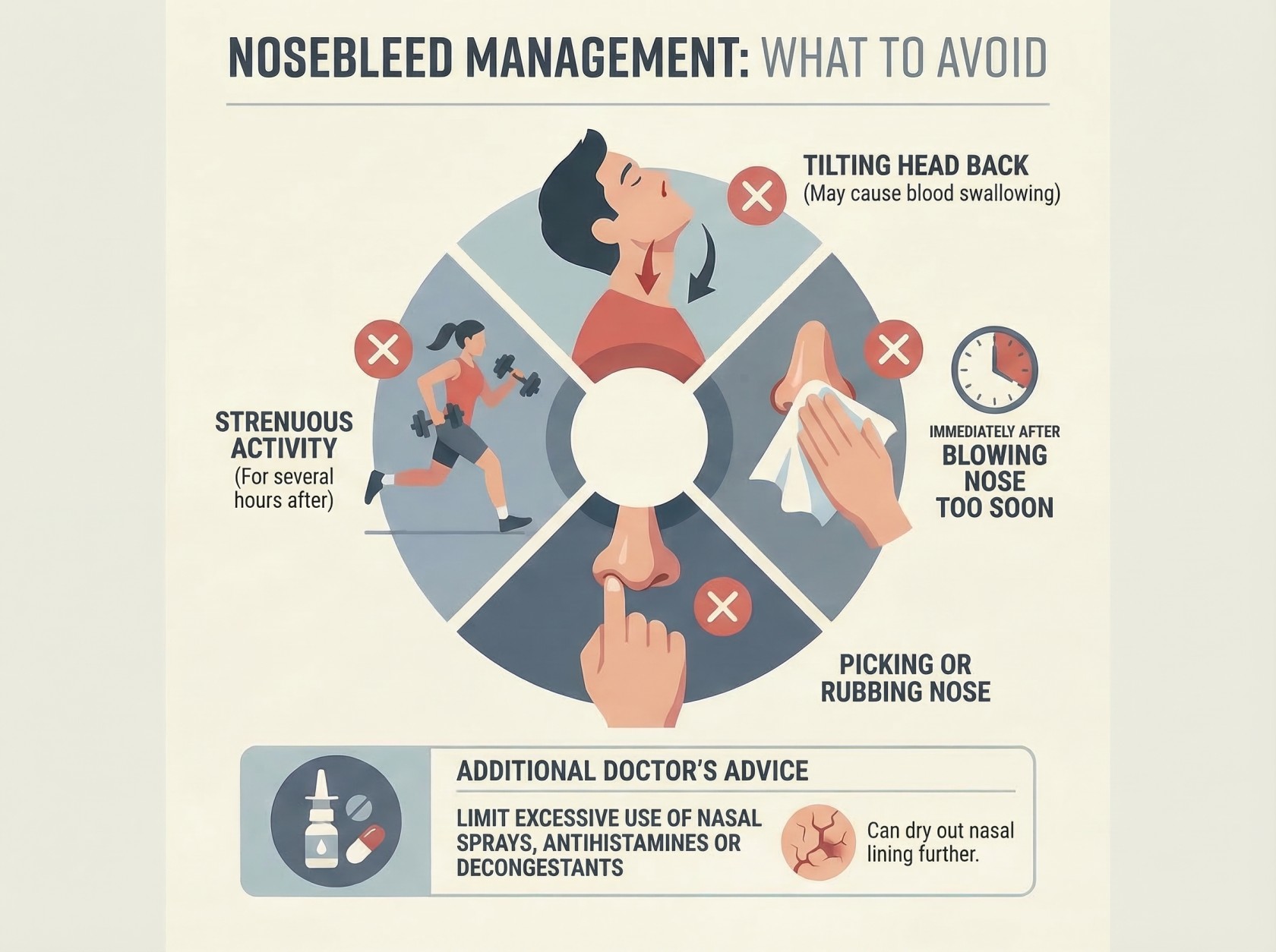
Certain common reactions can actually make the bleeding worse.
Avoid the following:
- Tilting the head backward (may cause blood swallowing)
- Blowing the nose immediately after bleeding stops
- Picking or rubbing the nose
- Strenuous activity for several hours after a bleed
- Doctors also advise limiting excessive use of nasal sprays, antihistamines or decongestants because they can dry out the nasal lining further.
How To Prevent Nosebleeds During Summer
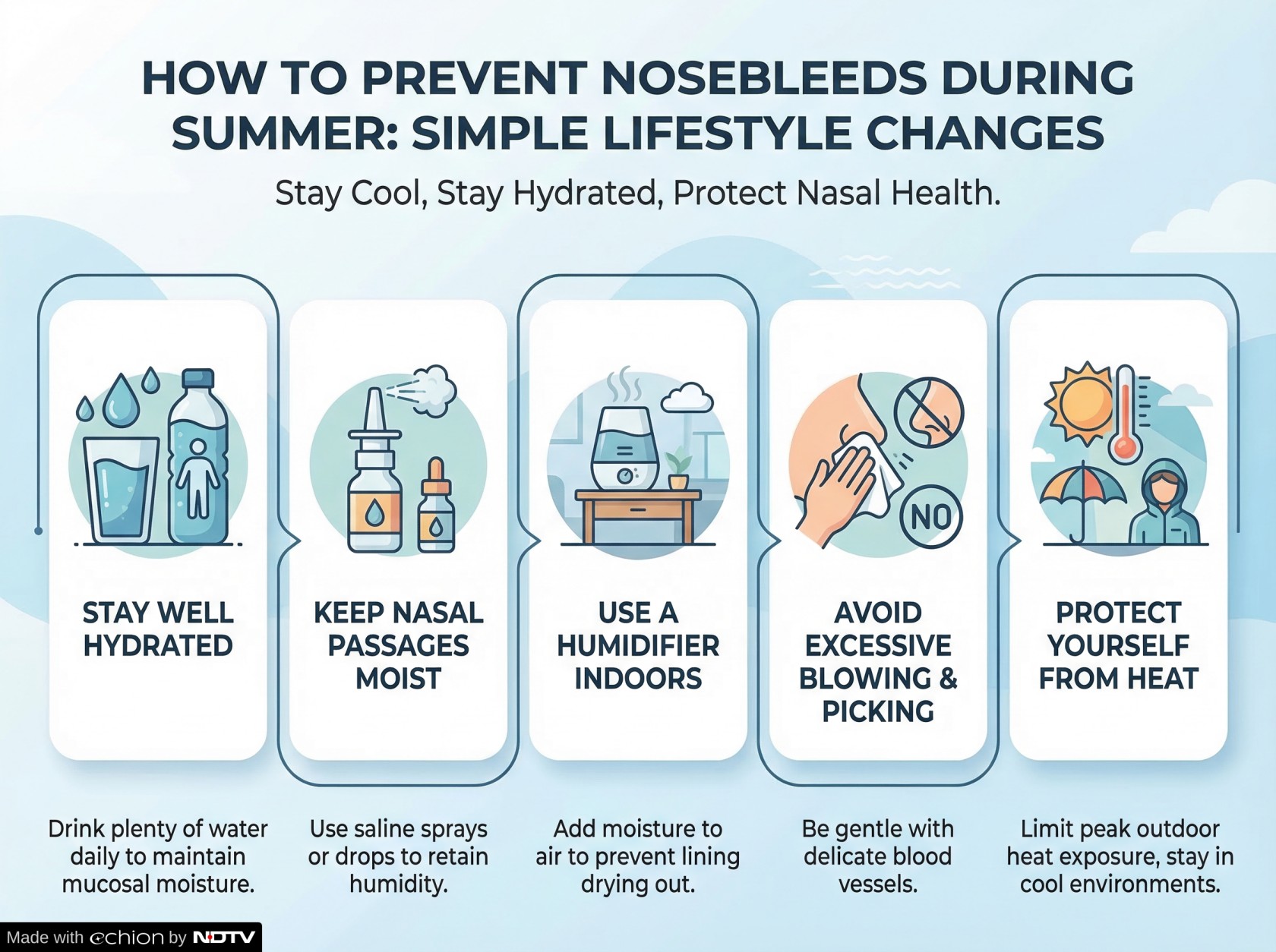
Simple lifestyle changes can significantly reduce the risk of nosebleeds during hot weather.
- Stay Well Hydrated: Drink enough water throughout the day to maintain moisture in mucous membranes.
- Keep Nasal Passages Moist: Using saline nasal sprays or drops can help maintain humidity in the nose.
- Use A Humidifier Indoors: Adding moisture to indoor air can prevent the nasal lining from drying out.
- Avoid Excessive Nose Blowing: Gentle blowing and avoiding nose picking can protect delicate blood vessels.
- Protect Yourself From Heat: Limit outdoor exposure during peak heat hours, wear protective clothing and stay in cool environments during heatwaves.
When To See A Doctor
Although most nosebleeds are harmless, medical evaluation may be necessary if:
- Nosebleeds occur frequently
- Bleeding lasts longer than 20 minutes
- The bleeding is heavy or accompanied by dizziness
- The person is taking blood-thinning medication
- Nosebleeds occur after a head injury
In rare cases, persistent nosebleeds may indicate underlying conditions such as bleeding disorders, high blood pressure or nasal abnormalities.
Summer heat and heatwaves can increase the likelihood of nosebleeds by drying out the nasal lining, expanding fragile blood vessels and causing dehydration. While most episodes are mild and manageable at home, understanding the triggers and taking preventive measures can significantly reduce their frequency. Maintaining hydration, keeping the nasal passages moist and avoiding excessive irritation of the nose are simple but effective ways to protect yourself during hot weather. If nosebleeds become frequent or severe, consulting a healthcare professional is essential to rule out underlying medical conditions.
Disclaimer: This content including advice provides generic information only. It is in no way a substitute for a qualified medical opinion. Always consult a specialist or your own doctor for more information. NDTV does not claim responsibility for this information.