- Nipah virus causes severe encephalitis and has a 40-75% fatality rate in humans
- Bird flu primarily affects birds but can infect humans, with rare human deaths
- India reported Nipah cases in West Bengal and bird flu outbreaks in Bihar in 2026
In early 2026, two viral threats - Nipah virus and bird flu (avian influenza) -have grabbed headlines in India and stirred global health vigilance. While both are zoonotic infections originating in animals, their patterns of spread, severity in humans and public health implications differ significantly. The Nipah virus, recently identified in West Bengal, has a high fatality rate and is closely watched because of its potential to cause severe encephalitis (brain inflammation) and respiratory symptoms in humans. According to the World Health Organization (WHO), the case fatality ratio for Nipah virus infections ranges from 40% to 75%, depending on the outbreak and medical response, and there are currently no licensed treatments or vaccines approved for widespread use.
In contrast, avian influenza (bird flu), which has recently been detected in Bihar's Darbhanga in crows, affects birds but can occasionally infect humans, typically through close contact with infected poultry. Some strains of bird flu, most notably H5N1, have caused human fatalities, but sustained human-to-human transmission remains rare. While bird flu can cause severe disease in humans with mortality seen in isolated cases, its overall fatality rate in humans is lower and far less predictable than Nipah virus.
Nipah Virus: Profile, Symptoms and Recent Outbreaks
What is Nipah Virus?
The Nipah virus (NiV) is a zoonotic virus, transmitted from animals to humans, that was first identified following an outbreak in Malaysia and Singapore in 1998-99 linked to pigs. Its natural reservoir is fruit bats (Pteropus genus), and transmission to humans may occur via contaminated food or close contact with infected animals or people.
Symptoms and Severity
Nipah infection often begins with fever, headache, cough, and difficulty breathing. Severe cases can rapidly progress to encephalitis, confusion, seizures and coma within 24 to 48 hours. Severe respiratory involvement has also been documented, necessitating intensive supportive care.
Mortality and Treatment
The WHO reports that Nipah's case fatality rate ranges from 40% to 75%, depending on the outbreak and clinical management. There are no specific antiviral treatments or licensed vaccines currently available; supportive care remains the mainstay of clinical management.
Recent Indian Outbreaks
In January 2026, health authorities in West Bengal confirmed multiple Nipah virus cases and activated surveillance, contact tracing, and isolation protocols. Nearly 200 contacts were monitored, with most testing negative. WHO characterised the risk of broader spread as low, but emphasised preparedness due to the virus's high lethality. Historically, India has experienced several outbreaks, especially in Kerala, with several deaths reported in past years.
Also Read: Bird Flu Outbreaks In India: How Does Bird Flu Differ From Regular Flu?
Bird Flu (Avian Influenza): Profile, Symptoms and Current Status
What is Bird Flu?
Bird flu, or avian influenza, refers to influenza A viruses that primarily infect birds but can occasionally cross over to humans. Subtypes like H5N1 and H9N2 have been detected in poultry and wild birds in India and globally.
Symptoms and Human Infection
In humans, bird flu symptoms can resemble seasonal flu but often progress to severe respiratory illness, including pneumonia and acute respiratory distress. The incubation period is generally 2-8 days, and while mild cases may resolve, severe infection can lead to death.
Mortality and Spread
Human infections with avian influenza are rare and usually linked to direct exposure to infected birds or contaminated environments. Mortality among confirmed human cases has been reported at high rates in isolated events, for example, up to 48-50% in some H5N1 cases, but overall numbers remain low compared with seasonal influenza due to limited human-to-human transmission.
Recent Indian Outbreaks
Outbreaks of bird flu have been confirmed in poultry and wild birds across several Indian states. For instance, Darbhanga in Bihar saw thousands of bird deaths linked to H5N1, prompting public health surveillance and biosecurity measures to prevent human exposure.
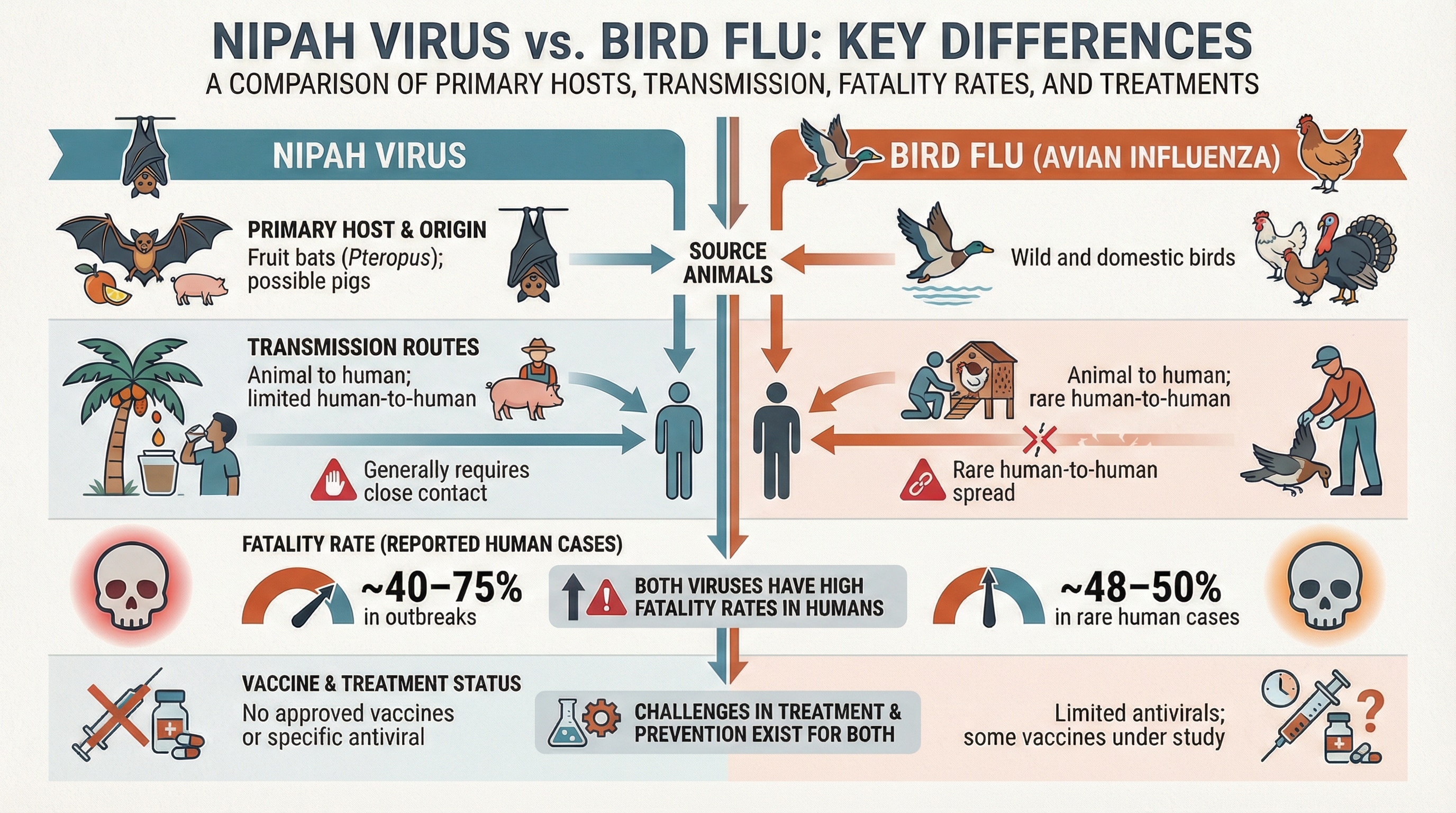
Key Differences: Nipah Virus vs Bird Flu (Avian Influenza)
1. Primary host
- Nipah virus: Fruit bats; pigs may act as intermediate hosts
- Bird flu: Wild and domestic birds
2. Transmission to humans
- Nipah virus: Transmitted from animals to humans; limited human-to-human spread
- Bird flu: Transmitted from animals to humans; human-to-human transmission is rare
3. Fatality rate
- Nipah virus: Approximately 40-75% during outbreaks
- Bird flu: Around 48-50% in rare human cases reported so far
4. Vaccine or treatment
- Nipah virus: No approved vaccines or specific antiviral treatments available
- Bird flu: Limited antiviral options available; some vaccines are under development
5. Human-to-human spread
- Nipah virus: Usually requires close physical contact
- Bird flu: Human-to-human spread is rare
Also Read: Why Nipah Virus Isn't The Next Covid-19: 3 Diseases Might Be Bigger Pandemic Risks
Nipah Virus Vs Bird Flu: Which Is Deadlier?
While bird flu can be severe, the Nipah virus is generally considered deadlier in humans due to its higher case fatality rate, lack of treatment options, and potential for severe neurological disease.
However, the overall public health risk from bird flu is broader in terms of poultry health and economic impact, whereas Nipah's threat lies in isolated but highly lethal human infections requiring rigorous containment.
Both Nipah virus and bird flu are significant zoonotic threats that warrant vigilance in India and globally. Nipah's high mortality and potential for severe neurological illness make it a particularly dangerous pathogen, even if its spread remains limited. Bird flu continues to affect bird populations and occasionally humans, underscoring the need for strong surveillance, biosecurity, and public health measures. Understanding the differences between these viruses helps inform risk communication, clinical preparedness, and community awareness, critical tools in preventing outbreaks from escalating.
Disclaimer: This content including advice provides generic information only. It is in no way a substitute for a qualified medical opinion. Always consult a specialist or your doctor for more information. NDTV does not claim responsibility for this information.