- Genital tuberculosis is an underrecognized cause of female infertility in India
- It damages fallopian tubes and uterus, hindering fertilization and implantation
- Symptoms are mild and nonspecific, causing frequent misdiagnosis or delayed diagnosis
When discussing infertility in India, common causes like hormonal imbalances, lifestyle factors, and delayed pregnancies often take centre stage. The disease genital tuberculosis remains an important but underrecognized factor that contributes to this situation. The high tuberculosis burden in India creates a dual problem because people fail to recognize its effects on female reproductive health which results in delayed diagnosis and missed chances for effective medical care.
What is Genital Tuberculosis?
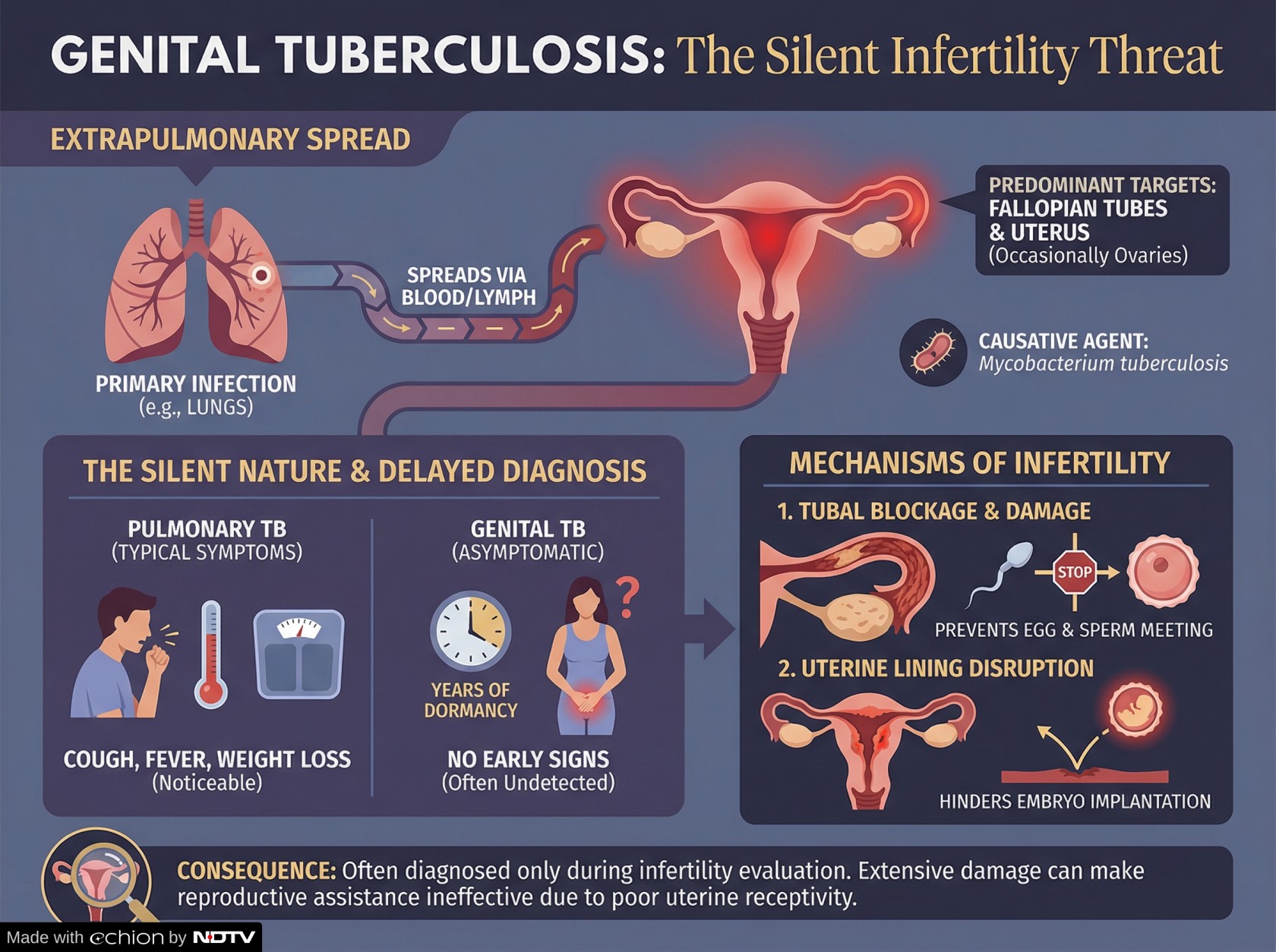
Genital tuberculosis is a form of extrapulmonary tuberculosis which spreads from lung infections and other body infections to invade the female reproductive system. The disease predominantly targets the fallopian tubes and uterus while it occasionally affects the ovaries. Mycobacterium tuberculosis usually causes the infection which can remain dormant for multiple years without showing any noticeable signs of disease. The absence of typical infection indications makes it hard to identify genital tuberculosis during its initial stage which differs from the common symptoms of pulmonary tuberculosis that include cough and fever and weight loss.
How Does It Lead to Infertility?
The most severe result which genital tuberculosis brings to human beings affects their ability to reproduce. The infection causes scarring and blockage and damage to the fallopian tubes which prevents the egg and sperm from meeting. The condition may also disrupt the uterine lining which hinders successful embryo implantation.
Women who experience regular menstrual cycles face difficulty achieving pregnancy in most situations. The infection creates extensive damage which becomes apparent only after doctors start evaluating infertility problems. Reproductive assistance methods become ineffective in extreme cases because of insufficient uterine receptivity.
Why It Often Goes Undiagnosed
The condition known as genital tuberculosis gets labeled as a "silent disease" because its symptoms display either low intensity or people mistake them for different medical conditions. Women will show non-specific symptoms that include irregular menstrual cycles and pelvic discomfort and unusual vaginal discharge which people usually link to hormonal disorders or infections. Patients and healthcare providers need better education about the condition because their understanding of it currently remains restricted. Doctors may fail to recognize the infectious origins of infertility because patients consider their infertility to be their main problem. The diagnosis process needs specialized tests which include endometrial biopsy and imaging and molecular testing because these tests do not appear in standard fertility evaluation procedures.
Who Is at Higher Risk?
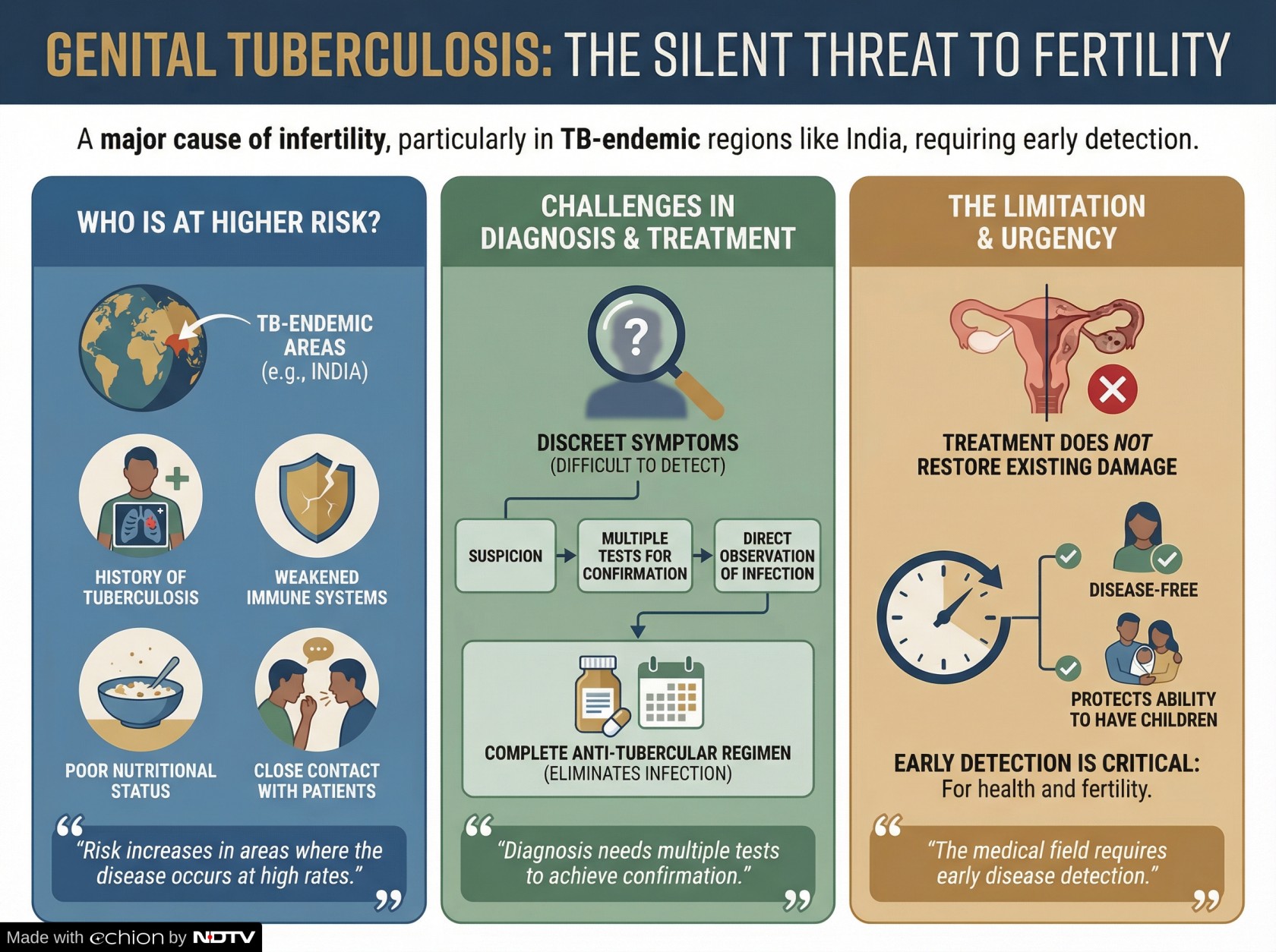
The natural risk of genital tuberculosis infection increases for women who reside in areas where the disease occurs at high rates. People who have a history of tuberculosis together with those who have weakened immune systems and those who have poor nutritional status and those who have been in close contact with tuberculosis patients face increased risk of developing the disease. The likelihood of genital tuberculosis to cause infertility in India exceeds that of most other countries because tuberculosis remains an endemic disease throughout the country.
Challenges in Diagnosis and Treatment
The diagnosis of genital tuberculosis becomes difficult because its symptoms appear in a discreet manner. The diagnosis needs multiple tests to achieve confirmation even when there is a suspicion of the condition. The medical team starts treatment after they confirm the diagnosis through direct observation of the infection, which they will treat with a complete anti-tubercular treatment regimen. The treatment eliminates the infection but does not restore the damage that has already happened to the reproductive system. The medical field requires early disease detection because it provides two benefits: First, it helps people become disease-free, and second, it protects their ability to have children.
The Importance of Early Screening in Infertility Cases
Genital tuberculosis should be considered as a potential diagnosis for women who experience unexplained infertility because the disease remains hidden and its effects persist for extended periods. The implementation of targeted screening within infertility assessment procedures enables healthcare providers to detect the condition at an earlier stage, which results in better treatment results. Women who have had multiple IVF attempts fail and who have experienced multiple pregnancy losses and who have unexplained uterine problems should undergo evaluation for genital tuberculosis because it will provide them with valuable medical assessment.
Raising Awareness for Better Outcomes
The treatable nature of genital TB remains unknown to people which leads to delayed diagnosis and results in continuing fertility problems. The hidden cause of infertility requires awareness among patients and healthcare providers to ensure its proper identification. The understanding of infectious origins of infertility leads to different methods for diagnosing and treating this condition. The infection will be permanently eliminated through proper treatment yet some cases will experience improved fertility results.
A Silent but Significant Factor
A country like India, which currently faces tuberculosis as a significant health problem, requires research into its lesser-known forms of the disease. Genital tuberculosis may not always present with obvious symptoms, but its impact on reproductive health can be profound. The process of recognizing a condition requires its identification, which needs proper investigation, and then treatment should begin immediately. The solution provides women who face the difficulties of infertility with an opportunity for improvement through early diagnosis and proper investigation and timely medical treatment.
(By Dr. Apurva Satish Amarnath, Fertility Specialist, Nova IVF Fertility, Kammanahalli, Bengaluru)
Disclaimer: The opinions expressed within this article are the personal opinions of the author. NDTV is not responsible for the accuracy, completeness, suitability, or validity of any information on this article. All information is provided on an as-is basis. The information, facts or opinions appearing in the article do not reflect the views of NDTV and NDTV does not assume any responsibility or liability for the same.