- AI integration in healthcare is essential due to workforce shortages and rising care complexity
- India’s digital health initiatives like Ayushman Bharat support AI with interoperable data systems
- Experts agree AI should augment clinicians, requiring ethical safeguards and system-level integration
Artificial Intelligence will have its greatest impact in healthcare, Roy Jakobs, CEO of Royal Philips, said at the India AI Impact Summit 2026 at Bharat Mandapam. Underlining that overburdened health systems worldwide have little choice but to embrace the technology, Jakobs said rising demand, workforce shortages and the growing complexity of care have made the integration of AI "not just an opportunity but a necessity".
"Technology must align with clinical needs and workflows," he said, cautioning that AI alone cannot transform healthcare. Robust data governance, seamless data handling and strong clinical integration are essential, he noted, adding that meaningful deployment depends on quality data, interoperability, and clearly defined use cases.
He stressed that healthcare runs on trust and AI systems must be transparent, explainable, and continuously validated to maintain clinical confidence and patient safety. Referring to India's digital push, he said initiatives such as Ayushman Bharat Yojana are laying the groundwork for interoperable data systems and continuity of care at scale, "precisely the kind of foundation AI requires".
Jakobs also pointed to the global relevance of Indian innovations, saying solutions built for India's scale and diversity are increasingly being deployed worldwide.
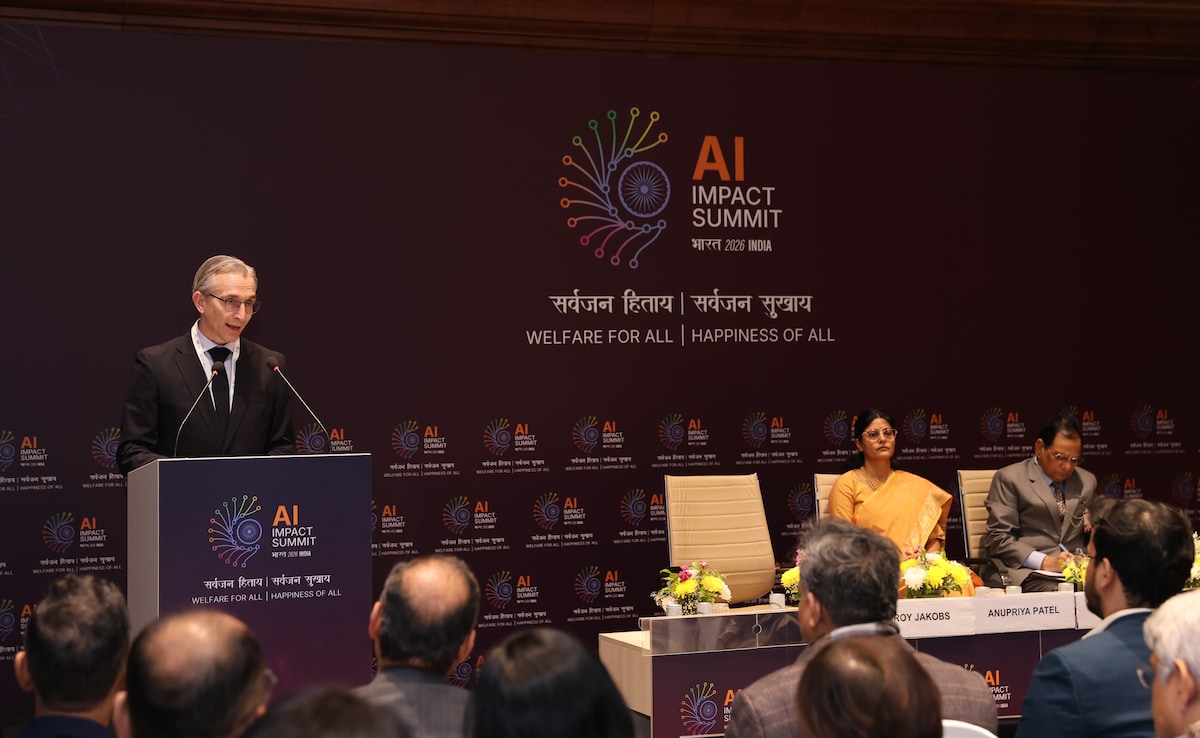
Artificial Intelligence will have its greatest impact in healthcare, Roy Jakobs, CEO of Royal Philips
Earlier in the session titled "Innovation to Impact: AI as a Public Health Game-Changer", Union Minister of State for Health and Family Welfare Anupriya Patel said AI in India must be viewed as "All-Inclusive Intelligence", adding that the true measure of AI in healthcare lies in its impact on lives and its ability to reduce health inequities.
Also Read: AI In Healthcare: India Restructures Public Health Delivery For 2026
Highlighting existing interventions, she referred to the AI-enabled Media Disease Surveillance System that monitors disease trends in 13 languages and generates real-time alerts to strengthen outbreak preparedness.
Under the One Health Mission, she said, the Indian Council of Medical Research has launched AI-based genomic surveillance tools capable of predicting potential zoonotic outbreaks before transmission from animals to humans.
On tuberculosis, Patel said AI-enabled handheld X-ray machines and computer-aided detection tools have expanded access to diagnostics, contributing to about 16 per cent additional case detection. AI-based tools predicting adverse treatment outcomes have helped reduce negative treatment results by 27 per cent, she added.
She said that in a resource-constrained setting, solutions must be scalable and affordable. "The government has set up three Centres of Excellence for AI at AIIMS Delhi, PGIMER Chandigarh and AIIMS Rishikesh to integrate advanced AI expertise into public healthcare delivery."
Clarifying concerns around automation, Patel said AI is meant to augment, not replace, clinicians. By reducing routine and high-intensity tasks, it allows doctors to focus on complex cases and critical decision-making.
"Medicine is not only a science, it is also an art," she said, adding that empathy, compassion and communication cannot be replicated by machines.
Also Read: AI Can Improve Early Disease Detection, Enable Timely Care, Says Health Tech Expert
V K Paul, Member (Health), NITI Aayog, said AI presents a strategic opportunity to accelerate progress towards universal health coverage. Integrating AI with India's growing digital public health infrastructure would enable real-time analytics and more efficient resource allocation, he said, while stressing the need for robust regulatory frameworks and ethical safeguards.
The session concluded with speakers agreeing that AI must move beyond pilot projects to system-level integration, backed by interoperable digital infrastructure and strong public-private collaboration. While AI can significantly enhance surveillance, diagnostics, and clinical decision-making, they said, it remains a tool to support, not substitute, human judgement in healthcare.
Disclaimer: This content, including advice, provides generic information only. It is in no way a substitute for a qualified medical opinion. Always consult a specialist or your own doctor for more information. NDTV does not claim responsibility for this information.