"I Cry In Shower": Meta, LinkedIn Employees Share Fears, Anxiety Amid Layoffs
Life decisions are on hold. Employees say they are unable to plan a future because they don't know if they will still have a salary next quarter.
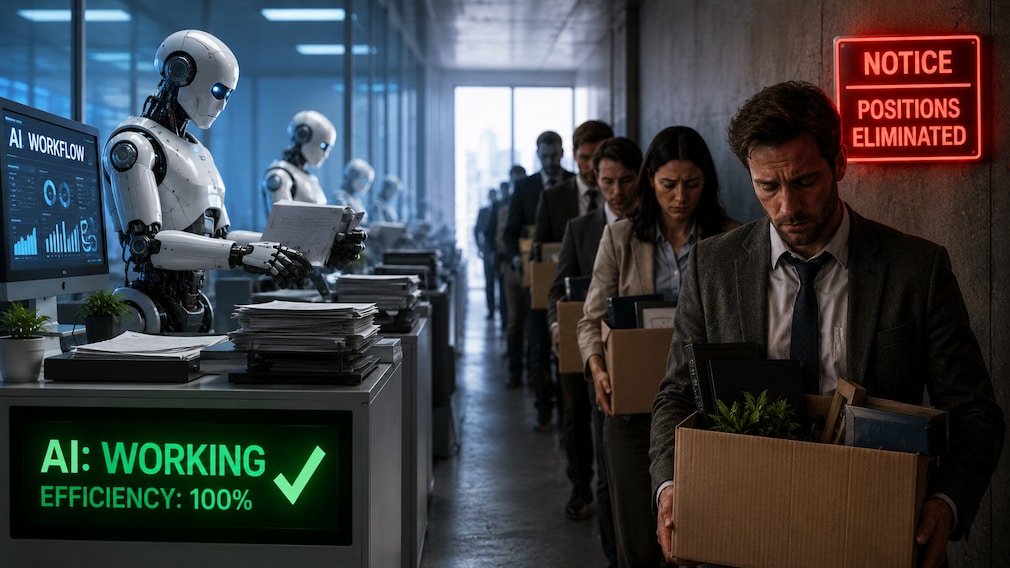
Not long ago, saying you worked at Meta or LinkedIn came with quiet pride. These were the "crème de la crème" jobs of the modern world -- high pay, generous perks, and the belief that you had made it in life.
Today, many of those employees wake up with a knot in their stomach. On Wednesday, Meta laid off about 8,000 employees, LinkedIn fired 600. However, this is no longer about job cuts. This is about what uncertainty is doing to tech employees.
Inside these companies, the aftershock remains: anxiety, distrust, and a constant fear of being the next.
A longtime Meta employee, seeking anonymity, describes a routine that has become common: "For weeks, I checked my email every morning before deciding whether it was worth commuting to work."
Employees told The Standard that office group chats are filled with dark humour -- memes of dancing skeletons, doomsday jokes. They say it's coping mechanism for a workforce that is training the AI systems that could replace them. "If you're on a work machine, you are probably being surveilled. We're training our replacement and not being paid more for it."
The company's internal Model Capability Initiative, which tracks how employees use their computers to improve AI models, has triggered petitions and quiet rebellion across offices.
Psychological Impact Of Uncertainty
For many employees, anxiety has replaced the assurance their jobs once promised. "I tend to cry in the shower. At work, I put on a brave face."
Life decisions are on hold. Moving homes. Having children. Taking loans. Planning holidays. Employees say they are unable to plan a future because they don't know if they will still have a salary next quarter.
Speaking on the psychological impact of such uncertainty, Dr Sajid Kazmi, Clinical Psychologist and Director of Indian Mental Health and Research Centre, told NDTV, "Sudden job loss or even the fear of it is a major traumatic life event. It leads to anxiety, depression, low self-esteem and identity crisis, especially for primary earners."
Dr Ajayita, Director at ACLINIC, adds a biological dimension: "Chronic uncertainty is one of the most potent stress triggers. Your cortisol rises. Sleep fractures. Decision-making is impaired. Ayurveda calls this "Vata Vaishamya". Modern medicine calls it chronic stress response. The damage is real."
This is not in their heads. It is in their nervous systems.
AI Is Reshaping Work (And Worker Confidence)
Shubham Bhamare, a Maharashtra-based independent cybersecurity researcher associated with Meta, told NDTV: "Meta is clearly directing its entire focus towards AI. Even the Metaverse, their ambitious virtual reality project, seems on the back burner. The company's cybersecurity team has been taking longer to respond lately. Besides, they have also implemented an automated reply system. So, that's another area where AI is replacing human workforce."
Nikhar Arora, Director & Builder of Bots.ai by HR Anexi, sees this as a structural shift: "AI redefines conventional jobs. The workforce of the future will work with AI, not against it."
Raghunandan Saraf, Founder & CEO of Saraf Furniture, offers a counterbalance: "Technology cannot replace employee creativity, empathy, and customer understanding. Companies must align AI adoption with responsible workforce planning."
But inside Big Tech, employees say they feel commoditised before being replaced.
Anxiety Is Not Limited to Meta
At LinkedIn, the very platform people use to find jobs, employees are facing their own wave of uncertainty.
More than 600 employees in California have reportedly been informed they will lose their jobs this summer, with the heaviest impact at the Mountain View headquarters. Reports suggest the cuts could amount to nearly 5 per cent of LinkedIn's global workforce.
This comes despite double-digit revenue growth. In an internal memo, LinkedIn CEO Daniel Shapero spoke about the need to "reinvent how we work," make hard trade-offs, and redirect investments to long-term priorities. AI was not officially cited as the reason.
But employees across Silicon Valley are reading between the lines. Even profitable tech companies are shrinking teams, simplifying operations, and reorganising for an AI-first future.
The End Of "Safe Tech Job" Myth
For years, Big Tech sold more than compensation. It sold the promise of the dream life. That certainty is gone. "Even if we haven't lost our jobs to AI yet, we're being commoditised in advance," said a Meta employee.
If the layoffs don't come, many say they will start looking for another role anyway -- not because they want to leave, but because they can no longer live with the unpredictability.
The salaries are still high. The campuses still shine. But the peace of mind that once came with these jobs has quietly disappeared.
And for thousands of employees inside companies once seen as the pinnacle of professional success, that loss hurts more than the layoffs themselves.
-
Opinion | The Last Bet? What Trump's 'Mother Of All Bombs' Could Actually Do To Iran

Can an MOAB deliver a decisive blow to Iran that may force it to surrender immediately, as Japan did after Hiroshima and Nagasaki in World War 2?
-
Hit Songs, Empty Pockets: The Hidden Math Behind India's Viral Music Boom
Over 80,000 brands and five lakh creators in India make branded content. The opportunity is worth around Rs 1,500 crore.
-
Opinion | Great 'Exceptions': How The Oil India Was Attacked For Is The Oil Trump Now Seeks
A law written to punish the buyers of Russian oil was suspended by the US to protect a purchase of Russian oil. India spent fourteen months being lectured for less.
-
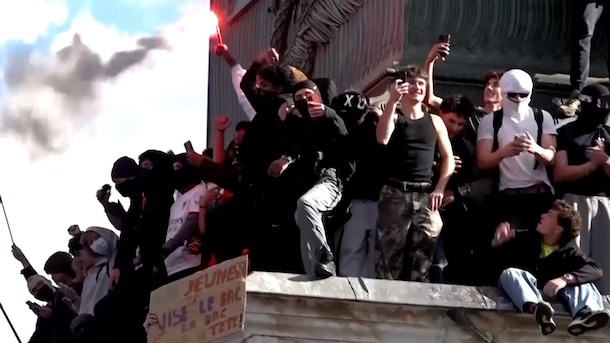
Opinion | Louis Vuitton Loot, Torched Cars: France Protests Have An Unlikely Beneficiary
It's an unbelievable moment. Crowds looting the most exclusive stores in Paris, including the famed Luis Vuitton. But what's behind this meltdown?
-
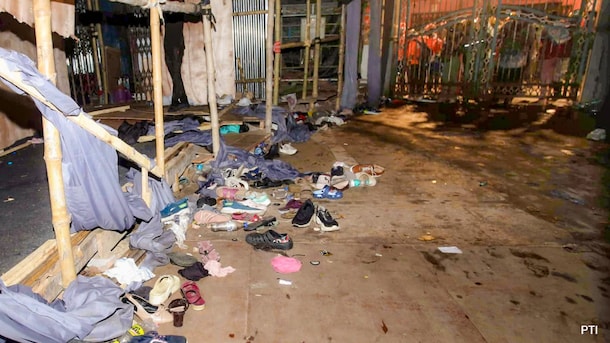
Blog: Kolkata Didn't Learn From 2015. Eleven Years Later, It Proved To Be Fatal
The City of Joy isn't a stranger to crowd control. Be it during Pujo or Christmas at Park Street, Eden Gardens cricket matches, or Derbies between Mohun Bagan and East Bengal. But during Pujo, the entire city is on alert.
-
Opinion | Slurs, Threats, Now A Temple Attack Plot: When Did America Become So Hostile To Indians?
The rising tide of anti-India, anti-Hindu, and racist attacks serves as a stark reminder that economic prosperity does not automatically guarantee social immunity from bigotry.
-
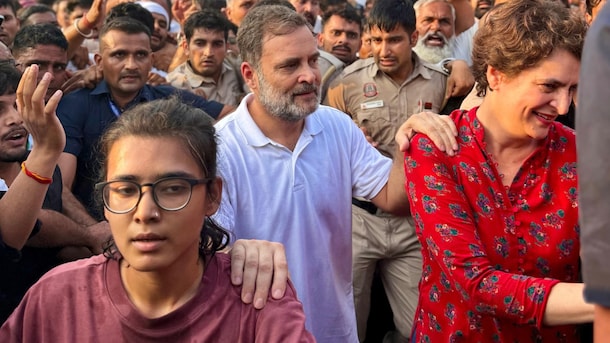
A Step Behind Neha Bora: What Rahul Gandhi's Gesture Says About Congress' Gen-Z Pitch
At INDIA bloc's march to Supreme Court, Rahul Gandhi placed himself a step behind two women, hands resting on their shoulders. One was his sister Priyanka. The one on his right was Neha Bora. Here's what the image means for the protest wave now, and for Rahul's politics in general.
-
Opinion | Imran Khan, And The Perils Of Having An 'Opinion' In Bollywood
The reality of the industry is quite grimy. More often than not, its inhabitants have been fairweather friends, happy to sing the praises of whoever is in a position of authority.
-
Exclusive: India's Food Safety Problem Goes Beyond Just Dirty Kitchens - By Tukaram Mundhe
On World Food Day, Maharashtra's Commissioner of Food Safety explains why instead of taking stopgap measures, the entire supply chain in India needs to be held accountable and made transparent.
-
Opinion | India Has Enough Coal. So Why Are Power Plants Running Short? A 76 Million 'Crunch'
As of October 5, as many as 82 of the 191 thermal plants monitored by the Central Electricity Authority were in the 'critical' category