
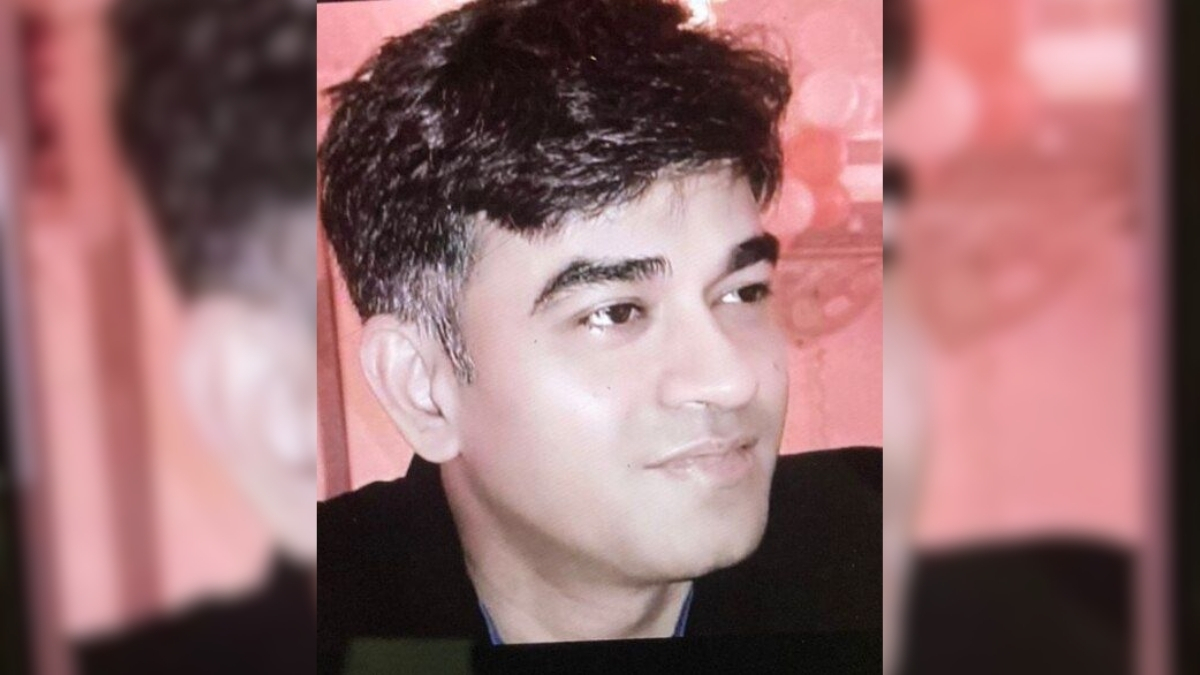





In this account from The Sky Warriors: Operation Sindoor Unveiled, written by NDTV Senior Managing Editor Vishnu Som and published by Juggernaut, Group Captain Animesh Patni, a serving IAF officer, describes the very first launch of an S-400 surface-to-air missile from Adampur on May 7, shortly after India carried out strikes on Pakistani terror targets. Patni commanded the S-400 unit and was awarded a Vir Chakra for gallantry. The Pakistani Air Force fighter that he downed is believed to be a China-designed JF-17 'Thunder'. This was the first PAF fighter that the Indian Air Force downed during Operation Sindoor. Patni's S-400 unit was also responsible for bringing down the very last aircraft that was shot down in Operation Sindoor - believed to be either a Pakistan Air Force Airborne Early Warning Aircraft or a large Electronic Intelligence Aircraft.
With missiles flying across the international border, Patni knew he could be called into action in minutes.
He was. Patni was ordered to fire. Weapons free, engage targets. It was a scenario that he had trained for time and time again, but always with his formidable weapons system in safe mode - the missiles would not leave their launchers. The radars and
systems would simulate incoming threats. And kills would not be real.
But this was the real deal.
Actively monitoring the air-picture around him through the data-linked IACCS network, Patni had a real-time picture of the jets in the air manoeuvring, targeting, locking on and launching.
There was no time to lose.
He ordered the primary long-range air search radar of his S-400 system to open up. Almost immediately, Patni had a lock.
The S-400 was a relatively new acquisition. It had never been tested in battle in the subcontinent. Its capabilities existed on a piece of paper, claims made by its Russian manufacturer. Until the first missile blasted off; no one really knew what to expect.
The jet that Patni engaged was more than 200 km away. The IAF had never taken out an aerial target at that range. Very few countries had.
'On the first night,' Patni admits, 'we had butterflies in our stomachs because the system had not been combat tested but it was now in a live operation. There are a lot of safeties which have to be removed before we carry out any kind of live operation, just to avoid any kind of accident.'
Safety systems for sophisticated weapons systems like the S-400 include a suite of engineered mechanisms, procedures and protocols designed to prevent accidental launches.
One by one, Patni called for them to be removed. The S-400s missiles were now prepped. A single button push was all that it would take to fire a round, each missile costing upwards of a cool $1.5 million.
"Taking out all the safeties was my call. Okay, remove this safety, remove that safety and so on. The final call that I gave was, "we are ready, the target has been assigned to us, we are ready to launch, the is in the kill zone now, we can shoot it down".
Patni took a deep breath. It was now or never. Would the system, a maze of high-tech engineering, actually work? Had he followed all his launch protocols? Was there any step that he had missed?
"The command [of the unit] is mine. However, the person who was pressing the button [to launch the S-400's missiles], was my number two, a Wing Commander.'
'I took a deep breath before giving my final call- "Okay, launch", and then it was the turn of my 2IC [second-in-command]. He asked me to confirm launch because this was the first time we had ever launched a surface-to-air missile into enemy airspace. We were trying to shoot down the enemy over his own territory.'
The Wing Commander set to depress the launch. He needed to know - one last time - if he had heard the orders properly.
'He asked me to confirm once again. "Sir, confirm fire." "Affirm," I said, "you are cleared to launch." It all took a couple of seconds, and then the missile was on its way.'
Time seemed to melt at that moment; it all seemed to be a haze. 'It felt like an eternity,' says Patni. 'The button had been pressed - was there something wrong?'
He then heard the boom. The earth shook under his feet as the missile - 25 feet tall - soared onto the night sky.
The S-400's missile accelerated to speeds well above Mach 5. The pilot who had been attacked now had seconds to attempt to out-manoeuvre the killer headed his way. His radar warning receiver would have been screeching an alert. He may have been dropping chaff and flares - decoys - in an attempt to deceive the incoming missile. Except, it didn't work.
'It's a huge sound and it actually lit up the entire sky, and after that sound, I heard one more sound. And that was the call of "Bharat Mata ki Jai". The men all started shouting "Bharat Mata ki Jai" after seeing that missile launch and everybody was charged up.'
Seconds later - 'Splash.' Patni laconically made the universal Air Force call-out announcing a successful hit.
The Pakistani fighter had been shot down. Its radar track disappeared off the screens of the S-400's radar and weapons controllers. 'We were hoping like hell that it could have been a J-10 so as to give him an even bigger slap, if possible,' he says with a smile. After systematic verification, the IAF chose to share that the fighter Patni shot down was a Chinese-built JF-17 Thunder'.
It wasn't just Patni and his Wing Commander who had held their breath as the first S-400 was fired. While crews test extensively on simulators, nothing really prepared most at Adampur base for what happened when the system launched a live round. 'When the first S-400 was fired, my guys did not even know what had happened,' said Group Captain A.G. Kumar, the COO of the base. "The sound of the missile launch was so loud that some of them thought a bomb had been dropped on them[.] I was very lucky to witness it firsthand,' he says, knowing he saw history being made in front of his eyes,
'Have you seen videos of Saturn 5 and Apollo 11 rockets being launched? It was actually like that. My son studies somewhere close to Phagwara. The students in this university could see missiles flying over their heads, intercepting incoming enemy missiles, with explosions in the sky. He sent videos back to us and asked, "Dad, are we at war?"
Kumar laughs grimly. And I thought, "Well, you know about it now!"
Courtesy: Juggernaut
(Excerpted from 'The Sky Warriors: Operation Sindoor Unveiled' with the permission of Rupa Publications India. Buy the book here)
Disclaimer: The author and publisher of the book are responsible for the contents of the excerpt and the book. NDTV shall not be responsible or liable for any defamation, intellectual property infringement, plagiarism or any other legal or contractual violation by the excerpt or the book.


