For Troops, 'BRRRT' Is Sound Of Music: All About The 'Avenger' In Hormuz
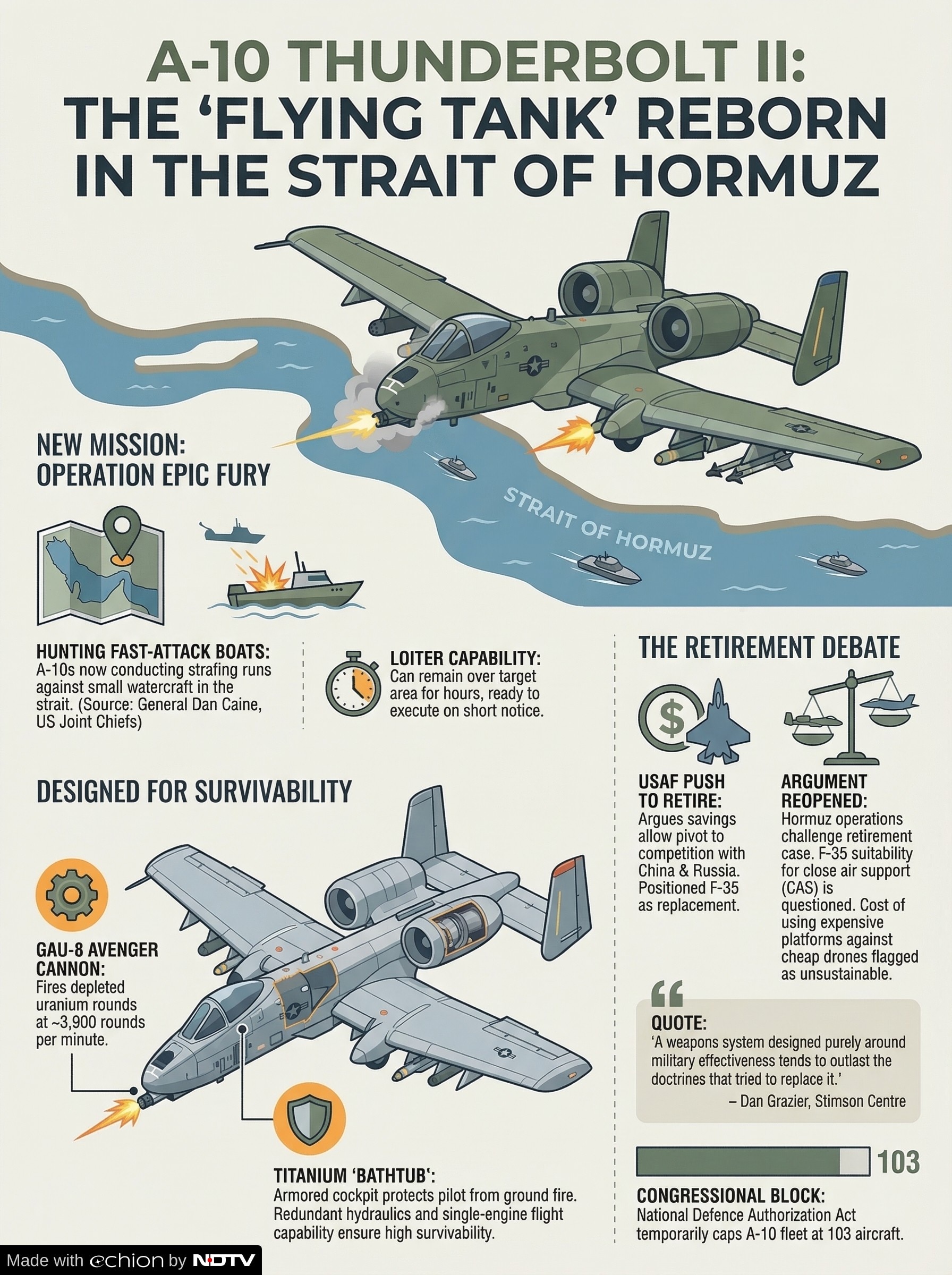
The US Air Force (USAF) issued a formal request in November 1970 to build a 30 mm rapid-fire cannon for a new close air support platform, which became the GAU-8/A Avenger carried by the A-10 over the Strait of Hormuz
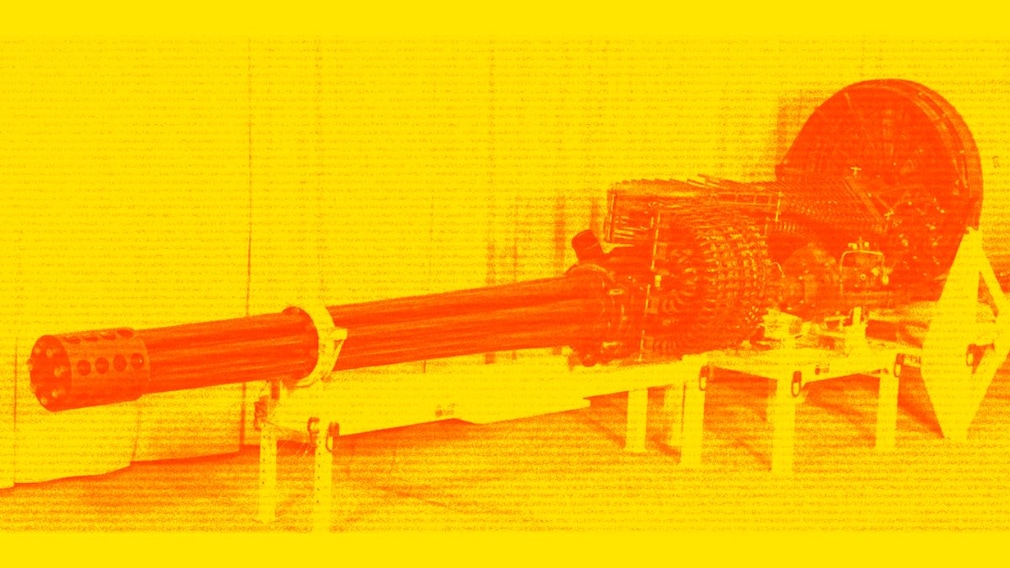
The story of the seven-barrel GAU-8/A Avenger cannon begins with a memo during the Cold War. The A-10 Thunderbolt or 'Warthog' carried the massive cannon to devastating effect in close air support (CAS) roles. Today, it is back in action in the Strait of Hormuz, defying those who wanted to retire it. When fired, the Avenger's signature "BRRRT" sound is instantly recognised by troops who need air support.
Details on the US Air Force (USAF) museum's website said the United States issued a formal request in November 1970 to build a 30 mm rapid-fire cannon for a new CAS platform. The brief said the gun had to kill tanks, punch through hardened positions and survive the low, slow flight regimes expected in contested frontlines.
It wasn't an aircraft looking for a weapon; it was a weapon looking for an aircraft.
By mid-1971, General Electric and Philco Ford had the contract to prototype what was then simply "GAU-8." The gun was only half the job because the USAF also demanded four types of ammo: armour-piercing incendiary, high-explosive incendiary, semi-armour-piercing high-explosive, and a cheaper practice round. Each was meant for a different category of target such as rolling armour, dug-in positions or massed vehicles that needed a short, decisive correction.
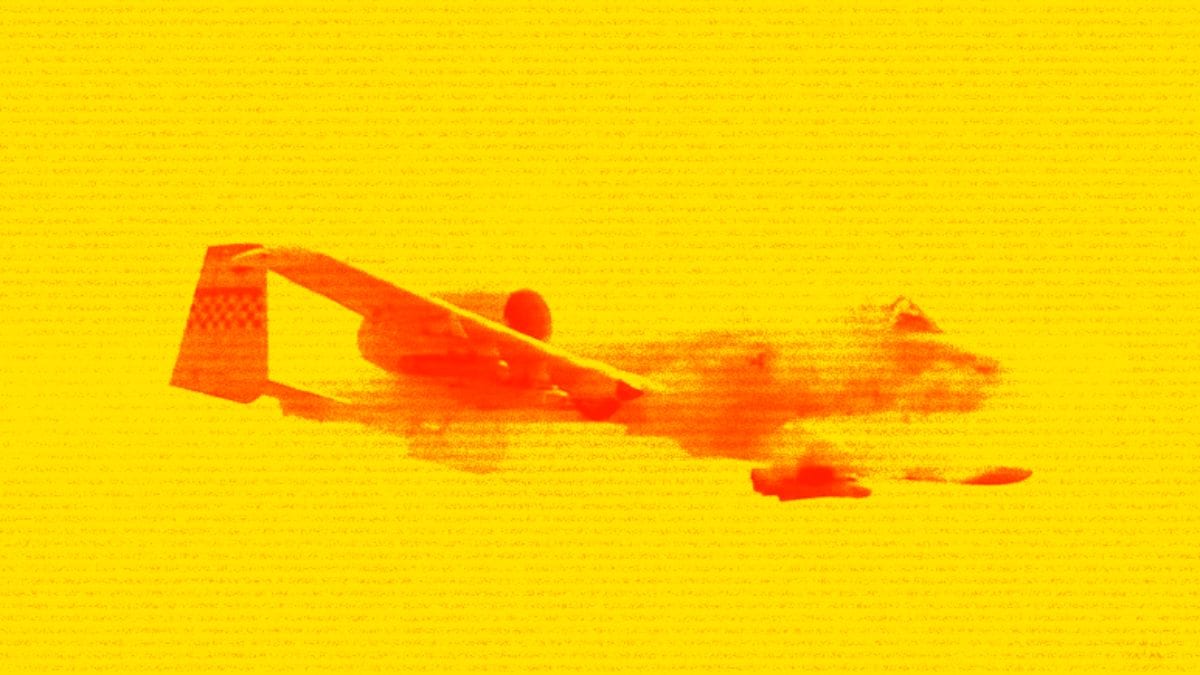
The A-X programme that later became the A-10 saw competition between Northrop's A-9A and Republic's A-10A. Before the Avenger was ready, the M61A1 Vulcan was used as a stand-in. A contingency gun also existed, called the GAU-9, which was basically a licensed Oerlikon 304RF built by Hughes. This gun went head-to-head with the GAU-8 in 1973 and lost, while the Avenger stayed.
The GAU-8 first fired in flight in February 1974 and its test crews fired more than 39,000 rounds. The flight envelope was pushed hard from 25,000 feet down to treetop level, with speeds of 135 to 415 knots pulling up to 5 Gs. The aim was to check reliability and survivability on the battlefield.
Later, the Avenger was no longer a gun installed on an airframe, but was the spine of the A-10A. Republic Aviation built the aircraft around the gun, offsetting landing gear, shaping fuselage space, and balancing recoil loads that could nudge the aircraft off its line if the mass ratios were misjudged.
The Avenger went into every production A-10. The earlier Vulcan, useful for testing, became an artifact eventually. Half a century on, the GAU-8/A is back in action in the Gulf of Hormuz. It fires depleted uranium rounds at roughly 3,900 per minute. Redundant hydraulics, a titanium "bathtub" protecting the pilot, and the ability to fly on a single engine give it a survivability that faster, sleeker aircraft could not replicate at low altitude and low speed.
-
Opinion | The AI Boom Has Run Into A Big 'Debt' Trap Problem. Inside The 5% Danger Line

For most of the AI buildout's first two years, hyperscalers funded it the easy way: out of operating cash flow. That era is over.
-
Opinion | Iran To Saudi, Pakistan Is Now Fast Running Out Of Sides To Play
Pakistan's long history of playing all parties to its own benefit may have reached the end of its road.
-
Gyanesh Kumar Has An Immunity Pin. Why A Petition Says He Can't Use It
The Opposition wants the Chief Election Commissioner prosecuted for alleged manipulation of voter rolls, but a 2023 law stands in the way. A petition in the Supreme Court now says the law has a gap.
-
Opinion | Is The World Staring At A Big Stock Market Crash - And Recession? 5 Uneasy Signs
On Wednesday, the US bond market recorded its worst day since Trump's "Liberation Day" tariffs rattled markets in April 2025. The 30-year US Treasury yield topped 5.43%, putting it on track for its highest close since 2004.
-
Form 6 For New Voters: When A Small Change Triggered A Big Row
In July 2026, the online version of Form 6 on the ECI's ECINet portal was modified to include a new declaration.
-
Opinion | Saudi Arabia's China Turn Has Begun - After Learning Much The Hard Way
Leaning on China just makes sense for the Saudis right now. The question is, can its other great 'ally' stomach it?
-
Opinion | Bihar Assault, Hisar Marriage Ban: Who'll Stop The Guardians Of Indian 'Culture'?
Why exactly does the sight of a young couple seeking a bit of alone time somewhere tend to particularly provoke a certain kind of Indian men?
-
Opinion | The Trump-Xi Summit, And India's Many Worries Of Its Own
Washington and Beijing may have chosen coexistence over confrontation. For India, that could be both a relief and a warning.
-
Opinion | China Claims It Has Cut Troops At The Indian Border. But The Math Doesn't Add Up
The reduction likely has more to do with the deployment along the LAC than the total strength active in the region