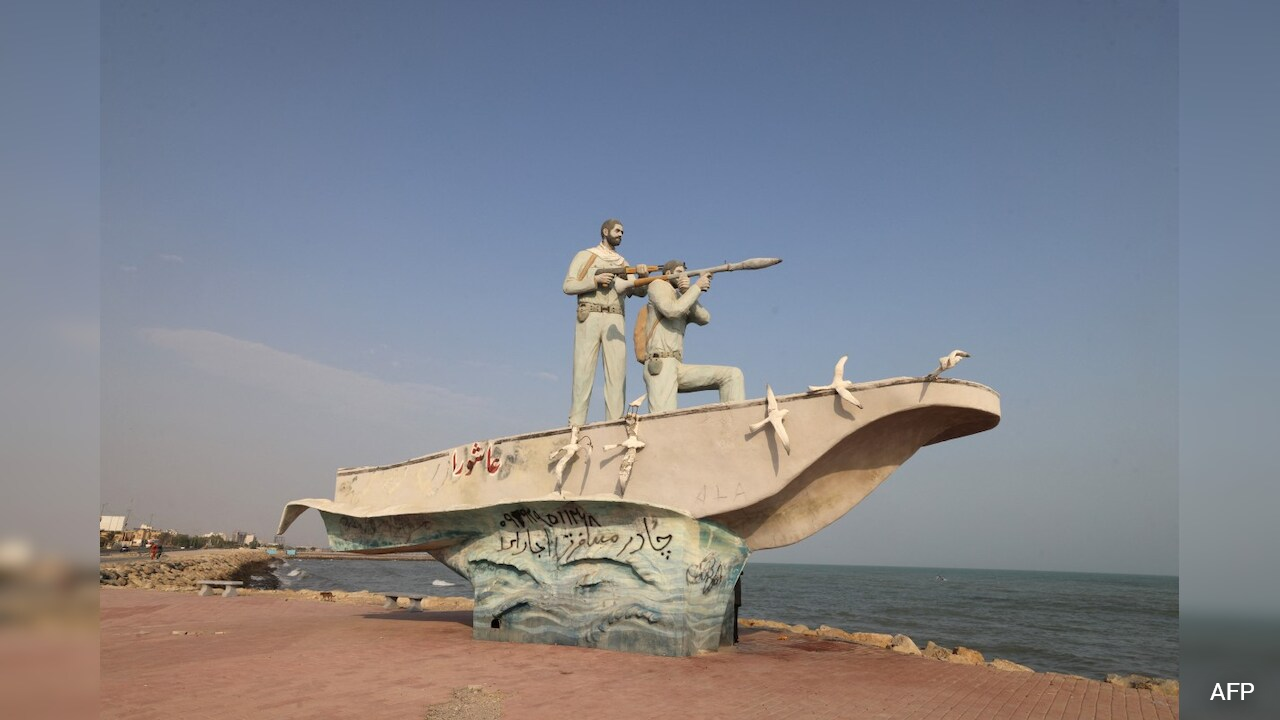
- US President Trump claims sovereignty over Strait of Hormuz and control of waterway
- Trump states all Iranian water mines in Strait of Hormuz have been removed or detonated
- Maritime data shows Iran losing grip on Hormuz as US naval blockade strengthens
US President Donald Trump has posted a map showing the Strait of Hormuz as a new American territory, claiming sovereignty over the critical chokepoint under Iran's control since the start of the war. The American leader has also claimed that all water mines -- planted by Iran in the waterway -- have been removed, reducing maritime risks.
"There are no talks or conversations going on, or scheduled, with the Islamic Republic of Iran. The Naval Blockade remains in full force and effect," Trump wrote on his Truth Social network.
"The Hormuz Strait is open and operating. All water mines have been removed or detonated."
Iran's Losing Grip On Hormuz
This is not the first time Trump has claimed the upper hand in control of the crucial energy passage in the six-month-old Iran war, but this might be the first time when he's closer to the truth. Citing maritime data, CNN has reported that Tehran is increasingly losing its grip on the waterway through which nearly one-fifth of global crude and natural gas passes in peacetime. US, on the other hand, has continued its blockade of the region with its navy, strengthening its grip over the region.
Data from maritime vessel-tracking platform MarineTraffic show that at least 95 vessels passed Hormuz last week and 118 in the week before. The majority (around 80 per cent) of these vessels transiting Hormuz over the past two weeks used the Omani route, which is a shipping channel authorised by the United Nations that Iran vehemently opposes, according to Kpler, which tracks shipping worldwide.
Iran, which claims the strait remains under its control, has reportedly attacked several ships that tried to bypass its choke point by travelling the waterway via the north coast of Oman. However, despite the risks, more and more vessels are choosing to ignore Iran's demands and cross the waterway under the promise of US protection.
"It increasingly looks like Iran has at least partially lost control of the strait," CNN reported Homayoun Falakshahi, head of crude oil analysis at Kpler, as saying.
The New Route
The new traffic data from Hormuz stands in stark contrast to that from a month ago, when, according to Kpler, there was virtually no shipping traffic via the Omani route. But then the Memorandum of Understanding between the United States and Iran expired this week, which opened a window for Tehran to collect tolls from ships passing the strait as it did in the spring.
The diversion of traffic from Iran's preferred route has prevented Tehran from charging any transit fee from ships passing through the strait.
"Iran's request to collect tolls is something that most Middle East folks don't want to do and haven't been doing. So the Oman route absolutely makes the most sense," Dan Pickering, founder and chief investment officer at Pickering Energy Partners, told CNN.
The Dark Shipping
Moreover, oil-producing Gulf nations like Saudi Arabia, Kuwait, and the United Arab Emirates have chartered the biggest oil tankers to transit out of the Persian Gulf via Hormuz. These Very Large Crude Oil Carriers (VLCCs) then transfer the Gulf oil to customers' tankers outside the danger zone in the Gulf of Oman, according to Andy Lipow, president of Lipow Oil Associates.
To evade Iran's attacks, these VLCCs reportedly kept their transponders off, often for weeks on end. This dark traffic, which even often eludes some data-tracking services like Kpler, adds to the increasing maritime traffic in Hormuz.
According to the CNN report, the data from the United States, which is keeping an eye on all ships passing through the strait, has reported significantly higher oil shipping numbers than most traditional estimates had previously suggested.
Last week, Energy Secretary Chris Wright said that combined oil transits through the strait and rerouted around the waterway totalled around 15 million barrels per day over the course of a week, a lot closer to the 20-million-barrel average from before the war.
Track Latest News Live on NDTV.com and get news updates from India and around the world


