NDTV Exclusive: A Catastrophe Captured By Satellites, Ignored By The World
In Darfur, the violence that once mobilised international outrage in the early years of the civil war, has returned in a form many here insist never truly disappeared.
There is a particular irony in the political life of Suliman Acrua "Minni" Minnawi. Because there exists an old Sudanese joke, dark and dry as Sudan itself, that says if you stay in politics long enough in that country, you will eventually become either a minister, a militant, or a refugee.
The Governor of Darfur, Minni Minnawi, has been all three.
For much of the world, the geography of war has narrowed into familiar coordinates like Gaza, Tehran, Tel Aviv, the Red Sea, the Strait of Hormuz. The diplomatic vocabulary of crisis has become dominated by oil chokepoints, missile exchanges and naval deployments. But far from those areas of conflict, in the vast dust-belt of western Sudan, another war is grinding forward with far less scrutiny and, according to those living it, with consequences no less catastrophic.
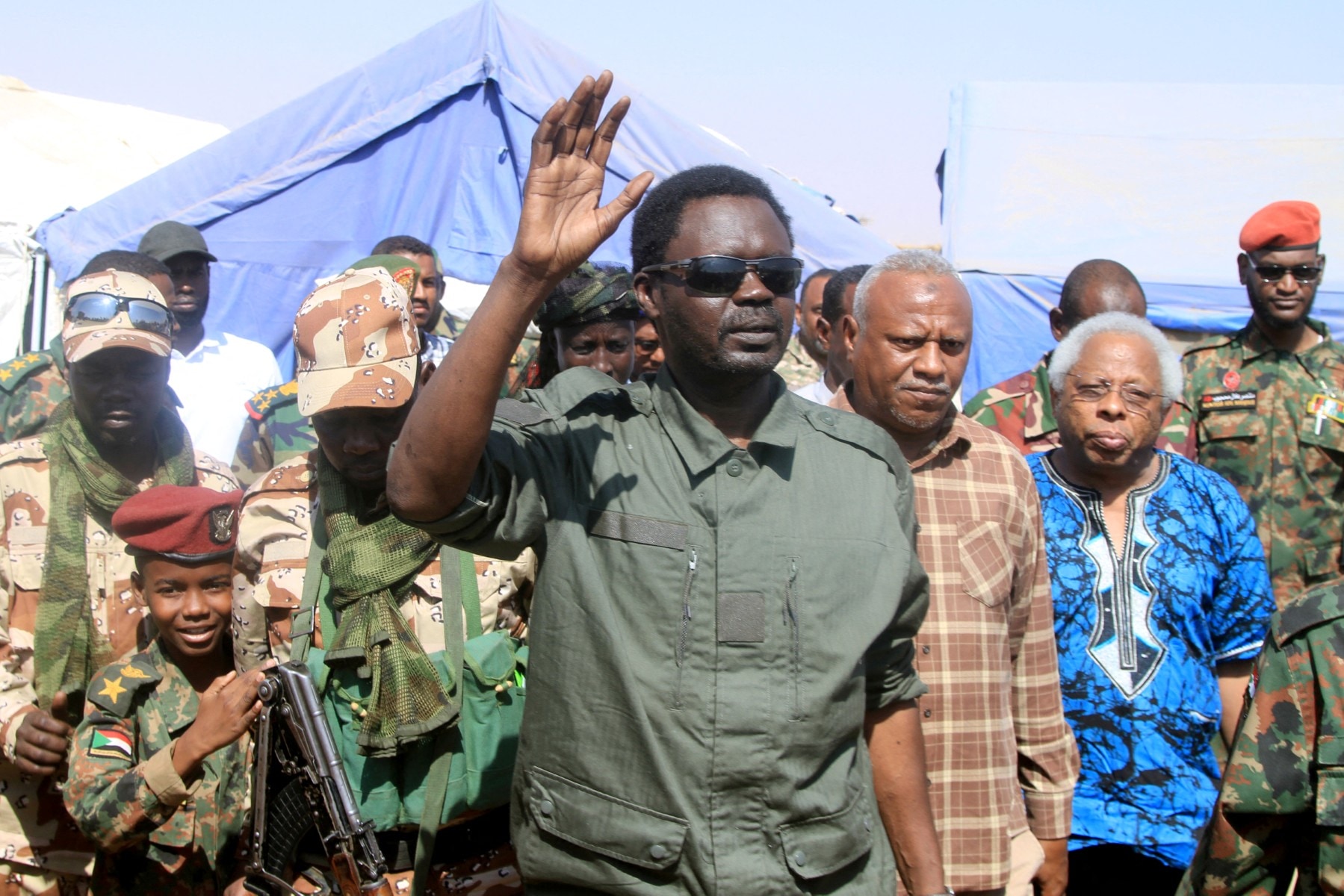
Darfur Regional Governor and leader of the Sudan Liberation Movement (SLM), Minni Arko Minnawi, gestures as he arrives at the Al-Afad camp for displaced people in the town of Al-Dabba, northern Sudan, on November 26, 2025.
Photo Credit: AFP
In Darfur, the violence that once mobilised international outrage in the early years of the civil war, has returned in a form many here insist never truly disappeared. At the centre of that warning is Minni Minnawi, one of the oldest surviving political actors of Sudan's modern wars, a man whose own political life mirrors the history of the region itself.
"Whenever Sudan suffers, Darfur suffers. Yes, the level of suffering is different from place to place. Sudan right now is in a dilemma of the war that was ignited by the Rapid Support Force (RSF), and the negative interventions of some countries from the outside," Minnawi told NDTV.
Before he became a rebel commander, before he signed peace agreements, before he became part of the government and then returned to armed opposition, Minnawi was a schoolteacher in Kutum, in North Darfur. His rise from village classrooms to war rooms has made him both witness and participant in one of Africa's most enduring conflicts.
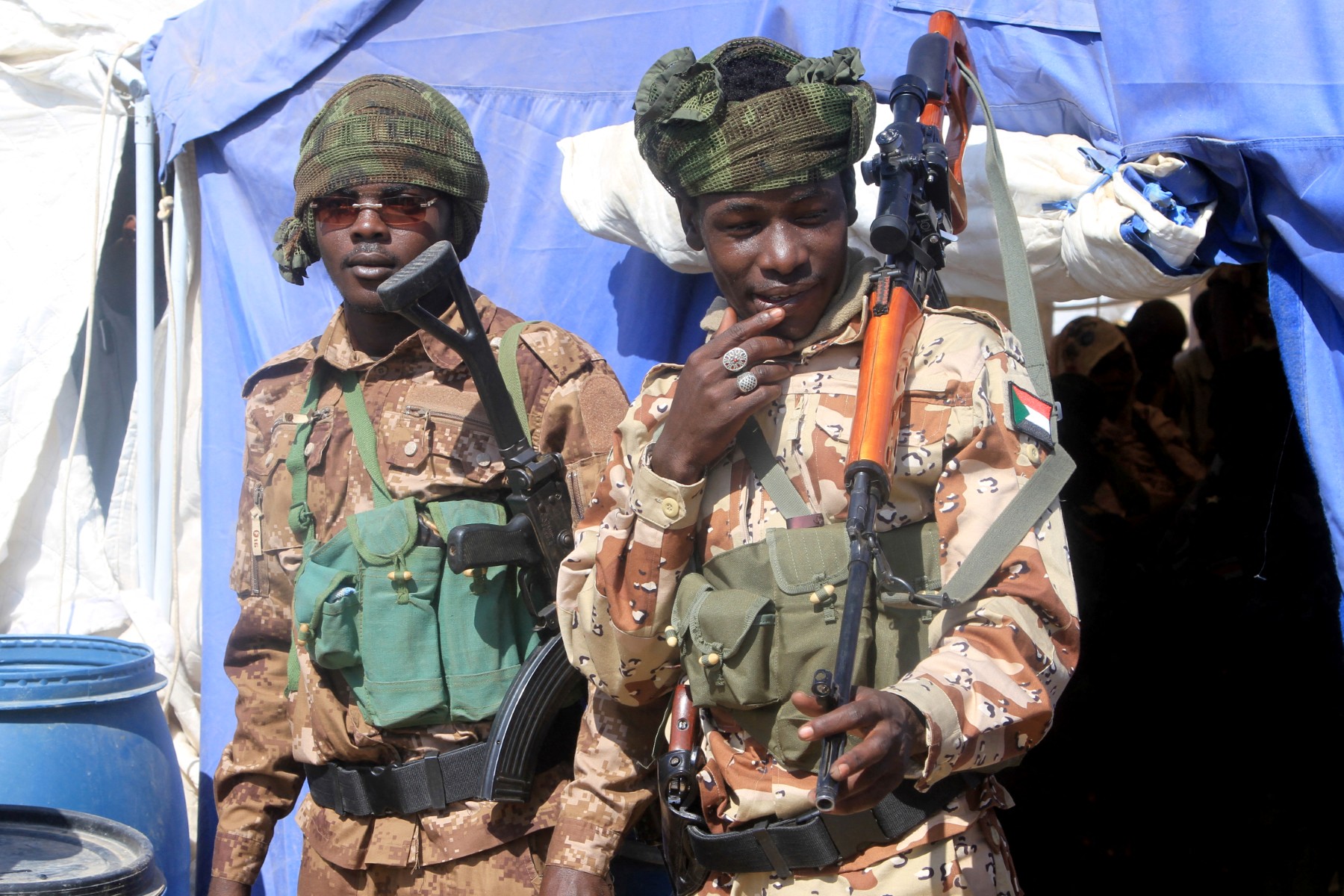
Security stand by during a visit by the Darfur Regional Governor and leader of the Sudan Liberation Movement (SLM)at the Al-Afad camp for displaced people in the town of Al-Dabba, northern Sudan, on November 26, 2025.
Photo Credit: AFP
"From 2003 up to today, the war has never ended. Yes, there have been some periods of peace, but there has never been complete peace in Darfur. The region is suffering because of the wrong policies of the previous government of Sudan. And continuation of those policies, they created so-called Rapid Support Forces, the current Janjaweed killing and so on. And even they were part of the genocide committed by the government of Sudan in 2003," he told NDTV.
The Janjaweed's Transformation
The Janjaweed militias, armed and mobilised under the government of Omar al-Bashir during the original Darfur war, became synonymous with some of the worst atrocities of that conflict. But Minnawi insists the infrastructure of violence remained intact.
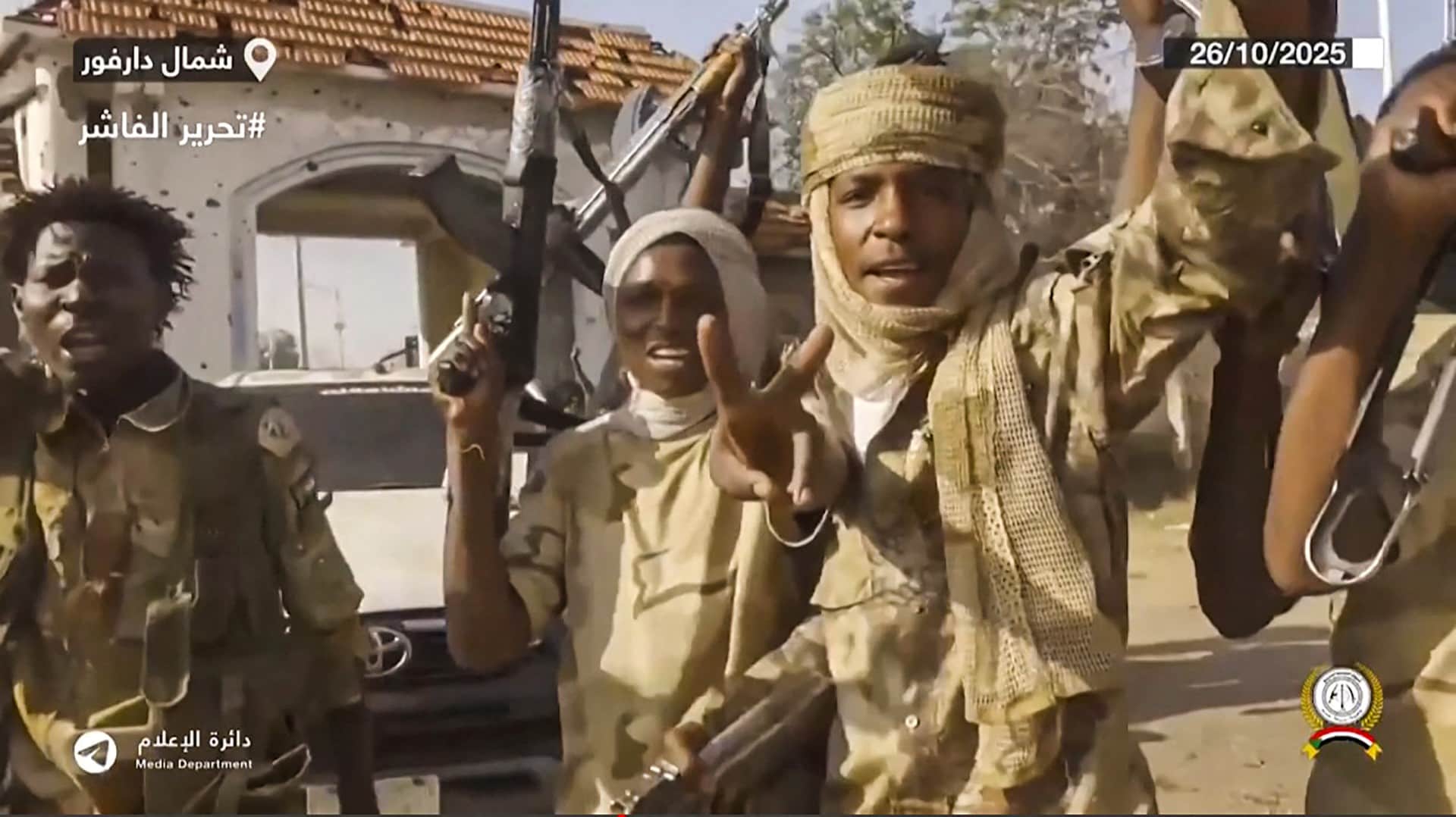
This image grab taken from handout video footage released on Sudan's paramilitary Rapid Support Forces (RSF) Telegram account on October 26, 2025, shows RSF fighters holding weapons and celebrating in the streets of El-Fasher in Sudan's Darfur.
Photo Credit: AFP
According to Minnawi, the RSF is not a break from Sudan's violent past but the institutionalisation of it and what changed was command structure and political utility, not the logic of force. That argument matters because it situates today's war within the legal and moral framework of the first Darfur genocide in 2003, a continuity Minnawi returns to repeatedly.
“In Darfur right now, many areas, and the majority of areas, are occupied by the Janjaweed. But unfortunately, they are not governing the areas they control. They are just looting and killing, and they are also creating ghost cities in Darfur -- El Geneina, El Fasher, Zalingei, Nyala -- all areas they occupy,” Minnawi told NDTV.
A Genocide Visible From Space
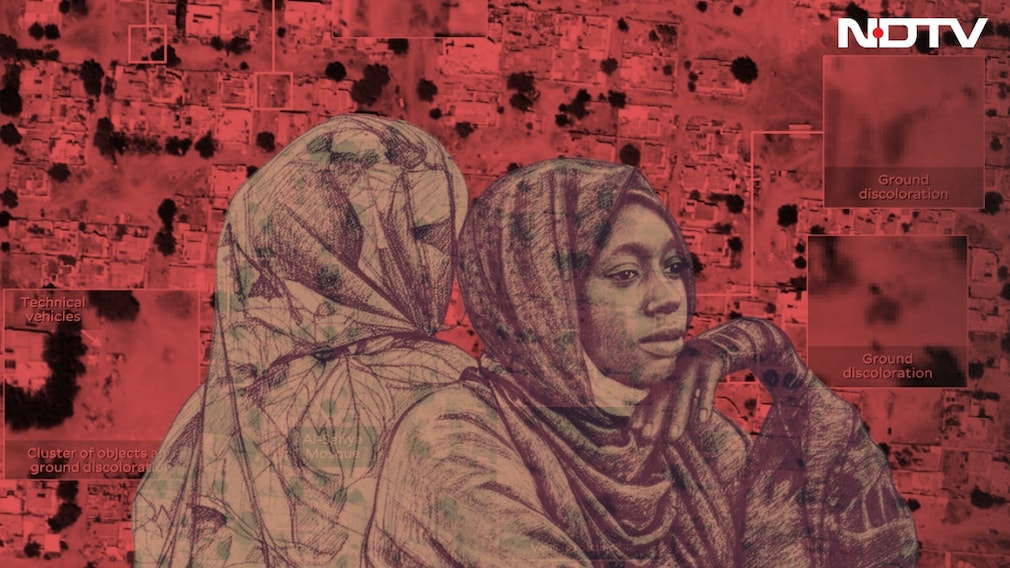
The phrase "ghost cities" captures something central to modern warfare in Darfur: urban conquest without any civil order whatsoever. In Minnawi's account, RSF-held cities are not functioning centres of life but emptied shells. And his description is corroborated by satellite images which emerged in October 2025, which showed vast areas of El Fasher drenched in blood with piles of bodies strewn on the ground.
It is a genocide you can see from space.
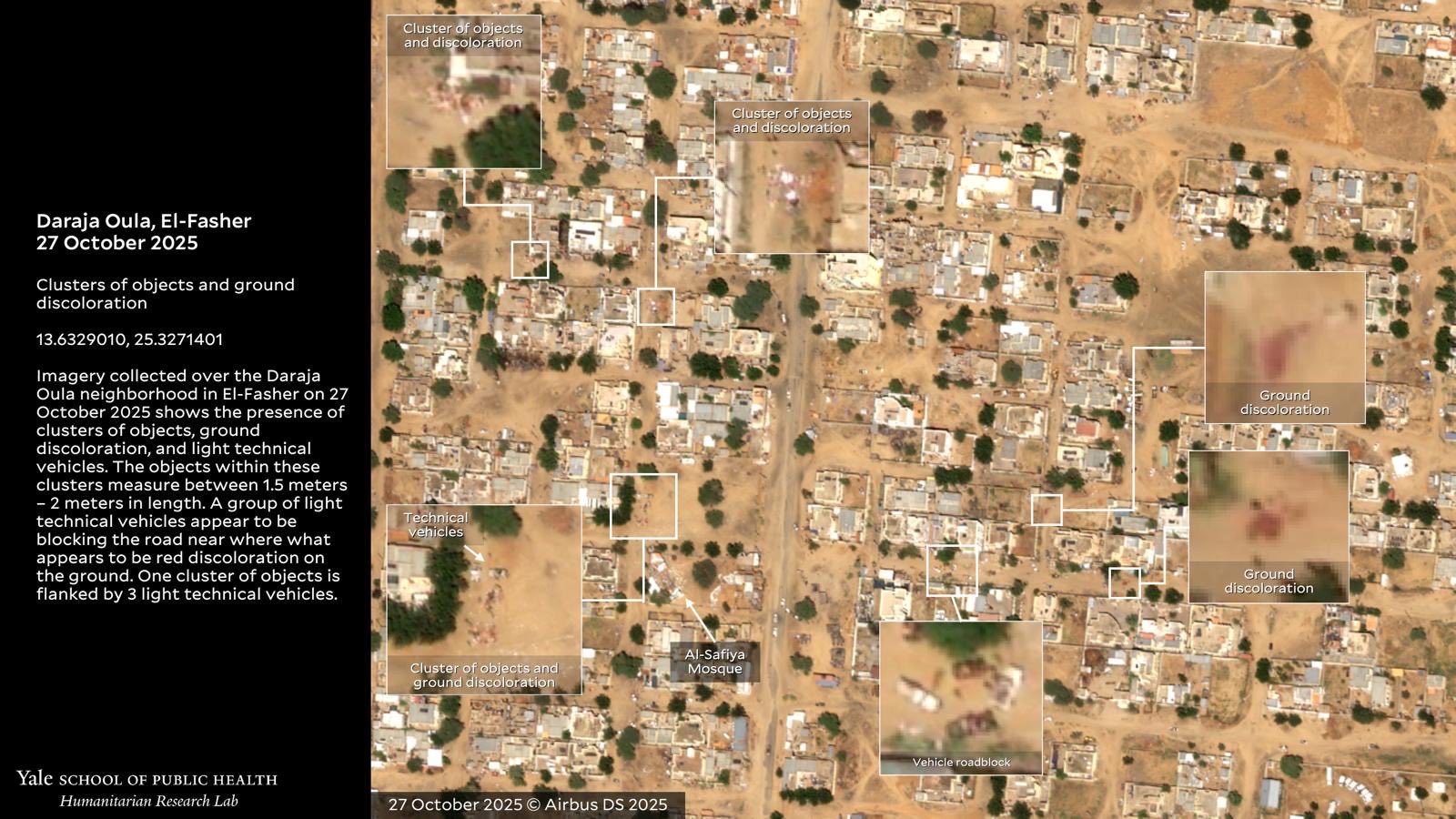
Satellite images capture the killings in Darfur.
Photo Credit: @HRL_YaleSPH
“Humanitarian-wise, there is no stable area in Darfur. All the human beings in Darfur are either refugees or IDPs (internally displaced persons) inside Darfur or outside the state, or refugees in Chad and Central Africa, including Europe. Many of them also, especially the young boys and girls, are fleeing Sudan. They are going to Europe and seeking another life, to resume their lives in peaceful countries,” Minnawi told NDTV. “The situation is really catastrophic and this humanitarian crisis continues. We are continuing to protect our people from the genocide committed by the RSF. So, to improve this humanitarian situation, the RSF must move out from civilian areas, from the cities and villages, so as to give people the opportunity to resume their lives and return.”
Minnawi also pointed to El Geneina, where mass killings of the Masalit community became emblematic of the war's ethnic component.
“Definitely what happened in El Geneina in 2023 was genocide. Intentionally, the RSF killed the Masalit people. Deliberately, they killed more than 8,000 people in just three days. They targeted the Masalit on an ethnic basis. That is why this is genocide.” “According to the definition in law, it is genocide,” he said. “And what happened in El Fasher -- in just three days they killed more than 30,000 people. This was also genocide on an ethnic basis.”
🚨HUMAN SECURITY EMERGENCY🚨
— Humanitarian Research Lab (HRL) at YSPH (@HRL_YaleSPH) October 27, 2025
El-Fasher has fallen to RSF. HRL finds evidence of mass killings including door-to-door clearance operations and objects consistent with reported bodies on berm entrapping El-Fasher.#KeepEyesOnSudan
🛰️@AirbusSpace @Maxarhttps://t.co/1HApllgNL5 pic.twitter.com/yrCbM5HxeP
“Besides these crimes, there were many others. When they put El Fasher under siege, they bombed and intentionally targeted all vital areas — civilian areas, civilian gathering areas, hospitals, schools. Wherever there were civilians, they targeted them and caused total destruction even before El Fasher fell into their hands. That is why nobody can reasonably say this was not genocide,” Minnawi added.
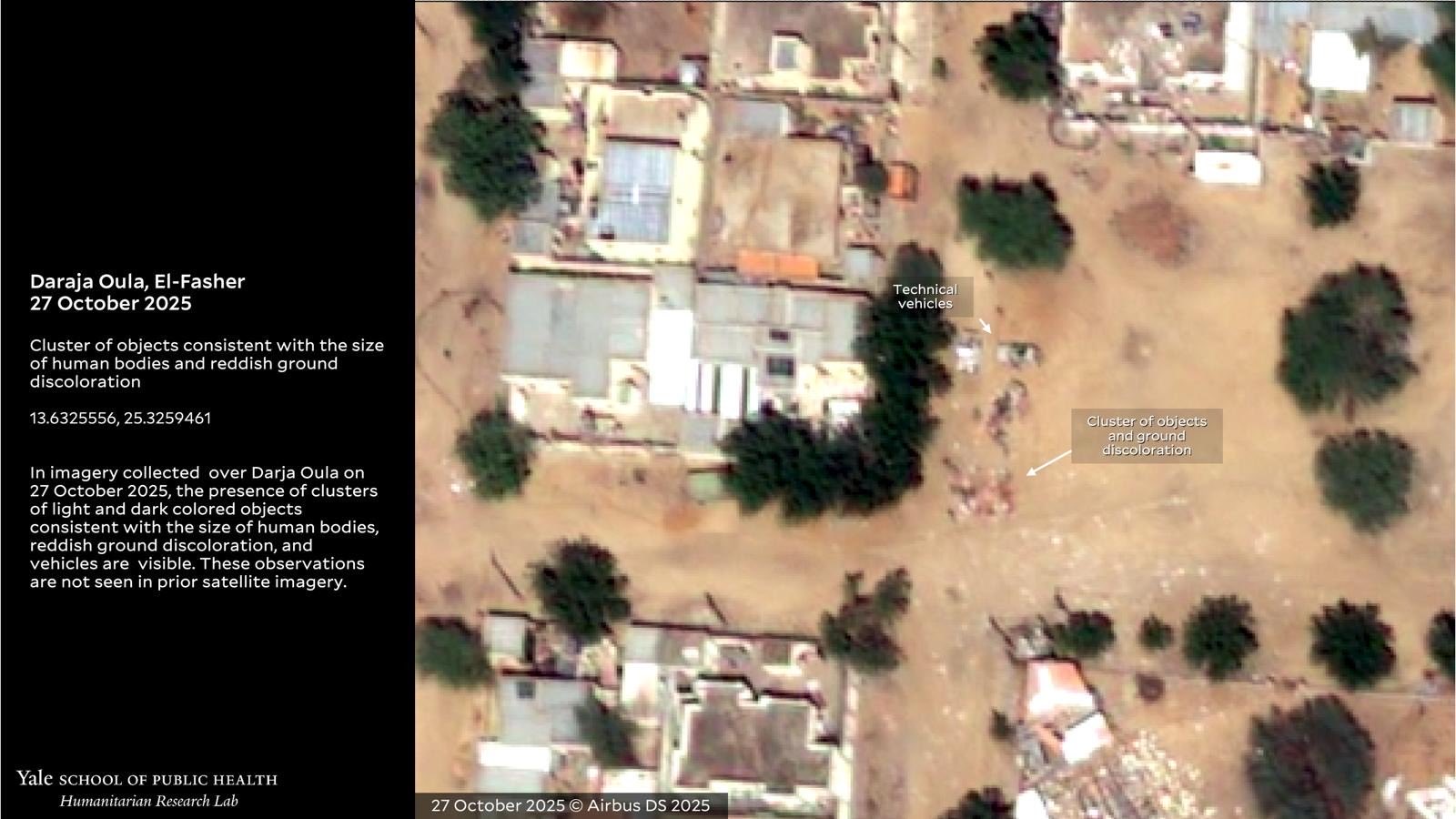
Satellite images capture the killings in Darfur.
Photo Credit: @HRL_YaleSPH
Speaking to NDTV, independent Sudanese human rights activist Mohammed Zakaria Madibo appealed to the wider world for intervention.
“Since the latest war that began in Sudan, millions of Sudanese people have suffered greatly, especially in North Darfur, El Fasher, and refugee areas in northern Darfur. Many children are dying, elders have lost hope, and healthcare systems have been destroyed. Thousands of families have been displaced and are living in extremely difficult conditions. They need your hand of support now more than ever,” Madibo told NDTV.
Foreign Fighters In Sudan?
In 2003, years of neglect and marginalisation in Darfur erupted into rebellion. Bashir, unwilling to overstretch the SAF, turned to local Arab militias known as the Janjaweed. These militias, led by figures including Mohamed Hamdan Dagalo, or "Hemeti," carried out a campaign of atrocities against Darfuri rebels and civilians, with over 3,000 villages destroyed and countless lives lost.
Among the Janjaweed leaders, Hemeti gained Bashir's trust. Bashir referred to him as "my protection," a nod to the Arabic word "Hemmati," meaning protection. By 2013, Bashir officially recognised the Janjaweed as the Rapid Support Forces (RSF) which had financial autonomy. Hemeti was granted control over lucrative gold mines in Darfur, providing him with immense wealth and power.
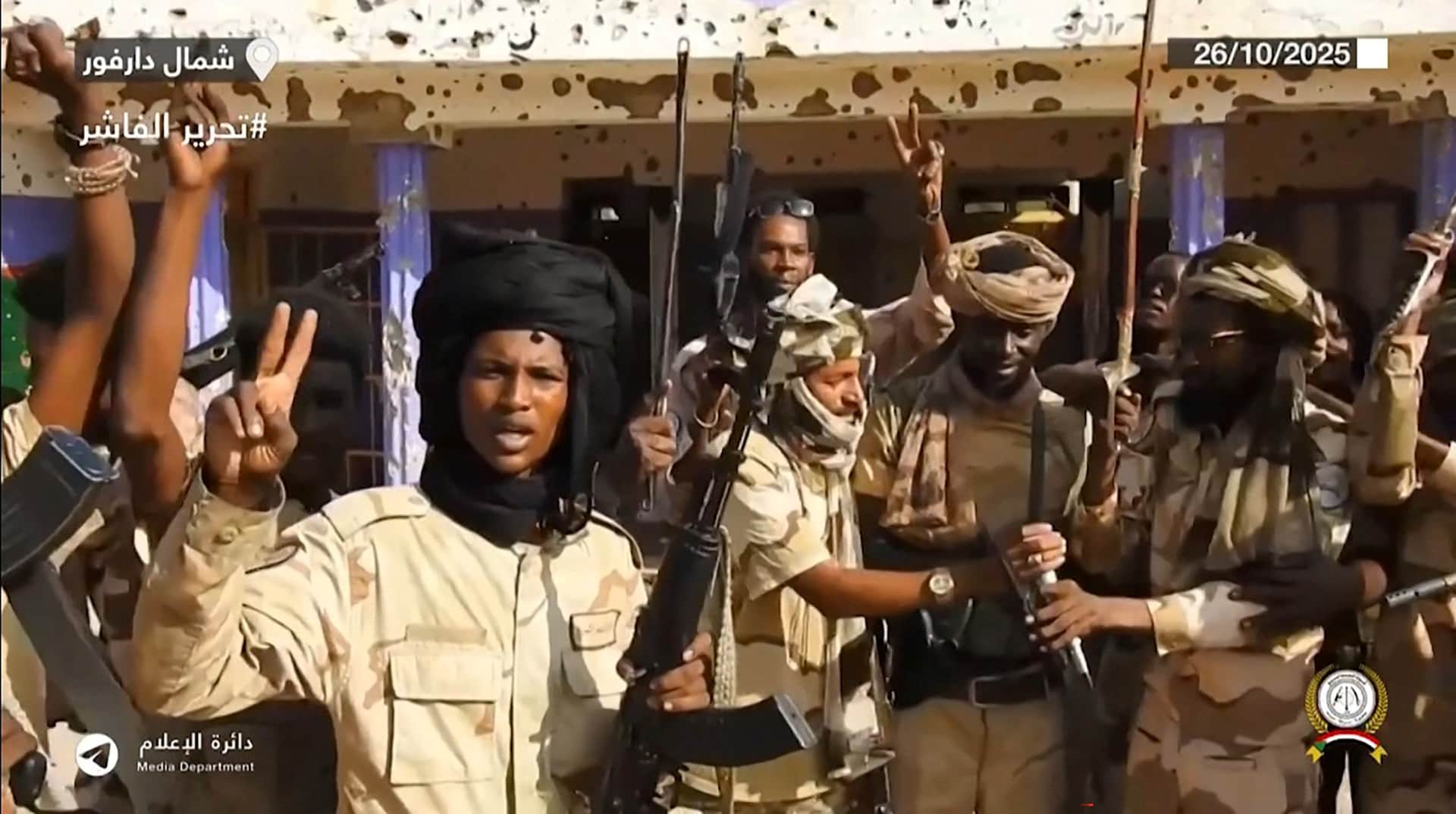
This image grab taken from handout video footage released on Sudan's paramilitary Rapid Support Forces (RSF) Telegram account on October 26, 2025, shows RSF fighters holding weapons and celebrating in the streets of El-Fasher in Sudan's Darfur.
Photo Credit: AFP
Minnawi describes the RSF as an expanding war machine, one that extends beyond the borders of Sudan.
“Definitely, they are recruiting. But you know, the RSF basically is an ideological Arab organisation. It is controlled by one family and the senior and junior brothers of that family are the ones controlling the RSF,” Minnawi told NDTV.
“Basically, they have recruited and established the organisation in the nature of Arabisation. That is why wherever there are Arab nomadic groups, they are recruiting from there. They are under the control of the Emirates, and that is why the Emirates are recruiting outsiders as well -- some of them from South America and different areas -- experts in sophisticated weapons like drones and so on. These outsiders are recruited as mercenaries through outside security organisations,” Minnawi said.
The Darfur Governor said the RSF's manpower increasingly comes from the broader Sahel and central Africa.
“Basically, the fighters are coming from neighbouring countries like Chad, Central African Republic, Niger, and some even from Mali. They come on an ethnic basis, which is Arab identity, and they are coming to find new land and another promise given by the RSF leaders,” he stated.
Who Is Helping Sudan?
The continuation of war begs the question – what are Sudan's neighbours doing? When asked about it, Minnawi stopped short of direct state accusations but suggested varying degrees of coordination and complicity.
“Those whose elements are fighting in Darfur or Sudan are under their own control. Especially there is coordination from some countries like Chad, which is well coordinated with the Janjaweed and RSF because it is backed by the United Arab Emirates,” Minnawi said. “This is how the mercenaries are being organised and brought in, sometimes with the knowledge of governments. But in the rest of the countries, these Janjaweed recruit people from among the masses living in different areas, even without permission from governments.”
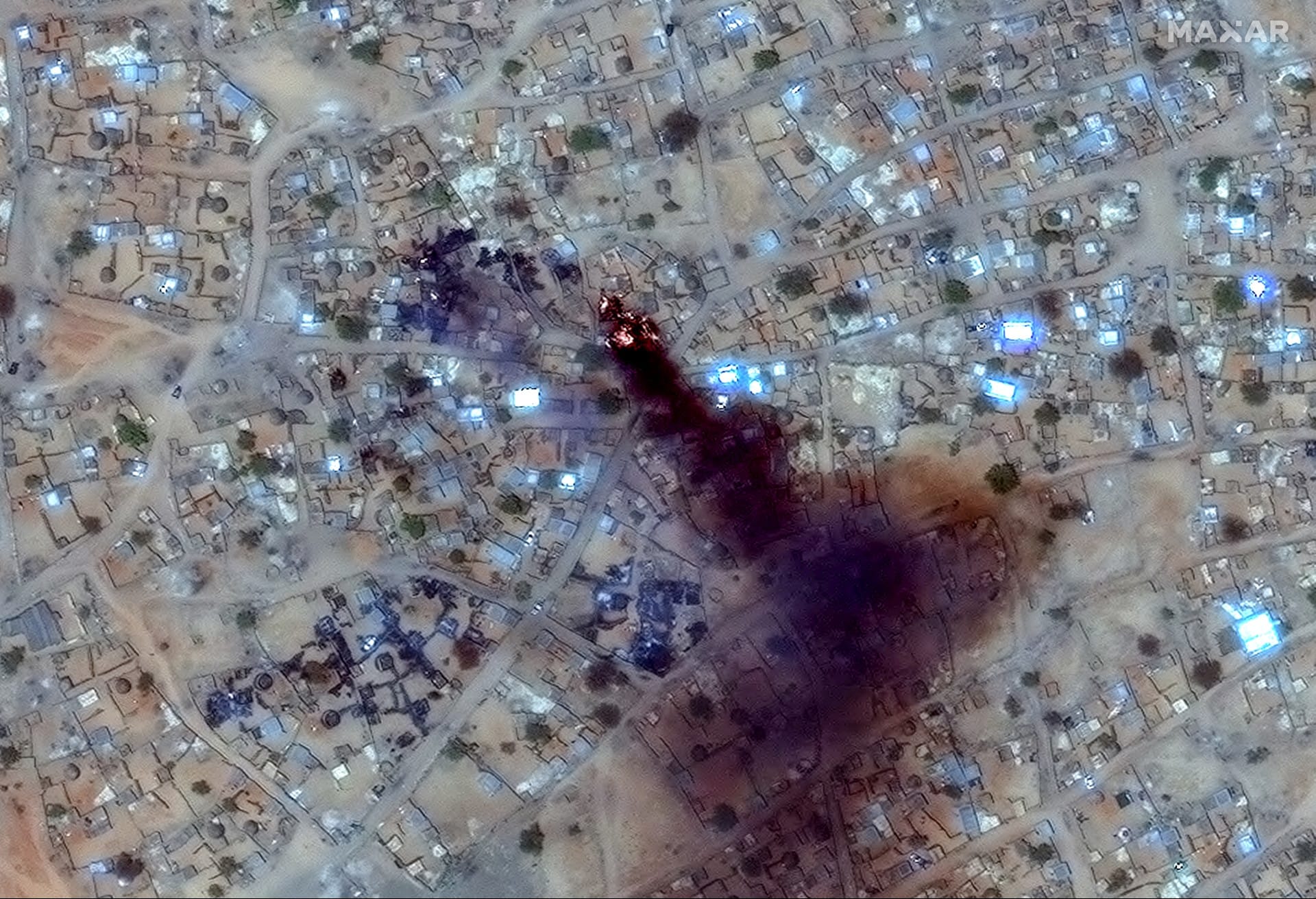
This handout image courtesy of Maxar Technologies taken on April 16, 2025 and released on April 17, 2025, shows fire and smoke at Zamzam camp near the besieged Darfur city of El-Fasher.
Photo Credit: AFP
Asked about major powers like the United States, China and Russia, Minnawi took a more diplomatic line.
"We respect every country and all countries. And many countries, they are playing a lot of positive role. Specifically China and Russia, they are playing diplomatic games in UN Security Council. Many times there are a lot of resolutions that should be issued against the Sudan but those blocked by Russia by that time. And China also playing a lot of positive role economic-wise,” he said.
“I believe India is one of the biggest and greatest nations in Asia and in the world as well. India is developing in many areas, especially technology and economics. We believe stronger relations with India will positively contribute to our development and help our people return home and improve their way of life. Technology-wise, we also need to exchange benefits with India. Many of our injured and sick people are receiving treatment in India, and we thank India for that,” Minnawi told NDTV.
Sudan's Oil Reserves
Despite vast natural wealth, Sudan's civil war has left much of the country unable to benefit from its own resources. The country possesses significant reserves of oil and gold, as well as fertile agricultural land capable of feeding millions, but nearly two years of fighting have fractured control over key territories and trade routes. The conflict has also disrupted production, displaced farming communities and deepened one of the world's worst humanitarian crises.
“The circumstances in Sudan are now dominated by war. Whatever oil production exists is not being utilised appropriately for the people. The war in the Gulf and the global situation are negatively affecting every inch of the world. A large percentage of the world's oil and energy comes through the Hormuz route. If those routes remain open, it benefits humanity,” Minnawi told NDTV.
Oil, gold and agriculture remain Sudan's three principal export sectors. In 2023, the country exported goods worth about $5.09 billion, led by crude oil exports valued at $1.13 billion and gold worth $1.03 billion. Agricultural exports also remained significant, including animal products worth $902 million and oilseeds valued at $709 million, the majority of which came from sesame.
“We are producing oil and we also have many other minerals. In different areas, we can produce oil, but many places are still untapped. Some areas are now being used, like Heglig and others. But still, as I said, we are under the circumstances of war. That is why we are not using our oil resources appropriately,” Minnawi said.
“A stable Sudan with proven resources of over 4 billion barrels of crude is a lucrative pivot in the transition of global security. From fertiliser, to chemicals and crude oil, Sudan has much to offer for a stable global, regional and national future,” echoed Aditya Kiran Nag, independent researcher and Open Source Intelligence (OSINT) expert.
“Regional stability needs a government in Khartoum in total control of its borders, confidence of the people and the willingness to resolve long-term issues with its neighbours. It needs to cut a deal; nations like India can midwife the process, helping bring in long-term stability between the Eastern half of the Sahel and East Africa. Such a strategic toehold in Heglig, Sudan, would enable India to help mitigate global energy shortages triggered by conflicts. With a proven 3 billion barrels of reserves, India might find new alternative markets compared to its current basket,” he added.
The War's End
Minnawi said Sudan's leadership was still prioritising negotiations despite the continued fighting between the Sudanese Armed Forces and the RSF.
“We are offering peace as the priority in every process that should be undertaken,” he said. “But unfortunately, outside interventions are prolonging the war, igniting new wars in different areas, and pushing the RSF to change its plans, strategies and tactics from place to place and from day to day.”
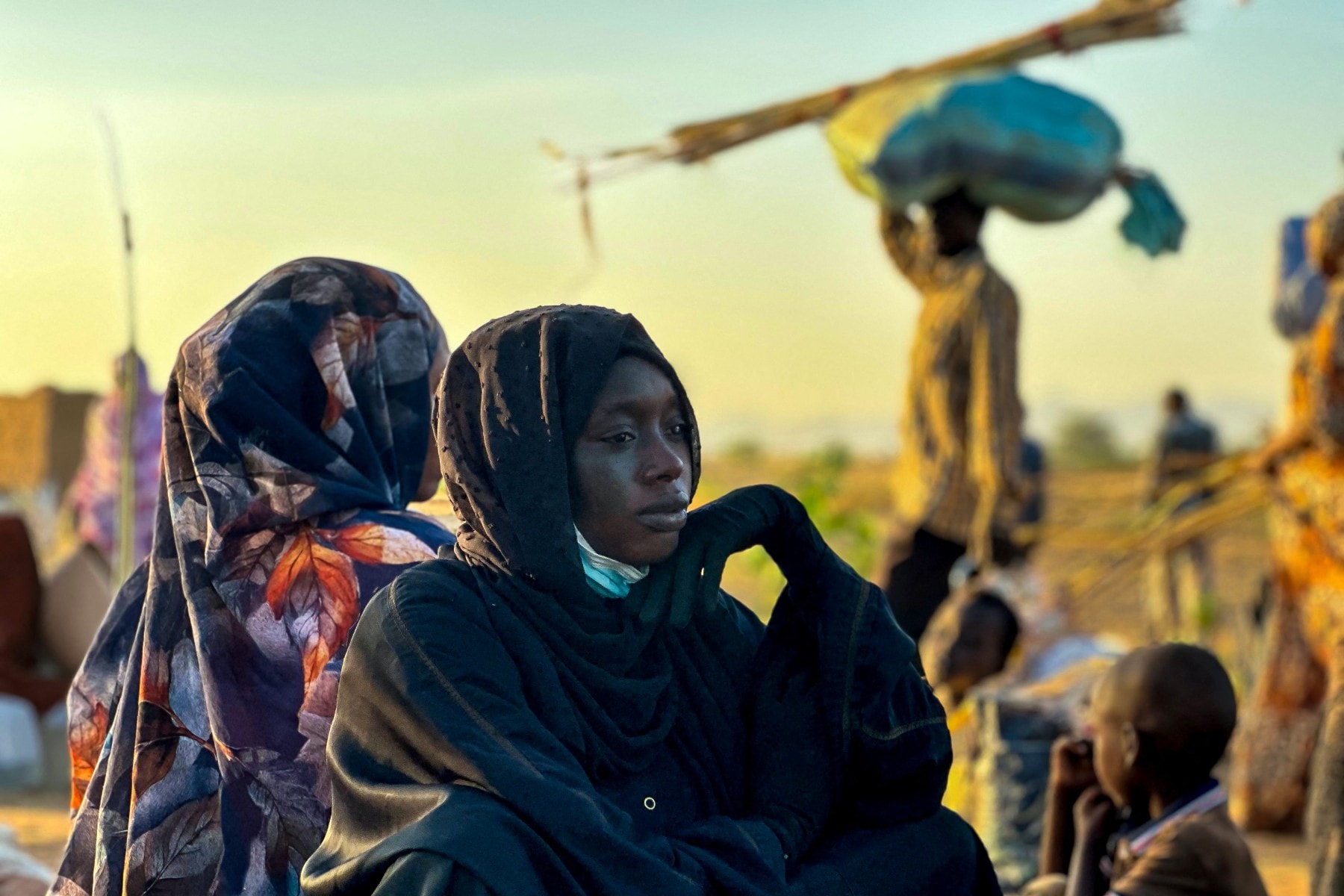
A displaced woman rests in Tawila, in the country's war-torn western Darfur region, on October 28, 2025, after fleeing El-Fasher following the city's fall to the Rapid Support Forces (RSF).
Photo Credit: AFP
He did not offer a timeline for when the war could end, but argued that dialogue -- including with foreign actors -- remained essential if Sudan was to avoid deeper fragmentation.
“Sudan is prioritising peace,” he said. “We have to sit down together for the sake of our community and our people. We have to discuss and negotiate with whoever is necessary, including foreigners. If they need something from Sudan, we have to sit down respectfully and exchange mutual benefits. Our children must return to school. Our hospitals must be developed to care for our people. We are human beings. We need what human beings need in the West, the East, the Centre -- everywhere in the world.
-
Opinion | The AI Boom Has Run Into A Big 'Debt' Trap Problem. Inside The 5% Danger Line

For most of the AI buildout's first two years, hyperscalers funded it the easy way: out of operating cash flow. That era is over.
-
Opinion | Iran To Saudi, Pakistan Is Now Fast Running Out Of Sides To Play
Pakistan's long history of playing all parties to its own benefit may have reached the end of its road.
-
Gyanesh Kumar Has An Immunity Pin. Why A Petition Says He Can't Use It
The Opposition wants the Chief Election Commissioner prosecuted for alleged manipulation of voter rolls, but a 2023 law stands in the way. A petition in the Supreme Court now says the law has a gap.
-
Opinion | Is The World Staring At A Big Stock Market Crash - And Recession? 5 Uneasy Signs
On Wednesday, the US bond market recorded its worst day since Trump's "Liberation Day" tariffs rattled markets in April 2025. The 30-year US Treasury yield topped 5.43%, putting it on track for its highest close since 2004.
-
Form 6 For New Voters: When A Small Change Triggered A Big Row
In July 2026, the online version of Form 6 on the ECI's ECINet portal was modified to include a new declaration.
-
Opinion | Saudi Arabia's China Turn Has Begun - After Learning Much The Hard Way
Leaning on China just makes sense for the Saudis right now. The question is, can its other great 'ally' stomach it?
-
Opinion | Bihar Assault, Hisar Marriage Ban: Who'll Stop The Guardians Of Indian 'Culture'?
Why exactly does the sight of a young couple seeking a bit of alone time somewhere tend to particularly provoke a certain kind of Indian men?
-
Opinion | The Trump-Xi Summit, And India's Many Worries Of Its Own
Washington and Beijing may have chosen coexistence over confrontation. For India, that could be both a relief and a warning.
-
Opinion | China Claims It Has Cut Troops At The Indian Border. But The Math Doesn't Add Up
The reduction likely has more to do with the deployment along the LAC than the total strength active in the region